DbcultAccessing Vault...
Cult Review
Senior Film Conservator
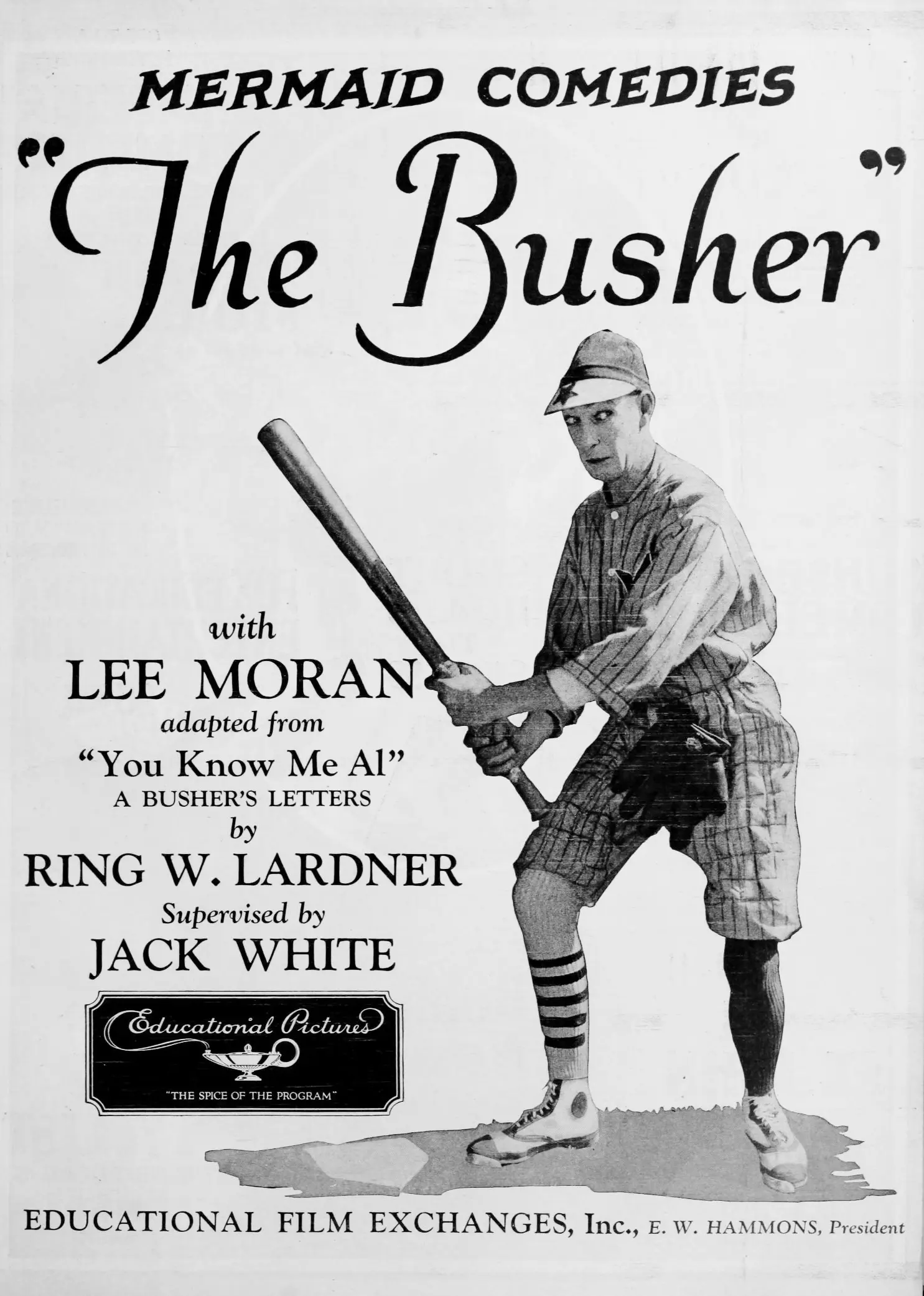
When the reels of The Busher begin to spin, the audience is thrust into a sun‑baked Midwestern town where baseball is less a sport than a civic religion. The opening intertitle, rendered in a jaunty serif, announces the historic showdown between the Snipeville Katydids and the Poseyville Caterpillars, and the camera immediately settles on a dusty diamond framed by a rust‑red barn and a lone telephone pole. The mise‑en‑scene is deliberately theatrical, a stage‑like tableau that invites the viewer to read each movement as both literal action and symbolic gesture.
Lee Moran, cast as the Katydids’ pitcher, embodies a paradoxical blend of swagger and vulnerability. His lanky frame, exaggerated in the silent‑era aesthetic, is juxtaposed with a series of close‑ups that capture the tension in his knuckles as he grips the ball. The cinematographer employs a low‑angle shot, bathing Lee in a shaft of amber light that mirrors the dark orange of the team’s uniform—an intentional visual cue that underscores his role as the narrative’s fulcrum. When Lee winds up, the camera lingers, allowing the audience to savor the kinetic poetry of his motion before the ball rockets toward the plate.
Mike Donlin, the Caterpillars’ batter, is a former professional baseball star whose on‑screen charisma feels almost self‑referential. Donlin’s performance is a masterclass in silent‑film physicality: a cocked eyebrow, a confident tap of the bat, and a grin that seems to wink at the audience. The intertitles that accompany his at‑bats are peppered with Lardner’s razor‑sharp humor—"He swings like a man who’s just read the newspaper and knows the world’s ending." The juxtaposition of Donlin’s polished athleticism against the rough‑hewn backdrop of small‑town America creates a tension that fuels the film’s comedic engine.
Lillian Hackett’s role, though limited by the era’s gender conventions, is a bright thread of agency woven through the male‑dominated narrative. She appears as the Katydids’ team mascot‑turned‑reporter, a woman with a notebook and a keen eye for the absurdities unfolding on the field. Her intertitles are laced with a sardonic wit that mirrors Lardner’s own voice, and her occasional glances toward the camera break the fourth wall, reminding viewers that the spectacle is as much about perception as it is about sport.
The supporting cast—William Dyer as the cantankerous manager, Irish Meusel as the bumbling umpire, and a chorus of townsfolk—functions as a living, breathing chorus. Their exaggerated gestures and synchronized reactions echo the Greek theatrical tradition, turning each foul ball or missed catch into a moment of collective catharsis. The film’s editing, brisk yet fluid, stitches together rapid cuts of the crowd’s roaring applause, the scoreboard’s ticking numbers, and the players’ frantic footwork, creating a rhythm that mirrors the pulse of a live baseball game.
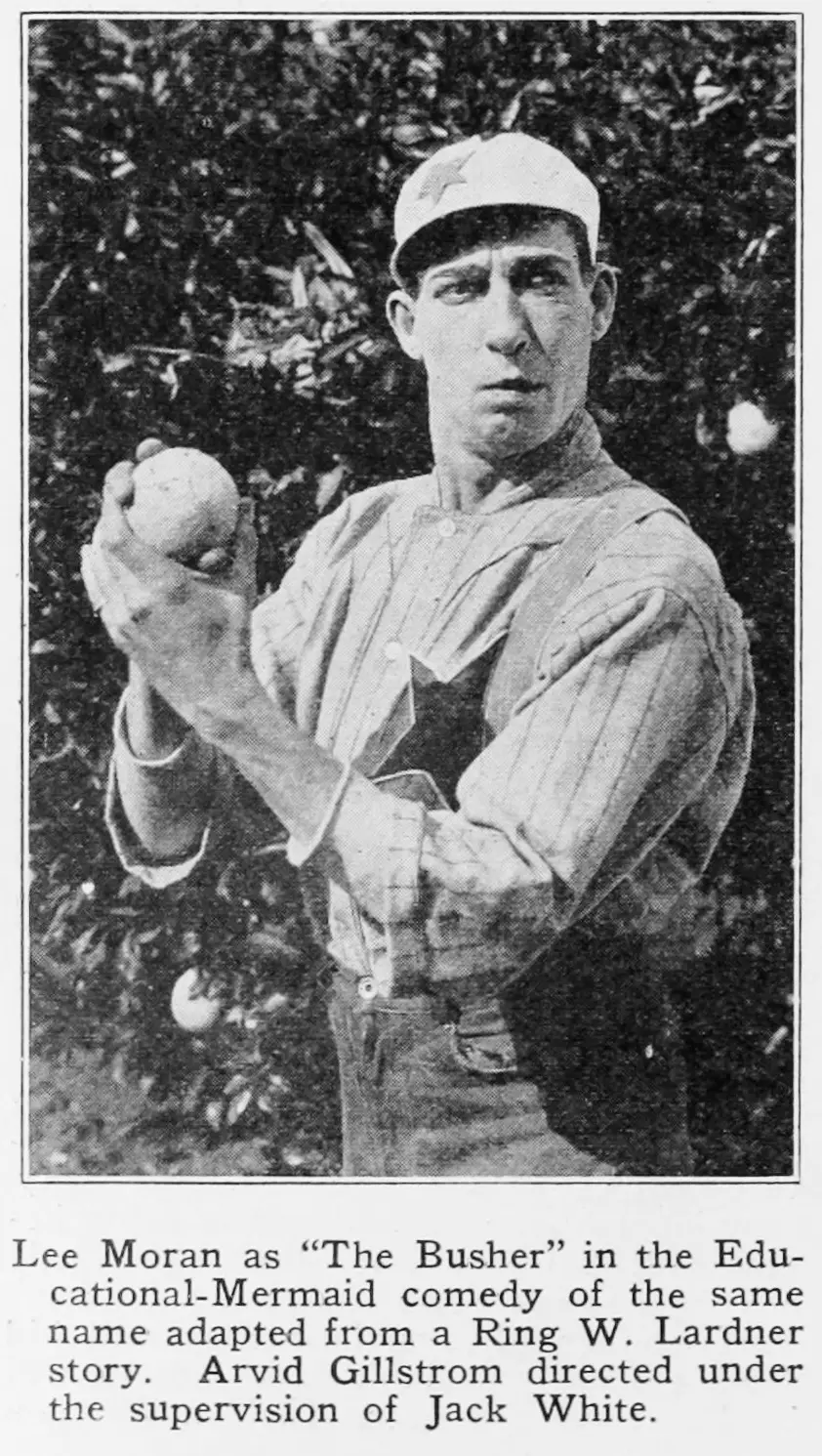
From a thematic standpoint, The Busher operates on multiple registers. On the surface, it is a slapstick comedy—a series of pratfalls, mis‑thrown gloves, and a runaway mascot that ends up tangled in a laundry line. Beneath that veneer lies a satirical commentary on the commercialization of sport in the early 1920s, a period when baseball was transitioning from a pastime to a burgeoning industry. Lardner’s intertitles subtly critique the spectacle: "When the crowd pays more for a hot dog than for the game, the players become circus acts." This line, delivered just before a chaotic double‑play, underscores the film’s awareness of its own performative nature.
The visual palette of the film is deliberately muted, with the black‑and‑white stock allowing the occasional splash of color to emerge through set design and costuming. The Katydids’ uniforms are rendered in a deep, dark orange (#C2410C), while the Caterpillars sport a bright, almost neon yellow (#EAB308). These hues are not merely decorative; they serve as visual signifiers of rivalry, each team’s identity crystallized in a single chromatic note. The sea‑blue (#0E7490) of the sky, captured in a rare moment of daylight, provides a calming counterpoint to the frenetic energy of the diamond.
Comparatively, A Tokio Siren offers a more melodramatic approach to silent storytelling, relying on exotic settings and romantic intrigue. The Busher, by contrast, grounds its humor in the familiar terrain of American small‑town life, making its satire more immediate and resonant. Similarly, Always Audacious showcases a daring protagonist who defies societal norms, yet it lacks the communal ensemble that gives The Busher its layered texture. The film’s focus on a collective experience—players, fans, and even the town’s mayor—creates a richer tapestry than the singular heroics found in many contemporaneous works.
The film’s pacing is noteworthy. While many silent comedies of the era rely on a rapid succession of gags, The Busher intersperses its physical comedy with moments of quiet observation. A lingering shot of a lone child clutching a baseball glove, for instance, invites contemplation about the generational transmission of sport and aspiration. This deliberate alternation between kinetic and contemplative beats mirrors the ebb and flow of an actual baseball game, where tension builds between innings and releases in climactic moments.
Ring Lardner’s script, though filtered through the silent medium, retains his signature linguistic flair. The intertitles are peppered with idioms and colloquialisms that feel both period‑accurate and timeless. Phrases such as "He’s got a fastball that could shave a pine tree" and "The crowd’s louder than a freight train on a Sunday" demonstrate Lardner’s ability to compress vivid imagery into a handful of words, a skill that translates seamlessly to the visual language of silent cinema.
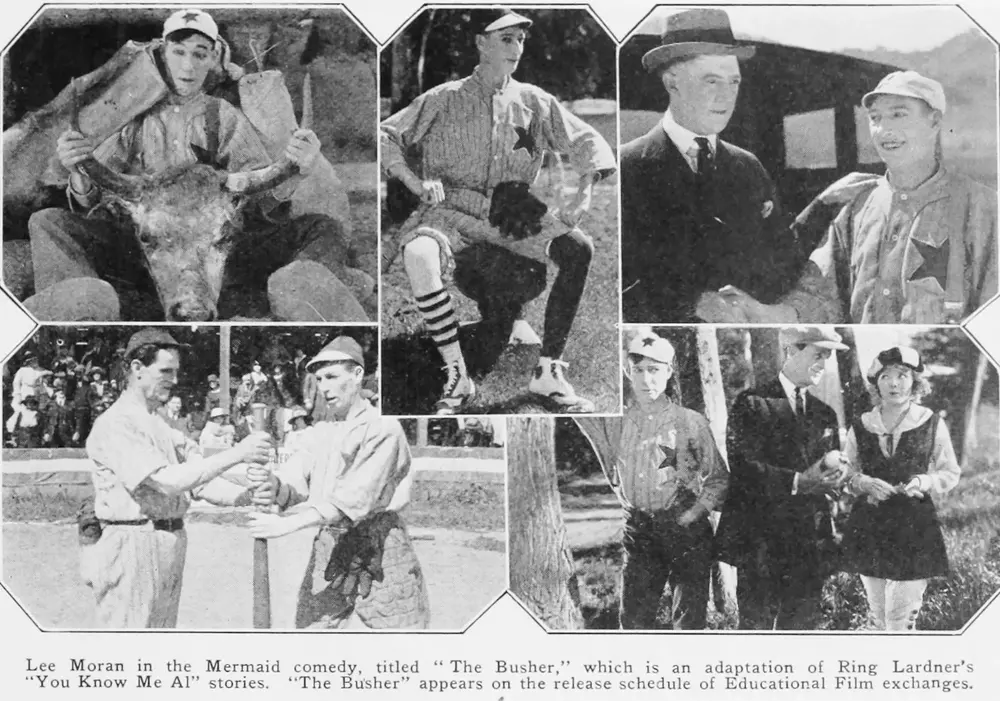
The film’s climax arrives in the ninth inning, a sequence that showcases the director’s mastery of tension. Lee’s final pitch is a slow‑motion marvel, the ball glinting like a silver comet against the dark orange backdrop of the stadium lights. Donlin steps into the box, his silhouette framed by the sea‑blue twilight. The audience holds its breath as the ball arcs, the camera cutting between the batter’s determined stare and the frantic gestures of the umpire. When the ball finally lands in the catcher’s mitt, the crowd erupts in a cacophony of cheers, whistles, and a sudden rain of confetti—a visual metaphor for the triumph of community over individual ego.
In the aftermath, the film does not resolve with a tidy moral; instead, it offers a montage of the town’s residents returning to their daily routines, the baseball field now a silent witness to the day’s drama. The final intertitle reads, "And so the game goes on, a story retold in every summer night, a legend in every whispered laugh." This closing line encapsulates the film’s enduring message: sport, at its core, is a narrative we collectively author and re‑author.
From a preservation standpoint, The Busher is a valuable artifact. Its surviving prints exhibit a surprisingly high level of image stability, allowing modern audiences to appreciate the nuanced performances of Moran and Donlin. The film’s intertitles have been meticulously restored, preserving Lardner’s original phrasing and ensuring that the comedic timing remains intact.
Critically, the film occupies a niche that bridges the gap between pure slapstick and sophisticated satire. It anticipates later baseball classics such as Crime and Punishment (not a baseball film but a study in moral ambiguity) and the more overtly comedic The Five Dollar Plate, which also explores the intersection of sport and commerce. Yet, The Busher remains singular in its ability to fuse Lardner’s literary wit with the kinetic language of silent cinema.
The film’s influence can be traced in later works that blend sport with social commentary, such as the 1930s baseball melodramas and even contemporary sports comedies that rely on ensemble casts to explore community dynamics. Its use of color symbolism—dark orange for the underdog, yellow for the flamboyant challenger, sea‑blue for the overarching sky of possibility—has been echoed in modern cinematography, where palette choices serve narrative functions.
In sum, The Busher is a richly textured silent comedy that rewards repeated viewings. Its deft combination of physical humor, incisive satire, and visual storytelling makes it a cornerstone of early American cinema, deserving of renewed scholarly attention and public appreciation. For anyone interested in the evolution of sports on screen, the film offers a compelling case study in how humor can illuminate deeper cultural truths while still delivering the pure joy of a well‑timed punchline.
IMDb —
1917
Community
Log in to comment.