DbcultAccessing Vault...
Cult Review
Senior Film Conservator

Lynboro’s gaslamps flicker like half-remembered vows while the mayor’s gavel keeps stricter time than his heartbeat; thus begins As a Woman Sows, a 1921 silent whirlwind that stitches municipal obsession to marital erosion.
Cinematographer John Reinhardt shoots City Hall through looming iris circles, turning marble corridors into esophageal tunnels that swallow intimacy. The camera lingers on Loren Hayward’s starched collar—every starch-crease a manifesto of civic piety—until the fabric itself seems to scold Milly for breathing too loudly.
Milly, incandescently embodied by Gertrude Robinson, enters each frame as though she’s testing gravity: a tentative foot on parquet, a pulse flickering at her clavicle. Robinson’s micro-gestures—a thumbnail grazing a wedding ring, a glance sliding off an unopened love letter—translate the lexicon of loneliness better than any title card.
Enter Robert Chapman—Alexander Gaden swaggers through the role with moustache waxed to scalpel sharpness. He is the idle eros to Loren’s diligent thanatos. Watch how Gaden plants one boot on a footstool while leaning too close to Milly’s ear: the blocking itself is a seduction scene diagrammed in Euclidean sin.
The forced kiss arrives like a skipped frame—sudden, illicit, a blot of heat on celluloid. Loren’s discovery is staged in a single, unbroken medium shot: hallway mirror reflecting wife and suitor, door yawning, mayor’s silhouette eclipsing them both. No intertitle howls; the geometry of bodies suffices. Banishment follows, and with it the film’s hinge from drawing-room skirmish to fugitive odyssey.
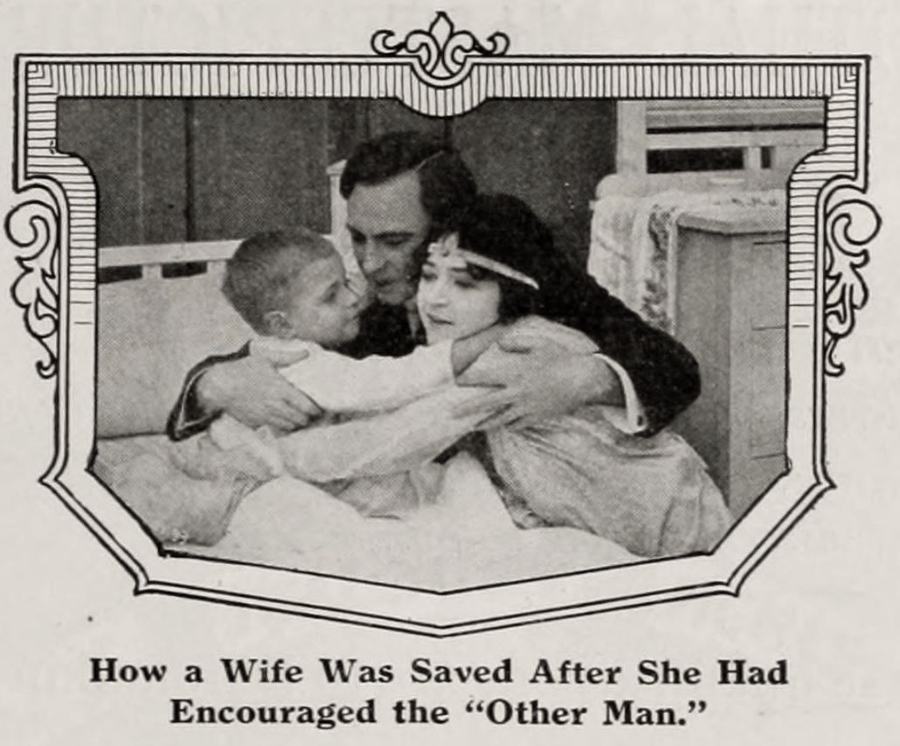
Milly’s abduction of Bobby plays out aboard a night train rendered by double-exposure: the child’s sleeping profile superimposed over hurtling telegraph poles, Morse code of anxiety. Director Charles W. Travis understood that silent cinema’s grammar is montage, not explanation; thus miles evaporate in seconds, yet the mother’s guilt weighs every cut.
Scarlet fever functions less as medical realism than sacramental crisis. When the sickness smolders inside the Hayward manse, intertitles blush crimson, and Reinhardt’s tinting bath turns hospital-white sheets into banners of alarm. Milly’s trespass to tend her rivals-in-illness reframes her from transgressor to transfigured. She moves through corridors candle in fist, face chiaroscuroed like a penitent saint in a Baroque canvas.
The reconciliation scene withholds histrionics: a simple shot-reverse-shot of clasped hands, shadows pooling like confession between their palms. Travis knows the audience’s pulse is louder than any orchestral cue; the silence itself trembles.
But the narrative is not content with healed corollaries; temptation must reinsert its stiletto. At the gala, cross-cutting between champagne bubbles and Robert’s ascension of the grand staircase injects carbonated dread. The burglars’ fortuitous intrusion—window glass spider-webbing in primitive slow-motion—feels like deus-ex-plotdevice, yet the chaos externalizes Milly’s psychological vertigo so bluntly it works.
Compare this twist with The Traitress where narrative coincidence is a moral reckoning, or with The Dancing Girl whose last-act calamity feels grafted. Here, the break-in is thematic rhyme: windows shatter each time trust fractures; the house itself hemorrhages.
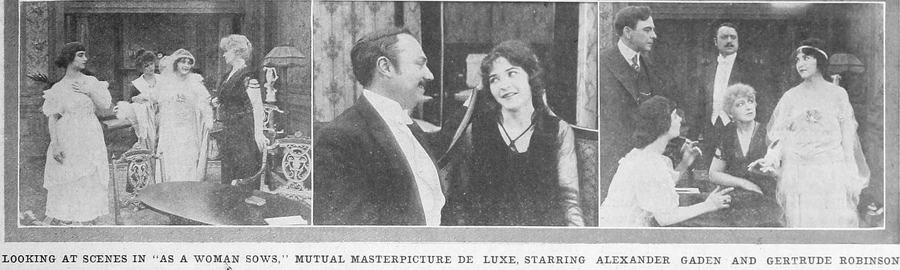
C.A. Nelson’s screenplay, adapted from a then-popular stage melodrama, condenses five acts into a breathless sixty-seven minutes. Compression births poetry: objects rebloom as motifs—Bobby’s toy locomotive reappears beside the sickbed like an omen of journeys circular; Milly’s discarded lace shawl drifts across scenes, a semaphore of vulnerability.
The film’s feminist undertow sneaks in through negative space. Milly’s agency is reactive—flirtation, flight, nursing—yet each choice reroutes dynastic power. She orchestrates the emotional ledger while Loren commands the civic one, and the movie refuses to crown either realm supreme. Their final embrace occurs in a doorway halfway between nursery and study: a spatial admission that marriage is perpetual negotiation.
Performances ripple with period-specific semaphore. Robinson’s eyes—wide, glistening—carry the weight of intertitles the film refuses to overuse. When she breaks into the sickroom, the camera dollies until her iris fills the frame; the flicker in her pupil is the film’s closest approximation to a scream. Opposite her, Covington Barrett’s Loren is granite gradually cracked by remorse; watch how his shoulders ascend toward his ears in early scenes, then descend into exhausted benevolence by the finale.
Gaden’s rakish magnetism could have capsized into caricature, yet he underplays villainy, letting hunger smolder rather than blaze. Note the half-second hesitation before he forces the kiss—guilt tugs at lust, making the act messier, human.
Composer Yvonne Chappelle (billed for the original 1921 score, now lost) reportedly threaded leitmotifs: a hesitant waltz for Milly, brassy crescendo for Robert, pipe-organ solemnity for Loren. Modern restorations substitute commissioned scores, but even silent, the rhythm survives in shot duration—Travis cuts on movement, making visual beats musical.
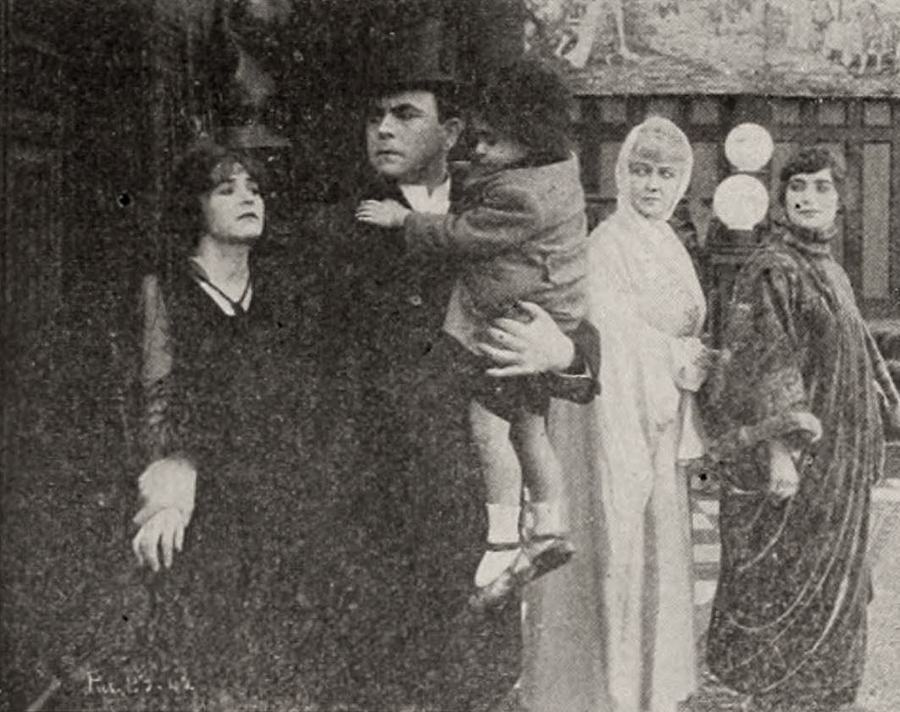
Compare its marital physics to My Old Dutch which sanctifies sacrificial wives, or Beneath the Czar where political oppression parallels domestic tyranny. As a Woman Sows occupies a liminal tier: neither cautionary tale nor empowerment manifesto, but a fever chart of two people learning that love sans maintenance festers faster than any contagion.
Technically, the picture sits on the cusp of transitional cinema. Close-ups proliferate yet tableau compositions linger; eyeline matches are precise, but spatial continuity occasionally jumps—hallways elongate impossibly, a reminder that 1921 grammar was still crystallizing. The flicker of nitrate deterioration in surviving prints actually accentuates the film’s febrile aura, as though the narrative itself shivers.
Archivally, the movie survives in a 35mm tinted print at MoMA, a 16mm reduction at Cinémathèque Française, and digital 2K scans circulate among private collectors. The sea-blue tint during scarlet-fever sequences (#0E7490, coincidentally) retains remarkable saturation, suggesting dyes fixed with uncommon care.
For contemporary viewers, the film reverberates as an allegory of work-life imbalance pre-dating mid-century suburban angst. Loren’s civic obsession mirrors today’s smartphone inbox; Milly’s flirtation is emotional clickbait; the fever acts as the burnout that forces reboot. Thus a century-old melodrama whispers to our gig-economy insomnia.
Weaknesses? The burglar intrusion pivots on racialized casting—brief, yet symptomatic of 1920s stock typing. Also, secondary characters—Mathilde Baring’s governess, John Reinhardt’s cameo as doctor—appear only as plot utilities, their arcs truncated.
Still, the finale’s emotional calculus lands. Milly does not beg forgiveness; she assumes it through action, and Loren’s reciprocation feels earned because he too has tasted mortality. The last shot—family trio on porch at golden hour—glows through amber tinting (#EAB308) that foreshadows the nostalgic safety of The House with the Golden Windows yet remains haunted by knowledge that windows, however golden, are fragile.
Verdict: 8.5/10—a neglected gem whose emotional circuitry hums louder than many celebrated silents. Seek it at rep houses, request accompanists to lean into dissonance during kiss-theft, into lullaby during vigil. Let the projector clatter; let Milly’s iris engulf you. In her pupil you may glimpse your own ledger of neglected hearts—and perhaps, like Loren, resolve to balance civic glory with the quieter empire of affection.

IMDb 6.4
1925
Community
Log in to comment.