DbcultAccessing Vault...
Cult Review
Senior Film Conservator
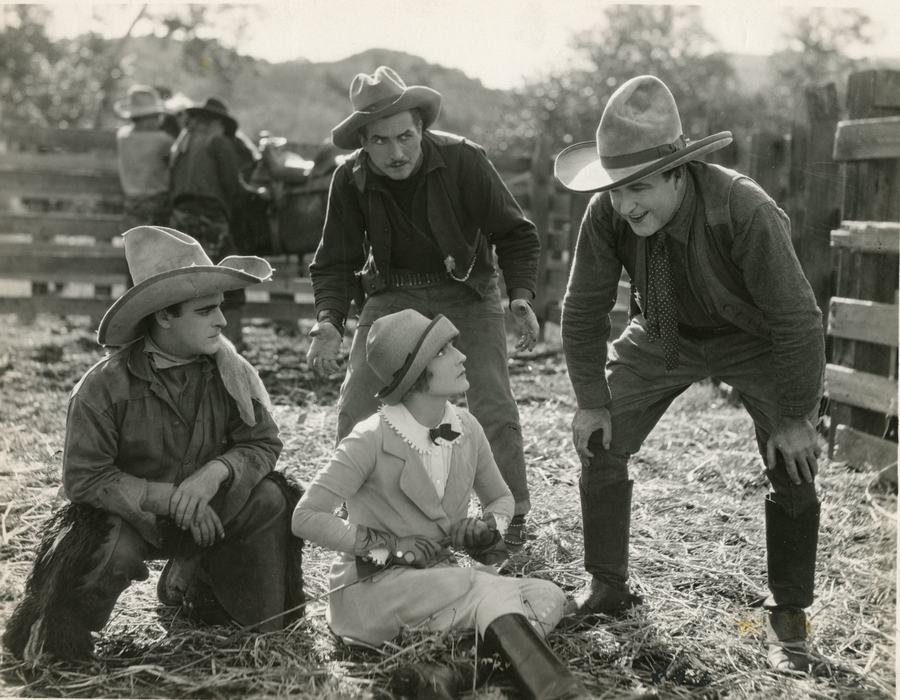
Stepping back into the annals of silent cinema, one often encounters narratives that, while perhaps simplistic by today's standards, offered profound insights into the societal mores and burgeoning cinematic language of their time. The Buster, a 1923 production featuring the spirited Doris Pawn and the compelling Francis McDonald, presents a fascinating study in early romantic comedies, albeit one steeped in the problematic, yet historically prevalent, trope of 'taming' the independent woman. This film, penned by John Stone and William Patterson White, attempts to navigate the turbulent waters of gender roles, deception, and ultimate self-discovery, all within the rugged, romanticized backdrop of the American West. It’s a narrative that, despite its age, still sparks conversations about agency, perception, and the often-misguided intentions behind grand gestures.
At the heart of this cinematic endeavor lies Bill Coryell, portrayed with a certain earnest, if misguided, charm. Coryell is a rancher, a man of the land, imbued with a frontier spirit that, in the early 20th century, often conflated masculinity with a desire to exert control or 'civilize' those perceived as wild or untamed. His target: Charlotte Rowland, a 'city girl' whose very epithet suggests an inherent incompatibility with the rustic simplicity Coryell embodies. Charlotte, by all accounts, represents modernity, independence, and a refusal to conform to the narrow expectations of a woman's place. This clash of worlds—urban sophistication versus rural stoicism—sets the stage for Coryell's ill-conceived plan, a testament to his belief that he knows what's 'best' for Charlotte, even if it means resorting to elaborate trickery. His motivation isn't malicious, perhaps, but rather born of a paternalistic desire to 'rescue' her from her own perceived wildness, a dangerous cocktail of affection and condescension.
Coryell’s grand design involves a staged kidnapping, a theatrical spectacle intended to cast him as the heroic savior, thereby earning Charlotte’s gratitude and, he hopes, her affection. This plot device, while a staple of many early adventure and romance films, takes on a particular resonance here, highlighting the era's fascination with damsels in distress and the men who would rescue them. However, the film cleverly introduces a significant complication: the interference of a malevolent bully. This antagonist, whose presence is less about personal vendetta and more about pure disruption, injects a dose of genuine peril into Coryell's carefully choreographed charade. The bully's actions are not merely accidental; they are designed to incite Charlotte against Bill, to sow seeds of distrust and suspicion, transforming a playful deception into a genuinely dangerous situation. This twist elevates The Buster beyond a simple romantic comedy, introducing elements of suspense and genuine threat that force both protagonists to confront the reality of their circumstances.
Doris Pawn’s portrayal of Charlotte Rowland is central to the film’s enduring appeal. She is not merely a passive object of Coryell's affections or a victim awaiting rescue. From her initial introduction as a 'city girl,' Pawn imbues Charlotte with an unmistakable spirit and intelligence. Her initial interactions with Coryell, even before the ruse begins, likely hint at a woman who is observant and not easily swayed. When the fake kidnapping unfolds, Charlotte's journey from potential unwitting participant to active agent is compelling. The moment of her discovery of the ruse is the film's pivotal turning point. It's a moment of profound realization, not just about Coryell's deception, but about her own capacity for self-preservation and independent action. This revelation empowers her, shifting the power dynamic entirely. She is no longer the one to be rescued; she becomes the rescuer, not only of herself from a dangerous situation but, in a broader sense, she rescues Coryell from the folly of his own machinations and the potentially disastrous consequences of the bully's interference.
The narrative’s clever subversion of the traditional damsel-in-distress trope is where The Buster truly shines. While films like Stuffed Lions or An Elephant's Nightmare might have leaned into more overt physical comedy or spectacle, The Buster grounds its humor and drama in character-driven conflict. Charlotte's agency, her ability to unravel the deception and then act decisively, positions her as a proto-feminist figure within the constraints of early 20th-century cinema. This is a far cry from the more overtly rebellious, yet often tragically constrained, heroines sometimes seen in melodramas of the era. Her intelligence is not merely a plot device; it is the engine of the film's resolution. This proactive stance contrasts sharply with films where female characters are often incidental to the male hero's journey, or where their strength is only revealed through their suffering. Here, Charlotte’s strength is in her intellect and her capacity for independent thought.
The performances, typical of the silent era, rely heavily on exaggerated expressions, physicality, and the subtle nuances conveyed through intertitles. Francis McDonald, likely embodying the 'bully' character, would have needed to project menace and antagonism without dialogue, a skill that silent film actors honed to a fine art. His role is crucial in escalating the stakes, transforming Coryell’s romantic prank into a genuine crisis. Gilbert Holmes, Dustin Farnum, and Lucille Hutton, while perhaps in supporting roles, would have contributed to the film’s ensemble, each playing a part in building the world and supporting the central conflict. The chemistry, or lack thereof, between Doris Pawn and her romantic lead would have been conveyed through longing glances, shared smiles, and the dramatic tension of their physical proximity. The success of a silent film often hinged on the actors' ability to communicate complex emotions and motivations purely through their bodies and faces, a craft that is both challenging and uniquely captivating.
From a directorial standpoint, the film likely employed the prevalent techniques of the era: static shots, intertitles for dialogue and exposition, and perhaps some rudimentary tracking shots or close-ups to emphasize emotional moments. The Western setting would have allowed for expansive outdoor cinematography, showcasing the rugged beauty of the landscape, a common element in films like Told in the Hills. The contrast between the open vistas of the ranch and the implied bustling environment of Charlotte’s city background would have been a visual metaphor for the clash of their personalities. The pacing of silent films often feels deliberate to modern audiences, but within its own context, The Buster would have unfolded with a rhythm designed to build suspense, elicit laughter, and ultimately deliver a satisfying resolution. The writers, John Stone and William Patterson White, crafted a screenplay that, despite its seemingly simple premise, offered layers of character development and a narrative arc that allowed for both comedy and genuine drama.
The thematic explorations in The Buster extend beyond mere romance. It touches upon the evolving understanding of gender roles in the early 20th century, a period of significant social change. While Coryell's initial plan reflects traditional patriarchal attitudes, Charlotte's ultimate self-rescue challenges these very notions. It suggests that true affection and respect cannot be built on deception or an attempt to diminish another's autonomy. This theme resonates with the spirit of other films from the era that explored societal expectations, such as The Law of Nature or St. Elmo, which often delved into the complexities of human relationships against a backdrop of moral and social codes. The film subtly argues for a relationship built on equality and mutual respect, rather than one where one party attempts to dominate or 'tame' the other. The resolution, one imagines, would leave both Charlotte and Coryell with a deeper understanding of themselves and each other, having navigated not just a fake kidnapping but a genuine test of character.
Comparing The Buster to its contemporaries provides valuable context. While it shares the Western setting with films like Told in the Hills, its central premise of a woman outsmarting her circumstances, even those orchestrated by a romantic interest, gives it a unique flavor. It possesses a certain playful spirit that might be echoed in titles like Little Miss Rebellion, which also likely features a strong-willed female protagonist challenging established norms. However, The Buster distinguishes itself by allowing the female lead to not just rebel, but to actively resolve the central conflict through her own intelligence, rather than relying solely on charm or a male hero's eventual change of heart. This proactive resolution elevates the film beyond a mere genre piece, imbuing it with a subtle, yet powerful, message of female empowerment that was perhaps ahead of its time.
The legacy of The Buster, like many silent films, lies in its contribution to the evolving cinematic language and its reflection of a bygone era's social anxieties and aspirations. It’s a testament to the power of visual storytelling, where emotions and plot twists are conveyed through glances, gestures, and the carefully chosen words of an intertitle. The film serves as a poignant reminder that even in the absence of spoken dialogue, compelling narratives can be woven, characters can be developed, and profound themes can be explored. It’s a snapshot of a time when cinema was still defining itself, experimenting with tropes, and inadvertently, or perhaps intentionally, pushing the boundaries of societal expectations. Its charm lies not just in its historical value but in its surprisingly modern take on female agency, making it a film worth rediscovering for those interested in the rich tapestry of early Hollywood. The journey of Charlotte Rowland, from being the object of a 'taming' scheme to becoming the orchestrator of her own salvation, remains an engaging and surprisingly resonant narrative, demonstrating that true strength often lies in wit and self-reliance, qualities that transcend any cinematic era.
IMDb 5.2
1931
Community
Log in to comment.