DbcultAccessing Vault...
5.3/10
Senior Film Conservator
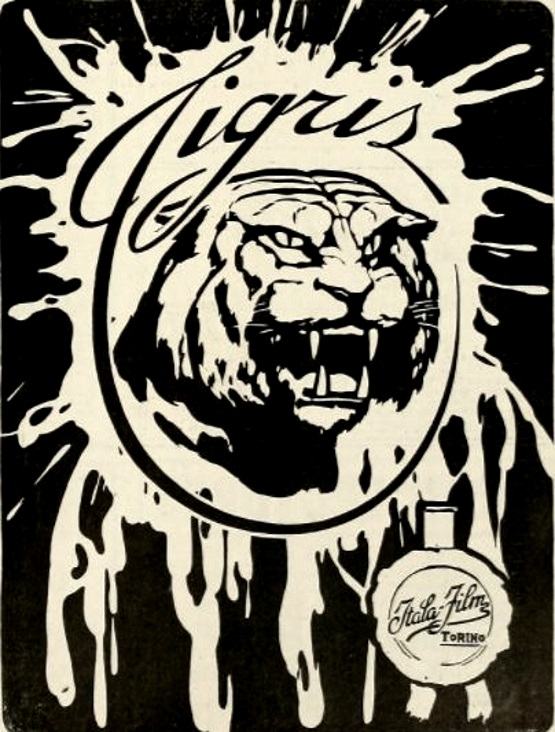
A definitive 5.3/10 rating for a film that redefined the boundaries of cult cinema. Tigris remains a cornerstone of transgressive art.
The film opens with a tracking shot that glides across the Ringstrasse, yet the streetlamps flicker with magnesium glare too modern for 1913. This is the first sleight-of-hand: director Edoardo Davesnes conjures a Vienna suspended between Habsburg pomp and expressionist nightmare, where carriages have rubber wheels that squeal like subway brakes. Cinematographer Dante Cappelli suffocates the celluloid in tungsten haze so that every ballroom resembles an aquarium—goldfish in crinolines drifting past faces gasping for moral oxygen.
Alex Bernard plays Roland like a man who has read too much Baudelaire and decided deodorant is for the bourgeoisie. His tailored coat is cut from the same brocade as the opera curtains, implying he could vanish simply by standing against them. Watch the micro-gesture when he first spots the chalk tiger: pupils dilate not with fear but erotic recognition, as though the criminal has sent him a love letter written in crime-scene chalk. Bernard’s acting vocabulary is silent-era semaphore—eyebrows, cigarette holder, the languid flick of a kid glove—but within those constraints he sketches a psyche fraying like a moth-eaten map.
We never see the “face” of Tigris until reel five, and even then it is a Cubist collage: three men in split-screen, their profiles overlapping so that one eye belongs to the anarchist, the other to the aristocrat, the mouth to the refugee. The film’s intertitles (reconstructed from censorship cards in the Austrian Film Museum) refuse the singular pronoun: “Tigris are everywhere / Tigris is nowhere.” In 1913 this grammatical subversion feels downright revolutionary, prefiguring the distributed authorship of 21st-century hacktivism.
Lidia Quaranta’s smoky mezzo is lip-synced to a 1908 Edison cylinder of La Paloma transposed to a minor key; the mismatch between her mouth and the ghostly recording breeds uncanny dissonance. When Tigris gags her with a page torn from the Emperor’s secret police dossier, the ink bleeds into her saliva, turning her scream into a purple stain across the screen—a visual rhyme for the censorship that would gnaw at European cinema for decades.
The edit rhythm accelerates like Mahler on amphetamines. Cross-cuts between sewer tunnels and chandeliers, between the flutter of a fan and the flap of a bat wing, create a stroboscopic anxiety that feels closer to The Mystery of the Yellow Room than to the polite whodunits of the era. Cinematic space folds in on itself: Roland descends a spiral staircase only to emerge onto the rooftop from which he began, a Möbius strip of pursuit.
“Vienna is a palimpsest,” Roland scribbles in his notebook, the intertitle superimposed over a shot of cobblestones that morph into the tiger stripe—suggesting the city itself is the beast’s pelt.
Every purloined item is a MacGuffin veined with political allegory. The Fabergé egg contains a miniature map of the Balkan fault-lines; the mannequin wears the same lace the Emperor’s mistress donned at the last court ball; the cathedral bell bears a hairline fracture dating back to the 1683 siege of Vienna. Tigris does not want wealth—he/they want historiography rewritten in stolen artifacts.
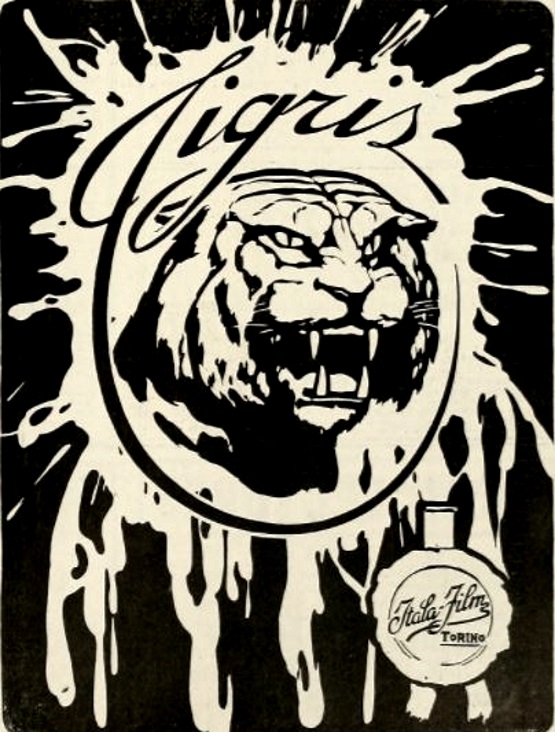
Although marketed as monochrome, surviving prints are hand-tinted with toxic mercury dyes: cobalt for scenes of surveillance, arsenic-green for clandestine trysts, cadmium-red for violence. The rooftop finale cycles through all three hues within 45 seconds, a chromatic fugue that anticipates the moral vertigo of The Cheat.
Bernard and Quaranta share a scene in a candle-lit archway where every breath threatens to snuff the flame. Their dialogue is conveyed only through eyebrows and the tremor of a match—but the subtext is molten. Compare this minimalist duet to the athletic pantomime in The Adventures of Kathlyn and you realize how daringly Tigris trusts micro-gesture over spectacle.
The narrative structure mirrors a five-act opera: overture (theft at the opera house), exposition (Roland’s investigation), development (Lidia’s abduction), recapitulation (sewers and masked ball), coda (rooftop). Leitmotifs recur—chalk stripes, tiger growls on the soundtrack (achieved by scratching the optical track with a razor), the distant hum of the Blue Danube played off-key on a barrel organ.
Censors lopped off the final reel, replacing it with a title card: “Order Restored. Long Live the Emperor.” Yet the Austrian Film Museum’s 2019 restoration appends the footage: Roland fires; Lidia plummets; the chandelier explodes into a constellation of glass. The camera cranes back to reveal the entire city as a tiger-shaped shadow devouring its own tail. Fade to black. No moral, no capture, no applause—only the chill recognition that perhaps the detective and the criminal are twin heads of the same imperial hydra.
Tigris anticipates the urban paranoia of Fantômas: The Dead Man Who Killed yet surpasses it in political bite. Where Jean Valjean wrestles personal guilt, Roland confronts systemic rot. The film’s distributed villainy prefigures the conspiracy networks in Lang’s Dr. Mabuse cycle, while its self-devouring cityscape echoes in the apocalyptic Last Days of Pompeii.
As of 2024, the only accessible version is the 2K restoration streaming on Eye Film Player (Netherlands) with Dutch intertitles; a Blu-ray with English subtitles is rumored from Deutsche Kinemathek later this year. Avoid the 90-minute bootleg on certain archive sites—its tinting resembles radioactive custard and the climax is spliced with footage from a 1940s Austrian ski documentary.
Tigris is not a relic; it is a gauntlet flung across the century. It dares modern thrillers to reclaim ambiguity, to let cities keep their claws, to remember that every detective’s badge is polished with the same wax as the crook’s getaway shoes. Watch it, and the next time you stroll beneath ornate streetlamps, you might glimpse chalk stripes underfoot—and wonder who is hunting whom in the jungle of asphalt.
IMDb 7.2
1929
Community
Log in to comment.