DbcultAccessing Vault...
Cult Review
Senior Film Conservator
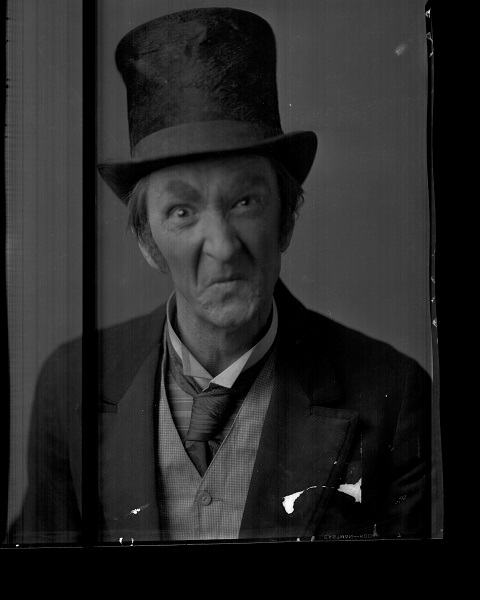
There is a peculiar, almost feverish energy that permeates Daffy House, a film that feels less like a traditional silent comedy and more like a proto-surrealist manifesto disguised as a domestic farce. While many films of the era, such as Off His Trolley, relied on the kinetic chaos of the exterior world, Daffy House turns its gaze inward, literalizing the psychological barriers of the marriage market. The premise—a father transforming a film studio into a house of madness to deter a suitor—is a stroke of high-concept brilliance that allows the film to comment on its own medium while delivering a relentless barrage of visual gags.
The suitor, played by Joe Bonner, is our surrogate in this labyrinth. Bonner possesses a physicality that is both grounded and elastic, providing a necessary anchor as the world around him dissolves into choreographed insanity. Unlike the protagonists in Circumstantial Evidence, who are often victims of external social pressures, Bonner’s character is trapped within a specifically tailored reality. The "Daffy House" is not just a setting; it is a character in its own right, a sprawling, liminal space where the boundaries between performance and reality are intentionally blurred.
The choice of a movie studio as the setting for the father’s deception is remarkably sophisticated for a film of this period. It suggests an early awareness of the power of the cinematic apparatus to manipulate perception. When the father hires actors to populate the house, he isn't just playing a prank; he is directing a film within a film. This layer of artifice gives Daffy House a depth that rivals the existential escapism found in The Lotus Eater. Where that film looks for paradise, Daffy House finds a purgatory of the absurd.
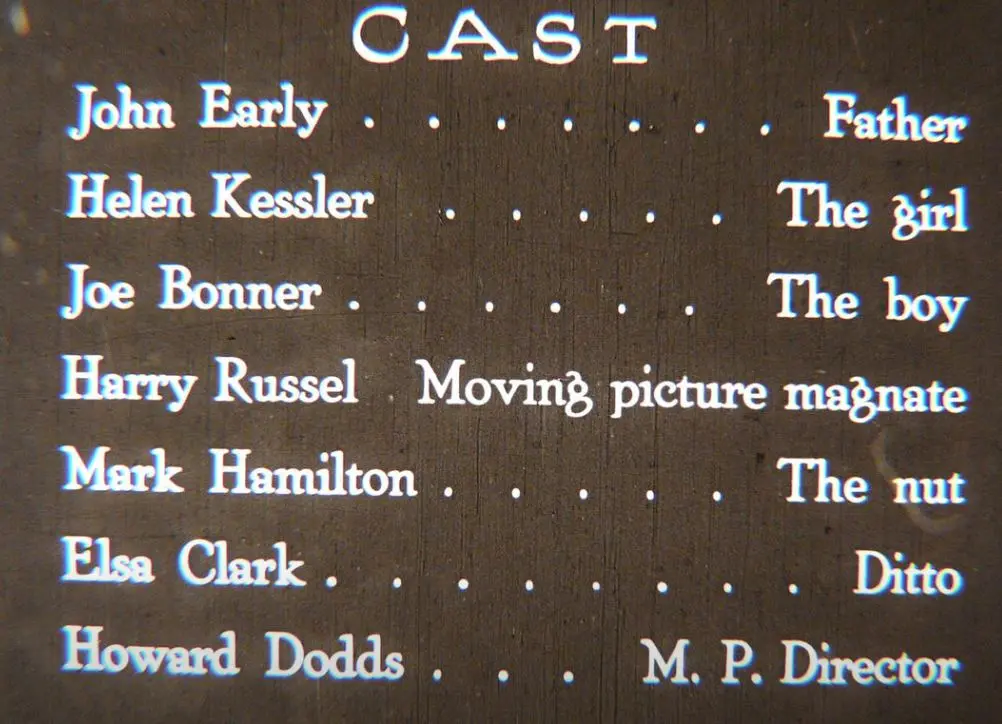
The "actors" within the house—played by a supporting cast including John Early and Harry Russell—execute their roles with a terrifying commitment. Their "madness" is not portrayed as a medical condition but as a theatrical style. They leap from furniture, engage in non-sequitur dialogues, and manipulate the physical environment to keep Bonner’s character in a state of perpetual disorientation. This use of performance as a weapon of domestic gatekeeping is a theme that resonates even in modern cinema, though rarely with such unadulterated glee.
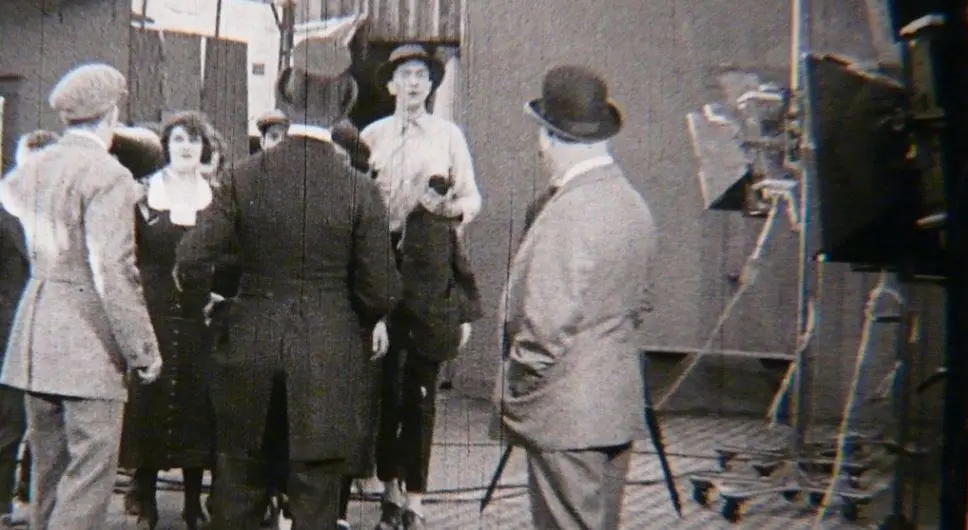
The cinematography in Daffy House utilizes the vastness of the studio space to emphasize the suitor's isolation. Long shots capture him wandering through oversized rooms, dwarfed by the sheer scale of the deception. The lighting often mimics the high-contrast style of German Expressionism, casting long, distorted shadows that mirror the suitor's growing paranoia. It is a far cry from the more straightforward visual storytelling of The Northern Trail, opting instead for a visual language that is as eccentric as its characters.
Consider the sequence where the suitor first enters the "Daffy House." The transition from the normal world to the studio interior is handled with a jarring lack of continuity, reflecting the suitor's sudden plunge into the unknown. The set design is cluttered with props that seem to have no purpose—a recurring motif in silent comedy that here takes on a more sinister, Dadaist quality. Every object is a potential trap, every door leads to a new absurdity. It is an environment that demands a resilient protagonist, and Bonner delivers, his face a canvas of escalating concern.
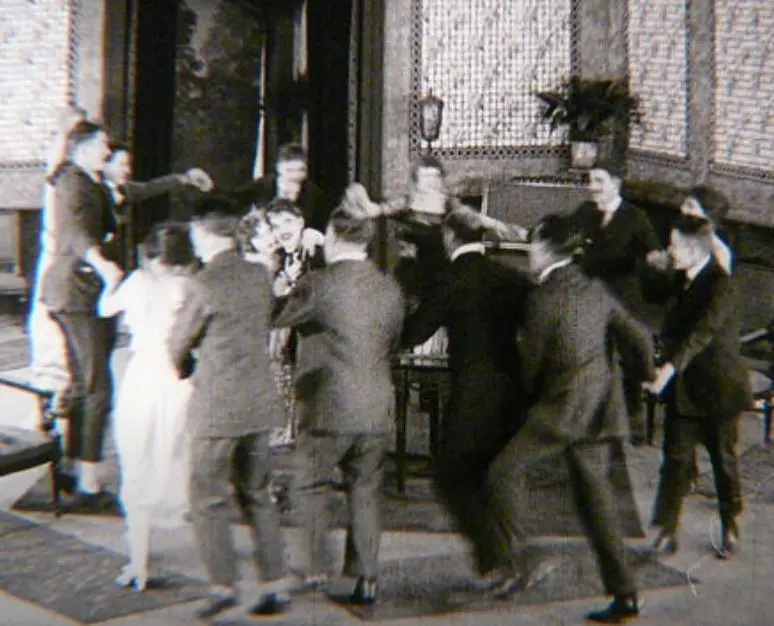
When comparing Daffy House to other works of the time, its unique position becomes clear. While Pay Me! deals with the gritty, transactional nature of human relationships, Daffy House treats marriage as a game of psychological endurance. It shares some of the high-stakes tension found in The Flying Torpedo, but replaces the threat of physical destruction with the threat of social and mental collapse. The film is less interested in the romance itself and more in the obstacles placed in its path—a theme also explored in Once Aboard the Lugger, albeit through a more nautical lens.
Furthermore, the father’s role as the architect of this chaos invites comparison to the manipulative figures in Not My Sister. However, in Daffy House, the manipulation is played for laughs, creating a tonal dissonance that is fascinating to unpack. The father isn't necessarily a villain in the traditional sense; he is a man using the tools of the modern age—the film studio—to preserve a traditional social order. It’s a reactionary impulse fueled by the most progressive technology of the day.
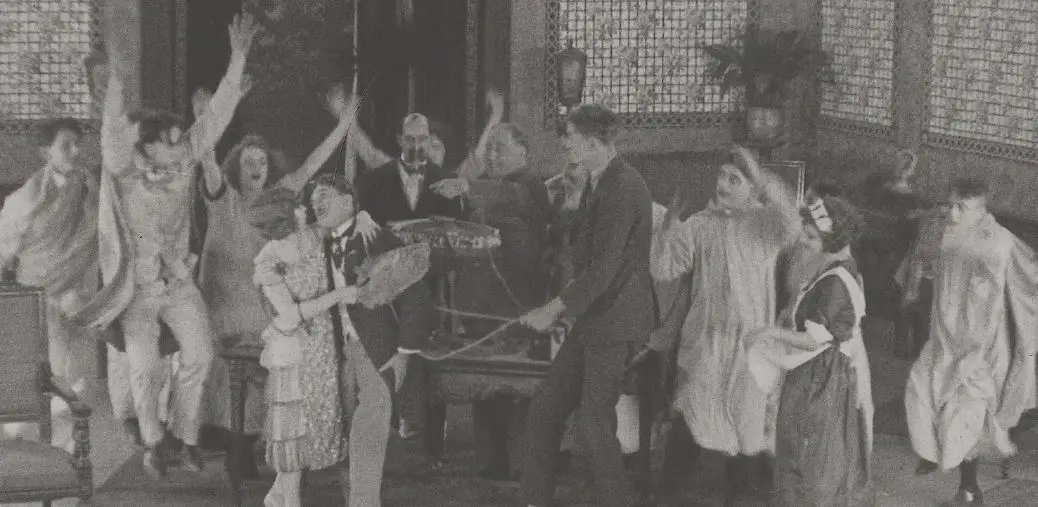
Elsa Clark brings a subtle complexity to the role of the daughter. While she is often the object of the suitor's affection, she is not a passive observer. There are moments where her expressions suggest she is in on the joke, or perhaps even the true mastermind behind her father’s elaborate scheme. Her presence provides a stark contrast to the histrionics of the hired actors, her calm demeanor acting as the eye of the storm. This nuance is reminiscent of the female leads in The Heart of Maryland, who often have to navigate complex male-driven conflicts with grace and hidden agency.
The pacing of Daffy House is relentless. Once the suitor enters the house, the film rarely pauses for breath. The gags are layered, often with multiple things happening in the background while the suitor reacts to a primary threat in the foreground. This density of action is something we see in The Lincoln Highwayman, but here it is used to create a sense of overwhelming sensory input. The suitor is not just being chased; he is being gaslit by his environment.
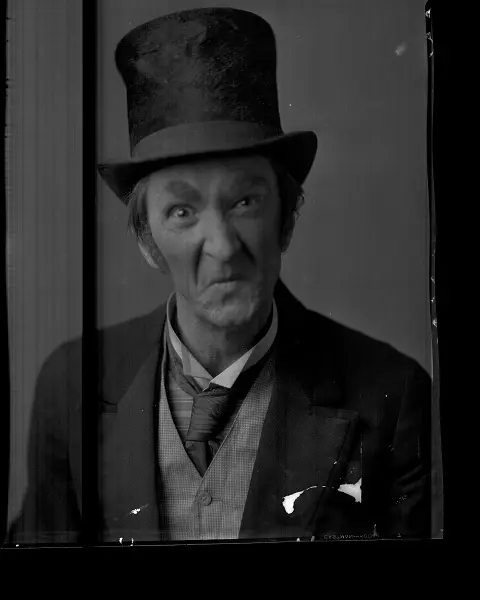
One particularly memorable sequence involves a dinner party where the food and the guests are equally unreliable. The choreography of the actors at the table is a masterclass in timing, with plates disappearing and chairs collapsing in a rhythmic pattern that borders on the musical. This level of precision is what separates Daffy House from the more haphazard slapstick of its contemporaries. It is a calculated chaos, much like the daring stunts in Over Niagara Falls, where every move must be perfect to achieve the desired effect.
At its core, Daffy House asks what it means to be "sane" in a world that is fundamentally deceptive. The suitor's struggle is to maintain his own sense of reality while everyone around him is dedicated to undermining it. This theme of social performance is a recurring one in silent cinema, appearing in different forms in On with the Dance and A Continental Girl. However, Daffy House takes it to its logical extreme. If reality can be manufactured in a studio, then how can we ever trust our own perceptions?
The film also touches on the class anxieties of the time. The suitor’s desire to marry into the family is met with a test that is essentially about his ability to handle the "madness" of the upper class or the creative class. This subtext adds a layer of social satire that elevates the film above mere buffoonery. It mirrors the fish-out-of-water dynamics in His Country Cousin, but replaces the rural/urban divide with a sane/madness divide.
Daffy House is a testament to the experimental spirit of early cinema. It is a film that refuses to be categorized, blending elements of romance, comedy, and psychological thriller into a singular, hallucinatory experience. While it may not have the name recognition of The Goddess, it occupies a vital space in the history of the medium. It is a reminder that even in its infancy, cinema was already questioning its own power to shape and distort the world.
In the end, the suitor’s journey through the Daffy House is a triumph of the human spirit—or at least a triumph of human stubbornness. By the time the credits roll, we are left wondering if the house was ever truly dismantled, or if the suitor simply became the latest actor to join the troupe. It is a haunting, hilarious, and deeply intelligent piece of filmmaking that deserves a place in the pantheon of silent greats. For those willing to step inside, the Daffy House offers a view of the world that is as distorted as it is revealing.
The legacy of such a film lies in its ability to make us laugh at the very things that frighten us: the loss of control, the failure of logic, and the terrifying possibility that our lives are being directed by a madman in a studio. Daffy House doesn't just provide entertainment; it provides a mirror to the beautiful, chaotic absurdity of the human condition.
IMDb 6.9
1919
Community
Log in to comment.