DbcultAccessing Vault...
Cult Review
Senior Film Conservator
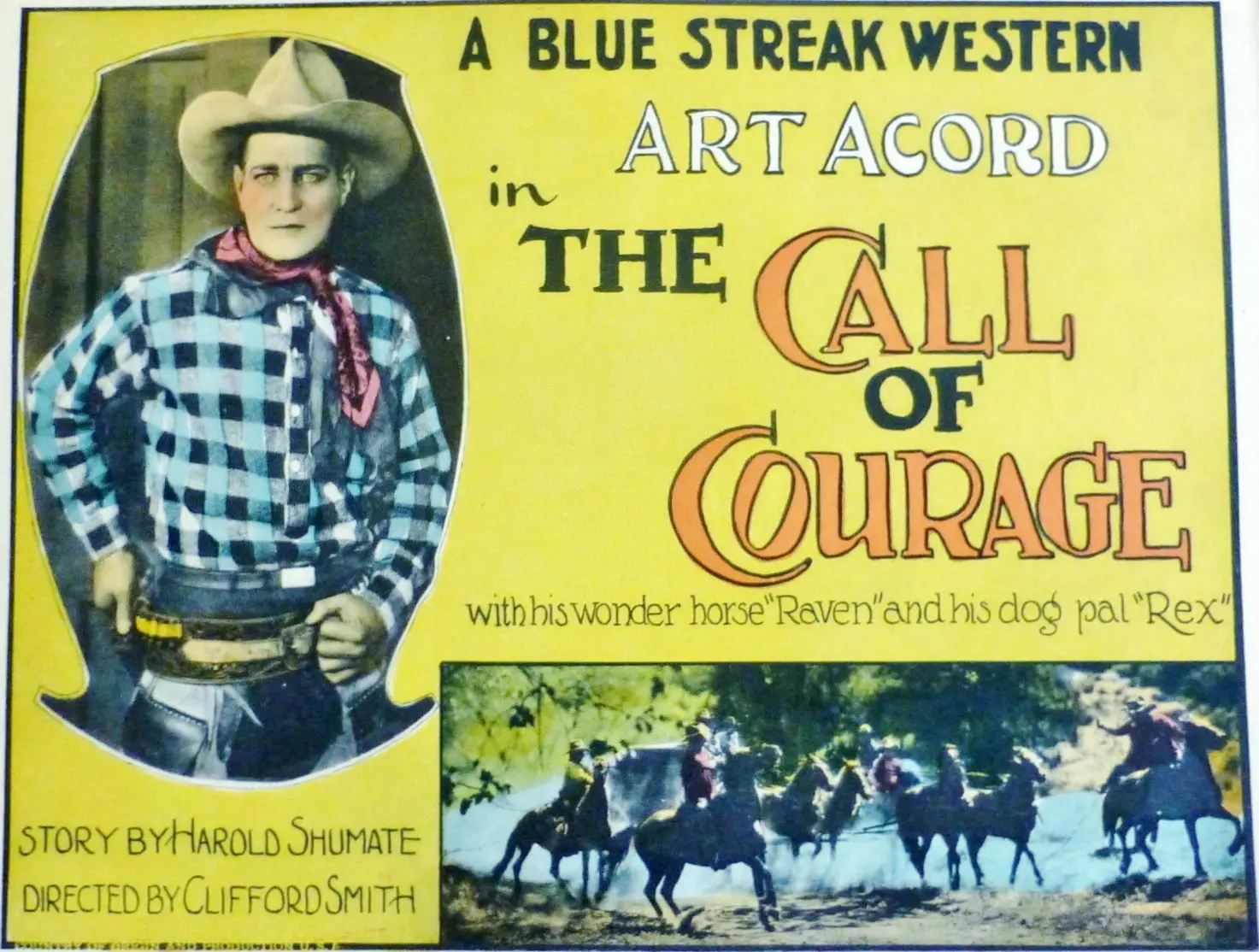
Is 'The Call of Courage' a Western worth unearthing from the annals of cinema history today? Short answer: yes, for specific audiences, but it comes with significant caveats. This film is a fascinating artifact for enthusiasts of early American Westerns, silent cinema, and those with a keen interest in the foundational narratives that shaped a genre. It is decidedly not for viewers seeking modern pacing, complex character studies, or polished production values.
At its core, 'The Call of Courage' delivers a straightforward, if somewhat rudimentary, tale of frontier justice and wrongful accusation. It's a film that demands a certain level of historical empathy from its audience, an understanding that its strengths lie not in contemporary polish but in its raw, unfiltered presentation of a classic archetype.
Let’s cut straight to it.
This film works because... it distills the essence of the classic Western revenge narrative into its purest form, delivering a compelling, if predictable, journey of a wrongly accused man seeking justice. Art Acord’s stoic performance, coupled with the authentic backdrop of the Old West, provides a tangible sense of rugged determination.
This film fails because... its pacing often drags, particularly in its expositional sequences, and the reliance on visual storytelling without the benefit of sound sometimes leaves character motivations feeling underdeveloped. Modern audiences will likely find its narrative simplicity and lack of intricate subplots to be a significant hurdle.
You should watch it if... you are a dedicated fan of silent cinema, a student of Western film history, or someone who appreciates the raw, unpolished charm of early filmmaking. It’s an essential watch for understanding the genre’s evolution, offering a glimpse into the era before sound irrevocably changed cinematic storytelling.
The narrative thrust of 'The Call of Courage' is as unyielding as the frontier itself. We are introduced to the Caldwell brothers, Steve and Sam, working the Hazelton ranch. Their lives are simple, defined by the rhythm of the land and the demands of their labor. This pastoral existence is shattered when Sam is brutally murdered, a sudden act of violence that ripples through the small community.
Immediately, suspicion falls upon Steve. It’s a classic setup: the innocent man framed, forced to flee the very justice system he implicitly trusts. But Steve Caldwell is no passive victim. His decision to evade capture isn’t an act of cowardice, but a defiant declaration of intent. He will not be a pawn in someone else’s game; he will find the real killer.
This premise, while familiar, gains a certain gravitas in the hands of Harold Shumate’s screenplay. It’s a primal quest for vindication, a personal crusade against a backdrop of dusty plains and rugged mountains. The film wisely grounds Steve's pursuit in tangible, albeit often simple, investigative steps, avoiding overly convenient plot devices.
The story progresses with Steve navigating a treacherous landscape, both physical and moral. He encounters figures who help and hinder, embodying the transient nature of alliances in the untamed West. It’s a journey that tests his resolve, transforming him from a suspected murderer into an active agent of his own fate. The film, in its silent grandeur, manages to convey the weight of his burden, even without spoken dialogue.
In silent cinema, acting is an entirely different beast. It relies on exaggerated expressions, precise body language, and an ability to convey internal turmoil through external physicality. Duke R. Lee, as Steve Caldwell, embodies this challenge with a performance that is both stoic and surprisingly nuanced.
Lee's portrayal of Steve is defined by a quiet intensity. His eyes, often narrowed in suspicion or determination, carry much of the emotional weight. There's a particular scene where Steve first discovers Sam's body; Lee’s reaction, a slow, dawning horror followed by a rigid resolve, speaks volumes without a single intertitle. It’s a masterclass in silent grief and burgeoning vengeance.
However, this stoicism, while effective for Steve's character arc, sometimes borders on the inaccessible. While it conveys strength, it occasionally limits the audience's emotional connection to his inner turmoil. We understand his drive, but we rarely feel the raw agony that might fuel such a desperate quest in a more expressive performance.
The supporting cast, while less developed, provides solid grounding. Art Acord, known for his Western roles, brings a familiar authenticity to his character, though his screen time is limited. It's the animal performers, Rex the Dog and Raven the Horse, who often steal the show, their loyalty and intelligence providing crucial plot points and moments of genuine warmth. Rex, in particular, demonstrates an uncanny ability to follow complex cues, a testament to early animal training in cinema.
One could argue that Rex is the true emotional anchor of the film, his unwavering companionship providing a stark contrast to the human deceit surrounding Steve. His presence is a surprising highlight, elevating otherwise functional scenes into something genuinely endearing. It’s an unconventional observation, but the dog's performance is arguably more consistent and emotionally resonant than some of the human supporting roles.
The direction in 'The Call of Courage' is functional, adhering to the conventions of early silent Westerns. The focus is on clear storytelling, establishing character motivations through action and reaction, and utilizing the vast landscapes to their full potential. There’s a commendable effort to use natural light and real locations, lending an undeniable authenticity to the proceedings.
The cinematography, while not groundbreaking by today's standards, effectively captures the grandeur and isolation of the American West. Wide shots of galloping horses across open plains, particularly one memorable sequence involving Steve's escape, emphasize the scale of his challenge and the raw beauty of the environment. These vistas serve as more than just backdrops; they are active participants in the drama, reflecting Steve's solitary struggle.
However, the camera work is often static, prioritizing a clear view of the action over dynamic visual storytelling. There are few close-ups that delve into character psychology, and the editing, while competent, lacks the rhythmic flow that would become a hallmark of later cinema. This is not a criticism of its era, but an observation for modern viewers: expect a more theatrical, less immersive visual experience.
One particularly impressive shot involves Steve riding away from the posse, the distant figures gradually shrinking against the vast horizon. It’s a simple visual, yet it powerfully conveys his desperate flight and the overwhelming odds against him. This kind of visual economy is a strength of the film, allowing the setting to speak volumes.
The pacing of 'The Call of Courage' is, to put it mildly, deliberate. This is a film that takes its time, allowing scenes to unfold without the rapid-fire cuts or constant narrative propulsion expected by contemporary audiences. Early silent films often adopted a theatrical rhythm, holding shots longer and relying on intertitles to convey dialogue and exposition. 'The Call of Courage' is no exception.
For those accustomed to modern blockbusters, this slow burn can be challenging. There are moments where the narrative momentum flags, particularly during investigative sequences that rely heavily on visual cues and less on dynamic interaction. However, this deliberate pace also allows for a deeper appreciation of the setting and the quiet determination of its protagonist.
The tone is consistently serious, befitting a tale of murder and revenge. There are few moments of levity, and the film maintains a somber, almost melancholic atmosphere throughout. This unwavering seriousness, while admirable in its commitment, can sometimes feel relentless. A touch more emotional variation might have allowed the audience to breathe and connect more deeply with the characters' experiences.
Despite its measured pace, the film does build to a satisfying, if somewhat predictable, climax. The final confrontation, while lacking the explosive action of modern Westerns, is earned through Steve’s arduous journey. It works. But it’s flawed. The tension is built more through the weight of injustice than through rapid action sequences.
Absolutely, but with a significant asterisk. 'The Call of Courage' is not a film for casual viewing. It is a piece of cinematic history, a window into the early days of a genre that would come to define American storytelling. For those interested in the evolution of film, the silent era, or the foundational tropes of the Western, it offers immense value.
It allows us to trace the lineage of countless revenge narratives, from this unassuming Western to more complex modern thrillers like Integritas or even the psychological depth of The Boy in Blue. Viewing 'The Call of Courage' reveals how enduring certain narrative structures are, even as the techniques for telling them have changed dramatically.
However, for the average viewer seeking entertainment without historical context, it might feel dated, slow, and visually unsophisticated. Its reliance on intertitles, its lack of sound, and its deliberate pacing require a different kind of engagement, one that modern audiences are rarely asked to provide.
My strong, debatable opinion here is that while many early Westerns suffer from an almost insurmountable datedness, 'The Call of Courage' retains a certain raw charm through its commitment to simple storytelling. It doesn't try to be more than it is, and in that honesty, it finds a quiet strength. It's not a forgotten masterpiece, but a sturdy foundation.
'The Call of Courage' is a film that asks for patience and rewards historical curiosity. It’s not a lost epic, nor is it a forgotten gem that will redefine your understanding of cinema. Instead, it’s a sturdy, foundational piece of the Western genre, a testament to the enduring power of a simple story well told, even without the benefit of sound. It showcases the raw talent of its lead and the nascent artistry of filmmaking in its early years.
For those willing to adjust their expectations and step back in time, 'The Call of Courage' offers a valuable, if somewhat unpolished, journey into the heart of the Old West. It's a testament to human resilience and the timeless pursuit of justice. Approach it not as a blockbuster, but as an archaeological find, and you'll find much to appreciate.
IMDb —
1920
Community
Log in to comment.