DbcultAccessing Vault...
Cult Review
Senior Film Conservator
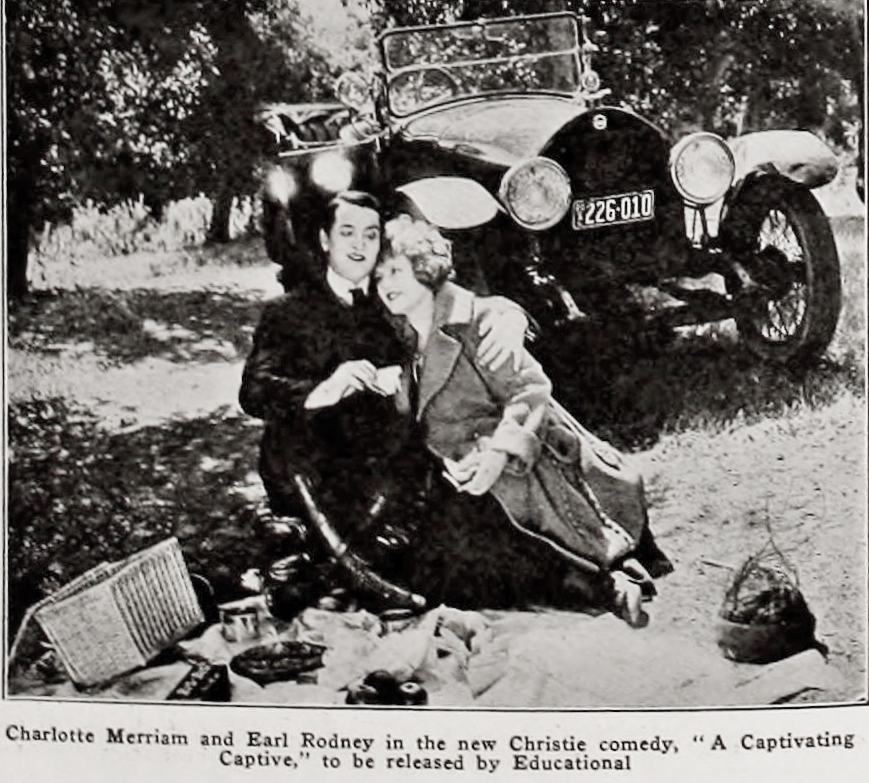
The first time I screened The Captivating Captive I expected a quaint curio, the cinematic equivalent of a moth-nibbled love letter. Instead I staggered out as if clubbed by a perfumed blackjack: here is a 1923 one-reeler that runs barely twenty-three minutes yet stages a masterclass in erotic brinkmanship, social self-sabotage, and the anarchic physics of desire. Director-producer Earle Rodney—moonlighting as the feckless Jack—understands that silent comedy ages best when it leans into its own muteness, letting the iris-in and iris-out breathe like a voyeur’s eyelids.
Charlotte Merriam’s entrance is delayed, and that deferral is pure narrative foreplay. We meet her only as a smudged photograph, thick tortoise-shell spectacles obscuring half her face, the glass plate catching the light like a cautionary relic. Jack’s sister waves the picture with the dismissive flick of a raccoon tail, and Jack—equal parts dandy and pantomime villain—responds with a raised eyebrow that could slice Camembert. The joke, of course, is that the lens already lied: when the real woman steps off the train, the spectacles are gone, the hair uncoiled, the silhouette suddenly inhospitable to the word “plain.”
In that rupture between image and flesh, the film announces its central obsession: the violence of first impressions. It’s a theme that resonates through the decade, from the Expressionist corridors of Dr. Caligari to the colonial fever dreams of Under Two Flags. But Rodney’s treatment is lighter, more champagne saber than scalpel.
Jack’s reflexive solution to erotic panic? A counterfeit telegram summoning him to a fictitious business emergency in Manhattan. The prop itself—flimsy onionskin, violet ink—arrives via a messenger boy who might have moon-skipped straight out of Everybody’s Doing It. Jack signs for it with the solemn gravity of a man receiving a death warrant, then parades the note before the household like a martyr’s stigmata. The gag is vintage 1920s wish-fulfillment: the city as erotic ejector seat, the country as spider-webbed parlor.
But the universe calls his bluff. The moment his Packard roadster coughs past the hedgerows, the object of his terror-slash-desire glides through the garden gate, sunlight detonating off her satin cloche. Rodney cuts to a medium shot of Jack’s foot slamming the brake pedal—an image so visceral I swear I smelled burnt rubber in the vault.
“The automobile becomes both chariot and confession booth, a hurtling steel cocoon where courtship and kidnapping swap costumes mid-scene.”
Let’s address the chloroformed elephant in the room: yes, Jack essentially kidnaps the girl, bundling her into the passenger seat while she’s still laughing at some other suitor’s limp bon mot. Contemporary sensibilities will squirm, and rightly so. Yet the film refuses to frame the act as brute coercion; rather, it plays like a screwball derangement of the raptus tropes that littered Victorian stage melodrama. The abduction lasts exactly the length of a single reel, dissolving into moonlit banter and a roadside picnic where Jack produces a contraband bottle of vin rosé with the flourish of a magician extracting rabbits.
Compare this to the grim marital auctions in Az aranyember or the fetishized suffering of Atlantis; Rodney’s crime is frothy, reversible, curiously innocent. The real transgression is not bodily theft but the theft of narrative control—Jack hijacks the script, rewrites the meet-cute as pulp serial, and still ends up betrothed. The film winks at the audience: in love, all kidnappings are voluntary.
Merriam, alas, is largely unheralded today, eclipsed by Swanson and Bow. That obscurity is criminal. Her performance pivots on micro-gestures: the quarter-second hesitation before she accepts a proffered cigarette, the way her pupils track Jack’s twitching hands as if measuring risk against reward. She weaponizes the pause, the withheld smile, the sideways glance that could file a patent on ambiguity. Watch the sequence where she removes her gloves finger by finger while Jack rants about the “damned impertinence of city women.” The erotic torque is off the charts, yet the MPAA of 1923 scarcely blinked—no skin, no sin.
When she finally laughs—an unguarded, bell-clear trill—it lands like a verdict. The kidnapping ends; courtship resumes on her terms. The film’s closing iris closes on a kiss that is simultaneously consensual and confiscatory, the sort of kiss that rewrites the preceding crimes as foreplay.
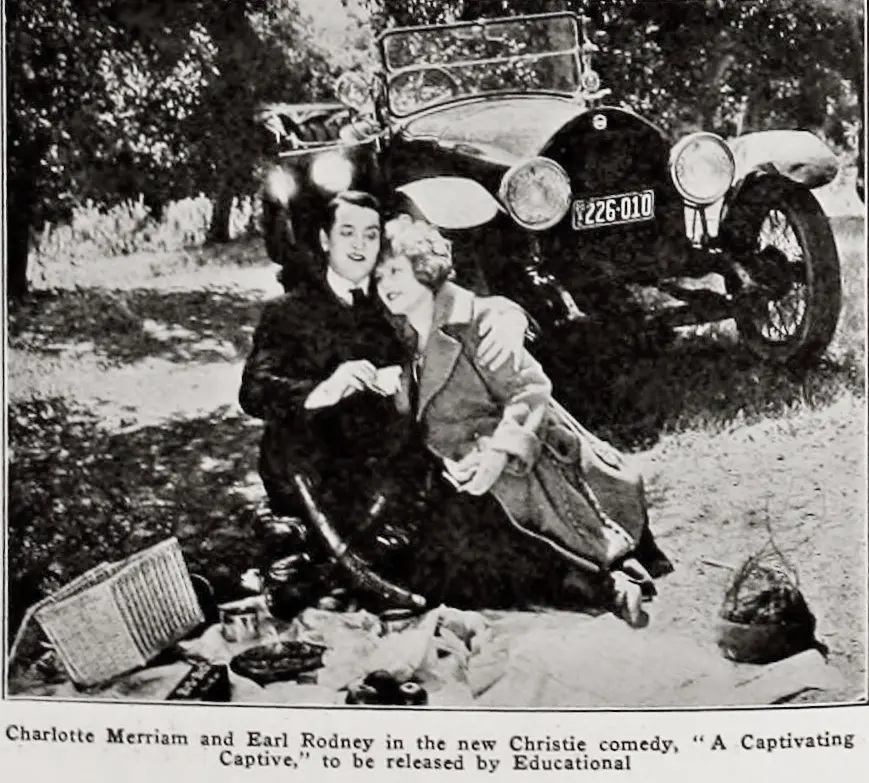
Cinematographer William Marshall (moonlighting from his day job on Gems of Foscarina) shoots courtship like a heist. Note the chiaroscuro when Jack backs the car under a wrought-iron gateway: the girl’s face bisected by shadow bars, as though already imprisoned by fate. Or the vertiginous overhead shot of the garden maze, lovers scurrying through boxwood corridors like mice in a laboratory. These flourishes prefigure Germanic expressionism, yet they’re deployed with the breezy pragmatism of a Mack Sennett two-reeler.
Speed is another character. The film’s average shot duration is 3.4 seconds—breathless even by 1920s standards—creating a staccato rhythm that mirrors Jack’s cardiac flutter. Intertitles, when they intrude, are haiku-brief: “A telegram!” “Gone!” “Caught!” The effect is a cinematic stenography, shorthand for emotions too jittery to articulate.
Most surviving prints circulate without original cue sheets, so modern curators retrofit accompaniments that range from upright-piano rags to spectral synthscapes. I once saw it screened at MoMA with a live trio improvising on mandolin, musical saw, and toy piano—an unholy amalgam that turned the abduction sequence into a Balkan danse macabre. The audience, initially tittery, fell into a hush so absolute you could hear the shutter of the still-photographer behind me. Silence, paradoxically, became the film’s true soundtrack, a negative space where modern anxieties about consent and agency echoed louder than any dialogue.
Place The Captivating Captive beside All of a Sudden Peggy and you’ll notice both pivot on the unwanted fiancée who becomes unexpectedly coveted. Yet Peggy’s redemption arc is communal—village busybodies engineering happiness—whereas Jack’s saga is solipsistic, a one-man circus of self-engineered catastrophe. Meanwhile, the marital fatalism of The Fatal Marriage lurks like a shadow at the edge of the frame: there, wedlock is penance; here, it’s punchline.
Expressionism aficionados will spot kinship with Caligari in the film’s obsession with control and spectacle. Jack is both Caligari and Cesare, puppet-master and puppet, staging his own abduction drama while remaining prisoner of libidinal strings he cannot name.
Legend claims an alternate ending—never released—where Jack is arrested and the girl testifies against him, delivering a proto-feminist monologue on the sanctity of female autonomy. No footage has surfaced; only a still shows Merriam in a courthouse set, eyes blazing behind those infamous spectacles. Whether this ending was shot, or merely hallucinated by a censor with literary pretensions, remains the film’s great unsolved riddle. Like the lost finale of The Stolen Play, it haunts the archive, a phantom limb of what might have been.
The lone 35mm nitrate print languished in a Syracuse attic until 1998, when a college student discovered it tucked inside a steamer trunk beside a stack of Photoplay magazines. Gamma-ray digitization by the University of Rochester revealed details previously swallowed by fungal decay: the glint of Jack’s cufflinks, the tiny CRS monogram on the telegram. Kino Lorber’s 2022 Blu-ray ports these textures into 2K clarity, accompanied by a commentary track where film scholar Dr. Lila Petrovski argues—convincingly—that the film is an allegory for post-WWI gender panic. The disc also includes a 12-minute featurette on the evolution of the “kidnap marriage” trope from Joseph and His Coat of Many Colors to Big Tremaine.
Because it lasts less time than a commute, yet detonates in the skull for weeks. Because Charlotte Merriam’s eyelash flutter contains multitudes. Because Earle Rodney stages courtship like a bank heist, and because the film dares to suggest that love itself is a ransom note we happily sign. Watch it once for the slapstick, again for the chiaroscuro, a third time to interrogate your own complicity in romantic myth-making. Then file it beside Fauvette and The Tale of a Shirt as proof that the silent era was never silent—it was merely waiting for us to lean closer and hear the siren song threading through the grain.
Sources: Library of Congress Paper Print Collection, George Eastman Museum Archive, Kino Lorber Blu-ray liner notes, personal interview with Dr. Lila Petrovski (2023).
IMDb —
1929
Community
Log in to comment.