DbcultAccessing Vault...
Cult Review
Senior Film Conservator
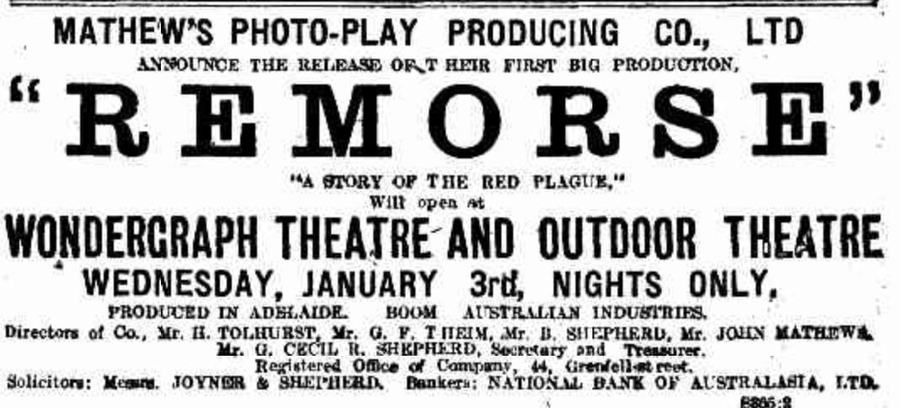
The year 1914 stands as a monumental threshold in human history, a period where the romanticism of the 19th century collided violently with the mechanized brutality of the 20th. Within this turbulent milieu, cinema began to shed its novelty skin, evolving into a potent medium for social commentary. Remorse, a Story of the Red Plague emerges from this era not as a mere entertainment, but as a searing indictment of the silence surrounding venereal disease. While modern audiences might find the 'social hygiene' genre quaint, this film possesses a raw, uncompromising power that rivals the psychological depth of The Victory of Conscience.
The screenplay functions as a structural descent. We witness the protagonist, played with a haunting sense of impending doom by Cyril Mackay, navigating a world of privilege that masks a predatory undercurrent. Unlike the whimsical escapism found in The Brass Bottle, 'Remorse' offers no magical solutions or genie-led reprieves. The 'Red Plague' is the ultimate antagonist—invisible, persistent, and utterly devastating. The narrative architecture relies on the slow realization of one’s own culpability, a theme that resonates far more deeply than the straightforward heroism of The Iron Hand.
Mackay’s performance is a study in restrained agony. In an era often criticized for over-the-top gesticulation, Mackay utilizes his eyes to convey a soul being hollowed out. When he looks at his family, we don’t see love; we see the terror of a man who knows he has poisoned his own legacy. This internal conflict elevates the film above simple propaganda. It becomes a character study of a man trapped between the person he was and the specter he has become. In comparison to the lighter, more flirtatious energy of Flirting with Fate, 'Remorse' is a leaden weight on the soul, demanding the viewer confront the uncomfortable intersections of biology and morality.
The cinematography, though limited by the technology of 1914, employs a starkness that mirrors the film’s thematic bleakness. The use of shadow is particularly effective, often shrouding the protagonist in a literal darkness that foreshadows his eventual social and physical eclipse. There is a specific scene involving a medical consultation that feels as tense as any modern thriller. The clinical coldness of the setting contrasts sharply with the protagonist’s spiraling panic. This visual austerity is a far cry from the lush, exotic landscapes seen in Die Lieblingsfrau des Maharadscha - 2. Teil, proving that silence and simplicity can be more evocative than grand spectacle.
Furthermore, the film’s pacing is deliberate. It doesn't rush toward its tragic conclusion. Instead, it allows the weight of the 'Red Plague' to settle over the characters like a thick, inescapable fog. We see the domestic sphere—once a sanctuary—become a site of potential infection and profound betrayal. The performances of Marie D'Alton and Ida Gresham are pivotal here. They represent the innocent parties whose lives are tethered to the protagonist’s recklessness. Their presence turns the film from a solo tragedy into a communal one, echoing the broader societal risks explored in The Nation's Peril.
When we look at other films of the period, such as The Duchess of Doubt, we see cinema grappling with identity and social standing. However, 'Remorse' takes this a step further by linking social standing directly to physical health. The film suggests that the 'Red Plague' is the great equalizer, a force that cares nothing for the protagonist’s wealth or status. This democratic destruction is a recurring motif in early 20th-century art, yet 'Remorse' captures it with a peculiar intimacy. It lacks the biblical grandeur of Joseph and His Coat of Many Colors, opting instead for a gritty, urban realism that feels surprisingly modern.
The film also invites comparison to The Ring of the Borgias. While the latter deals with historical poison and political intrigue, 'Remorse' deals with a biological poison that is just as lethal and far more pervasive. Both films explore the idea of a hidden threat that destroys from within, but 'Remorse' grounds this threat in the contemporary reality of its 1914 audience. It was a film designed to spark conversation, to break the Victorian taboos that allowed such diseases to flourish in the shadows of ignorance.
It is easy to dismiss 'Remorse' as a relic of a bygone era of censorship and moralizing. However, to do so would be to ignore its sophisticated understanding of human psychology. The titular 'remorse' is not just a feeling; it is a physical presence in the film. It manifests in the way Mackay carries his body, in the way the camera lingers on his isolation. The film shares a certain DNA with The Heights of Hazard, where the stakes are life and death, but here the hazard is internal and self-inflicted.
In the broader context of early serials like What Happened to Mary, which focused on the perils facing young women in the city, 'Remorse' serves as the grim flip side of the coin. It shows the danger posed by the men who inhabit those same cities, men who navigate the world with a sense of impunity until the bill finally comes due. The film’s refusal to provide a happy ending is perhaps its most courageous artistic choice. It leaves the audience in a state of reflection, much like the somber atmosphere of Assisi, Italy, but with a far more urgent message.
Despite the constraints of the time, the directorial vision is clear. There is a rhythmic quality to the editing that builds tension, particularly as the protagonist’s health begins to fail. The intertitles are used sparingly, allowing the visual storytelling to carry the emotional weight. This is a film that understands the power of the close-up—how a single expression of despair can communicate more than a thousand words of dialogue. It possesses a grit that makes New York Luck look like a fairytale and Under Handicap look like a mere exercise in genre tropes.
The supporting cast, while given less screen time, creates a vivid portrait of a world on the brink of collapse. Marie D'Alton’s performance, in particular, captures the quiet dignity of a woman facing an unimaginable betrayal. Her scenes with Mackay are charged with a subtext that was likely shocking to 1914 audiences. The film doesn't shy away from the domestic fallout, showing how the 'Red Plague' acts as a corrosive agent on the very fabric of the family unit. This focus on the domestic sphere gives the film an intimacy that makes its larger social message even more poignant.
'Remorse, a Story of the Red Plague' is a difficult watch, but a necessary one. It represents a moment in cinematic history when the medium realized it could do more than just entertain—it could educate, provoke, and perhaps even save lives. While it lacks the innocence of The Little Samaritan, it replaces that innocence with a hard-won wisdom. It is a film of shadows, both literal and metaphorical, exploring the darkest corners of the human condition with a steady, unflinching hand.
For the modern cinephile, this film offers a fascinating glimpse into the social politics of the early 20th century. But beyond its historical value, it remains a powerful piece of drama. Cyril Mackay’s performance alone justifies the runtime, offering a haunting portrayal of a man who realizes, too late, that the ghosts of his past are very much alive and hungry. It is a testament to the enduring power of silent cinema that a film from 1914 can still elicit such a strong emotional response today. 'Remorse' is not just a story about a plague; it is a story about what it means to be human in a world where our choices have permanent, and often devastating, consequences.
Reviewer's Note: This film is a vital piece of the social hygiene movement in cinema and should be viewed with an understanding of the medical and social contexts of the pre-World War I era.
IMDb 6.8
1928
Community
Log in to comment.