DbcultAccessing Vault...
Cult Review
Senior Film Conservator
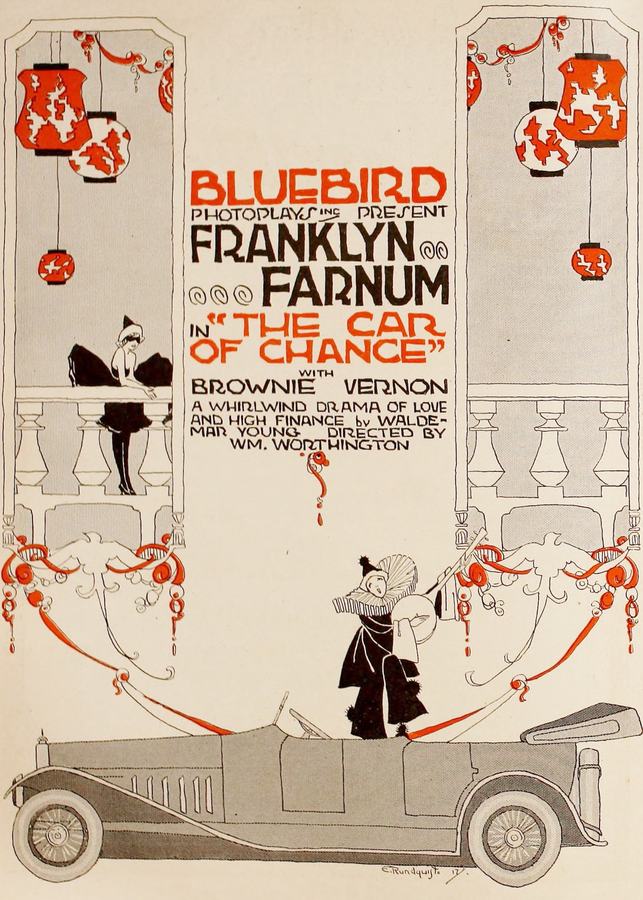
In the annals of cinematic history, certain narratives, despite their initial impact, sometimes recede into the shadows, awaiting rediscovery. Such is the case with The Car of Chance, a vibrant silent film that, upon closer inspection, reveals itself as far more than a mere period piece. This picture, penned by the collaborative talents of Eugene B. Lewis and Waldemar Young, is a compelling social commentary wrapped in a delightful romantic comedy, showcasing the burgeoning entrepreneurial spirit of its era alongside timeless themes of love, class struggle, and personal triumph. It’s a fascinating glimpse into the nascent American dream, where gumption and innovation could, against all odds, overturn established power structures.
At its core, the film presents a classic underdog narrative, but with a distinctly modern twist for its time. We are introduced to Arnold Baird, portrayed with a light-hearted yet determined air by Franklyn Farnum. Baird's inheritance is less a windfall and more a whimsical challenge: a seven-passenger motor and a paltry $100, earmarked exclusively for fuel or repairs. This isn't the grand legacy one might expect from a scion, but Baird, unburdened by bitterness, embraces his peculiar lot. Instead of despairing, he sees opportunity, transforming his meager assets into the foundation of a revolutionary 'jitney bus' line. This act of resourceful defiance immediately sets the tone for a story that champions ingenuity over inherited wealth, a theme that resonates even today in discussions about economic mobility and the spirit of innovation.
Baird's journey, however, is complicated by matters of the heart and the rigid societal expectations of the day. His affection for Ruth Bennett, played by the captivating Agnes Vernon, is met with vehement disapproval from her father, James Bennett (H.J. Bennett), the formidable general manager of the Consolidated Traction Co. Bennett, a man of considerable influence and rigid class consciousness, views Baird as a pauper, an unsuitable match for his daughter, and an affront to his family's social aspirations. His disdain is not merely personal; it's deeply intertwined with his wife's (Molly Malone) fervent desire for social climbing, a goal she believes can only be achieved by marrying Ruth to the influential Wm. Mott-Smith (Walter Belasco), who conveniently controls the very traction company Bennett manages.
This dynamic immediately establishes a compelling love triangle, not merely between individuals but between competing ideologies: authentic affection versus cynical social strategizing. Ruth, refreshingly, is no passive pawn. Her spirited rejection of Mott-Smith leaves no ambiguity about her feelings, cementing her as an active participant in her own destiny. Her clandestine meetings with Baird, where she's privy to his audacious jitney-bus plans, underscore her independent spirit and her unwavering belief in his vision. This portrayal of Ruth as a woman with agency, challenging the patriarchal norms of her time, is a noteworthy element of the film, elevating it beyond a simple boy-meets-girl narrative.
The narrative gains significant traction with the introduction of Israel Helmstone, a powerful labor leader, whose demands for increased pay for Consolidated Traction Co. employees are summarily dismissed by Bennett. This refusal ignites a powder keg, leading Helmstone to seek counsel from the most unlikely ally: Arnold Baird. This alliance between the champion of labor and the burgeoning entrepreneur is a stroke of narrative genius, demonstrating how disparate forces can converge against a common, entrenched adversary. It's a nuanced exploration of economic power dynamics, revealing that even in the early 20th century, the lines between 'capital' and 'labor' could be blurred by a shared opposition to monopolistic control.
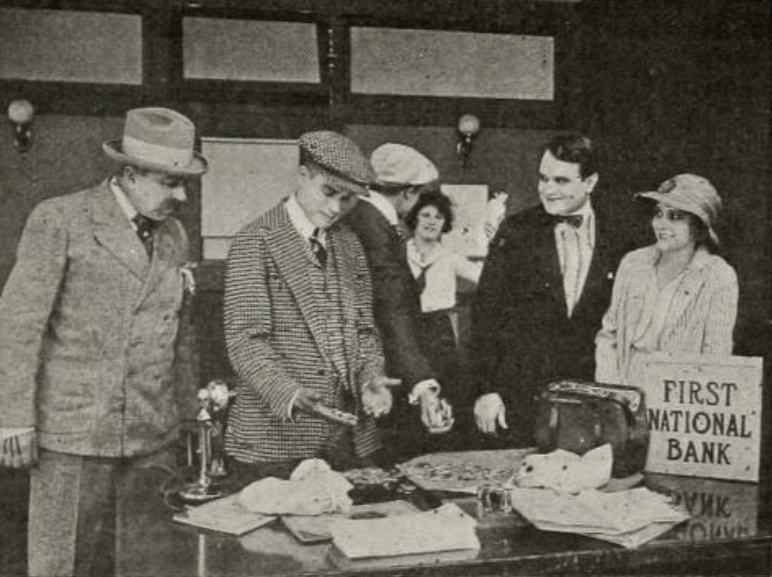
Crucially, this alliance is bolstered by Wanda Helmstone (Helen Wright), Israel's daughter and, serendipitously, Wm. Mott-Smith's stenographer. Her access to inside information becomes a pivotal plot device, exposing the vulnerabilities of Bennett's position. This element adds a layer of espionage and strategic maneuvering, transforming the conflict from a mere labor dispute into a full-blown corporate and social skirmish. The impending car strike, which threatens to paralyze the city, becomes the perfect storm for Baird's audacious counter-plan.
The morning after the strike is called, the city awakens to a new reality: Baird's "Social Rapid Transit Company." This isn't just a business venture; it's a social phenomenon. Baird's society pals, including Mark Fenton and Harry De More, lend their opulent limousines to the cause, transforming luxury vehicles into public transport. This unprecedented act of solidarity, blurring the lines between social strata, is a brilliant commentary on the power of collective action and public goodwill. The consternation of Mott-Smith and Bennett is palpable, as their monopoly is not merely challenged but utterly circumvented by a grassroots, yet socially elevated, alternative.
The public's immediate preference for these 'limousine jitneys' over the strike-ridden traction company lines is the ultimate validation of Baird's vision. When strikebreakers are eventually called in, they find themselves with no passengers, their efforts rendered futile by popular demand. This sequence is a powerful visual metaphor for the shifting tides of public opinion and the inherent weakness of a system that fails to serve its constituents. It echoes sentiments found in other social dramas of the era, such as The Streets of Illusion, which similarly explored the fragility of established orders when confronted by emergent realities.
As Bennett's empire crumbles and he cries for mercy, Baird emerges not just as a victor but as an intermediary, dictating the terms of surrender. But before the final agreement, fate intercedes with a dramatic flourish: Baird is called upon to rescue Wanda Helmstone from the clutches of a drunken Mott-Smith, a man whose moral depravity starkly contrasts with Baird's heroic integrity. This moment solidifies Baird's character, proving his worthiness not just as an entrepreneur and a lover, but as a man of principle. It's a classic silent film trope, where the villain's true colors are exposed in a moment of crisis, reinforcing the hero's virtue. This kind of moral clarity was a common thread in films like Heart and Soul, where virtue ultimately triumphed over vice.
Baird's terms for settling with Bennett are audacious and utterly satisfying. He demands not just a financial recompense of $10,000 a year, but a position as assistant general manager within the very company he brought to its knees. This is a masterstroke, symbolizing not just a personal victory but a systemic shift, integrating the disruptive innovator into the establishment he challenged. The coup de grâce, however, is his demand for a six-month vacation, to be enjoyed as a honeymoon with Ruth. This final condition beautifully intertwines his personal happiness with his professional triumph, illustrating that true fortune encompasses both love and career, on one's own terms.
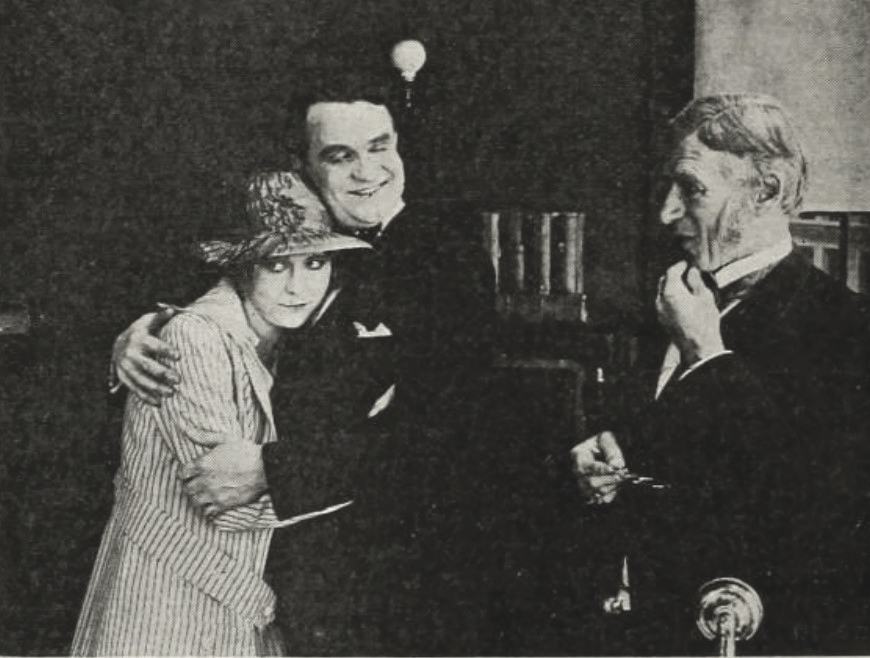
The Car of Chance, though a product of its time, offers surprisingly modern insights into social dynamics, economic disruption, and personal agency. The performances, particularly from Franklyn Farnum as the charismatic Baird and Agnes Vernon as the resolute Ruth, anchor the narrative with emotional depth and engaging charisma. The writers, Eugene B. Lewis and Waldemar Young, crafted a narrative that is both entertaining and thought-provoking, avoiding simplistic solutions while celebrating individual initiative. It’s a film that, much like Miss Petticoats or Half a Rogue, uses the framework of romance to delve into broader societal critiques.
The film's depiction of the 'jitney bus' movement is particularly noteworthy. Jitneys were a real phenomenon in the early 20th century, a spontaneous, unregulated form of public transport that emerged in response to inadequate or expensive streetcar services. Their rise and eventual suppression by established traction companies represent a fascinating chapter in urban history and the ongoing tension between innovation and regulation. The Car of Chance captures this historical moment with verve, making it a valuable cultural artifact in addition to its narrative merits. It reflects a period of immense social and technological change, where the automobile was rapidly reshaping urban life and challenging existing infrastructures.
Watching The Car of Chance today is an exercise in both historical appreciation and timeless entertainment. It reminds us that the struggle for fairness, the pursuit of love, and the power of a single idea to upend an entire industry are themes that transcend generations and cinematic eras. The film's vibrant energy, characteristic of early American cinema, coupled with its well-structured plot and engaging characters, makes it a compelling watch. It is a testament to the fact that even without spoken dialogue, the human spirit, its triumphs, and its tribulations, can be communicated with profound clarity and dramatic impact. This film, in its quiet yet powerful way, truly offers a chance to reflect on how far we’ve come, and perhaps, how little some fundamental human desires have changed.
The cast, including the aforementioned Franklyn Farnum and Agnes Vernon, along with the supporting turns by Mark Fenton, Walter Belasco, Harry De More, Helen Wright, Molly Malone, and H.J. Bennett, collectively bring this vibrant world to life. Their nuanced expressions and physical acting, crucial for the silent era, convey a spectrum of emotions from lightheartedness to grave consternation, making the narrative accessible and engaging. The collaboration between writers Eugene B. Lewis and Waldemar Young is evident in the film's brisk pacing and the satisfying arc of its characters. While comparisons to grand historical epics like The Battle of Trafalgar or profound psychological dramas such as Peer Gynt might seem disparate, The Car of Chance shares with them a commitment to telling a compelling story, albeit on a more intimate, yet socially resonant, scale. Its narrative, though less overtly dramatic than I tre moschettieri, nevertheless captures a spirit of adventure and defiance that is equally captivating.
Ultimately, The Car of Chance is more than just a forgotten film; it's a vibrant snapshot of a moment when the individual could still challenge the monolith, when love could conquer class, and when a simple motor and a hundred dollars could truly change one's destiny. It's a reminder of cinema's enduring power to reflect and shape societal narratives, making it a valuable piece for any serious film enthusiast or historian exploring the richness of the silent era. It exemplifies the era's optimistic belief in progress and the individual's capacity to forge their own path, much like the independent spirit seen in Daughter of Maryland or the social critiques inherent in Ingeborg Holm. A true cinematic rediscovery, it deserves its moment in the sun, proving that even a small inheritance, when combined with ingenuity and a dash of romance, can lead to monumental change.
IMDb 5.3
1933
Community
Log in to comment.