DbcultAccessing Vault...
Cult Review
Senior Film Conservator
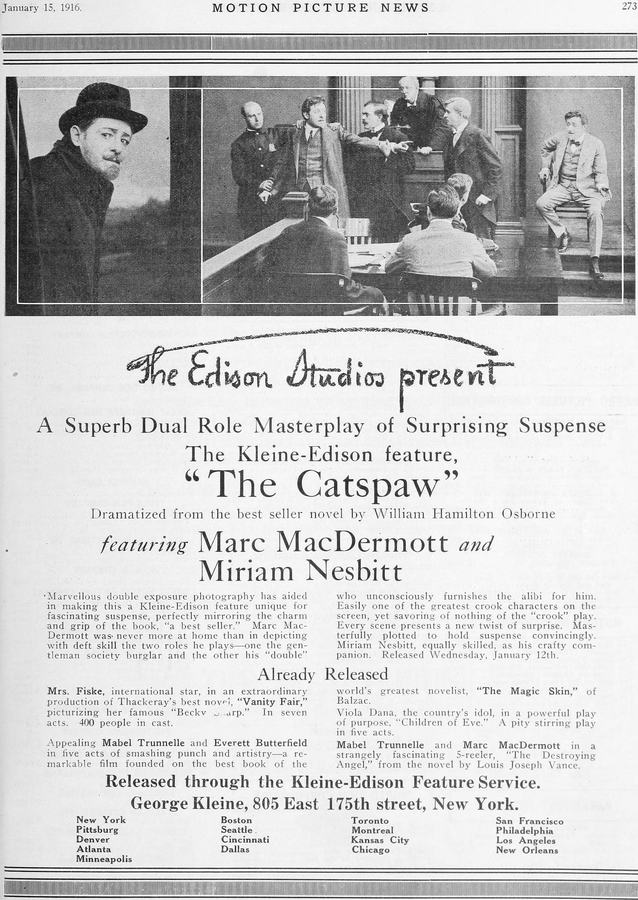
The cinematic landscape of the early 20th century, often characterized by its nascent exploration of narrative complexity, occasionally yielded a gem of intricate plotting and psychological depth. "The Catspaw" (1916), a silent film helmed by an uncredited director and penned by William Hamilton Osborne, stands as a testament to this burgeoning sophistication, weaving a tale of elaborate deception, moral ambiguity, and the perilous dance between appearance and reality. Set against the seemingly placid backdrop of Milville, a town secretly festering with corruption, the narrative unfurls with the arrival of Kittredge St. John, a figure whose very presence hints at a past shadowed by intrigue and a future brimming with audacious designs. His reunion with Roxane Bellairs, an old confederate whose shrewdness rivals his own, ignites the central conflict: a shared, albeit covert, mission to "clean up" the town. This premise immediately elevates "The Catspaw" beyond a simple crime drama, positing it as a societal critique wrapped in the guise of a thrilling caper.
Kittredge's strategy, however, is not merely audacious; it is a masterclass in misdirection, a scheme so meticulously crafted that he guards its full scope even from Roxane. The linchpin of his plan is the employment of a doppelgänger, a cultured gentleman bearing an uncanny resemblance to Kittredge himself. This double is tasked with a deceptively simple role: to serve as Kittredge St. John at social functions, a public face designed to divert scrutiny while the true Kittredge operates in the shadows. This ingenious device immediately brings to mind other tales of mistaken identity and dual roles, albeit often with more comedic intent or simpler motivations. Here, the double is not just a plot device but a living, breathing component of a grand deception, a human shield in a war against unseen forces. Roxane, meanwhile, plays her part with equal aplomb, her charm and strategic acumen allowing her to insinuate herself into the good graces of Milville's most influential figures: Major Holbrook and Mr. Bonwit, a key player at the Milville bank. Her infiltration is crucial, a delicate ballet of manipulation designed to gather intelligence and perhaps even set the stage for the inevitable confrontation.
The social fabric of Milville, seemingly genteel and respectable, becomes a stage for Kittredge's machinations, culminating in Mrs. Shackleton's lavish ball. This event, a microcosm of the town's elite, serves as a crucible where the carefully constructed illusion begins to encounter unforeseen pressures. It is here that the double, fulfilling his social duties, finds himself ensnared by the genuine affections of Dorothy Paget. This burgeoning romance, innocent in itself, introduces an unpredictable human element into Kittredge's cold, calculated scheme. The double's departure from the ball with Major Holbrook for a game of cards, a seemingly innocuous detail, becomes a crucial pivot point, providing him with an alibi that will later prove invaluable.
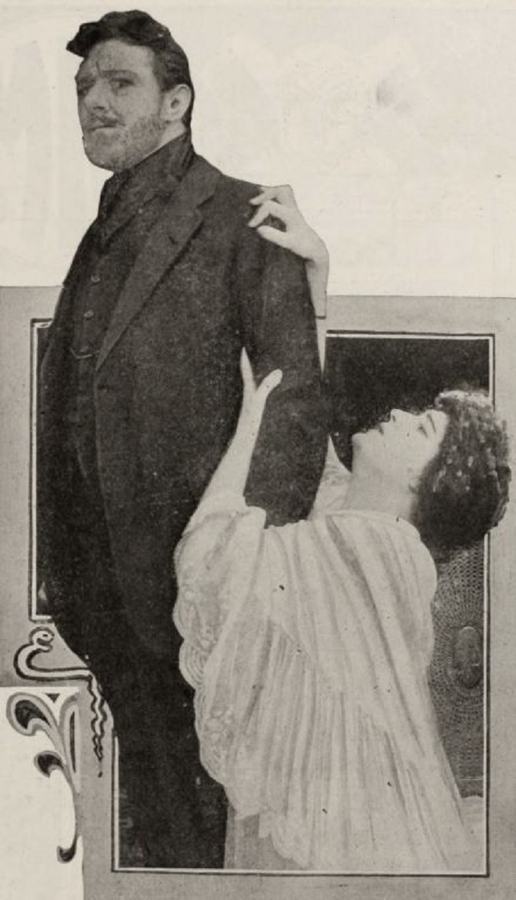
Roxane, observing the undeniable chemistry between the double and Dorothy, is consumed by a fierce jealousy. Her emotional response, predicated on the mistaken belief that the man is Kittredge, underscores the profound danger of deception: it not only misleads the public but can also wound those closest to the orchestrator. Her personal stake in Kittredge's identity, fueled by a complex mix of professional loyalty and romantic attachment, adds a layer of tragic irony to the unfolding drama. This internal conflict, conveyed through the expressive acting prevalent in silent films, would have been a highlight of her performance.
The night of the ball also witnesses the first major strike against Milville's corrupt underbelly: the audacious robbery of the Milville bank. Detectives, following the scant clues, quickly identify Kittredge St. John as the prime suspect. The subsequent arrest of the double, a man unwittingly caught in a web not of his own making, heightens the dramatic tension. Yet, Major Holbrook's steadfast testimony, confirming the double's presence at the card game, provides an irrefutable alibi, exposing the inherent flaws in a system that relies solely on visual identification. This sequence cleverly exploits the theme of identity, demonstrating how easily appearances can be manipulated and how swiftly justice can be misdirected when a doppelgänger is in play.
As the plot thickens, the romantic subplot involving Roxane takes a darker, more cynical turn. Mr. Bonwit, the influential bank official, utterly smitten by Roxane's cunning allure, lavishes upon her a veritable fortune in gifts and money. This relationship, seemingly a genuine romance, is in fact a calculated maneuver by Roxane, a further entrenchment within the very establishment Kittredge seeks to dismantle. The announcement of their engagement, celebrated with another grand dinner party at Mrs. Shackleton's, underscores the pervasive nature of deceit. The façade of respectability, both for Roxane and for Milville's elite, is maintained even as the foundations of truth begin to crumble beneath them.
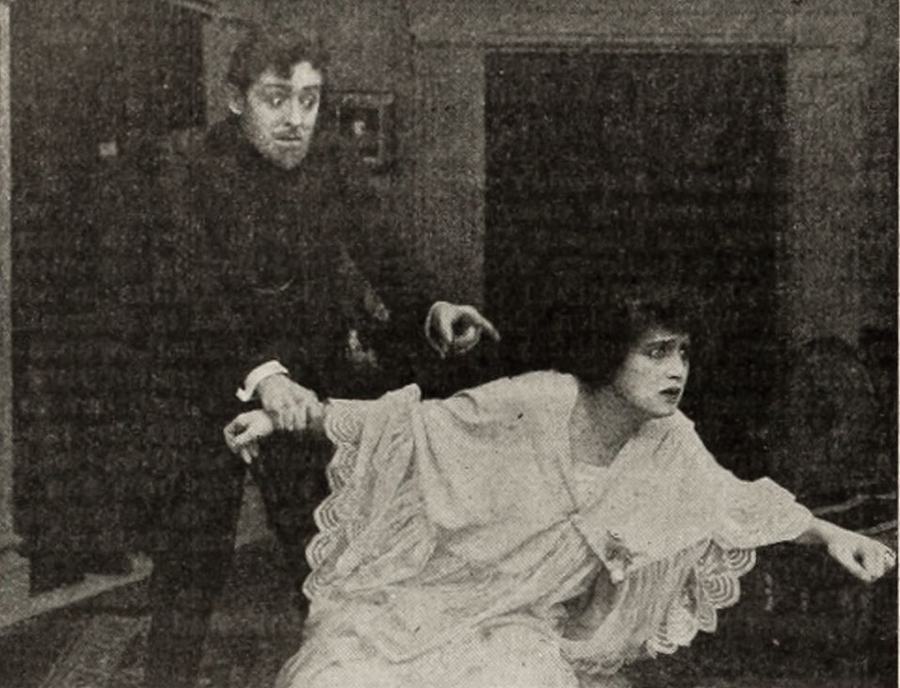
During this celebratory dinner, the narrative delivers another jolt of suspense. While the guests are absorbed in their meal, another audacious robbery unfolds, this time targeting Mrs. Shackleton's residence itself. A maid, stumbling upon Kittredge at the safe, lets out a piercing scream of discovery. The true Kittredge, the orchestrator of all this chaos, is momentarily exposed. His swift escape into an adjoining house, a desperate dash for freedom, momentarily shatters the illusion. However, the brilliance of Kittredge's scheme lies in its foresight. The fact that the double is simultaneously in the tranquil countryside, enjoying the company of Dorothy Paget's family, provides an instant, seemingly irrefutable counter-narrative. The guests, clinging to the belief that the man they know as Kittredge is miles away, dismiss the maid's frantic, eyewitness account as a delusion, a hysterical fabrication. This final twist powerfully illustrates the psychological impact of Kittredge's strategy: by creating an alternate reality, he renders truth itself unbelievable, leaving society to discredit its own perceptions in favor of a comforting, yet false, narrative. The sheer audacity of this misdirection is what truly sets "The Catspaw" apart, cementing its place as an early masterclass in cinematic suspense.
"The Catspaw" delves deep into the fascinating territory of identity, a theme that resonates across cinematic history. The central conceit of a doppelgänger, employed not as a mere plot device but as an active participant in a grand design, forces the audience to question the very nature of self and perception. Charles Sutton, playing both Kittredge St. John and his cultured double, must have faced a considerable challenge in conveying distinct personalities within identical physiognomies, relying on subtle shifts in posture, gaze, and interaction to differentiate the ruthless mastermind from his romantically inclined stand-in. This duality is not merely superficial; it explores the idea that identity can be a performance, a costume donned for specific purposes. The double, initially a pawn, develops his own desires and attachments, particularly with Dorothy Paget, adding an unexpected layer of human vulnerability to Kittredge's cold, calculating world. This unexpected romance introduces a moral dilemma: is the double merely an extension of Kittredge, or does his independent emotional life grant him a separate, albeit precarious, existence?
Grace Morrissey's portrayal of Roxane Bellairs is crucial to the film's success. Roxane is not merely a sidekick; she is a formidable intellect, a woman of agency operating within the patriarchal constraints of her era. Her ability to navigate Milville's high society, to charm and manipulate figures like Major Holbrook (likely Brad Sutton) and Mr. Bonwit (possibly Yale Benner), speaks volumes about her shrewdness. Her jealousy, sparked by the double's affection for Dorothy Paget, adds a compelling human dimension to her otherwise calculating persona, reminding us that even the most hardened operatives are susceptible to the vagaries of emotion. This internal conflict, conveyed through the expressive acting prevalent in silent films, would have been a highlight of her performance.
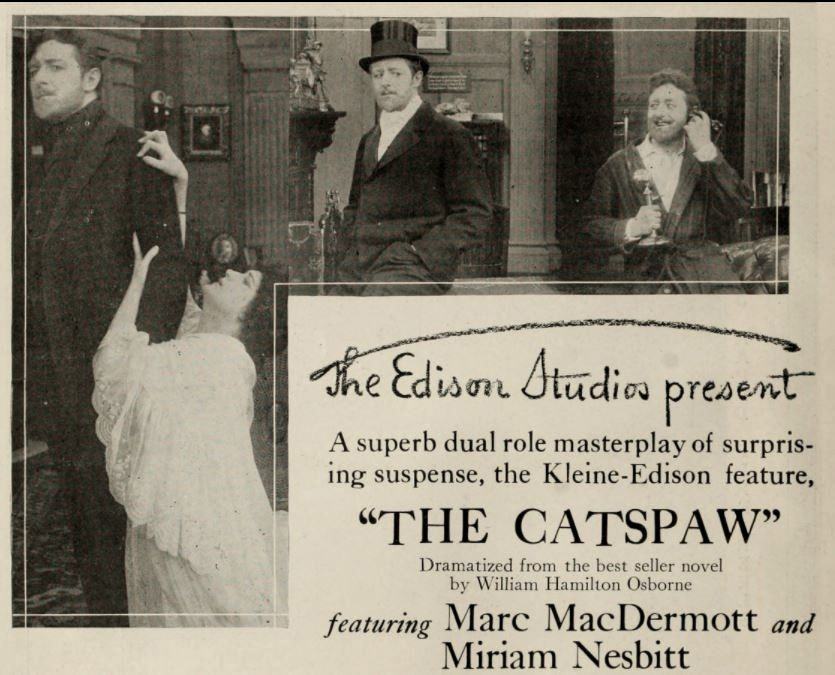
The film also offers a potent critique of societal hypocrisy. Milville, outwardly respectable, is revealed to be a hotbed of corruption, necessitating Kittredge's drastic "cleanup" operation. The ease with which the town's elite are duped, their readiness to dismiss inconvenient truths in favor of a comfortable narrative, exposes a deep-seated complacency. The recurring motif of the social event – the ball, the dinner party – as a backdrop for crime and deception highlights the superficiality of their world. These gatherings, ostensibly symbols of order and propriety, are precisely where the chaos is orchestrated, where identities are exchanged, and where the truth is most effectively obscured. This societal commentary aligns with other films of the period that explored urban decay and hidden vices, such as The Shadows of a Great City, which often depicted the underbelly of metropolitan life.
While the directorial credit for "The Catspaw" remains elusive, the execution of such an intricate plot demands a keen eye for pacing and visual storytelling. The film, a product of the early silent era, would have relied heavily on intertitles to convey dialogue and exposition, but the visual narrative—the blocking of actors, the use of close-ups to emphasize emotional states, and the careful staging of key scenes like the bank robbery or Kittredge's escape—would have been paramount. The tension inherent in the dual identity plot, the constant threat of exposure, would have been expertly built through these visual cues. The film's ability to maintain suspense across multiple acts of deception, culminating in the masterful misdirection at Mrs. Shackleton's dinner party, is a testament to its narrative craftsmanship.
The ensemble cast, including figures like Charles Sutton in the pivotal dual role, Grace Morrissey as the enigmatic Roxane, Mabel Dwight likely as Mrs. Shackleton, and the supporting turns from William Wadsworth, James Harris, Brad Sutton, Yale Benner, Harry B. Eytinge, Marc McDermott, Miriam Nesbitt, Denis Ward, and Julian Reed, would have contributed to the film's texture. Sutton's task, embodying two distinct personas with identical physical attributes, is particularly demanding for a silent film actor. He would have had to differentiate Kittredge, the calculating mastermind, from his more earnest, romantically inclined double through subtle physicalities and expressions. This kind of nuanced performance, without the aid of spoken dialogue, separates truly gifted silent era actors from their contemporaries. The impact of such a performance can be compared to the intricate character work seen in films like His Picture in the Papers, which also toys with the public image versus private reality.
"The Catspaw" can be seen as an early progenitor of the crime thriller genre, particularly those involving elaborate cons and mistaken identities. Its complex plotting and moral ambiguities set it apart from simpler melodramas of the era. While it might not possess the grand scale of an epic like War and Peace or the historical spectacle of The Last Days of Pompeii, its strength lies in its tight, suspenseful narrative and its exploration of human fallibility. The film's focus on a "cleanup" operation, a vigilante justice against an entrenched corrupt system, also echoes themes found in other crime dramas, such as The Deep Purple, which often explored the dark underbelly of society and the fight against criminal elements. The intricate web of lies, the constant shifting of appearances, and the ultimate triumph of deception over perceived truth make "The Catspaw" a compelling watch, even for modern audiences accustomed to more overt forms of cinematic trickery.
The film's exploration of trust, betrayal, and the malleability of public perception remains remarkably relevant. In an age where information can be easily manipulated and identities crafted online, the core premise of "The Catspaw" resonates with a surprising contemporary echo. It reminds us that what we see is not always what is real, and that the most dangerous deceptions are often those we are most willing to believe. William Hamilton Osborne's writing crafted a narrative that, despite the technological limitations of its time, managed to create a sophisticated psychological thriller. The film, in its quiet brilliance, serves as a fascinating artifact of early cinematic storytelling, demonstrating that even in its infancy, cinema was capable of tackling complex themes with remarkable ingenuity and flair. Its enduring appeal lies not just in its historical significance but in its timeless exploration of human nature's darker, more cunning facets.
IMDb 4.8
1924
Community
Log in to comment.