DbcultAccessing Vault...
Cult Review
Senior Film Conservator
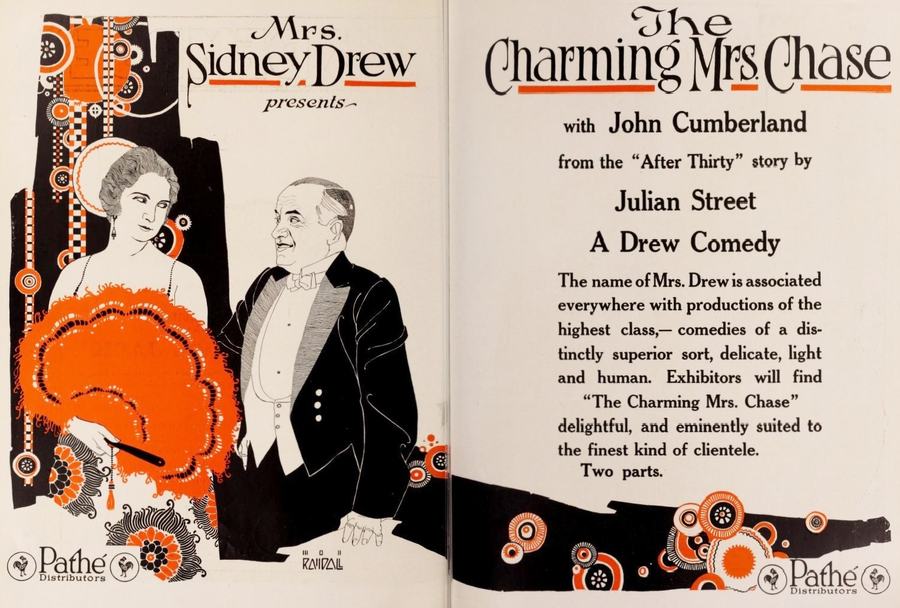
Imagine a world where the most scandalous thing a man can do is wear a sprig of lilac in his buttonhole before noon. Into that world glides The Charming Mrs. Chase—a 1916 one-reel hand-grenade lobbed at the fortress of monogamy. Clocking in at barely fifteen minutes, it nonetheless compresses an entire novel’s worth of longing, self-delusion, and marital déjà-vu into its nitrate frames. The film’s central joke lands with the elegance of a fountain pen running dry: the promise of adultery is infinitely more intoxicating than adultery itself, while the threat of boredom proves the most faithful spouse of all.
We open on a dining tableau so rigid it could be a museum diorama: Jimmie Wickett, shoulders squared against the creeping mildew of routine, cuts his roast as though carving time itself. Across from him, Mrs. Wickett—eyes glittering with the low amusement of someone who has already read the last page—dispenses peas with surgical precision. Enter Mrs. Chase, a woman whose silhouette arrives five seconds before she does, all lace fan and sly décolletage. One conversational ricochet later, Jimmie’s imagination detonates. The film’s genius lies not in what happens but in what almost happens: an assignation sketched in the margins of a husband’s mid-life yawn.
Next morning, the marital bedroom becomes a proscenium. Jimmie materializes in a checked waistcoat so audacious it should require its own license. Mrs. Wickett, instead of swooning into wounded heroine mode, wields irony like a riding crop: “Off to conquer Troy, darling?” The line, delivered via intertitle card bristling with curlicues, detonates a laugh so sharp it could slice bread. Permission granted, Jimmie struts out—only to cool his heels on a park bench while Mrs. Chase, in a delicious gag of cosmic punctuality, keeps the rendezvous waiting longer than a tax refund. By the time they finally share a table, the air has gone out of the balloon; conversation deflates into platitudes about the weather and the lamentable softness of dinner rolls. They retreat to their separate spouses, chastened not by sin but by tedium.
John Cumberland’s Jimmie is a masterclass in micro-gesture: watch the way his fingers drum a military tattoo against his thigh the instant Mrs. Chase’s name is spoken. Dorothy Wallace, as the titular charmer, weaponizes the pause between smile and speech—an eternity in which every spectator drafts his or her own fantasy. Yet the stealth MVP is Mrs. Sidney Drew (also the screenwriter) who plays Mrs. Wickett with the serene authority of a chess grandmaster moving her knight. She knows the game is already won; the fun lies in letting the opponent believe otherwise. Eleanor Custis, in a smaller maid role, steals two reaction shots that deserve their own dissertation on class-coded spectator-ship.
Cinematographer Tom Bret composes in rectangles of constraint: doorframes, mirror edges, the steep V of a morning coat lapel. Notice how Jimmie’s reflection repeatedly splits into double images—an optical confession that he is already two selves, the husband and the hypothetical rake. When the illicit duo finally sits down to lunch, the camera retreats to a discreet medium two-shot, the table’s white linen stretching like a demilitarized zone between them. The absence of close-ups is the film’s slyest joke; passion kept at arm’s length eventually asphyxiates.
Color tinting on surviving prints alternates between amber domesticity and cerulean flirtation. One revelatory moment: a fade from amber to blue the instant Jimmie pens his secret invitation. The tint itself is a mood ring, telegraphing sin before the censors could object.
Credit Mrs. Sidney Drew and collaborator Julian Street for a screenplay that treats marriage as a comic battlefield rather than a sentimental shrine. The wives in this universe possess X-ray vision; they see through male vanity like it’s made of isinglass. When Mrs. Wickett sanctions the luncheon, she’s not surrendering—she’s calling Checkmate with a kiss. The film whispers an inconvenient truth: female intuition profits far more from a husband’s brief excursion into fantasy than from his dutiful, grinding presence at every breakfast.
Compare this to the continental cynicism of Akit ketten szeretnek or the sumptuous moral rot of La gola. Where those narratives punish or absolve, The Charming Mrs. Chase shrugs, amused by the universal talent for self-boredom.
Though released during the pre-sync-sound era, the picture pulses with an internal metronome: the clatter of cutlery, the rustle of taffeta, the imagined squeak of Jimmie’s new patent shoes. Modern accompanists often score the luncheon scene with a hesitant habanera, letting the tempo collapse into a waltz as appetite wilts. The tonal joke lands harder than any spoken dialogue could.
If you squint, you can spot DNA strands linking this urbane miniature to the later marital jousts of Telefondamen and Stolen Honor. Yet unlike the brooding penance of When Dawn Came or the rags-to-riches upheaval in Sudden Riches, Mrs. Chase refuses melodrama. Its closest temperamental cousin may be One-Thing-at-a-Time O’Day: both films find slapstick poetry in the anticlimax.
A 4K restoration by the Eustace Archive surfaced on Blu-ray as part of the “Drawn Curtains: American Silents 1915-1918” box set. Streaming rights ping-pong between Criterion Channel and Kanopy; check regional lockouts. Be wary of the 2003 Alpha DVD whose score slaps a jaunty ukulele over every frame, bulldozing nuance.
Fast-forward a century and you’ll spot Mrs. Chase’s progeny in films like “Enough Said” and “The One I Love,” where the grass on the other side is revealed to be astroturf. The DNA persists: introduce temptation, let it oxidize in open air, then watch commitment emerge strangely galvanized. Only the costumes change; human foibles remain stubbornly 1916.
Is The Charming Mrs. Chase a trifle? Technically, yes—its runtime is shorter than a coffee break. Yet its aftertaste lingers like a French film on the tongue: a reminder that most storms inside the teacup evaporate before they can even rattle the saucer. For anyone convinced silent cinema is all swooning maidens and twirling moustaches, this compact marvel offers a corrective sip of acid wit. Pour yourself a measure, sample the flirtation, and savor the humbling conclusion that the greatest threat to grand passion is the awkward silence once the small talk runs dry.
Verdict: 9/10 — a razor-edged bonbon that proves the quickest route to marital contentment is a harmless brush with disaster.
IMDb —
1917
Community
Log in to comment.