DbcultAccessing Vault...
7.3/10
Senior Film Conservator
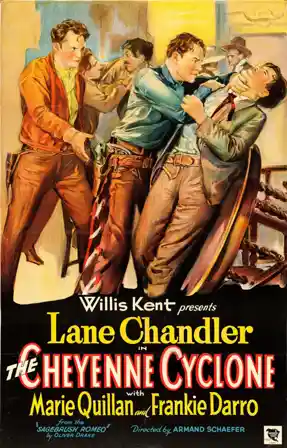
A definitive 7.3/10 rating for a film that redefined the boundaries of cult cinema. The Cheyenne Cyclone remains a cornerstone of transgressive art.
You should probably only watch The Cheyenne Cyclone if you have a very high tolerance for crackle-heavy audio and guys who wear their pants way too high. It is a movie for people who miss the sound of horses galloping on hard-packed dirt and don't mind a plot that’s thinner than a cheap diner napkin.
If you hate old movies where the actors stand perfectly still so the microphone can actually hear them, stay far away from this one. But if you’re into the history of stunts, seeing Yakima Canutt on screen is always a little bit of a treat.
The story starts with Bob Carelton, played by Edward Hearn, who shows up at the O'Brien ranch looking for work. The ranch is in a bad way because there’s no water, which is usually how these things go.
O'Brien is stressed out, and honestly, you can tell the actor is just tired. He looks like he wants to go home and take a nap rather than deal with cows.
Then we meet the villain, Flash Corbin. With a name like Flash, you’d expect him to be fast or maybe have a cool outfit, but he’s just a jerk who likes to ruin things.
Flash decides the best way to get the ranch is to poison the water supply. It is such a mean-spirited move that it feels like something out of a cartoon, but they play it totally straight here.
Bob tries to be smart and brings in a well driller to find a new source. This is where the movie gets oddly specific about the mechanics of digging holes in the desert.
I spent about five minutes wondering if that drilling rig was actually functional or just a bunch of wood held together by prayer. The movie spends a lot of time just watching people look at the ground.
The pacing is a bit of a nightmare. One scene will be Bob riding a horse really fast, and the next will be three minutes of two guys talking in a room that looks like it was decorated with whatever was in the back of the studio’s garage.
It reminds me a little of the stiff feeling you get in Salomy Jane, but without the cool forest scenery. Here, everything is just grey and dusty.
There is a weird subplot involving an actress. Flash pays her to pretend to be someone who wants to buy the ranch so O'Brien will get discouraged and sell cheap.
It’s a very complicated plan for a movie that is only about an hour long. Why not just steal the cows? Bringing in a professional actress seems like a lot of paperwork and travel expenses for a desert heist.
I liked the kid, Frankie Darro. He’s got this weirdly intense energy that makes everyone else look like they are sleepwalking.
He’s much more interesting to watch than the leading man. Bob is a bit of a wooden plank, if I'm being honest.
Then there is Raven the Horse. The horse actually gets a credit, which is fair because he does more acting with his ears than some of the humans do with their whole faces.
The horse scenes are actually the highlight. There is a sense of real danger when they are moving fast, mostly because 1931 safety standards were basically non-existent.
I noticed one shot where a rider almost loses his hat and you can see him break character for a split second to grab it. I love little mistakes like that.
It makes the whole thing feel like a real day at work for these people. They weren't making art; they were making a product for Saturday afternoon crowds.
The sound quality is... well, it's rough. It sounds like the actors are talking through a thick wool blanket most of the time.
If you aren't paying close attention, you’ll miss half the dialogue. Not that the dialogue is saying anything life-changing, but still.
There’s a lot of “Howdy, Bob” and “Sure is dry out here.” It’s not exactly Shakespeare.
It’s a bit like watching A Temporary Vagabond in terms of how simple the stakes feel. You know exactly who is going to win within the first ten minutes.
I did find myself wondering how they kept their shirts so white in the middle of a dust bowl. Bob’s shirt is pristine even after he’s been digging a well and fighting bad guys.
Maybe Flash Corbin’s real crime was having a better laundry service than everyone else. The movie doesn't explain the laundry situation.
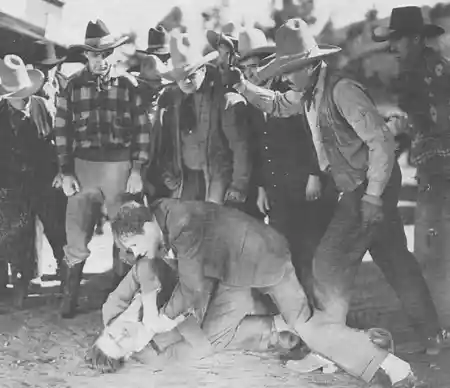
The climax involves some fighting and a lot of shouting. It’s a bit messy, and the camera doesn't always know where to look.
One guy gets punched and falls over about a second after the fist actually passes his face. It’s charmingly bad.
I’ve seen better choreography in Ice Cold Cocos, and that’s a totally different kind of film. This is just pure B-movie chaos.
Is it a good movie? Not really. It’s barely a movie by today’s standards.
But it has a certain vibe that you can't find anymore. It’s the smell of old celluloid and the feeling of a world that was still figuring out how to talk on screen.
If you like seeing Yakima Canutt do his thing, it’s worth a look. He’s the guy who basically invented modern stunt work, and you can see him starting to flex those muscles here.
The way he handles a horse is just different from everyone else. He looks like he’s part of the animal.
I also noticed the background extras just standing around in some shots. They look like they are waiting for the catering truck to arrive.
One guy in the back of the ranch scene is literally just leaning against a post, staring at the ground for an entire minute. I wonder what he was thinking about.
The movie ends exactly how you think it will. There are no surprises here, which is kind of comforting in a way.
It’s like eating a plain piece of toast. It’s not a feast, but it fills the hole.
If you want something with more plot, maybe check out Mary Ellen Comes to Town. This one is strictly for the cowboys.
Final thought: Flash Corbin is a top-tier name for a bottom-tier villain. I’m going to name my next cat Flash Corbin.
Anyway, it’s fine. It’s just fine. 🐎🏜️
IMDb —
1918
Community
Log in to comment.