DbcultAccessing Vault...
6.4/10
Senior Film Conservator
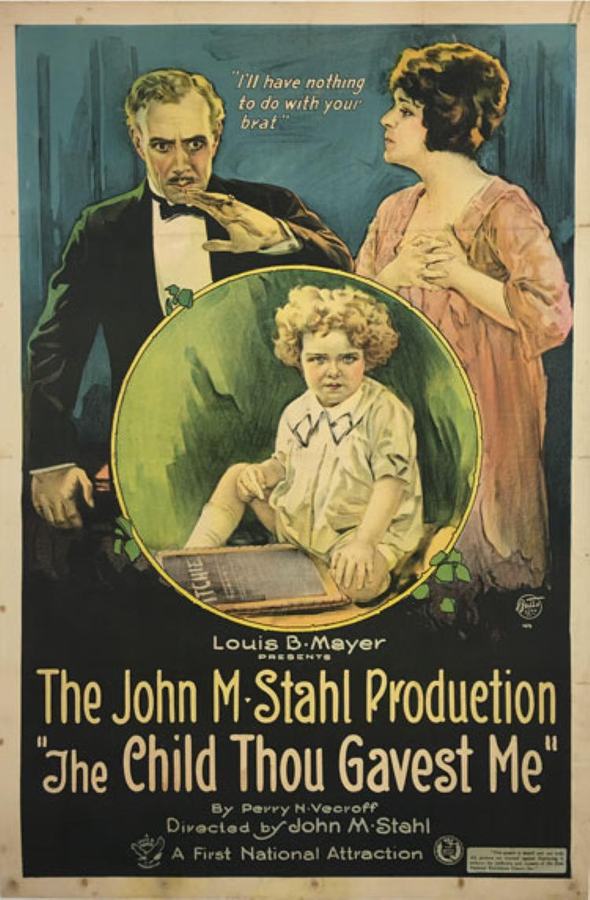
A definitive 6.4/10 rating for a film that redefined the boundaries of cult cinema. The Child Thou Gavest Me remains a cornerstone of transgressive art.
When a wedding ceremony becomes a crucible for concealed truths, the result is a narrative that transcends mere plot mechanics to probe the human condition’s rawest edges. The Child Thou Gavest Me (1924), directed with unflinching precision, crafts a story where love and betrayal collide in a storm of moral ambiguity. Adele Farrington’s portrayal of the bride—her every gesture a calculus of vulnerability and defiance—anchors the film in a reality where secrets are both armor and vulnerability. William Desmond’s character, the groom, is a vessel for the audience’s disquiet; his unraveling is not a spectacle of anger but a slow, aching collapse into disillusionment.
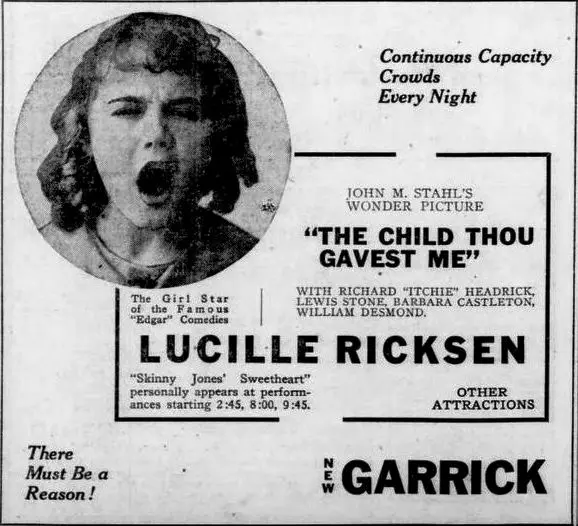
The script, co-authored by Perry N. Vekroff and Chester L. Roberts, is a labyrinth of subtext. Where lesser films might lean into overt conflict, this one thrives in silence. A single glance exchanged between the bride and a former lover (played with simmering intensity by Mayre Hall) is more incendiary than a hundred shouted accusations. The dialogue is sparse, each line a chisel strike against the characters’ facades. Even the child, a silent specter at the story’s core, becomes a symbol of both innocence and indictment—a living testament to choices that bind and unbind.
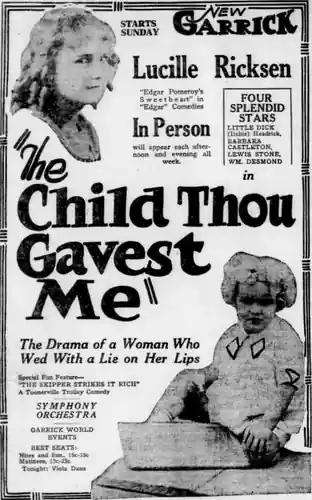
What distinguishes The Child Thou Gavest Me is its refusal to romanticize its themes. The cinematography, stark and unadorned, mirrors the emotional austerity of its protagonists. There are no sweeping landscapes or grand set pieces to romanticize the drama; instead, the camera lingers on close-ups, capturing the micro-expressions that betray internal tempests. The child’s face, framed in a dimly lit room, becomes a portal to the film’s moral complexity. Here, the visual language is as deliberate as the script, with shadows and light used to delineate the boundaries between truth and pretense.
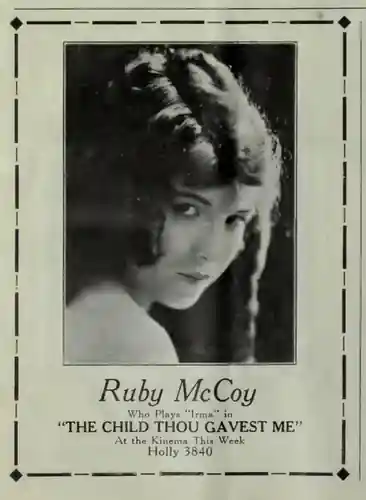
Adele Farrington’s performance is a masterclass in understatement. Her eyes carry the weight of a thousand unspoken words, her posture a study in the tension between grace and desperation. William Desmond, often relegated to the role of the wronged man, subverts expectations by portraying his character’s anguish as a slow-burning embers, not a conflagration. The supporting cast, particularly Ruby McCoy and Winter Hall, injects moments of levity and warmth that contrast sharply with the central tragedy, creating a dynamic tension that elevates the film beyond a mere melodrama.
Comparisons to Marriage a la Mode (1935) are inevitable, yet The Child Thou Gavest Me diverges by focusing on the personal rather than the societal. While both films dissect the fragility of marital vows, this earlier work lacks the political subtext of its later counterpart, instead drilling into the intimate fractures of individual lives. Its treatment of paternity as a catalyst for moral reckoning also resonates with Her Temptation (1928), though with a more restrained, less operatic tone. The film’s exploration of maternal instinct and sacrifice further aligns it with Polly Redhead (1931), though without the latter’s comedic flourishes.
In the pantheon of early American cinema, The Child Thou Gavest Me occupies a unique niche. Its emotional candor anticipates the more psychologically intricate narratives of the sound era, yet its visual austerity harks back to the expressionist roots of German cinema. The film’s enduring relevance lies in its ability to frame human frailty as both a flaw and a universal truth. It is a work that demands patience, rewarding viewers with a portrait of love as a battlefield where the victors are rarely the ones who shout the loudest.
For modern audiences, The Child Thou Gavest Me serves as a reminder that the most potent stories are those that dare to sit with discomfort. It does not offer easy resolutions or redemptive arcs, instead leaving its characters—and by extension, the viewer—to grapple with the consequences of their choices. In an era saturated with hyper-stylized narratives, this film’s quiet intensity is a breath of fresh air. It is a testament to the power of restraint, both in storytelling and performance, and a landmark in the evolution of American cinema. To watch it is to witness the alchemy of emotion, where silence speaks louder than spectacle.
IMDb 5.9
1935
Community
Log in to comment.