DbcultAccessing Vault...
Cult Review
Senior Film Conservator
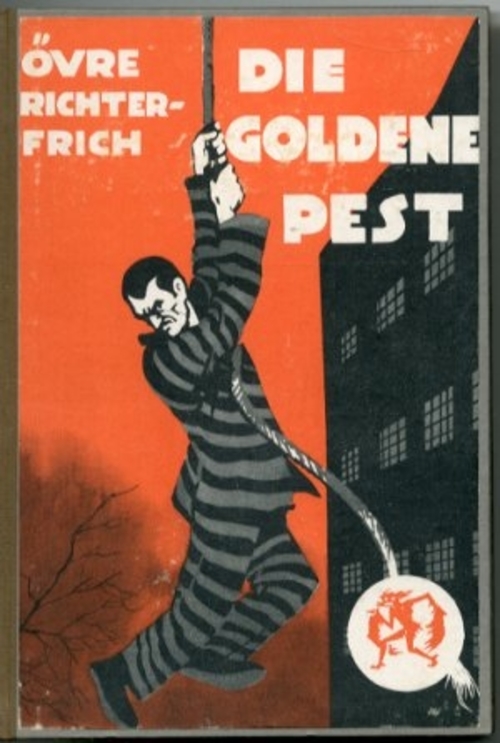
Die goldene Pest, a 1920s silent film directed by Øvre Richter Frich and Paul Merzbach, is a provocative exploration of economic subterfuge and ideological rebellion. Its narrative, centered on an anarchist’s audacious scheme to synthesize artificial gold, unfolds with a relentless intensity that mirrors the volatile era of Weimar Germany. The film’s stark visual contrasts and psychological depth position it as a seminal work in early cinema, blending speculative fiction with socio-political commentary.
The protagonist, portrayed with chilling composure by Emil Stammer, is a figure of both fascination and dread. His plan to manufacture gold—a material symbol of capitalist excess—serves as a Trojan horse for dismantling the very systems that uphold it. The film’s writers, Frich and Merzbach, weave a narrative that is as much about the mechanics of financial collapse as it is about the moral decay of a society built on exploitation. By substituting real gold with a counterfeit, Stammer’s character exposes the fragility of value itself, a theme that resonates with unsettling clarity in today’s climate of inflationary crises and digital currencies.
Anita Berber’s performance as the enigmatic femme fatale adds a layer of psychological complexity to the film. Her character, caught between allegiance to the anarchist’s cause and her own self-preservation, embodies the tension between idealism and pragmatism. Berber’s nuanced portrayal—marked by fleeting glances and calculated gestures—elevates the film beyond mere plot-driven spectacle, infusing it with the existential dread that permeates Weimar-era cinema. This dynamic is further amplified by the supporting cast, including Hans Adalbert Schlettow as a beleaguered banker whose crumbling world mirrors the disintegration of traditional hierarchies.
The film’s visual language is equally compelling. Stark chiaroscuro lighting and angular set designs evoke a sense of unease, reflecting the destabilization of economic and moral order. One particularly striking sequence involves the anarchist’s laboratory, where bubbling flasks and metallic contraptions become metaphors for the alchemy of destruction. The directors’ use of rapid cuts and fragmented compositions during scenes of financial panic mirrors the disorienting effects of market collapse, creating a visceral experience for the viewer.
Thematically, Die goldene Pest draws parallels to Jeanne Doré (href="/movies/jeanne-dore") in its portrayal of rebellion against institutional power, though Die goldene Pest’s focus on economic collapse is more pronounced. Similarly, The Man in the Moonlight (href="/movies/the-man-in-the-moonlight") explores clandestine operations, but Die goldene Pest’s anarchist protagonist is a more overtly destructive force, challenging viewers to question the legitimacy of the systems it critiques. The film’s prescience in addressing financial manipulation foreshadows later works like The Little Diplomat (href="/movies/the-little-diplomat"), which also grapples with the intersection of politics and personal ambition.
What sets Die goldene Pest apart is its refusal to offer easy resolutions. Unlike films such as Into the Primitive (href="/movies/into-the-primitive"), which often conclude with a return to order, this film leaves its characters—and the audience—adrift in a world irrevocably altered by the protagonist’s actions. The final scenes, depicting the aftermath of the gold flood, are suffused with a haunting ambiguity. Are the characters’ fates a consequence of the anarchist’s genius, or merely the inevitable collapse of a flawed system? This ambiguity, coupled with the film’s unflinching examination of greed and power, ensures its enduring relevance.
The technical execution of the film is a marvel in itself. Louis Ralph’s cinematography captures the decay of urban landscapes with a painterly precision, while the score, though absent in silent films, is complemented by the stark, almost operatic pacing of the narrative. The use of intertitles is sparse yet impactful, allowing the actors’ expressions and the set designs to convey subtext. This restraint enhances the film’s realism, making the viewer acutely aware of the human cost of systemic failures.
In terms of influence, Die goldene Pest shares thematic DNA with later works like J-U-N-K (href="/movies/j-u-n-k") and Temptation and the Man (href="/movies/temptation-and-the-man"), which similarly dissect societal decay through the lens of individual transgression. However, its unique focus on economic manipulation sets it apart as a precursor to modern financial thrillers. The film’s critique of materialism and its exploration of the psychological toll of rebellion resonate with contemporary audiences grappling with issues of wealth inequality and environmental exploitation.
For cinephiles seeking to understand the evolution of political cinema, Die goldene Pest is an essential study. Its blend of intellectual rigor and cinematic flair ensures that it remains a benchmark for films addressing the intersection of ideology and economics. While its pacing may feel deliberate by today’s standards, the film’s emotional and thematic depth more than compensates, offering a rich tapestry of ideas that reward repeated viewing. Whether one views it as a cautionary tale or a call to arms, its impact on the genre is undeniable.
IMDb —
1924
Community
Log in to comment.