DbcultAccessing Vault...
6.8/10
Senior Film Conservator
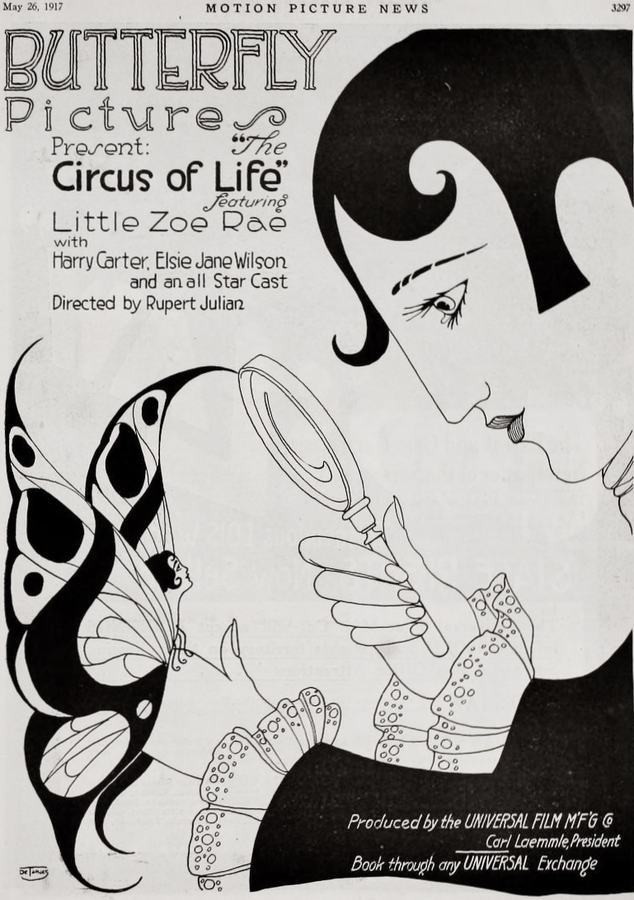
A definitive 6.8/10 rating for a film that redefined the boundaries of cult cinema. The Circus of Life remains a cornerstone of transgressive art.
Step right up, ladies and gentlemen, to a cinematic spectacle that, despite its century-old vintage, still pulsates with the raw, untamed emotions of the human heart. We’re delving deep into the silent film era today, specifically to shine a spotlight on The Circus of Life, a 1917 drama penned by the prolific Elliott J. Clawson. This isn't merely a film; it's a profound exploration of domestic turbulence, the corrosive nature of misunderstanding, and the enduring, often surprising, paths to redemption. In an age when narratives relied solely on expressive visuals and the nuanced performances of its players, Clawson crafted a story that resonates with a timeless quality, reminding us that the 'circus' of existence is always in full swing, replete with its dazzling highs and devastating lows.
At its core, The Circus of Life unfurls a narrative tapestry rich with both tenderness and tragedy. We are introduced to Danny, portrayed with compelling sincerity by Burwell Hamrick, a humble brewery wagon driver whose world, initially, seems quite uncomplicated. He finds matrimonial bliss with Mamie, brought to life by the nuanced performance of Elsie Jane Wilson. Their union, however, soon faces an insidious threat, not from external forces initially, but from the internal stirrings of the heart and the cruel caprices of fate. Mamie's affections become tragically entangled with Gaston Bouvais, an artist whose bohemian charm, perhaps, offers a fleeting escape from the quotidian realities of her life with Danny. This burgeoning infatuation sets the stage for a domestic drama of Shakespearean proportions, where misinterpretations wield the power of a poisoned chalice.
The pivotal moment arrives with the birth of Daisy May, a role embodied by the captivating Zoe Rae. Through a calamitous twist of hospital miscommunication, Danny is led to believe the child is not his own. This single, devastating error shatters his world, plunging him into a spiral of despair and self-destructive indulgence. His journey into a life of drinking and carousing is not merely a descent into vice, but a poignant manifestation of his profound heartbreak and feelings of betrayal. Yet, even amidst this personal ruin, a flicker of humanity persists: his undeniable, unconditional love for Daisy May, the child he believes is not his by blood, but is profoundly his by affection. This paradox forms the emotional bedrock of the film, highlighting the complexities of love and paternity beyond mere biological ties. It’s a theme echoed in other silent era dramas exploring familial bonds under duress, though perhaps not always with such a stark, tragic misunderstanding at its core.
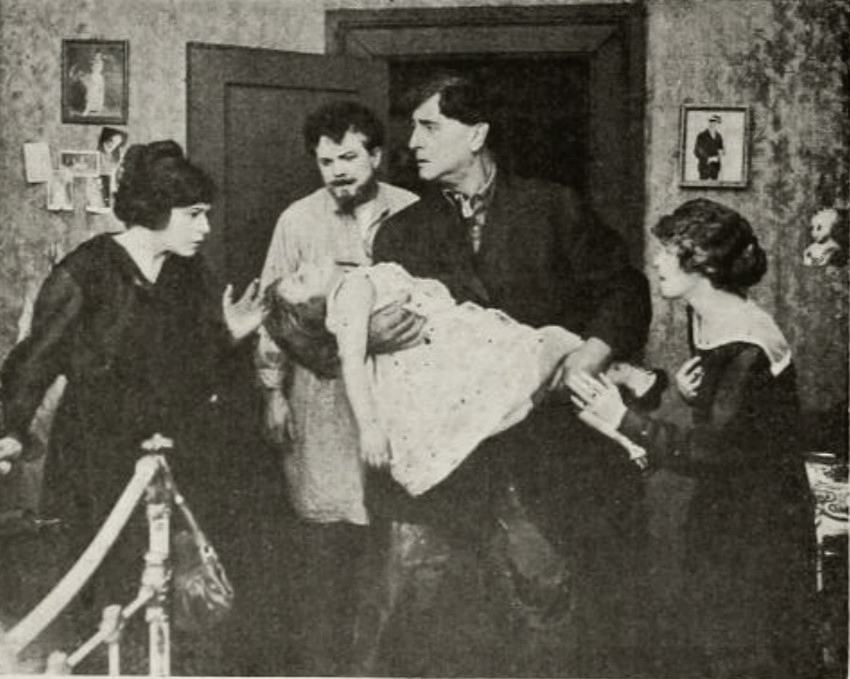
The narrative deftly navigates Danny's fractured existence, depicting his daily routine on the brewery wagon, now a somber tableau of his inner turmoil. Daisy May, growing up amidst this melancholic backdrop, becomes his constant companion, a beacon of innocence in his darkening world. Their shared journeys on the wagon, however, culminate in a harrowing sequence where Danny’s inebriation leads to a catastrophic loss of control, resulting in Daisy May’s severe injury. This moment serves as a brutal awakening, a visceral consequence of his self-pity and despair. It is a stark reminder of how personal failings can ripple outwards, inflicting pain upon the most innocent among us. The visceral impact of this scene, delivered through the expressive power of silent cinema, is truly remarkable, showcasing the era's ability to convey intense emotion without a single spoken word.
Concurrently, Mamie's own struggles reach a crescendo. Gaston Bouvais, played by Harry Carter, finally succeeds in convincing her to abandon her shattered home life and elope with him. This decision point, however, is where the film truly shines its light on the intricate dance of human emotions. The news of Danny's accident and Daisy May's injury acts as a powerful catalyst, ripping away the veil of infatuation and exposing the deep-seated love Mamie still harbors for her husband. The choice she makes, to reject Bouvais and return to Danny's side, is not one born of obligation, but of a profound rediscovery of affection and loyalty. It speaks volumes about the enduring power of shared history and the unexpected ways in which tragedy can forge, rather than break, bonds. This emotional pivot is handled with exceptional grace by Elsie Jane Wilson, whose portrayal of Mamie's internal conflict is both believable and deeply moving.
The resolution, while perhaps appearing straightforward, carries a weighty emotional resonance. Bouvais, rejected, moves on to marry another, his artistic dalliance with Mamie now relegated to a mere footnote in his life. Danny and Mamie, brought to the brink of utter collapse, find solace and strength in their shared ordeal. The recovery of Daisy May becomes a symbol of their own healing, a tangible representation of their renewed hope. Danny’s transition from driving a brewery wagon to a milk wagon is a brilliant piece of visual symbolism, signifying his shift from a life of intoxicating despair to one of wholesome, nourishing purpose. It's a poignant testament to the idea that even after the darkest storms, a new dawn can break, bringing with it the promise of a fresh start. This kind of symbolic transformation is a hallmark of strong silent film narrative, where every visual cue carries immense meaning.
To truly appreciate The Circus of Life, one must immerse oneself in the unique language of silent cinema. The film, like its contemporaries, relies heavily on visual storytelling, exaggerated gestures, and evocative intertitles to convey complex emotions and plot developments. The performances here are critical, and the cast rises to the occasion. Burwell Hamrick as Danny delivers a masterclass in portraying a man consumed by grief and then slowly, painfully, redeemed. His posture, his gaze, the way he carries himself – every element speaks volumes without uttering a single word. Similarly, Elsie Jane Wilson's Mamie is a study in internal conflict, her face a canvas of conflicting emotions as she grapples with infidelity, guilt, and ultimately, rediscovered love. Even the younger Zoe Rae as Daisy May manages to convey vulnerability and innocence, a crucial anchor for the drama unfolding around her. The supporting cast, including Mignon Anderson, Nanine Wright, Emory Johnson, and Pomeroy Cannon, contribute effectively to the film's rich emotional tapestry, each playing their part in the grand 'circus' of this familial drama.
The screenplay by Elliott J. Clawson is remarkably robust for its time. Clawson, a prolific writer of the era, understood the mechanics of silent storytelling intimately. He constructs a narrative that, while relying on a significant misunderstanding, never feels contrived or artificial. Instead, the emotional reactions of the characters feel earned, their journeys compelling. The pacing is deliberate, allowing moments of quiet despair and sudden revelation to breathe, ensuring that the audience is fully invested in the plight of Danny and Mamie. This careful construction distinguishes it from more melodramatic fare, providing a solid foundation for the actors' expressive performances. One might compare its intricate plotting to the careful unfolding of human drama seen in films like The Marconi Operator, which also built tension through a series of interconnected events, or even the moral quandaries presented in Behind the Mask, where hidden truths drive the narrative forward.
At its heart, The Circus of Life is a profound meditation on the fragility of trust and the arduous path to forgiveness. Danny's initial joy is utterly decimated by a simple, yet catastrophic, error. His subsequent descent into alcoholism is not merely a character flaw, but a coping mechanism for an unbearable emotional wound. This portrayal of a man grappling with perceived betrayal feels incredibly authentic, even a century later. His love for Daisy May, despite his belief she isn't his biological child, adds a layer of complexity that elevates the film beyond simple melodrama. It suggests that love can transcend conventional boundaries, finding root in unexpected places and persisting even in the face of profound hurt. This emotional resonance is a testament to the film's enduring power, much like the timeless themes of human struggle found in a film like Joan of Arc, albeit in a vastly different context.
Mamie's arc is equally compelling. Her infatuation with Gaston Bouvais, while a betrayal, isn't painted as purely malicious. It's a human failing, perhaps a yearning for something she feels is missing, or simply a momentary lapse in judgment. Her eventual return to Danny, spurred by crisis, is crucial. It signifies a realization that true love and commitment run deeper than fleeting attractions. The film doesn't shy away from depicting the messy, imperfect reality of relationships, acknowledging that even good people can make terrible mistakes. This nuanced portrayal of infidelity and its consequences is quite sophisticated for its era, offering a more empathetic view than some contemporaneous works. For comparison, consider the complexities of relationships explored in To-Day or even the more lighthearted, yet still insightful, marital dynamics in The Marriage of Kitty.
The titular 'Circus of Life' metaphor is subtly woven throughout the narrative. Life itself is presented as a grand, unpredictable spectacle, full of unexpected turns, dramatic highs, and crushing lows. Danny's journey on the brewery wagon, with Daisy May by his side, becomes a literal and metaphorical journey through this circus. The accident, the moment of crisis, is the unexpected tightrope walk, the dangerous act that forces everyone to confront their true feelings. The eventual shift to the milk wagon symbolizes not just a new career, but a profound internal transformation – a move towards purity, stability, and a nourishing future. It’s a beautifully understated way of conveying profound change and renewal, a thematic depth that elevates the film beyond a simple domestic drama.
Viewing The Circus of Life today offers a fascinating window into the early days of cinematic storytelling. Without the crutch of dialogue, filmmakers and actors were compelled to master visual communication, creating a unique aesthetic that relies on bold expressions, symbolic gestures, and meticulously crafted mise-en-scène. The film's strength lies in its ability to evoke strong emotional responses through these means. The close-ups on the actors' faces, particularly during moments of intense emotion, draw the audience in, creating an intimate connection that transcends the lack of sound. This mastery of visual narrative is something contemporary filmmakers can still learn from, demonstrating that sometimes, less is indeed more. It’s a testament to the power of pure cinematic form, much like the compelling visual narratives found in films such as The Jungle Child, which also relied heavily on visual storytelling to convey its exotic setting and emotional stakes.
The societal context of 1917 also adds another layer of appreciation. The world was on the cusp of immense change, with World War I raging and social norms beginning to shift. Films like The Circus of Life often reflected the moral quandaries and domestic anxieties of the time, offering audiences both escapism and a reflection of their own struggles. The themes of fidelity, family, and personal responsibility would have resonated deeply with viewers navigating a rapidly evolving world. While not overtly political, the film subtly touches upon class differences through the contrast between the working-class Danny and the bohemian artist Bouvais, a theme also explored in other contemporary dramas like One Million Dollars, which often dealt with wealth disparity, or The Thoroughbred, which might have explored similar social strata.
In conclusion, The Circus of Life stands as a compelling example of silent era drama, proving that a powerful story, well-acted and thoughtfully constructed, can transcend the limitations of its medium. It offers a rich tapestry of human experience, exploring the destructive force of misunderstanding, the pain of betrayal, and the redemptive power of love and forgiveness. The performances by Burwell Hamrick and Elsie Jane Wilson are particularly noteworthy, anchoring the film with their deeply felt portrayals. Elliott J. Clawson's screenplay is a testament to the enduring appeal of well-crafted narrative. While it might not possess the grand scale of some epic silent films, its intimate focus on a family’s struggle makes it incredibly relatable and impactful. It’s a reminder that the greatest dramas often unfold not on vast battlefields, but within the confines of the human heart and home. For those interested in the psychological depth of early cinema, one might also explore films like Wer ist der Täter?, which delved into criminal psychology, or the intense emotional landscapes of Maria Rosa. Each offers a unique perspective on the human condition, much like the layers of meaning found within The Circus of Life.
So, if you ever have the opportunity to witness this forgotten gem, I urge you to do so. Allow yourself to be transported back to a time when moving pictures spoke volumes without uttering a single sound, where emotions were writ large on the screen, and where the 'circus' of human existence played out with all its raw, captivating drama. It's a journey well worth taking, offering insights that remain relevant even in our cacophonous modern world. The subtle beauty of its resolution, where a milk wagon replaces a brewery wagon, is a poetic touch that lingers long after the final frame, solidifying its place as a quiet triumph of early filmmaking. It's a film that reminds us that even after falling from the tightrope, one can always find the strength to get back up, dust oneself off, and continue the show, perhaps even with a renewed sense of purpose. And isn't that, after all, the true magic of the circus of life itself?
IMDb 6.8
1917
Community
Log in to comment.