A definitive 4.1/10 rating for a film that redefined the boundaries of cult cinema. Lola remains a cornerstone of transgressive art.
In the cadaverous glow of 1914, while Europe was busy rehearsing apocalypse, American screens birthed a miniature thunderclap named Lola—a one-reel fever dream that feels like reading someone else’s séance through a nickelodeon peephole.
James Young, pulling double duty behind the megaphone and in front of the lens, never once flinches from the story’s radioactive core: parental grief weaponized into mad-science hubris. The plot, skeletal on paper, detonates in the mind precisely because it refuses catharsis; instead it lingers, like the metallic tang that stays on your tongue after lightning has tasted the earth.
A quintessence of Edwardian angst, Lola predates both Frankenstein and The Living Dead Club yet already savors the same necrotic marrow: that resurrecting flesh without spirit is merely exchanging one tomb for another.
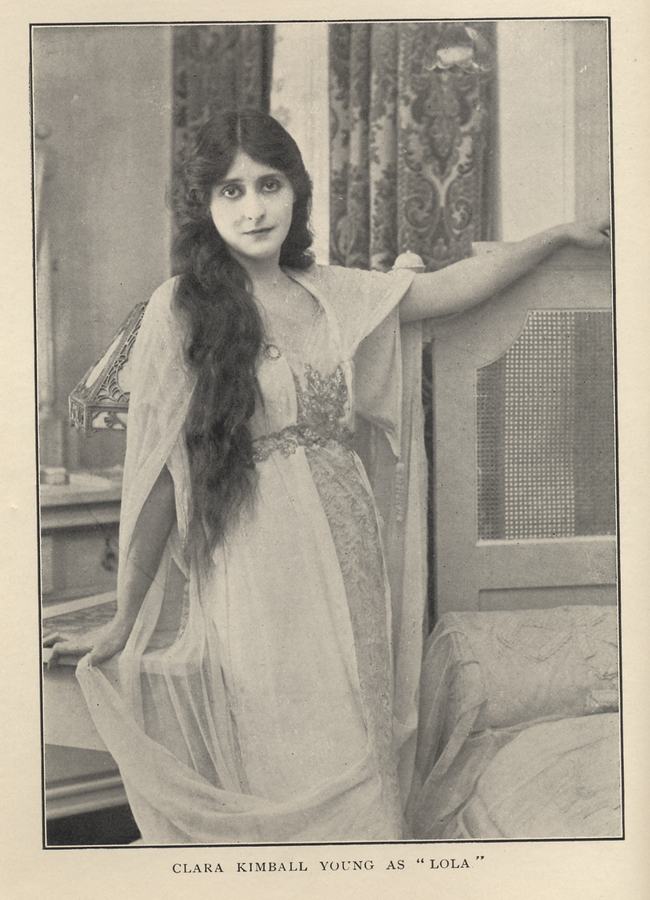
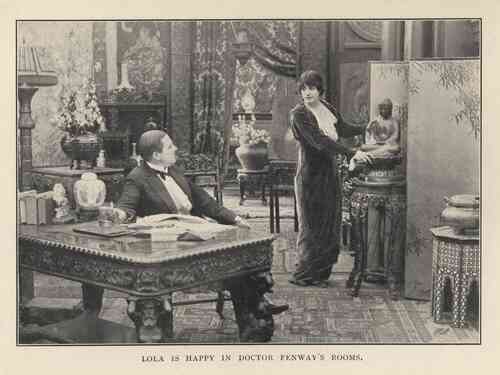
Scene from Lola
Cinematic perspective: Exploring the visual vocabulary of Lola (1914) through its definitive frames.
Visually, the film is a chiaroscuro sonata. Cinematographer Frank Holland bathes the laboratory in arterial reds and cyanotic blues—tints that swim across the 35mm like bruises blooming under skin. When the titular child (played with unsettling placidity by Baby Esmond) first opens her post-mortem eyes, the iris shot—an in-camera vortex—sucks the viewer straight into a void where morality and physics cancel each other out. The effect lasts maybe three seconds yet brands itself onto your hippocampus harder than most feature-length spectacles released a century later.
"Young’s direction waltzes on the lip of the abyss—every iris-in feels like a guillotine, every dissolve like ether swallowing consciousness."
Because the film is mute, the absence of dialogue becomes its own voice. Intertitles, sparse and spartan, arrive like telegrams from the afterlife: "She breathes… but something is missing." The ellipsis is original, not editorial; that hollow dot-cluster hurts more than any line of exposition could. Silence pools so thick you swear you can hear synapses firing inside your own skull, a private Morse code between viewer and viewed.
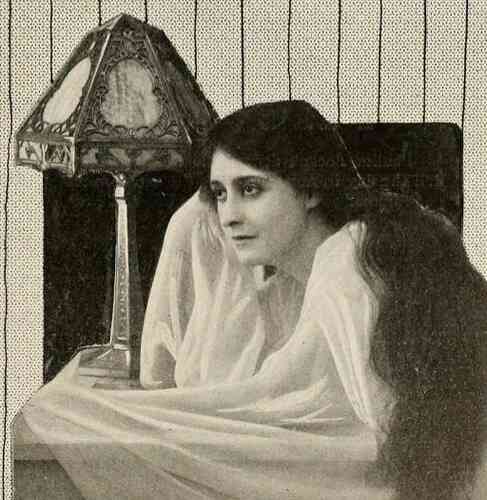
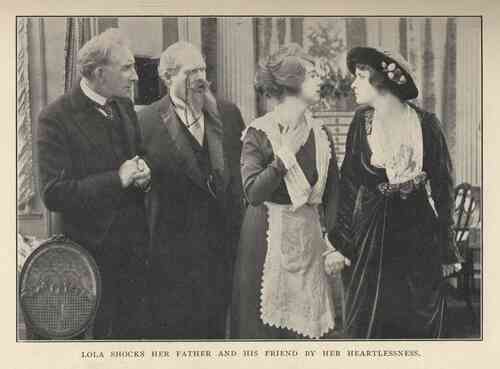
Scene from Lola
Cinematic perspective: Exploring the visual vocabulary of Lola (1914) through its definitive frames.
Comparative literature majors will spot the ectoplasmic fingerprints of East Lynne’s maternal haunting or the spiritualist séances in Home, Sweet Home, but Lola is more surgical. It isn’t interested in redemption arcs or heavenly reunions; its thesis is colder: love, when soldered to machinery, becomes a carnivore that devours both engineer and experiment.
Performances oscillate between grandiloquent pantomime and microscopic subtlety—yes, subtlety existed even when faces had to sell emotion to the cheap seats.
Edward Kimball, essaying the bereaved father, carries bags under his eyes so heavy they look like cannonballs sewn into parchment. Watch the way his shoulders collapse not once but in increments—each time the reanimated girl fails to recognize him, another vertebra seems to dissolve. Conversely, Olga Humphries as the housekeeper supplies the film’s moral gyroscope, her glances toward the laboratory door thick with unspoken dread; she’s the stand-in for every audience member who wants to scream "Stop!" but is trapped in the amber of pre-recorded history.
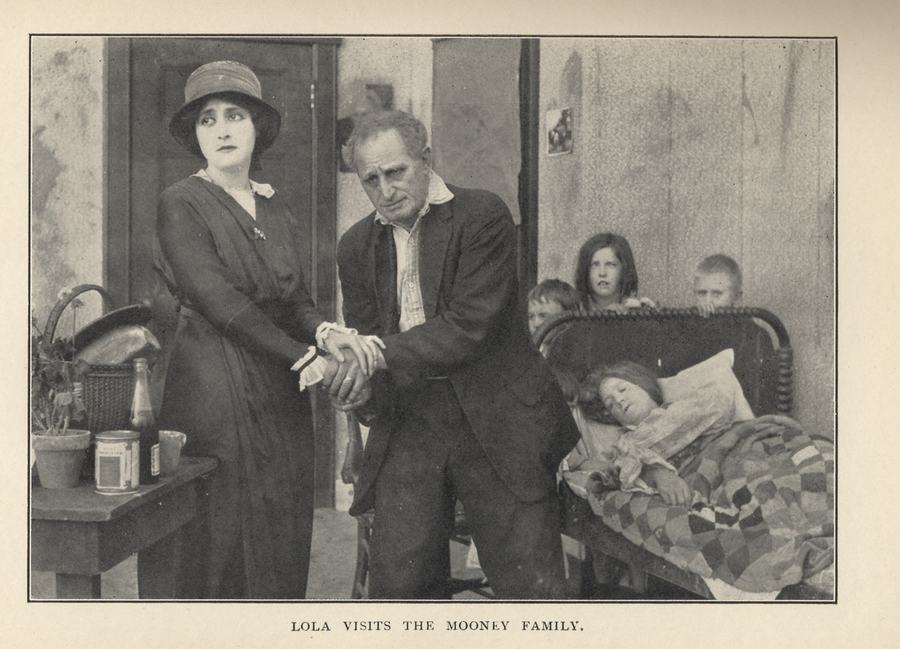
Scene from Lola
Cinematic perspective: Exploring the visual vocabulary of Lola (1914) through its definitive frames.
Then there is the machine itself—half-orthopedic brace, half-cathedral organ. Its brass coils and knife-switch levers anticipate the expressionist madness of Metropolis by thirteen years. In close-up, rivets resemble blind eyes; in wide shot, the contraption looms like a proto-cyborg crucifix. When voltage surges, Young overlays a triple-exposure of crackling lightning, the girl’s limp body, and a wavering silhouette that might be her soul recoiling from re-entry. The frame becomes a fresco of agnostic terror: here is science without sacrament, parenthood without mercy.
Yet the film’s most subversive stroke is its refusal to punish the patriarch via conventional comeuppance. No pitchfork mob, no burning mill, no curse of eternal damnation—only a final tableau where father and hollow-child stare at each other across the laboratory’s scorched floorboards, the distance between them unbridgeable by any voltage. The last intertitle reads: "And the door that was opened could never again be closed." Cut to black. End. Cue the existential shudder that slithers down your spine and sets up permanent residence.
Archivally speaking, the survival of Lola is a miracle stitched from near-loss.
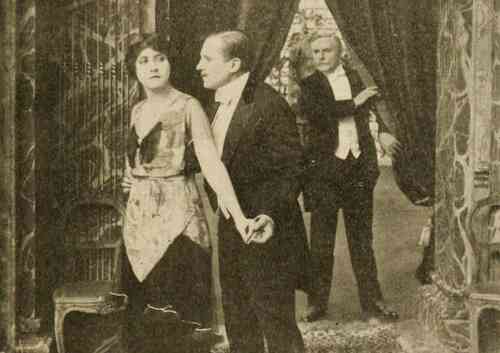
Scene from Lola
Cinematic perspective: Exploring the visual vocabulary of Lola (1914) through its definitive frames.
For decades the sole print languished in a Rochester warehouse, mislabeled as "Child Reborn", a title that sounds like a Salvation Army pamphlet. When restorers peeled back the shrunken nitrate in 1998, they discovered that the last reel had decomposed into a mosaic of emulsion bubbles eerily resembling the very scar tissue the narrative obsesses over. Digital recombination salvaged 87% of the runtime; the remainder was reconstructed from a detailed continuity script discovered in Owen Davis’s papers at the University of Delaware. The result? A ghost that walks whole, even if its garments still smell of graveyard mildew.
Score-wise, the current Kino edition offers two sonic options: a 2011 avant-chamber quartet commission full of glass harmonica and bowed electric guitar, and a historically informed 2018 piano track heavy on Satie-esque arpeggios. I opt for silence—pure, cavernous silence—because anything else feels like graffiti scrawled across a fresco. Your mileage may vary; just know that once you’ve heard the girl’s breath sync with the clatter of your own projector, you can’t un-hear it.
"To watch Lola is to stand inside a mausoleum built of electrons and regret, your pupils dilated so wide they could swallow the screen."
Scene from Lola
Cinematic perspective: Exploring the visual vocabulary of Lola (1914) through its definitive frames.
Modern horror hounds weaned on jump-scare insulin will find the film’s glacial dread narcotic. There are no face-huggers, no found-footage strobe—only the inexorable awareness that the boundary between devotion and desecration is as porous as decomposing nitrate. Yet its DNA coils through everything from Don’t Look Now to Hereditary: the terror of a parent who cannot protect, the curse of a child who cannot die properly.
And yes, gender matters. In 1914, cinema rarely granted women the luxury of scientific genius; mostly they were consumptive seamstresses or wide-eyed ingénues. Here, though the father occupies the operational spotlight, it is the daughter’s body—passive yet pivotal—that becomes the text upon which patriarchal grief inscribes its horror. She is both subject and substrate, a biological palimpsest. Contemporary theorists will rightly detect an anticipatory critique of the ways medical patriarchy still colonizes female corporeality, from electro-convulsive therapy to non-consensual cesareans.
Lest we drift too far into seminar jargon, let us praise the film’s pulp heart: it is first and foremost a ripping yarn, a dime-store myth electrified by ambition and desperation.
That it also moonlights as a philosophical treatise on the limits of love is gravy—thick, obsidian gravy you could pour over the machinery of your own unresolved mourning. We have all, after all, wished someone back from the dead; Lola simply plugs that wish into a dynamo and lets the smoke reveal what we’re too civilized to confess.
So seek it out—stream it, steal it, summon it via interlibrary occult request—then watch it alone at 2 a.m. with every bulb in your apartment unscrewed. Notice how the screen becomes a mirror once the girl’s vacant pupils meet your own. Ask yourself: if tomorrow a gadget could reboot the beloved, would you yank that lever? And if you did, could you live with the echo that came back? Lola offers no answers, only a galvanic chill that lingers long after the final frame has guttered into darkness, a reminder that every machine we build to outwit death merely ends up amplifying the abyss we hoped to silence.
For further spectral excavation, pair this viewing with Fides (1913) for its martyred innocence, or The Right to Exist (1915) for another parable of science overstepping mortal contracts. Just remember to leave a night-light on—your soul may thank you.