DbcultAccessing Vault...
Cult Review
Senior Film Conservator
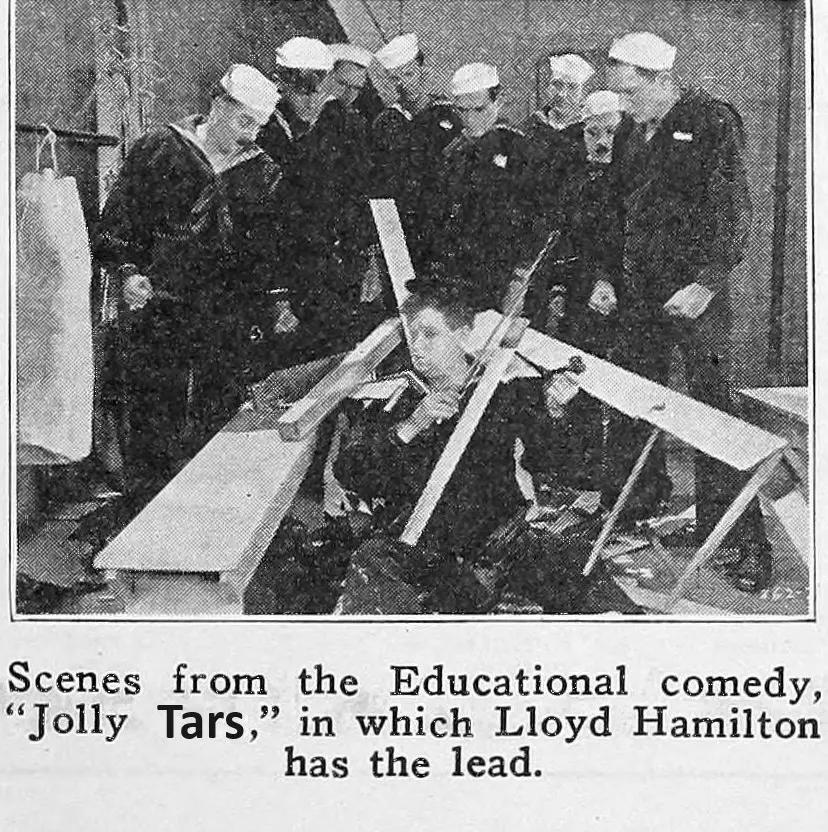
Is 'Jolly Tars' worth watching today? Short answer: yes, but only if you approach it with the right set of expectations and a genuine appreciation for the foundational mechanics of silent-era slapstick. This isn't a film for those seeking profound narratives or cutting-edge visual effects; it's a window into a bygone era of physical comedy, a charming, if at times predictable, diversion.
It's a film for silent film enthusiasts, comedy historians, and anyone curious about the roots of cinematic humor. Conversely, it's not for viewers accustomed to fast-paced, dialogue-driven modern comedies, nor those who lack patience for the deliberate pacing and exaggerated performances inherent to the silent era.
Yes, 'Jolly Tars' holds a certain historical charm and delivers genuine laughs for its target audience. It's a testament to the enduring appeal of physical comedy, even when viewed through a century-old lens. While it won't redefine your understanding of cinema, it offers a delightful, if fleeting, escape.
At its core, 'Jolly Tars' is a classic fish-out-of-water tale, though the 'fish' here, Lloyd Hamilton's character, practically jumps into the net himself. The premise is elegantly simple, almost absurd: a romantic farewell at the pier morphs into an accidental, four-year commitment to the U.S. Navy. This instantaneous shift from lovelorn civilian to bewildered recruit is the film’s central conceit, a springboard for every subsequent gag.
The film opens with Lloyd's frantic dash to Grace Dalton's home, only to be met with the crushing news of her imminent departure for Europe. This establishes the emotional stakes, however lighthearted, for our protagonist. Grace, played with a charming, albeit somewhat passive, grace by Dalton, represents the life Lloyd is desperately trying to cling to – a life of domesticity and romance, far removed from the rigors of military service.
The pivotal moment, Lloyd’s unintentional enlistment, is executed with a delightful blend of physical comedy and escalating panic. The misplaced bus, the bustling pier, the persuasive (or perhaps simply opportunistic) recruiting officer played by Henry Murdock – all conspire against Lloyd. His wide-eyed bewilderment as the ink dries on his contract is a masterclass in silent comedic expression, instantly communicating his utter dismay without a single spoken word.
From this point, the plot dissolves into a series of vignettes exploring Lloyd's hapless attempts to navigate naval life. The narrative isn't concerned with deep character arcs or complex motivations; it's a vehicle for gags, a framework upon which to hang the escalating chaos that defines silent slapstick. It’s simple. It mostly works.
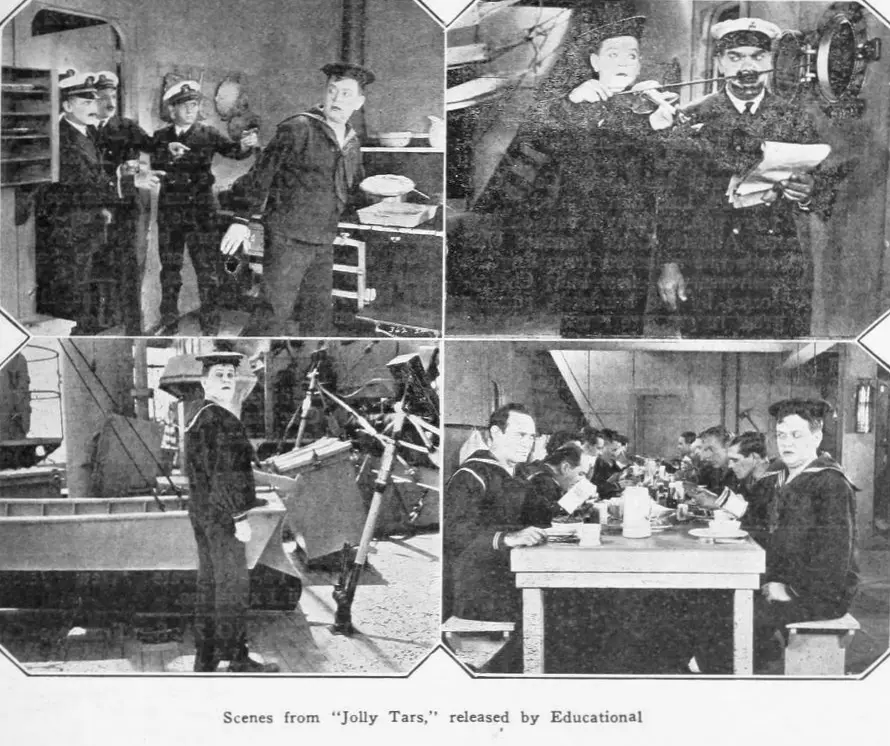
The comedic heart of 'Jolly Tars' undeniably beats with the rhythm of Lloyd Hamilton’s performance. Hamilton, a prolific but often overshadowed silent comedian, possesses a unique brand of humor that sets him apart from the more boisterous antics of a Chaplin or Keaton. His comedy isn't about grand acrobatic feats or a tragicomic tramp persona; it's about the quiet desperation of the everyman, perpetually overwhelmed by circumstances beyond his control. He's the human embodiment of a shrug.
Hamilton's physical comedy is subtle yet effective. Observe his posture – a slight slump, a perpetually worried brow, a gait that suggests he’s always bracing for the next mishap. In 'Jolly Tars,' this is evident in his initial rush to Grace's house, a frantic energy that quickly deflates into resigned despair upon hearing her father's news. Later, his attempts to salute or march in formation are not overtly clumsy, but rather awkwardly sincere, highlighting his fundamental unsuitability for military discipline.
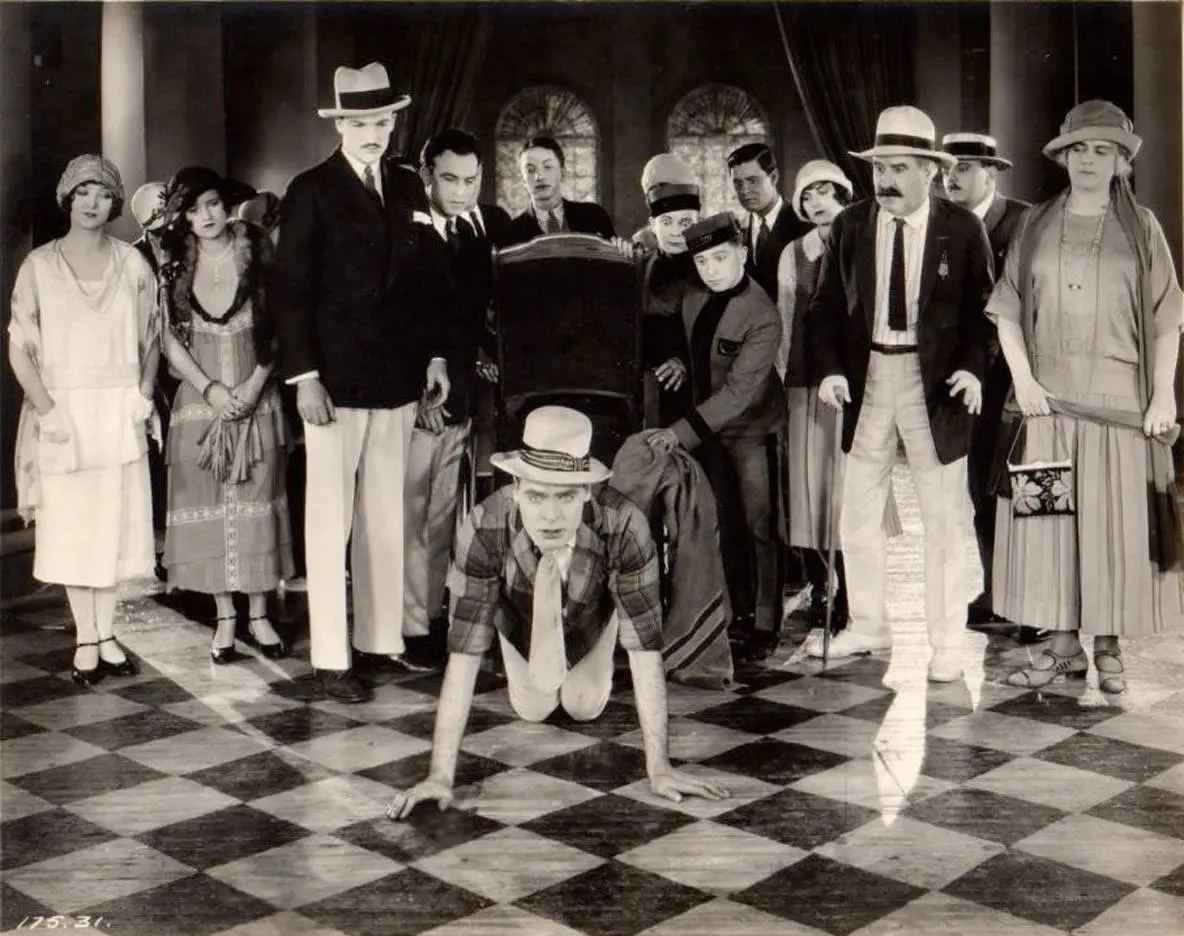
One particular moment stands out: his attempt to polish a deck, which inevitably leads to him sliding across it in a flurry of suds and flailing limbs. It's a classic slapstick scenario, yet Hamilton imbues it with a weary resignation that makes it more relatable than purely farcical. He's not trying to be funny; he's just trying to survive, and that’s where the humor lies.
Grace Dalton, as the object of Lloyd's affection, plays a more reactive role. Her performance is largely defined by wistful glances and concerned expressions, effectively conveying her sorrow at their separation without demanding too much screen time. She represents the anchor Lloyd loses, and her presence, though brief, provides a necessary emotional counterpoint to the ensuing chaos.
The supporting cast, including Dick Sutherland and Phil Dunham, embody the archetypes necessary for this brand of comedy. Sutherland likely portrays a gruff, imposing figure, perhaps a drill sergeant or ship captain, whose authority is constantly, if inadvertently, undermined by Lloyd's blunders. Dunham, a veteran character actor, probably provides bureaucratic exasperation or an additional layer of comedic hindrance. Their performances are broad, designed to amplify Hamilton's understated reactions, creating a dynamic tension that fuels the gags.
Norman Taurog, credited as a writer here, would later become an Oscar-winning director, and even in this early work, one can discern the seeds of his knack for comedic timing. For a silent short, 'Jolly Tars' is surprisingly well-paced. The transitions between scenes are crisp, and the gags don't overstay their welcome, a crucial element for maintaining audience engagement in an era without dialogue.
The cinematography, while not groundbreaking, is functional and effective. Shots are generally straightforward, focusing on clearly framing the physical comedy. There are no elaborate camera movements or experimental angles; the camera is a static observer, allowing Hamilton's body language and facial expressions to tell the story. This directness, however, is a strength, ensuring that the visual jokes land with maximum impact.
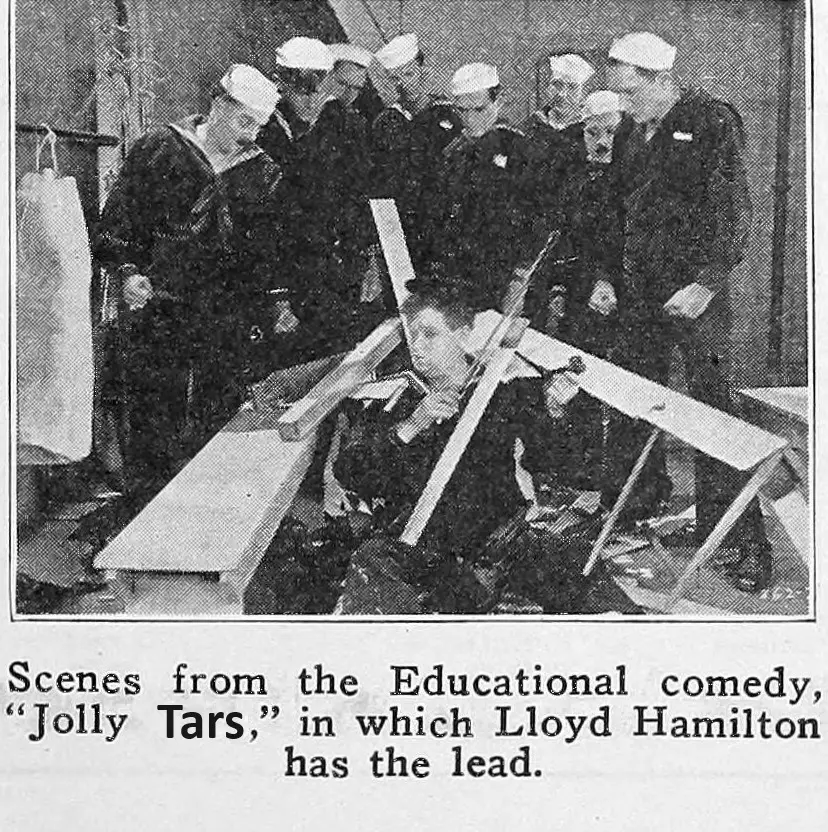
Editing is key to silent slapstick, and 'Jolly Tars' demonstrates a competent understanding of this. The rapid cuts during moments of frantic action – Lloyd missing his bus, signing the papers, or engaging in a shipboard chase – build comedic momentum. Conversely, longer takes are used to allow Hamilton's reactions to fully register, giving the audience time to absorb the humor in his predicament. The interplay between these rhythms is what makes the film feel fluid rather than disjointed.
The use of intertitles is sparse but effective, serving primarily to advance the plot or deliver punchlines. They avoid being overly wordy, allowing the visual storytelling to take precedence. This adherence to visual clarity is a hallmark of good silent film production, and 'Jolly Tars' largely succeeds in this regard.
The humor in 'Jolly Tars' is pure, unadulterated slapstick. It's built on a foundation of mistaken identity, escalating accidents, and the sheer absurdity of a civilian trying to adapt to military life. While the film’s specific gags aren't detailed in the plot, one can easily imagine scenarios: Lloyd attempting to scrub the deck and inadvertently dousing a superior officer, getting tangled in ropes, or accidentally firing a cannon. These are the bread and butter of silent-era naval comedies, and 'Jolly Tars' likely delivers them with gusto.
What distinguishes 'Jolly Tars' from other silent comedies of its time isn't necessarily revolutionary innovation, but rather Lloyd Hamilton's particular brand of comedic pathos. He's not a daredevil like Harold Lloyd, nor a poetic clown like Chaplin. Hamilton is the everyman who finds himself in extraordinary, humiliating circumstances, and his quiet suffering is what resonates. This makes him, for some, even more endearing than his more famous contemporaries.
However, this reliance on predictable setups can also be its biggest flaw for a contemporary audience. Silent slapstick, while often brilliant, frequently relies on a predictability that can feel tedious to contemporary viewers accustomed to more nuanced humor. The escalating chaos is a formula, and once you recognize it, some of the surprise factor diminishes. Yet, there’s a comfort in this predictability, a nostalgic echo of simpler times.
The legacy of films like 'Jolly Tars' lies not just in their individual comedic merits, but in their contribution to the evolution of film language. These shorts were laboratories for visual storytelling, experimenting with timing, framing, and physical performance to elicit laughter without a single spoken word. They laid the groundwork for generations of comedians and filmmakers, proving that a well-executed pratfall can be universally understood, regardless of language or culture.
Jolly Tars is not a lost masterpiece, nor does it aim to be. It's a charming, unpretentious slice of silent-era entertainment, buoyed almost entirely by the magnetic, understated comedic talent of Lloyd Hamilton. While its narrative is as thin as a single sail in a storm, and its humor occasionally shows its age, it delivers precisely what it promises: a succession of well-executed slapstick and sight gags. For those willing to embrace its historical context, it offers genuine chuckles and a valuable glimpse into the foundational art of visual comedy. It’s a pleasant diversion, a reminder that laughter doesn't always need words to resonate. If you're looking for a quick, wholesome dose of vintage humor, 'Jolly Tars' sails just fine.
IMDb 6.9
1932
Community
Log in to comment.