DbcultAccessing Vault...
Cult Review
Senior Film Conservator
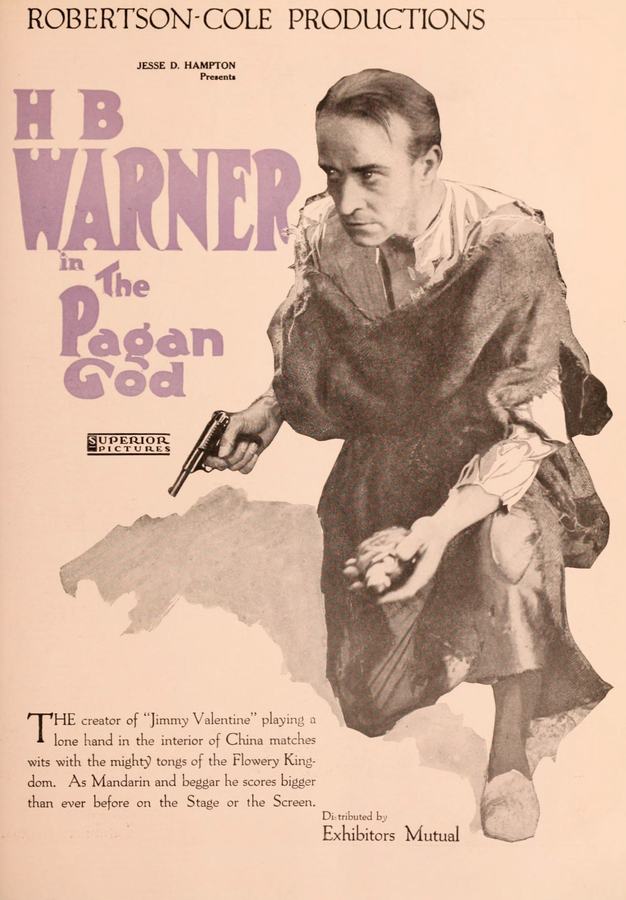
In the nascent years of cinematic storytelling, when the world flickered to life in monochrome and silence, filmmakers often turned to exotic locales and grand narratives to captivate audiences. 'The Pagan God,' a 1918 production, is a prime example of this trend, plunging viewers into a thrilling mélange of international espionage, political intrigue, and passionate romance against the evocative backdrop of the Mongolian borderlands. Directed by George Elwood Jenks and written by Jenks and F. McGrew Willis, this silent epic attempts to weave a complex tapestry of loyalty, betrayal, and forbidden desire, anchored by a compelling cast including H.B. Warner, Carmen Phillips, and Marguerite De La Motte. It’s a fascinating relic, not just for its narrative ambition but for the cultural lens through which it presents its Eastern setting, a common trope in early 20th-century Western cinema.
The film introduces us to Bruce Winthrop, portrayed with a compelling blend of gravitas and quiet intensity by H.B. Warner. Winthrop isn't merely a clerk in the American consulate; he's a secret United States government operative, tasked with the monumental mission of quelling a burgeoning Chinese rebellion. This clandestine role immediately establishes a duality to his character, a man living a lie for a higher purpose. His target, the formidable Tai Chen, brought to life with magnetic allure and dangerous ambition by Carmen Phillips, leads the revolutionary forces from deep within Mongolia. Phillips imbues Tai with an almost ethereal quality, a figure both seductive and menacing, whose very presence promises either salvation or destruction. This dynamic sets the stage for a narrative fraught with tension, where every interaction carries the weight of geopolitical consequence. The screenplay, while adhering to the dramatic conventions of its era, manages to imbue the espionage plot with a surprising degree of urgency, especially considering the limitations of silent film exposition. The visual storytelling, through gestures and intertitles, works diligently to convey the high stakes involved.
Winthrop's initial strategy involves a calculated proximity to Tai, a necessary evil for intelligence gathering. However, this professional entanglement sparks a profound misunderstanding with his fiancée, Beryl Addison, played by Marguerite De La Motte. De La Motte portrays Beryl with a delicate vulnerability, her innocence a stark contrast to the hardened world of espionage and rebellion. Beryl, unaware of Bruce’s true mission, interprets his attentiveness to Tai as a romantic betrayal, leading her to call off their engagement. This emotional pivot serves as a crucial subplot, deepening the personal stakes for Winthrop. His professional duty directly conflicts with his personal happiness, a classic dilemma that resonates even today. The film thus becomes more than just a spy thriller; it's also a poignant exploration of sacrifice and the collateral damage of secret lives. The emotional turmoil of Beryl could easily compare to the complex romantic quandaries found in other period dramas like The Marriage Bond, where societal expectations and personal desires often clash with dramatic results.
The narrative truly accelerates when Winthrop accepts Tai's offer of a position within her inner circle, venturing deeper into the heart of Mongolia. This move is a calculated risk, placing him squarely in the lion's den. Here, he uncovers the full scope of Tai's revolutionary aspirations: her plan to seize the throne and reshape the region. Carmen Phillips’ Tai Chen is not merely a villain; she is a figure of tragic grandeur, driven by conviction and, ultimately, by a profound, unrequited love for Winthrop. Her confession of love and offer of a high position within her new regime highlights the moral ambiguities at play. Is Winthrop merely exploiting her affections, or is there a genuine human connection, however fleeting, that complicates his mission? The film expertly plays with this tension, making Tai a surprisingly sympathetic antagonist, a woman whose ambition is matched only by her vulnerability.
H.B. Warner, with his expressive eyes and restrained physicality, conveys Winthrop's internal struggle admirably. He is a man caught between duty and a burgeoning, albeit dangerous, affection. The scene where he succeeds in reading the secret list of revolutionaries is a masterclass in silent film suspense, relying on subtle movements and intense gazes to communicate the gravity of his actions. This crucial piece of intelligence, however, becomes a catalyst for further peril. In a dramatic turn, the list falls into the hands of Beryl's father, Edward Peil Sr., leading to the capture and threatened execution of both Beryl and her father. This development reintroduces Beryl into the immediate danger, elevating the personal stakes for Winthrop to an unbearable degree. The film effectively uses this trope of the damsel in distress, but with a twist: Beryl's peril is a direct consequence of Winthrop's mission, not just a random act of villainy. This kind of escalating tension and rescue sequence might remind viewers of other adventure-laden silent films, perhaps with the dramatic flair of Rip Roaring Rivals, albeit with a more serious geopolitical undertone.
The strength of 'The Pagan God' largely rests on the shoulders of its lead actors. H.B. Warner, a seasoned performer of the era, brings a nuanced portrayal to Bruce Winthrop. His performance is subtle, relying on facial expressions and body language to convey a man burdened by secrets and torn between allegiances. He avoids the exaggerated theatrics sometimes seen in silent film, opting instead for a more internal struggle that feels remarkably modern. This allows the audience to connect with his moral quandaries and appreciate the weight of his mission. Warner's ability to project intelligence and resolve, even in moments of profound emotional conflict, is truly commendable.
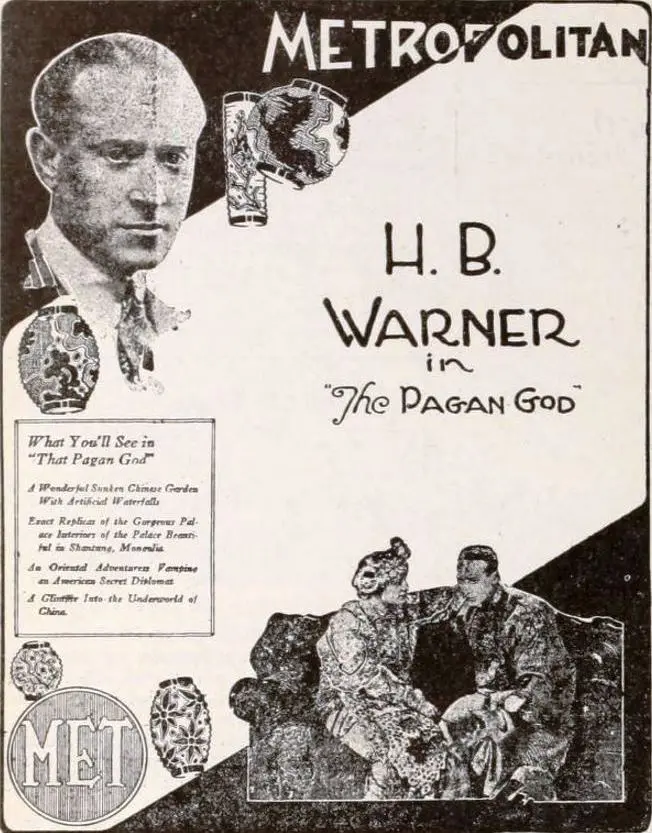
Carmen Phillips, as Tai Chen, is the film's undeniable femme fatale, yet with a depth that transcends mere villainy. Phillips’ portrayal is captivating, her eyes conveying both fierce determination and a heartbreaking vulnerability. She embodies the 'Pagan God' of the title, a figure of immense power and mystique, whose ultimate downfall is tinged with tragedy. Her exotic beauty and commanding presence make her a memorable antagonist, one who elicits a complex mix of fear and sympathy. The chemistry between Phillips and Warner, though fraught with tension, is palpable, adding a layer of sophisticated drama to their interactions. This kind of complex female character, driven by ambition and passion, was a hallmark of certain silent film narratives, perhaps echoing the strong female leads found in films like Old Wives for New, though Tai Chen's geopolitical ambitions set her apart.
Marguerite De La Motte, as Beryl Addison, effectively represents the innocent outsider caught in a dangerous world. Her performance is less about grand gestures and more about conveying genuine distress and unwavering loyalty. Her journey from confusion and heartbreak to understanding and eventual reunion with Winthrop provides the romantic anchor of the story. While her character might seem less active than Tai or Winthrop, De La Motte ensures that Beryl's emotional arc is felt, making her a sympathetic figure whose plight genuinely concerns the audience. The supporting cast, including Edward Peil Sr. as Beryl's father and Yutaka Abe, Walter Perry, and Carl Stockdale in various roles, contribute to the film’s atmosphere, even if their characters are less developed. Their collective efforts help build the world of intrigue and danger that Winthrop navigates.
George Elwood Jenks’ direction, while adhering to the cinematic language of 1918, effectively utilizes the visual medium to tell a compelling story. The film’s pacing, a crucial element in silent cinema, maintains a steady rhythm, building suspense gradually and culminating in dramatic peaks. The choice of the Mongolian border as a setting provides a canvas for exoticism, a fascination for Western audiences of the era. While the depiction might now be viewed through a critical lens concerning cultural representation, it undeniably added to the film's allure at the time. The sets and costumes, though likely constructed on a studio lot, aim to evoke a sense of authenticity, transporting the audience to this faraway land. The use of shadows and lighting, typical of the period, enhances the sense of mystery and danger inherent in the espionage plot.
Thematically, 'The Pagan God' explores several enduring concepts. The conflict between duty and personal desire is central to Winthrop's character, forcing him to make difficult choices that affect both his mission and his relationships. The film also delves into the complexities of loyalty – to one's nation, to one's beloved, and even to a charismatic leader whose cause might be misguided. Tai Chen’s character, in particular, embodies the tragic consequences of ambition and unrequited love, making her a figure of pathos rather than pure villainy. Her ultimate act of self-sacrifice, a stark and dramatic conclusion, underscores the film’s exploration of honor and despair. This dramatic resolution provides a poignant counterpoint to the eventual reunion of Winthrop and Beryl, highlighting the differing fates of those caught in the maelstrom of conflict. The film's portrayal of international conflict and the 'other' aligns with a broader trend in early cinema, where narratives often capitalized on geopolitical anxieties and the allure of distant lands, much like the adventurous spirit seen in films such as The World for Sale.
In its entirety, 'The Pagan God' stands as a compelling artifact of early 20th-century cinema. It’s a testament to the ingenuity of filmmakers who, without sound or color, managed to craft narratives that were both thrilling and emotionally resonant. The film’s strengths lie in its engaging plot, the strong performances of its lead actors, particularly H.B. Warner and Carmen Phillips, and its ability to maintain suspense throughout. While some aspects of its cultural representation may feel dated by modern standards, it offers valuable insight into the preoccupations and narrative conventions of its time. The romantic entanglements and misunderstandings, for example, have parallels in many films of the era, from lighthearted fare like A Coney Island Princess to more dramatic offerings, but 'The Pagan God' elevates these personal dramas with a backdrop of international espionage.
The resolution, with Winthrop’s successful rescue of Beryl and her father, the dispersal of the revolutionaries, and Tai Chen's tragic end, brings a sense of closure, albeit one tinged with the melancholy of lost lives and unfulfilled ambitions. The final reunion of Winthrop and Beryl reaffirms the triumph of love and duty, a comforting conclusion for audiences of the time. For contemporary viewers, 'The Pagan God' is more than just a historical curiosity; it’s an opportunity to witness the foundational elements of genre filmmaking—espionage, romance, and adventure—being forged in the silent era. It reminds us of the power of visual storytelling and the enduring appeal of human drama, regardless of the technological limitations of its creation. Its intricate plotting and character-driven conflicts ensure that it remains a fascinating, if sometimes overlooked, piece of cinematic history.
IMDb 5.8
1935
Community
Log in to comment.