DbcultAccessing Vault...
5.5/10
Senior Film Conservator
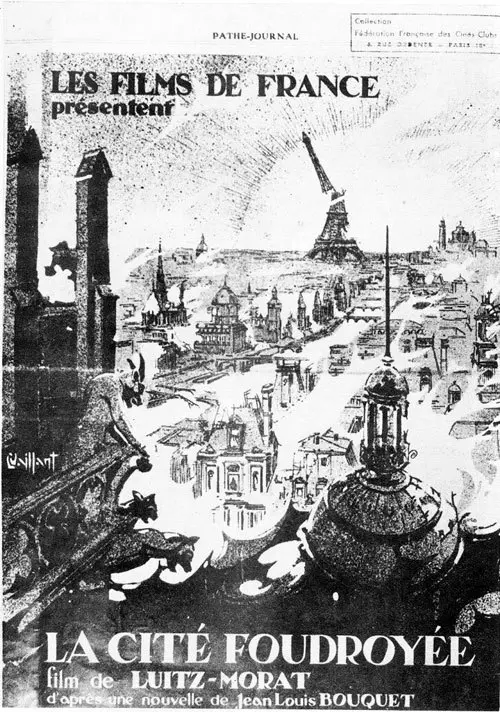
A definitive 5.5/10 rating for a film that redefined the boundaries of cult cinema. The City Struck by Lightning remains a cornerstone of transgressive art.
The City Struck by Lightning
In the realm of cinematic history, certain films stand out for their prophetic vision and technical ingenuity. The City Struck by Lightning, helmed by a visionary director and penned by Jean-Louis Bouquet, is one such movie. This gripping tale of a crazed scientist bent on global domination via his lightning/ray gun is as much a product of its time as it is a timeless warning about the perils of unchecked scientific progress.
The plot, expertly woven by Bouquet, revolves around a scientist whose ambition knows no bounds. Driven by an insatiable desire for power and control, he sets his sights on Paris, the City of Light, both literally and metaphorically. The film's cast, including Paul Journée, Lucien Cazalis, and Émilien Richard, bring to life the complex web of characters that populate this dystopian vision.
At its core, The City Struck by Lightning is a study in contrasts. On one hand, it presents a future where science has advanced to the point of near-singularity, yet on the other, it reveals the primal fears and vulnerabilities of humanity. This juxtaposition is masterfully achieved through a combination of state-of-the-art special effects and a narrative that probes the darker aspects of human nature.
The cinematography is noteworthy, capturing the eerie beauty of a city on the brink of destruction. The use of lighting, in particular, adds a layer of depth to the film, symbolizing both the literal and metaphorical illumination of the human condition. Each frame is meticulously composed, drawing the viewer into a world that is at once familiar and unsettlingly alien.
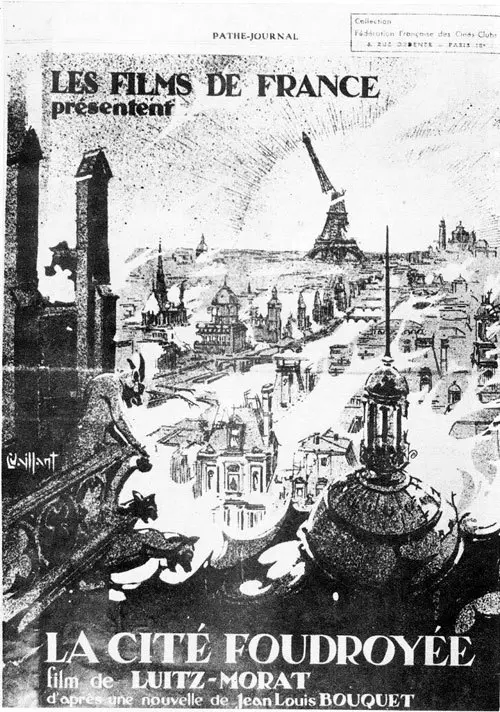
In terms of thematic resonance, The City Struck by Lightning shares some intriguing parallels with Richelieu, another film that explores the intersection of power, ambition, and morality. However, while Richelieu focuses on the machinations of a cunning statesman, The City Struck by Lightning takes a more speculative approach, delving into the realm of science fiction.
The performances of the cast are commendable, bringing a level of authenticity to the film's speculative narrative. Paul Journée, in particular, stands out, embodying the complexity of a character torn between genius and madness. The supporting cast, including Lucien Cazalis and Émilien Richard, add depth to the story, their characters serving as foils to the scientist's megalomania.
Comparing The City Struck by Lightning to other films of its era, such as Dangerous Days and Solomon in Society, reveals a shared concern with the social and ethical implications of technological advancement. While Dangerous Days presents a more industrialized vision of the future, and Solomon in Society offers a critique of societal norms, The City Struck by Lightning uniquely combines these themes with a gripping narrative of scientific hubris.
In conclusion, The City Struck by Lightning is a masterpiece of early cinema, offering a prescient exploration of the dangers of unchecked scientific progress and the enduring power of human resilience. Through its expertly crafted narrative, memorable performances, and groundbreaking special effects, the film provides a viewing experience that is both entertaining and thought-provoking.
The film's influence can be seen in later works, such as The Silent Witness and The Reed Case, which also explore the intersection of technology and morality. However, The City Struck by Lightning remains a standout, its unique blend of science fiction and social commentary making it a must-see for fans of classic cinema.
Ultimately, The City Struck by Lightning is a testament to the power of cinema to challenge, entertain, and inspire. As we continue to navigate the complexities of our own technological landscape, this film serves as a timely reminder of the importance of ethics, responsibility, and the enduring human spirit.

IMDb 6.8
1925
Community
Log in to comment.