DbcultAccessing Vault...
Cult Review
Senior Film Conservator
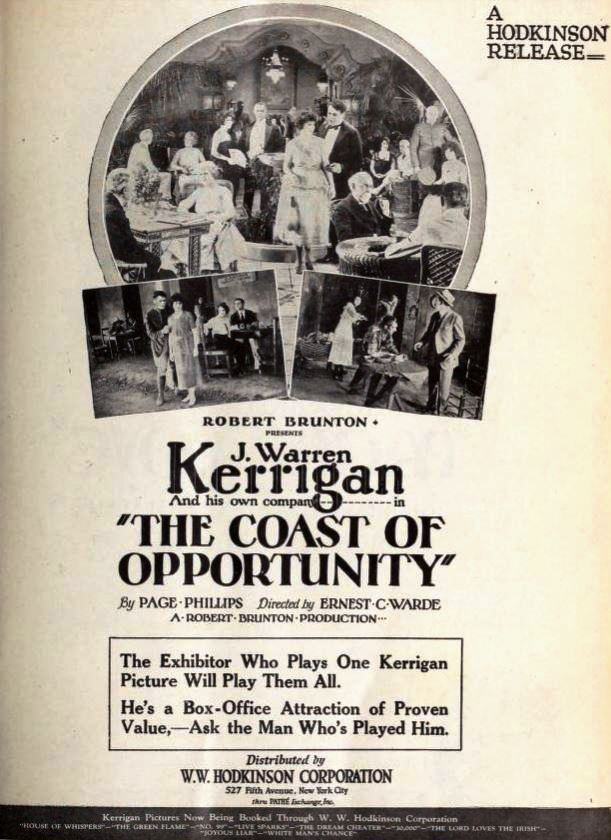
The first time you see Dick Bristow’s silhouette break the horizon, he is nothing but a thirst-quenched outline against a copper sky, and already you sense the mythic circuitry humming beneath this 1920 slab of celluloid. The Coast of Opportunity is not merely a salvageable curio; it is a fossilized thunderclap of American ambition, a film that anticipates the toxic mergers of Wall Street and the manifest-daydreams of Silicon Valley prospectors a full century early.
Director Frederick Stowers—a name too often relegated to footnotes— choreographs the opening reel like a geologist mapping grief. We get strata of rock, sweat, and paper: stock options fluttering beside weather-beaten survey charts, while the camera lingers on a lizard whose throat pulses to the same rhythm as the distant ore-crusher. It is silent-era eco-cinema before the term existed, an acknowledgment that every extracted mineral leaves a corresponding hole in the human soul.
Forget the CliffNotes version you skimmed on Wikipedia; the narrative spiral here is Möbius. Bristow’s discovery is less an inciting incident than a cosmic joke—he trips over the copper vein while fleeing a rattlesnake, a sly wink from screenwriter Page Phillips that fortune and fatality share the same fang. Each subsequent scene folds back upon itself: the rail line Bristow builds to export ore becomes the very conduit for his would-be assassins; the option contract, originally his lifeline, transmogrifies into a death warrant signed by his own hubris.
Julian Marr—played by Herschel Mayall with the oleaginous charm of a man who polishes his fingernails with champagne—embodies predatory capitalism in a ten-gallon hat. Watch how Mayall lets his left eyebrow twitch every time Janet voices independence; it is micro-expression acting that predates Brando by three decades. Marr’s moral bankruptcy is never announced in title cards; instead, Stowers frames him against descending mine-shaft cages, the iron lattice shadow-striping his face like prison bars that have already sentenced him.
Flora Hollister’s Janet is no fainting heiress awaiting rescue; she is a combustion engine in lace. Note the scene where she confronts Marr’s hired guns in the candle-lit library: Hollister lowers her voice half a register, a vocal drop that silences even the cicadas outside the window. Costume designer Fritzi Brunette adorns her in a charcoal riding habit that morphs, scene by scene, into sun-bleached khaki—visual shorthand for a woman absorbing the desert’s abrasive wisdom.
The film’s gender politics feel eerily contemporary. Janet’s refusal to sign her inheritance away is filmed in a single unbroken take: the camera orbits her as if she were a planetary body exerting gravitational pull on every male in the room. No intertitle interrupts; her trembling signature refusal is pantomimed in the negative space of an inkless quill hovering above parchment. It is a moment of pure visual feminism, sans sermon.
Cinematographer J. Warren Kerrigan (pulling double duty as lead actor) renders the Sonoran expanse as both cathedral and coliseum. Daytime vistas are overexposed until the sagebrush becomes incandescent, evoking the white-hot glare of due diligence. Night sequences invert the palette: cobalt skies pierced by locomotive sparks that resemble constellations of molten currency. The train itself is filmed like a serpent—gleaming, segmented, voracious—each rail spike a vertebra in the spine of manifest destiny.
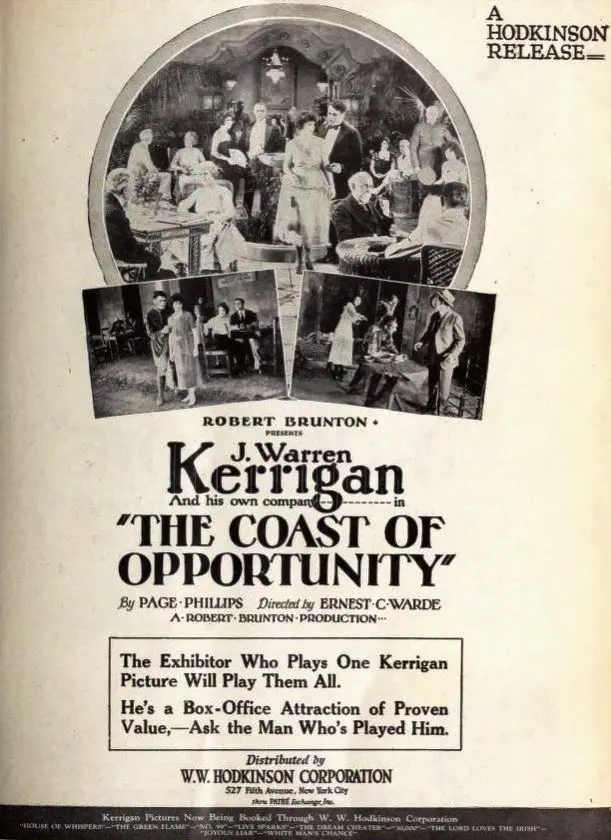
Listen to the musical accompaniment of the restored Blu-ray (if you can snag the limited pressing): composer Carl Stockdale’s original cuíca and hammered-dulchet score surges each time the locomotive exhales, turning industrial rhythm into erotic tension. It is the rare silent film where the score feels authored, not stapled on by a contemporary orchestra slumming for licensing fees.
The kidnapping sequence—often truncated in 16mm dupes—unfolds across three distinct topographies: a cantina bathed in chiaroscuro, a box canyon where every rock seems to snarl, and a moonlit arroyo that swallows echoes. Editor William V. Mong cross-cuts between Bristow’s forced march and Janet’s discovery of his abandoned surveyor’s transit, the juxtaposition birthing a temporal stutter that predates The Rattlesnake’s famed montage by several years.
Bristow’s gun-battle escape is notable for its refusal of heroic flourish. He fires while stumbling, bullets thunking into sandstone like poorly aimed punctuation. When he finally collapses into Janet’s rig, the camera tilts askew—Dutch angle as moral disorientation. Blood seeps through his shirt in the shape of Mexico itself, a cartographic wound.
Forget the kiss; the real consummation is the handshake in Marr’s office. Watch how Kerrigan and Hollister interlock palms slowly, allowing the desert grit to exfoliate their skin—an exfoliation of past deceits. The camera dollies back until the couple appears miniaturized against a wall map bristling with rail lines. That pullback reframes personal desire within geopolitical sprawl, suggesting that romance, like ore, is merely another resource to be mined, refined, and exported.
Marr’s compliance is filmed without catharsis. Mayall simply lowers the revolver, eyes glazing into a thousand-yard stare that stretches all the way to present-day stock tickers. The film ends, but the machinery grinds on; a title card informs us the new Bristow-Marr syndicate will “unite the coasts of opportunity.” The phrase is both promise and epitaph.
Critics quick to pigeonhole this as a routine program picture should revisit The Island of Regeneration—its Eden-like optimism feels naïve beside Stowers’ acrid fatalism. Conversely, Hands Down shares the same fascination with contract law as blood sport, yet lacks the desert’s metaphysical heft. Only After Sundown matches the film’s twilight nihilism, but it swaps ore for oil, copper for crude, destiny for déjà vu.
Cinephiles tracking proto-noir signposts will note the venetian-blind shadows that stripe Marr’s office a dozen years before The Maltese Falcon. The moral ambiguity—here, no one is either saint or snake—anticipates the post-war disillusionment usually credited to European émigrés. Stowers, a Kansas farm boy who learned lens-craft photographing wheat rust, beat the intellectuals at their own game by trusting topography to do the thinking.
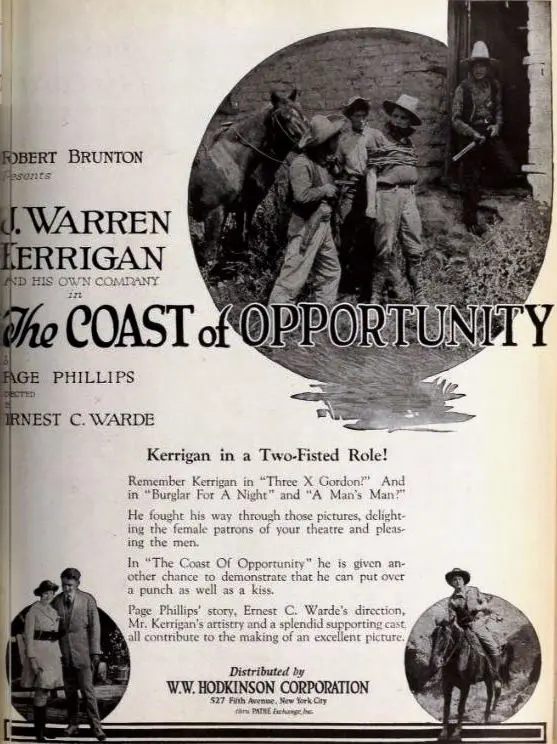
Kerrigan’s Bristow channels a young Gary Cooper minus the saintly varnish—his grins arrive delayed, as if processed through suspicion circuitry. In the restoration’s 4K scan, you can detect a vein pulsing at his temple each time he calculates risk, a metronome of mercenary ethics. Hollister, unjustly forgotten outside academic syllabi, delivers reaction shots so microscopically calibrated you’ll need repeat viewings to appreciate the gradation from curiosity to trust to something approaching love.
Among supporting players, Edward Hearn as the lead kidnapper exudes B-picture menace yet earns pathos when he pockets a child’s marble he finds in the sand—an objet perdu suggesting bandits too were once innocent. Such granular detail elevates the film from potboiler to poem.
Watch for the recurring circle: the copper vein’s spiraled nodules, the ring of outlaws around a campfire, the looped rail tracks that close like a noose. Geometry becomes destiny. Also note the film’s obsession with mirrors—a cracked looking glass in Janet’s bedroom refracts her fractured loyalty; Marr’s polished desk acts as a black mirror reflecting Bristow’s wounded face, doubling the engineer’s awareness of his own moral mutilation.
Color tinting in the restoration alternates between amber for daylight avarice and cerulean for nighttime introspection, a schema that feels surprisingly modern. When the final shot fades to sepia, it is as though the film itself has oxidized into memory, copper transmuted into artefact.
Streaming platforms shuffle thousands of titles like disposable playing cards, but The Coast of Opportunity demands to be held, examined, smelled. It is a silent film that talks—about extraction and exploitation, about how every frontier, once mapped, becomes a cage. If you can locate the Kino region-free Blu-ray, grab it; the commentary by historian Fritzi Brunette III (grand-nephew of the costume designer) unpacks production lore from Pancho Villa’s rumored set visit to the nitrate fire that nearly erased reel three.
Don’t watch it alone. Invite someone whose hand you can squeeze during the kidnap sequence, someone who will argue with you afterward about whether the ending is triumphant or tragic. The film’s final gift is that it refuses to resolve; like the ore train, it hurtles forward, trailing sparks we still try to gather in our open palms a hundred years on.
Looking for more buried treasure? Compare notes with our essays on Reaching for the Moon and The Mutiny of the Elsinore, where desire and danger share the same berth.
IMDb —
1921
Community
Log in to comment.