DbcultAccessing Vault...
6.4/10
Senior Film Conservator
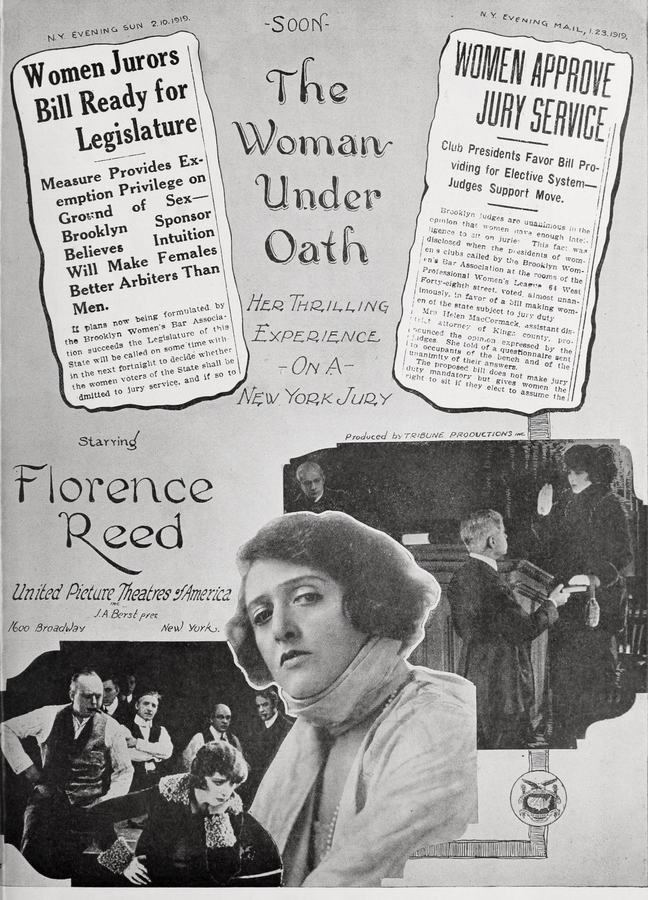
A definitive 6.4/10 rating for a film that redefined the boundaries of cult cinema. The Woman Under Oath remains a cornerstone of transgressive art.
Stepping into the flickering glow of an early cinematic masterpiece like 'The Woman Under Oath' is akin to unearthing a time capsule, not just of filmmaking, but of societal anxieties and nascent shifts. This 1925 drama doesn't merely tell a story; it serves as a fascinating cultural artifact, challenging contemporary notions of gender roles within the austere confines of the American legal system. From its very opening, with a didactic foreword questioning the suitability of women for jury duty, the film positions itself squarely at the nexus of social commentary and gripping melodrama. It's a bold gambit, immediately inviting the audience to consider the inherent biases of the era, setting a stage where justice itself is not merely blind, but perhaps prejudiced.
The narrative thrust is immediate and visceral: we are plunged into the aftermath of a violent crime. Young shipping clerk Jim O'Neil (Gareth Hughes) stands over the deceased body of his employer, Edward Knox (Harold Entwistle), a smoking revolver in his grasp. The tableau is one of undeniable suspicion, a perfect storm for a sensational trial. But what truly elevates this particular legal drama is the introduction of Grace Norton (Florence Reed), a celebrated novelist, who makes history as New York's inaugural female juror. Her presence isn't just a plot device; it's a profound statement, a deliberate disruption of the established order, designed to provoke thought and, perhaps, discomfort among contemporary audiences. Reed, with her commanding presence, embodies this trailblazing spirit, navigating a landscape traditionally dominated by men, her very participation a silent, yet potent, act of defiance.
The initial proceedings are fraught with the unspoken. Jim O'Neil, despite his fervent declarations of innocence, remains frustratingly tight-lipped about the circumstances leading to Knox's death. This reticence only deepens the mystery, fueling the jury's suspicions and testing Grace's resolve. The film masterfully builds this tension, allowing the audience to feel the weight of the jurors' frustration and the defendant's enigmatic silence. It's a testament to the power of early silent cinema, where gestures and expressions carry the full weight of dialogue, demanding a more engaged and interpretive viewing experience. One might draw parallels to the psychological intensity found in films like The Argyle Case, where the slow reveal of information is paramount to the dramatic impact.
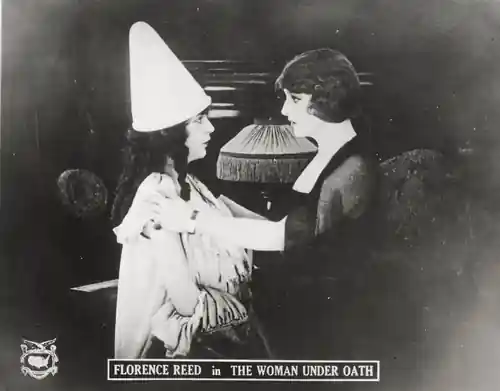
The narrative pivot arrives with the testimony of Helen (May McAvoy), Jim's sweetheart. Her heartbreaking account shatters the courtroom's decorum, revealing a darker, more predatory side to the deceased Edward Knox. Helen recounts how she desperately pleaded with Knox for Jim's reinstatement, only to be met with a horrifying act of sexual violence. This revelation not only provides a motive for Jim but also casts Knox in a villainous light, complicating the simplistic good-vs-evil dynamic initially presented. Jim's subsequent testimony further twists the knife of intrigue: he confesses his intent to murder Knox, driven by a righteous fury over Helen's assault, but insists he found his tormentor already dead. This introduces a fascinating 'whodunit' element, transforming the trial from a straightforward judgment of guilt or innocence into a genuine puzzle.
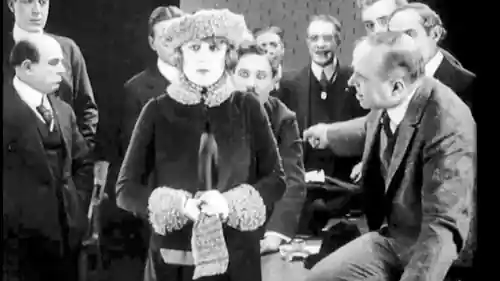
The jury's deliberation is where 'The Woman Under Oath' truly shines as a study in human nature under duress. Confined within the jury room, the eleven male jurors, presumably representing the prevailing societal views, are pitted against Grace Norton, the lone dissenter. Their all-night session devolves into a heated, angry deadlock, an 11-to-1 split against a guilty verdict, with Grace holding firm. This segment is a microcosm of the larger societal struggle, portraying the arduous battle for a woman's voice to be heard and respected in a male-dominated sphere. The film effectively uses the claustrophobic setting to amplify the tension, showcasing the clash of personalities, prejudices, and principles. The sheer endurance of Grace against such overwhelming opposition is a powerful statement on conviction and moral courage.
Florence Reed's portrayal of Grace Norton is particularly compelling during these intense scenes. She conveys a profound sense of inner turmoil and unwavering conviction, without resorting to histrionics. Her subtle expressions, the set of her jaw, the intensity in her eyes – all speak volumes, communicating the immense pressure she is under and her steadfast belief in a more nuanced truth. It’s a performance that transcends the limitations of silent film, resonating with an authenticity that still feels palpable today. Her character is not merely a symbol of female empowerment but a complex individual grappling with profound ethical dilemmas.
The film then introduces its most shocking twist, one that reconfigures everything that has come before. As dawn breaks, bringing with it the news of her sister Edith's death, Grace Norton is utterly broken. In a moment of raw, unvarnished grief and confession, she reveals the devastating truth: she, Grace, is the true killer of Edward Knox. Her motive is a tragic echo of Helen's plight – Knox had seduced Edith and then callously reneged on a promise of marriage, leaving her sister heartbroken and, implicitly, leading to her demise. This revelation is a masterstroke of dramatic irony, transforming the pioneering female juror into the very perpetrator she was sworn to judge. It's a narrative bombshell that forces both the jury and the audience to re-evaluate every preceding scene, every glance, every word.
This confession plunges the jury into an ethical abyss. The foreman, acutely aware of their solemn oath to keep jury proceedings secret, faces an unprecedented dilemma. The film doesn't shy away from the profound moral quandary, allowing the weight of the decision to settle heavily upon each juror. The subsequent agreement to conceal Grace's confession and acquit Jim is a controversial, yet undeniably human, resolution. It speaks to a raw, primal justice, perhaps transcending the letter of the law in favor of a perceived moral rightness. The jurors, now privy to a truth far more complex than the courtroom drama allowed, opt for a collective act of mercy and, perhaps, a shared complicity. This echoes themes of communal secrecy and the blurring of moral lines seen in other dramatic works of the era, where the strictures of society often clashed with individual desires and desperate acts, much like the intense personal stakes in Love or Justice.
The thematic richness of 'The Woman Under Oath' extends beyond its immediate plot. It's a profound exploration of justice – its fallibility, its complexities, and its often-unseen human cost. The film questions whether true justice can ever be achieved through rigid legal frameworks when human emotions, betrayals, and deeply personal tragedies are at play. It's a bold statement on the limitations of the system, suggesting that sometimes, the most 'just' outcome might require bending, or even breaking, the rules. The film also delves into the destructive power of societal expectations and the devastating consequences of broken promises, particularly for women in that era. Edith's fate, though largely off-screen, serves as a poignant reminder of the vulnerability faced by women at the mercy of unscrupulous men.
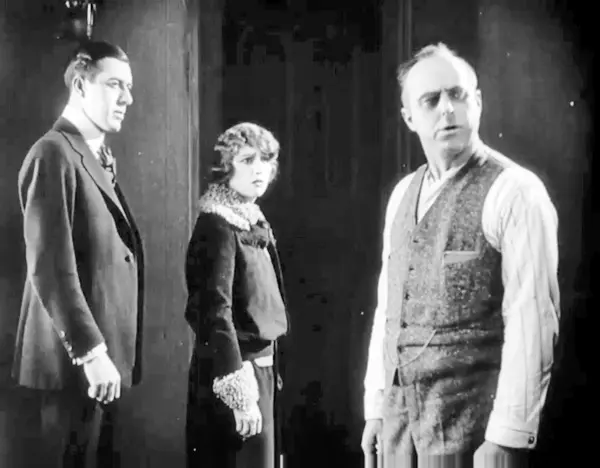
Performance-wise, the ensemble cast delivers a solid foundation for the unfolding drama. Hugh Thompson as one of the jurors, Walter McEwen, Edward Brennan, and Florida Kingsley – all contribute to the authentic atmosphere of the jury room. Gareth Hughes, as the accused Jim O'Neil, manages to convey a compelling blend of innocence and simmering rage, making his ultimate acquittal feel both earned and morally ambiguous. May McAvoy as Helen brings a raw vulnerability to her pivotal testimony, making her character's trauma palpable and providing the initial catalyst for the jury's internal conflict. These performances, while constrained by the conventions of silent film acting, manage to convey a surprising depth of character, pulling the audience into their shared predicament.
From a technical perspective, the film showcases the evolving craft of silent cinema. While perhaps not as visually audacious as a contemporary Robin Hood, the direction maintains a steady hand, focusing on character reactions and the slow, deliberate unveiling of the truth. The use of close-ups during key emotional moments, particularly during Grace's confession and the jury's deliberation, effectively amplifies the drama, drawing the audience into the characters' internal struggles. The pacing, though deliberate by modern standards, allows for the gradual build-up of suspense and the full impact of each revelation. The film's strength lies not in grand spectacle, but in its intimate portrayal of moral struggle and the human condition.
Ultimately, 'The Woman Under Oath' is far more than a simple murder mystery. It's a socio-legal drama that grapples with profound questions about gender, justice, and the sometimes-blurry line between right and wrong. It’s a testament to the power of early cinema to engage with complex contemporary issues, using a compelling narrative to provoke thought and discussion. The film's conclusion, while ethically challenging, resonates with a raw, humanistic sentiment, suggesting that compassion and understanding can sometimes outweigh the rigid adherence to legal statutes. It reminds us that behind every verdict lies a tapestry of human lives, motivations, and often, untold secrets. This film remains a compelling watch, not just for its historical significance as a portrayal of pioneering female participation in the justice system, but for its enduring exploration of the intricate dance between law, morality, and the human heart. It prompts us to consider whether true justice resides solely in the application of law, or in the deeper, often unwritten, code of human empathy and shared understanding. Its provocative ending ensures that its themes linger long after the final frame, compelling viewers to ponder the true cost of justice and the secrets we keep to protect those we deem worthy.
IMDb 6.5
1933
Community
Log in to comment.