DbcultAccessing Vault...
Cult Review
Senior Film Conservator
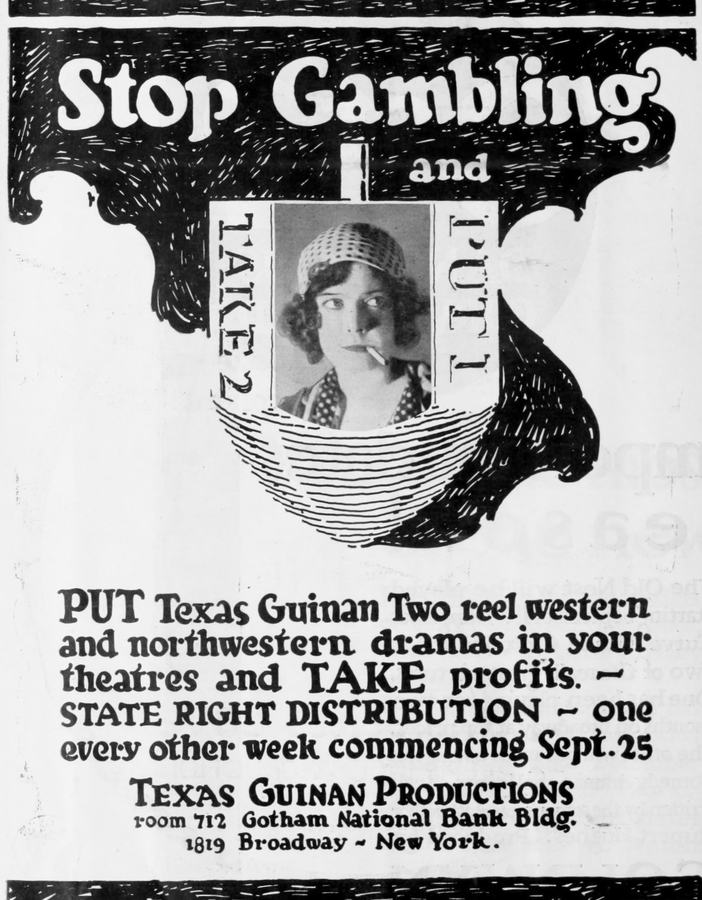
A nickel-arcade projector once clattered this reel through a Texas opera house in the fall of ’21; the crowd smelled of mesquite, kerosene, and the last century’s uncertainty. What they saw—though the title cards have frayed—was a frontier aria about ownership: of soil, of body, of story. The Code of the West (dir. unaccredited, script by Mildred Sledge, Frances Guihan, Jesse J. Ormont) survives today only in scattered 35-ft cans, yet its mythic pulse endures, throbbing louder than many pristine epics.
Strip the logline to bones—a woman, a mortgage, a posse of scoundrels—and you still feel the marrow: land as destiny, woman as deed, violence as interest on unpaid futures. The narrative engine is blunt: foreclosure looms, villains torch the ledgers, and the chase begins. Yet the film’s cadence is anything but primitive. Editors splice day-for-night footage with iris-shot close-ups so that every hoofbeat seems to punch through the celluloid itself. The brother’s wounding arrives via jump-cut: one frame he is mounted, the next he lies supine, blood blooming like a poppy on alkali. That jolt—pure 1920s visual daring—still outstrips the continuity pieties of later sound westerns.
Notice how the script refuses to center the marshal. Authority here is peripheral; instead, the camera clings to Texas Guinan’s ranch heiress, her trousers belted high, revolver butts polished like obsidian eggs. She brandishes contracts as fiercely as Colts, an embodiment of proto-feminist property rights rarely granted in The Awakening’s spiritual melodrama or Big Happiness’s marital romps. When the villains kick in her oak door, they splinter more than timber—they fracture the masculine assumption that only men can hold collateral against the horizon.
Texas Guinan, vaudeville queen turned screen icon, strides through scenes with the swagger of a cavalry bugle. Her grin is both invitation and warning: come closer, but count your fingers afterward. Opposite her, David E. Townsend’s foreman courts with the laconic economy of a man who sleeps spur-to-spur with danger. Their chemistry transpires less in clinches than in mirrored postures—both square shoulders the same way when cocking rifles, a choreography of equals. It’s the type of gendered mirroring you’d be hard-pressed to locate in Rogues and Romance, where romance tilts into damsel theatrics.
Watch Guinan’s micro-gesture when she sips coffee laced with gun-smoke: pinky extended, eyes hawk-still over the tin rim. That dainty finger becomes a semaphore of civility refusing to capitulate to the savage dusk. Silent film, bereft of spoken bravado, magnifies such flourishes; the audience reads hieroglyphs of wrist and clavicle. In this semaphore, Guinan carves a lexicon of female dominion decades ahead of its time.
Early sepia tinting bathes homestead interiors in honey, implying domestic utopia; the moment loan-sharks intrude, the footage shifts to cobalt-blue—an early form of emotional color grading. Modern viewers might mock the artifice, yet the abrupt hue swap generates uncanny disquiet, prefiguring the moral inversion of the plot. The climactic jailbreak, rendered in high-contrast yellow, feels like a nickelodeon sun—blinding, righteous, and slightly surreal.
Framing devices further complicate ethics. A low-angle shot of the sheriff positions him against a cruciform windowpane, inadvertently sanctifying state power; seconds later, the same angle is applied to the outlaw gang, doubling the visual sanctity and thereby muddying moral binaries. It’s a visual echo you’ll scarcely find in the more schematic morality of The Great Nickel Robbery, where cops wear white hats in both costume and lighting.
Three writers—Sledge, Guihan, Ormont—interweave legal jargon with frontier aphorisms: "A deed is just paper till a bullet signs the margin." Such lines, intertitled in florid serif, intimate that contracts, like flesh, are permeable to violence. The heroine’s final act is not vengeance but record-keeping; she restores the mortgage receipt to its iron safe, slamming the vault like a judge’s gavel. Property, once validated, re-subjugates chaos. This denouement undercuts the masculine revenge trope still fetishized by countless westerns, including the contemporaneous The Kaiser’s Shadow, where dynastic honor eclipses civic procedure.
Moreover, the screenplay sneaks in economic literacy rarely granted to female characters of the era. Guinan’s heiress tallies interest, negotiates extensions, and even lectures the banker on variable-rate perfidy. Her intellect, not her waistline, anchors the final reel—a quiet revolution amid cowboy bombast.
Original screenings boasted live fiddle and stomp-board, rhythms now lost to archival silence. Yet even mute, the film crackles with sonic suggestion: you can almost hear the rope whiz before it ensnares a rafter, the metallic rasp of spur against stirrup. Contemporary curators sometimes pair the picture with modern bluegrass, but that anachronism flattens the historical imagination. Better to watch in hush, letting phantom syncopation haunt the gallery.
Exhibition ephemera from Dallas’ Palace Theatre promises "Real gunsmoke pumped through ducts!"—an early 4D gimmick. One can only ponder how the scent of cordite altered narrative reception; did viewers conflate the on-screen siege with post-WWI labor clashes still fresh in memory? Such haptic exhibition tactics foreshadow immersive cinema by a full century.
Stack The Code of the West against Youthful Folly: both hinge on inheritance, yet where the latter moralizes prodigal sons, our western lets a woman reclaim birthright without patriarchal absolution. Contrast it with Romeo and Juliet in the Snow—a playful alpine rehash of star-crossed tropes—whose stakes feel featherweight compared to the threat of foreclosure bloodied by real bullets.
Even beside Miss Crusoe’s island feminism, Guinan’s ranch mistress wields more systemic clout: she battles not nature but contract law, a foe simultaneously abstract and lethal.
Though largely unremembered, the picture fed the archetype later polished by Barbara Stanwyck in Forty Guns and by Marlene Dietrich in Destry Rides Again. Guinan’s proto-Amazon became a template, her smirk recycled in pulp cover art, comic strips, even cigarette cards. When second-wave academics later excavated women’s participation in homestead legislation, they stumbled upon references to this film in 1922 suffrage newsletters, cited as evidence that frontier liberty could be re-imagined beyond the masculine gaze.
Only two incomplete prints survive: one at the Library of Congress (missing reel 3), another in a private Parisian archive (nitrate, dangerously brittle). Digital 4K scans captured the intertitles but cannot replicate the original tint; hence restorations oscillate between sepia fidelity and interpretive blue. Each iteration renegotiates history, reminding us that restoration is criticism by other means.
Measured against the gargantuan budgets of today’s neo-westerns, this 55-minute sprint feels like a campfire tale told with Shakespearean gravitas. Its gender politics prefigure contemporary discourse, its visual grammar invents grammar, its economic critique resonates in an age still grappling with subprime sins. For buffs seeking lineage, for feminists seeking provenance, for cinephiles seeking sparks, The Code of the West is not a relic but a root system—gnarled, hidden, sustaining everything that grows above.
Score: 9/10 – A silent stunner that still rattles spurs in the 21st-century psyche.
IMDb 7.1
1925
Community
Log in to comment.