DbcultAccessing Vault...
Cult Review
Senior Film Conservator
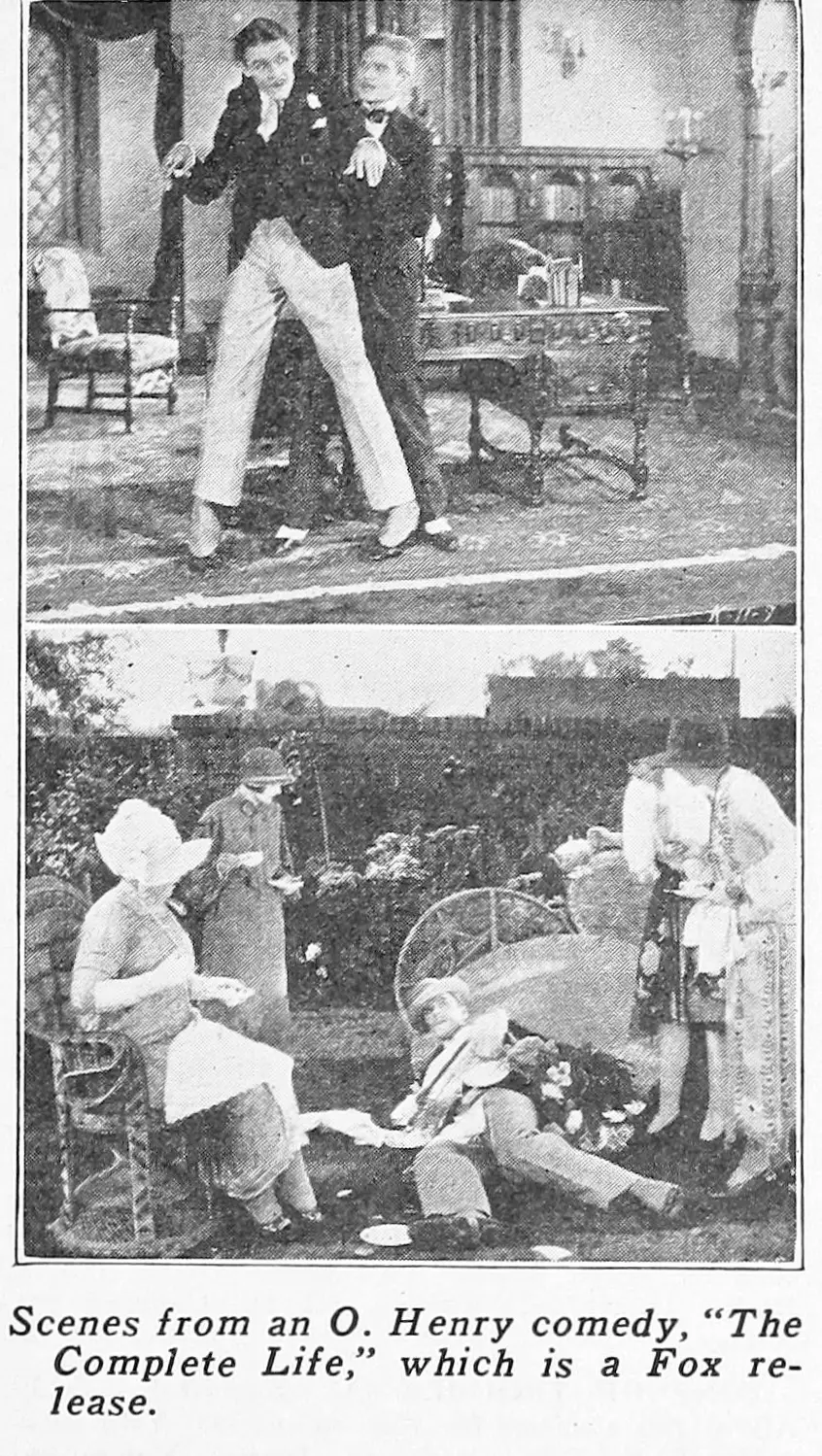
Is The Complete Life worth watching today? Short answer: yes, but with significant caveats. This early silent comedy is a fascinating historical artifact for cinephiles and those curious about the roots of slapstick, but its outdated gender dynamics will undoubtedly grate on modern sensibilities. It’s a film for those with an appreciation for cinema’s formative years, not for viewers seeking progressive narratives or universally palatable humor.
This film works because of its energetic pacing and the sheer commitment to physical comedy that defines early silent cinema. It fails because its ultimate resolution hinges on a problematic, misogynistic worldview that undercuts much of the preceding lightheartedness. You should watch it if you appreciate silent film history, O. Henry's early adaptations, or the raw, unpolished charm of classic chase sequences.
At its core, The Complete Life is a film built on escalating absurdity. It begins with a premise that is both quaintly charming and faintly ridiculous: a man, slightly worse for wear, mistaking a telephone booth for a taxi. This simple misunderstanding is a brilliant, understated hook, grounding the ensuing chaos in a relatable, if exaggerated, human error. It immediately establishes a tone of playful chaos, a world where logic takes a backseat to comedic opportunity.
The inciting incident – a phone call revealing a broken engagement – propels the narrative forward with breakneck speed. This is where the film truly finds its stride, transitioning into a protracted car chase that is the comedic engine of the entire piece. These sequences, a staple of early cinema, are executed with a verve that belies the film’s age, showcasing a series of inventive, if simple, gags that would influence generations of physical comedy.
However, the narrative takes a sharp, uncomfortable turn in its final act. The hero's detour to save Aunt Emma, only to discover her 'danger' is a marital squabble, is meant to be a final comedic beat. Instead, it serves as a catalyst for a deeply problematic thematic conclusion. His subsequent decision to adopt a 'cave man' philosophy, asserting dominance over women, feels less like a comedic resolution and more like a betrayal of the film's initial lightheartedness. It's a jarring shift that taints the memory of the preceding laughs.
This ending, presumably a reflection of certain societal attitudes or perhaps a misguided attempt at a 'punchline' from O. Henry's original concept, lands with a thud in the modern viewing landscape. It transforms what could have been a simple, enjoyable romp into a complex historical document, forcing a critical examination of the values it implicitly endorses. It's a curious piece. A problematic one.
Silent film acting often prioritized broad physicality and exaggerated facial expressions, and The Complete Life is no exception. Larry Steers, as our unnamed protagonist, delivers a performance that is nothing short of energetic. He is constantly in motion, his body language conveying a frantic desperation that perfectly suits the narrative's escalating pace. His initial tipsy confusion in the telephone booth is a highlight, a masterclass in silent comedic timing that relies purely on physical presence.
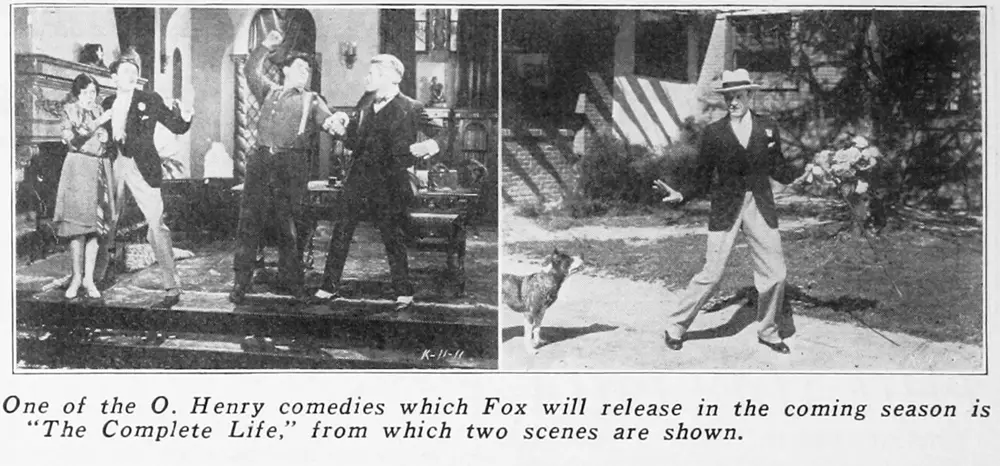
Steers' performance during the car chase is particularly commendable. He doesn't just drive; he emotes with every swerve, every near-miss, every frantic glance. His reactions are the audience's guide through the chaotic landscape, a constant source of visual humor. Compare his tireless efforts to the more refined, yet equally expressive, work seen in later silent comedies like A Looney Honeymoon, and you see a foundational energy at play.
Grace Goodall, as the fiancée, has a less extensive but equally important role in establishing the emotional stakes. Her brief appearance on the telephone, conveying heartbreak and resolve through silent gestures, is effective. Her reactions to the hero's arrival and the subsequent Aunt Emma debacle are crucial in reflecting the escalating absurdity. While the film doesn't delve into deep character studies for any of its cast, the actors effectively serve the comedic mechanisms of the plot.
The supporting cast, including Henry Murdock and Ethel Sykes, contribute to the tapestry of comedic incidents, often serving as foils or exaggerated caricatures that populate the hero's journey. Their performances, while brief, are essential in building the comedic world. It's a testament to the era's acting style that so much can be conveyed with so little dialogue, relying instead on pure physical storytelling.
The direction in The Complete Life, while not groundbreaking by today's standards, is effective in its primary goal: delivering laughs through visual storytelling. The film's strength lies in its ability to orchestrate chaotic sequences with clarity. The opening scene, with its simple but effective setup of mistaken identity, immediately establishes a playful tone, demonstrating a director who understands the power of visual gags.
The car chase sequence is a standout, showcasing the ingenuity of early filmmakers in creating dynamic action. While the special effects are rudimentary, relying on practical stunts and clever editing, they effectively convey speed and danger. The camera often maintains a medium shot, allowing the audience to witness the full scope of the physical comedy unfolding, from Steers' frantic driving to the reactions of other road users.
The cinematography, typical of the era, is functional rather than overtly artistic. Lighting is generally flat, and shot composition adheres to established conventions. However, there are moments where the framing enhances the comedy, such as the initial shot of Steers' character struggling with the telephone booth door, or the wide shots that emphasize the scale of the chase. There's a raw, documentary-like quality to some of the outdoor scenes, capturing early 20th-century street life, which adds an unintended layer of historical value.
The use of intertitles is sparse but effective, serving primarily to advance the plot or deliver key pieces of dialogue. Unlike some other films of the period, such as The Dawn of a Tomorrow, which relied more heavily on expository text, The Complete Life prefers to let its visuals do the talking, a smart choice given its comedic ambitions. It's a straightforward, unpretentious approach that prioritizes immediate comedic impact.
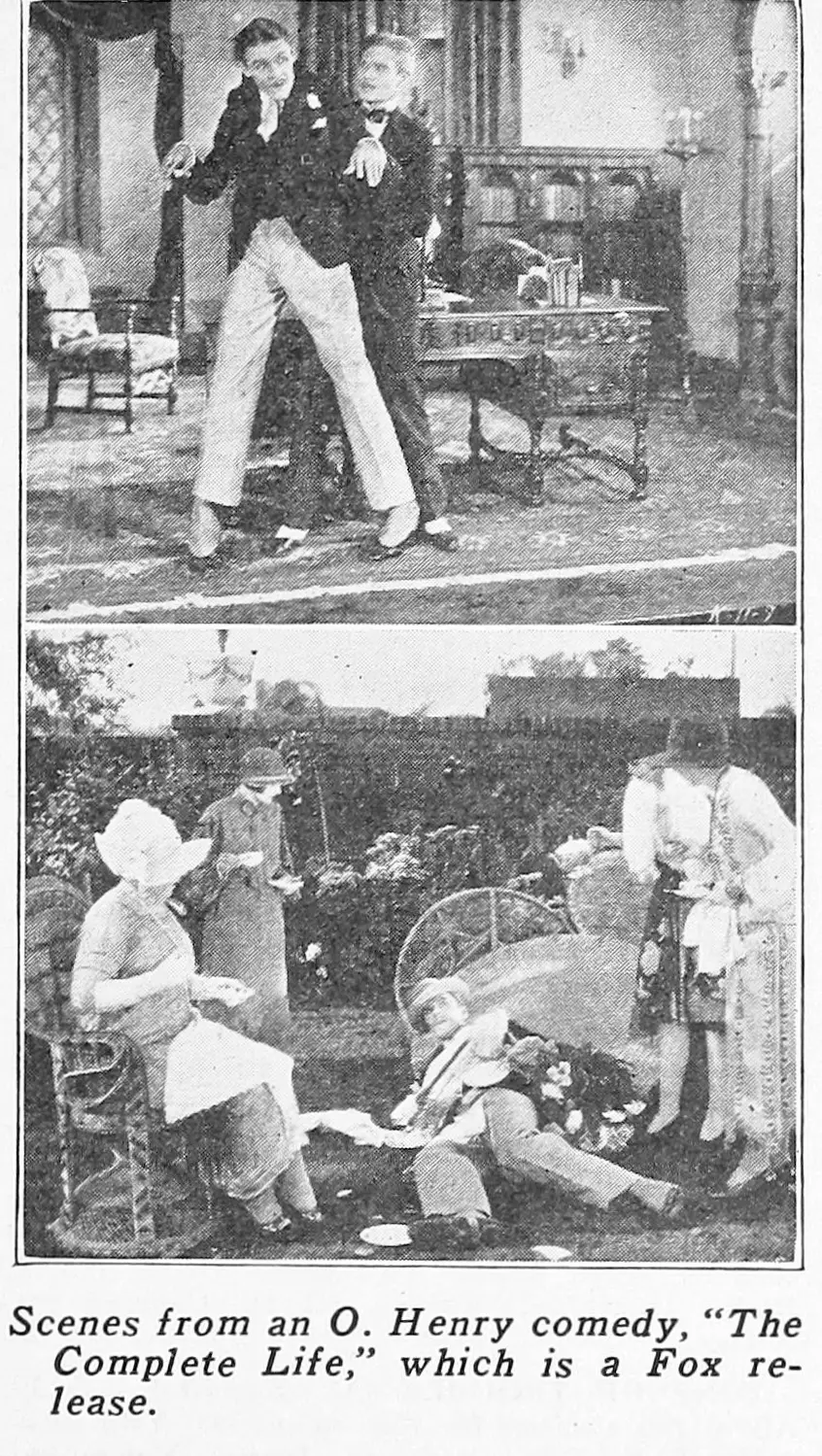
The pacing of The Complete Life is undeniably brisk. From the moment the engagement is called off, the film shifts into high gear, maintaining a relentless tempo that propels the audience through a rapid succession of comedic incidents. This energetic rhythm is one of its greatest assets, preventing any scene from overstaying its welcome and ensuring a constant stream of visual gags. It feels like a sprint, a headlong rush through a series of increasingly absurd scenarios.
The tone throughout much of the film is lighthearted and farcical. It's designed to elicit simple, unadulterated laughter through physical comedy, mistaken identities, and the sheer chaos of a frantic chase. There's a joyous, almost innocent quality to the early antics, a sense that the film is simply delighting in its own silliness. This is the tone that makes the film initially accessible and enjoyable, placing it firmly within the tradition of early silent comedies like Happy Go Luckies.
However, this consistent tone is tragically undermined by the film's conclusion. The shift from boisterous comedy to a problematic declaration of male dominance is jarring and deeply unsatisfying. It’s a tonal stumble, an abrupt pivot that leaves a bitter aftertaste. The lightness of the initial acts is retroactively darkened by the protagonist’s final, ill-conceived resolution. What began as a charming, if chaotic, journey ends on a note that feels less like a punchline and more like an uncomfortable ideological statement.
This tonal whiplash is perhaps the film's biggest narrative misstep. It asks the audience to laugh along with a character's antics, only to then present his final, defining characteristic as something quite regressive. It’s a fascinating example of how cultural context and evolving sensibilities can profoundly alter a film's perceived tone and impact over time. The humor is there. But it’s flawed. Deeply.
For silent film enthusiasts and historians, absolutely. It offers a glimpse into early comedic filmmaking and O. Henry's adaptations. For a general audience, it's a mixed bag. The physical comedy is still effective, but the ending is undeniably dated and problematic. It's a piece of cinema history, but one that requires a critical lens.
The Complete Life is a film that embodies the dual nature of cinematic history: it is both a delightful time capsule and a stark reminder of how much societal values have evolved. Its early sequences, particularly the frantic car chase, are a testament to the raw energy and inventive spirit of silent comedy. Larry Steers delivers a performance that is a masterclass in physical humor, a whirlwind of motion and exaggerated emotion that drives the film forward with undeniable charm. The pacing is relentless, ensuring that the comedic engine rarely sputters, a quality that makes it an engaging watch even today.
However, one cannot discuss The Complete Life without confronting its deeply uncomfortable conclusion. The protagonist's final decision to adopt a 'cave man' approach to relationships, prompted by a rather mundane marital dispute, is not merely dated; it is actively jarring. It transforms what could have been a straightforward, enjoyable romp into a piece that demands critical dissection, forcing the viewer to reconcile genuine laughs with a profoundly regressive message. It's a thematic misstep so significant it casts a long shadow over the film's otherwise commendable attributes.
For those with a keen interest in the evolution of film, particularly silent-era comedies and adaptations of literary figures like O. Henry, The Complete Life is an essential, if challenging, viewing. It offers a fascinating glimpse into the nascent stages of comedic filmmaking, showcasing techniques and performances that laid the groundwork for future generations. Yet, for a casual viewer seeking uncomplicated entertainment, the film’s problematic ending will likely prove to be a significant barrier. It’s a film worth seeing for its historical value and comedic ambition, but one that absolutely requires a critical, understanding eye. It works. But it’s flawed. And those flaws are impossible to ignore.
IMDb 6.2
1930
Community
Log in to comment.