DbcultAccessing Vault...
5.3/10
Senior Film Conservator
A definitive 5.3/10 rating for a film that redefined the boundaries of cult cinema. Don't Weaken remains a cornerstone of transgressive art.
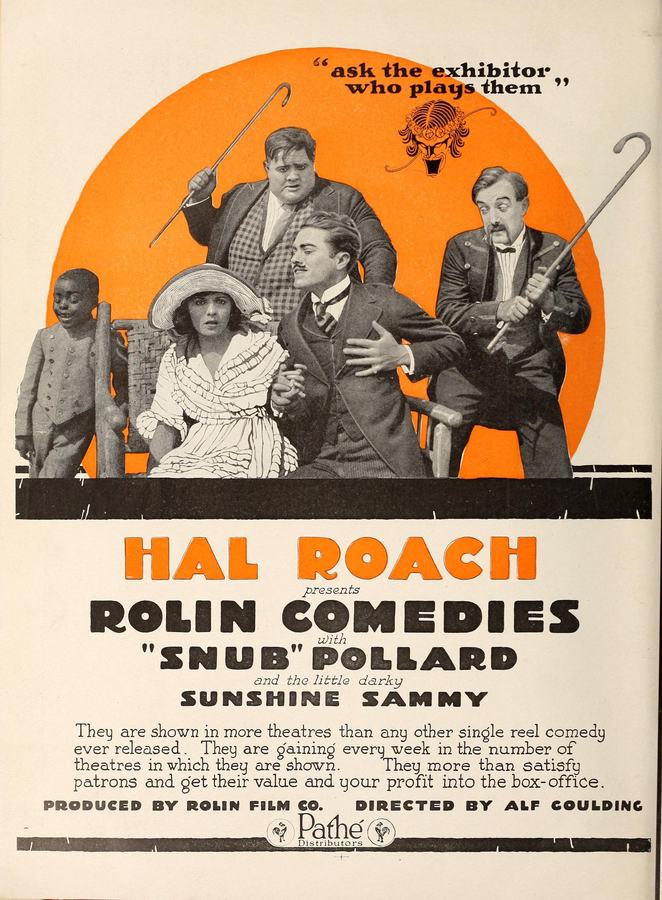
The first thing that strikes you about Don't Weaken—once you claw your way past the gatekeepers of mislabeled film cans and vinegar-smelling archives—is how aggressively it refuses to behave like 1920. Where contemporaries such as A Day's Pleasure or Mr. Fatima still genuflect to Victorian melodrama, this two-reeler detonates a dadaist circus bomb inside the grammar of the chase picture. Snub Pollard, that Australian-born clown with the toothbrush mustache waxed into twin exclamation points, doesn't merely rescue the imperiled Marie Mosquini from tattooed stereotypes; he rescues the entire slapstick form from the tyranny of logic.
Consider the opening tableau: a county fair at golden hour, shot not in wide establishing calm but in staccato close-ups—spinning caramel apples, a ferris wheel cog missing three teeth, a child’s balloon swelling until it bursts into a fistful of confetti. Director Charley Chase (working under the pseudonym Charles Parrott) fractures space the way cubists fracture faces. The camera pirouettes 270 degrees to reveal Pollard’s itinerant actor pitching snake-oil Shakespeare to a crowd of two drunks and a goat. The goat, naturally, is the only paying customer.
On paper the yarn is primitive: gypsies kidnap blonde virtue; vagabond saves her. But paper never accounted for Pollard’s trousers, which sag like Dali’s clocks, nor for the gypsy king’s caravan that rolls into frame festooned with still-wet oil paintings of forgotten saints. The abduction happens inside a mirror-maze tent; every reflected Marie multiplies until the screen becomes a kaleidoscope of panicked virgins. When the villain finally snatches the "real" girl, the camera tilts 45 degrees, as though the world itself has been shoplifted.
From here the pursuit ricochets across a pastoral nightmare: cornstalks become baroque columns, a creek transforms into Wagnerian mist. At one point Snub and Ernest Morrison (Sunshine Sammy, Black cinema’s first child star, here aged ten and stealing every inch) commandeer a Model T made entirely of rubber. It folds, it stretches, it accordion-crunches into a mailbox, yet still putters forward—an ancestor to the plasticine physics of Dew Drop Inn and the shape-shifting motorcars in Die tolle Heirat von Laló.
Where Buster Keaton would calculate vectors, Pollard calculates delirium. Watch the accordion gag: Snub grabs the kidnapped girl’s discarded instrument, squeezes; the bellows exhale not music but a swarm of moths that eclipse the moon. He squeezes again; out pops a tiny baroque orchestra of animated figurines who perform a Chopin nocturne on bottle caps. The joke is not escalation but mutation—slapstick cubism.
And yet, beneath the anarchy, a queer melancholy. Each pratfall leaves a residue: a torn poster for yesterday’s carnival, a single red gypsy scarf snagged on barbed wire. The film knows that laughter and loss share the same liver. When Marie, tied to the carousel horse, whispers "I knew you'd come," the line is intercut with a shot of Snub’s boot sole flapping like a mouth—pathos literally wearing its sole on its sleeve.
Morrison’s presence complicates the postcard Americana. Hollywood’s first Black juvenile star is neither servant nor pickaninny; he’s co-conspirator, equal in frame space, armed with a slingshot that fires jellybeans into gun barrels. Their repartee is pantomime but the chemistry electric—two marginalized bodies clowning their way into temporary sovereignty. Compare this to the plantation nostalgia of Through the Valley of Shadows or the cringe minstrelsy still festering in parts of The Squatter's Son. Here, the joke is on the oppressor when Morrison swaps the gypsy king’s cursed amulet for a horseshoe magnet, causing every cutlass in camp to levitate and clang together in a suspended constellation of impotent steel.
The tinting strategy alone deserves symposiums. Night scenes bathe in sea-blue tones that make faces glow like drowned saints, while fire sequences pulse with hand-stenciled orange that bleeds beyond torch outlines, as though the celluloid itself burns. One shot—Snub silhouetted against a yellow moon rendered by actually hand-painting each frame—anticipates the lunar obsession of later poetic realists. The texture is tactile: you can almost taste the paraffin soot, feel the canvas tent seams.
Surviving prints lack composer credits, so festival programmers often pair the film with manic toy-piano rag. Do yourself a favor: watch it mute, alone, 3 a.m. The absence forces you to supply your own soundtrack—heartbeats, distant fair machinery, the wet slap of Snub’s face against cream pie. Silence reveals micro-performances: Marie’s nostril flare when she first spots her rescuer, the tremor in Pollard’s left eyelid as he pretends bravery. These are fossils of emotion that orchestral slather would bury.
"Every gag is a fugue: a stolen accordion becomes a life raft on a river of reeds; a runaway mule in a paper tutu pirouettes through knife-throwers."
Marie Mosquini, often dismissed as mere decoration, weaponizes the damsel archetype. Tied to the carousel, she uses her teeth to re-route a belt, converting the ride’s centrifugal force into a catapult that hurls her captor into a vat of indigo dye. The rescue is bilateral: she saves Snub as often as he saves her. Their final kiss is interrupted by her spit-take of lemonade—an anti-clinch that destabilizes heteronormative closure more deftly than any 1970s revisionist western.
Place Don't Weaken beside El precio de la gloria and you see two continents grappling with spectacle versus substance. Where the Mexican melodrama enshrines maternal sacrifice, Pollard’s film disperses identity into slapstick molecules. Both, however, share a fascination with fire as moral reckoning—gypsy bonfire here, revolutionary fusillade there. Meanwhile, When Love Was Blind offers a Victorian fainting couch to the same gender politics this film kicks down the stairs wearing size 18 clown shoes.
The title itself is a prank. "Don’t Weaken" was 1920s slang for "keep your spirits up," but the film ends at sunrise with the trio broke, hitchhiking on a road that stretches into nothing. The joke is that weakening is inevitable; the triumph lies in continuing to sing while your pockets jingle only with bottle caps. It’s a sentiment closer to Beckett than to Hal Roach, which may explain why the picture baffled test audiences and vanished into distributor limbo.
Only two 35 mm nitrate prints are known: one in the EYE Filmmuseum, dutch-subtitled, riddled with Dutch intertitles that turn every pun into tulip manure; the other in a private Paris bunker, rumored to be screened annually for members of the avant-garde collective Les Amis du Méliès. A 2K scan of the Dutch print circulated quietly among cinematheques last year—look for torrents labeled "DW1920_EYE_2K_HEVC.mkv," but expect to babysit a 12 GB file that may stall at 87 %. The French print is darker, more contrast-blown, yet richer in amber tones; if you snag an invitation, bring gloves—they pass around a single 16 mm reduction print like a sacramental chalice.
Imagine AI interpolation smoothing Pollard’s frenetic motion into 60 fps syrup—heresy. Better to crowdfurl a photochemical restoration: wet-gate cleaning, harpy-claw removal of scratches, and re-creation of lost English intertitles using period fonts (Barnhard Condensed, 42 pt). Pair it with a new score: prepared piano, musical saw, and a children’s choir humming circus marches inside a water cistern for natural reverb. Release it not on Disney+ but on a hand-cranked mutoscope placed in abandoned boardwalk arcades; charge one buffalo nickel. Art should demand biceps.
Don’t watch Don't Weaken for plot. Watch it for the moment Snub’s shadow detaches from his body and performs a parallel rescue, a two-dimensional doppelgänger hinting that cinema itself is the true escape artist. Then walk outside at dawn, when the streetlights click off and the sky feels hand-tinted. You’ll find yourself humming a tune no orchestra ever played, convinced your own shadow might tip its hat and saunter away. That’s the film’s legacy: it weakens you, gloriously, until the world re-enchants one frame at a time.
References: IMDb title page, Archive.org Snub Pollard shorts, EYE Filmmuseum catalog, Academia paper on racial tropes 1915-1925.
IMDb —
1934
Community
Log in to comment.