DbcultAccessing Vault...
6.8/10
Senior Film Conservator
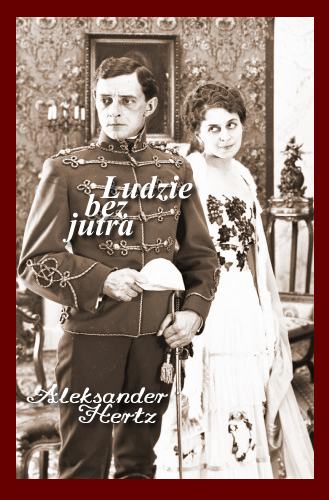
A definitive 6.8/10 rating for a film that redefined the boundaries of cult cinema. Ludzie bez jutra remains a cornerstone of transgressive art.
Ludzie bez jutra is not merely a film; it is a theatrical manifesto, a razor-sharp dissection of power, desire, and the performative nature of identity. Released in 1972 during Poland’s cultural thaw, the film arrived at a time when the nation’s artistic pulse was both stifled and electrified by political tension. Director Stanisław Jerzy Kozłowski, known for his incisive social critiques, here channels the grandeur and decay of a society clinging to vestiges of grace while succumbing to its own contradictions. The Warsaw Theatre, the film’s central setting, becomes a microcosm of a world where roles are worn like masks, and the audience is both spectator and participant in the unfolding tragedy.
The protagonist, Ania, portrayed with unsettling magnetism by Iza Kozłowska, is a paradoxical figure—a coquette whose allure is inseparable from her menace. Her arrival at the theatre is heralded as a revolution, yet her methods are ruthless. Ania’s seduction of the male patrons, her manipulation of directors and actors, and her calculated indifference to the women who feel displaced by her presence form the spine of the narrative. Kozłowska’s portrayal is a masterstroke of subtlety; her eyes gleam with the promise of forbidden fruit, and her voice carries the weight of a woman who knows the world bends to her will. She is both artist and destroyer, a figure who embodies the film’s central thesis: that art and exploitation are two sides of the same coin.
The supporting cast, particularly Jerzy Leszczyński as the conflicted theatre director Krzysztof, elevates the film to operatic heights. Leszczyński’s performance captures the duality of Krzysztof—a man torn between artistic integrity and the baser instincts of admiration and possessiveness. His internal struggle mirrors that of the audience, who are forced to confront their own complicity in Ania’s ascent. The tension between creator and muse is rendered with brutal honesty, as Krzysztof’s attempts to reinvent his company into a modern, daring institution are repeatedly undermined by Ania’s self-serving agenda. The film’s most harrowing scenes unfold in the shadows of the theatre’s backstage corridors, where whispered betrayals and half-formed alliances take shape.
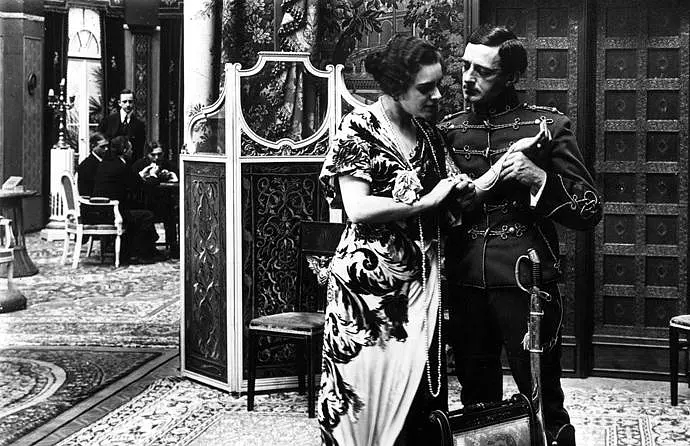
Kozłowski’s visual style is a triumph of restraint and symbolism. The theatre, with its gilded proscenium and crumbling velvet curtains, becomes a character in its own right. Long, unbroken takes emphasize the claustrophobia of the space, while the use of chiaroscuro lighting casts Ania and her adversaries in a moral limbo. The camera often lingers on the audience, their faces half in shadow, a visual reminder that the film’s themes of spectatorship and judgment extend beyond the screen. The contrast between the opulent stage and the squalor of the backstage areas underscores the fragility of the illusion the theatre seeks to maintain.
Thematically, Ludzie bez jutra is a scathing indictment of a culture obsessed with spectacle. The film interrogates the role of the artist in society, asking whether creation is a form of transcendence or a mechanism of control. Ania’s rise to prominence is paralleled by the decline of her peers, who are reduced to caricatures of their former selves. The Varsovian women, initially portrayed as a unified front of propriety, splinter into factions of envy and resignation, their solidarity eroded by Ania’s presence. This societal fragmentation is rendered with clinical precision, as the film’s women become both victims and enablers of the system that elevates Ania.
The score, a haunting blend of avant-garde composition and dissonant string arrangements, amplifies the film’s disquietude. Each note feels like a question mark, lingering in the air as the narrative spirals toward its inevitable collapse. The music’s dissonance mirrors the moral disarray of the characters, whose alliances shift with the flick of a curtain rod. Even the film’s pacing is deliberate, with moments of silence stretching like taut wires, threatening to snap. This tension is heightened by the cinematography, which often frames characters in tight, suffocating compositions that evoke the sensation of being trapped in a gilded cage.
In the pantheon of Polish cinema, Ludzie bez jutra holds a unique place as a work that defies easy categorization. It is at once a psychological thriller, a social satire, and a philosophical inquiry into the nature of power. The film’s influence can be traced in later works such as The Final Judgment, which shares its preoccupation with moral decay, and Dante’s Inferno, whose descent into corruption mirrors the trajectory of Ania’s character. Yet Ludzie bez jutra remains singular in its unflinching exploration of the intersection between art and exploitation.
For modern audiences, the film’s themes resonate with renewed urgency. In an age where public personas are curated for consumption and artistic expression is often conflated with self-promotion, Kozłowski’s vision feels startlingly prescient. The film’s critique of a culture that elevates individuals to pedestals only to crush them beneath the weight of expectations is as relevant today as it was in 1972. The Varsovian theatre, with its flickering chandeliers and rotting foundations, serves as a potent metaphor for our own societal structures—glittering on the surface but hollow at the core.
Ultimately, Ludzie bez jutra is a film that demands to be experienced, not merely observed. Its layers of meaning unfold slowly, like a play rehearsed to perfection. The final act, a crescendo of betrayal and revelation, leaves the audience with a lingering unease, as if they too have been implicated in the drama. This is the mark of a truly great film: it does not offer answers but instead compels us to confront the uncomfortable truths we project onto the screen.
For those seeking further exploration, Kozłowski’s earlier work Inherited Passions provides a fascinating contrast, while The Duke’s Talisman shares thematic echoes of power and corruption. Fans of Ludzie bez jutra may also appreciate the operatic intensity of Dante’s Inferno or the psychological depth of A Kiss for Susie.
IMDb 6.1
1923
Community
Log in to comment.