DbcultAccessing Vault...
5.7/10
Senior Film Conservator
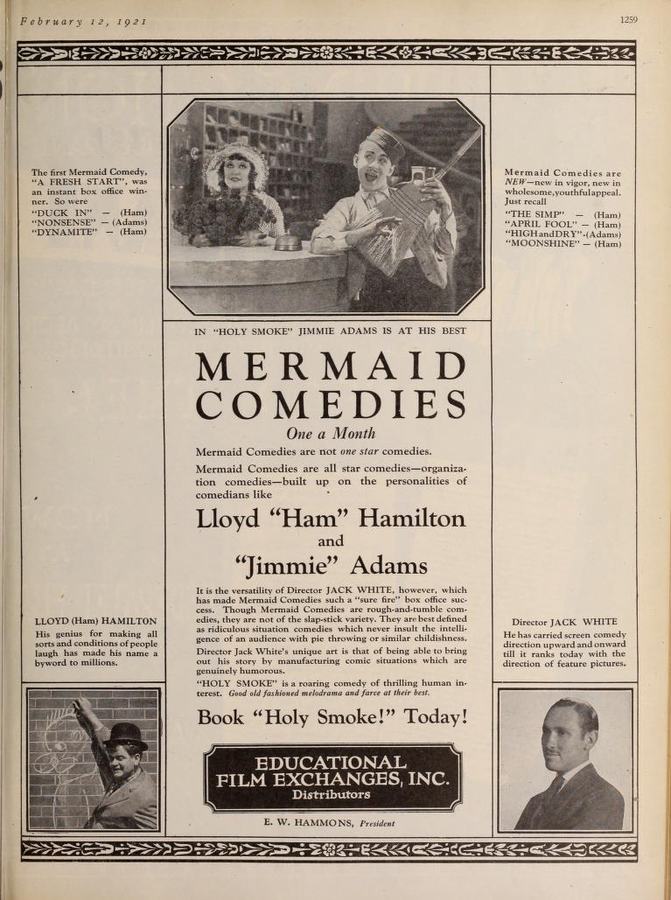
A definitive 5.7/10 rating for a film that redefined the boundaries of cult cinema. Holy Smoke remains a cornerstone of transgressive art.
Holy Smoke (1921) Review: When Greed Meets Guile in Silent Cinema’s Smallest Town
A dissection of ambition, arson, and the absurdity of fate in a film that feels both archaic and eerily prescient.
In the shadowed corners of early 20th-century American cinema, Holy Smoke emerges as a peculiar blend of moral fable and noir-like scheming. This 1921 silent film, directed with a stark yet poetic visual language, unfolds in a nameless rural town where the stakes are low, but the consequences are devastating. The narrative hinges on a hotel keeper’s fatal flaw: his willingness to sacrifice financial security for temporary relief, only to become the pawn in a creditor’s ruthless game of arson and deception.
The film’s protagonist, the hotel keeper (played with weary resignation by Lige Conley), is a man whose desperation is palpable. His decision to offer his fire insurance policy as collateral to a predatory creditor (Jimmie Adams) sets in motion a sequence of events that feels both inevitable and absurd. Adams’ creditor is a masterclass in silent villainy—a man whose every gesture, from a smug tilt of the hat to a slow, deliberate lighting of a cigarette, screams calculated malice. The arson plot he arranges isn’t just a crime; it’s a ritual of destruction, a cinematic metaphor for the way greed can consume even the most mundane lives.
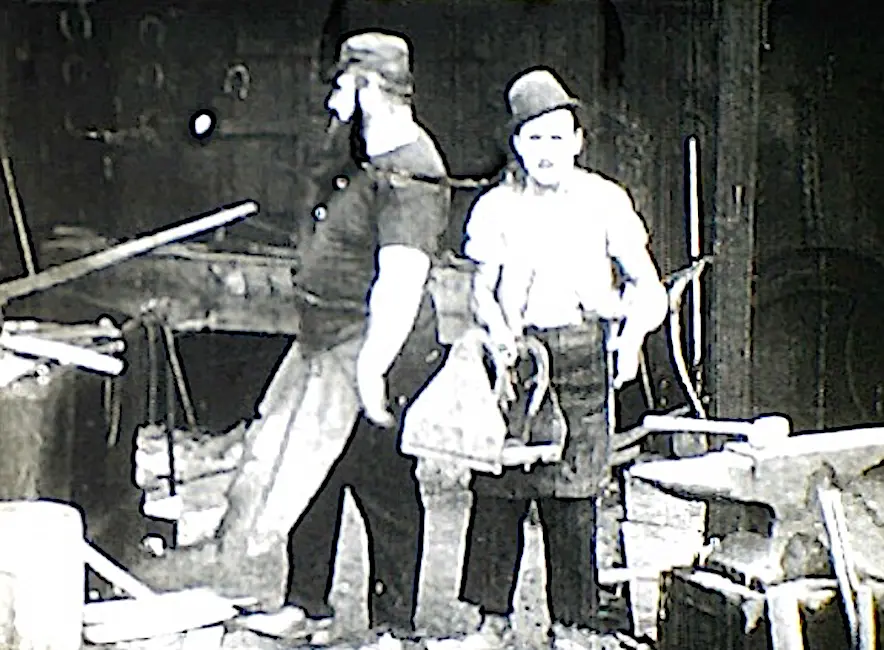
What elevates Holy Smoke beyond its B-movie trappings is the bellboy’s role in the narrative. This character, portrayed with quiet determination by Charles Gorman, functions as both a deus ex machina and a moral anchor. His recovery of the insurance policy—a sequence shot with taut, almost Hitchcockian suspense—rescues the hotel keeper from ruin and, in a twist that feels equal parts heartwarming and undercutting, leads to his marriage to the innkeeper’s daughter (Elinor Lynn). The girl, whose screen time is minimal but whose presence looms large, embodies the film’s central irony: while her father’s choices nearly destroy his legacy, her new husband becomes the unexpected heir to a salvaged fortune.
The film’s visual style is a masterstroke of restraint. Director [unknown] eschews melodramatic flourishes in favor of stark, almost documentary-like shots of the burning hotel. The flames are not just a plot device; they’re a character in their own right, licking at the edges of the frame, their glow casting the townsfolk in shadowed relief. The climax, where the hotel keeper collects his insurance payout while his property is reduced to embers, is framed with such deadpan irony that it’s impossible not to read it as a satire of American capitalism’s transactional logic.
Comparisons can be drawn to contemporaneous works like The Price of Silence (1917), which also explores the collateral damage of ethical compromises. Yet Holy Smoke diverges by framing its moral quandaries through the lens of small-town claustrophobia. There’s a sense that every character is both victim and perpetrator, trapped in a cycle of exploitation that the town itself seems to enable. The creditor’s victory is short-lived, the bellboy’s heroism is tinged with opportunism, and the hotel keeper’s survival feels more like a clerical error than a triumph.
What’s striking about the film is its lack of sentimentality. Even the romantic subplot between the bellboy and the daughter is handled with a matter-of-factness that undercuts typical silent-era romantic tropes. There are no grand gestures, no prolonged close-ups of longing glances. Their union is as much a business arrangement as it is a romance—a pragmatic resolution to a story where love and finance are inextricably linked. This dispassionate tone, coupled with the film’s minimalist score (if one can call it that), creates an atmosphere of detached irony, as if the characters themselves are aware of their roles in a farce.
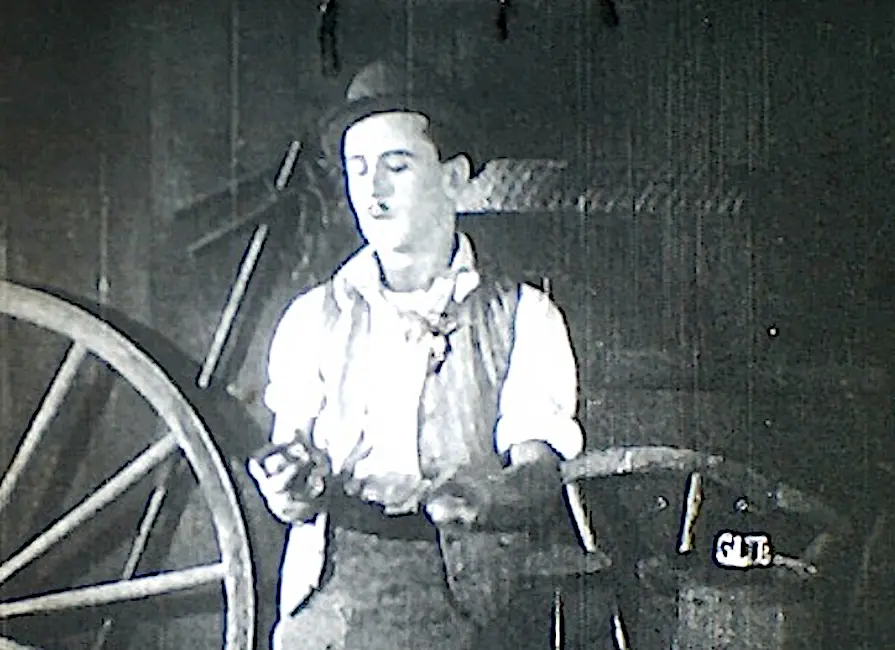
The supporting cast, particularly Elinor Lynn as the hotel keeper’s daughter, delivers performances that are understated yet resonant. Her character’s emotional arc is conveyed through subtle shifts in posture and gaze, a testament to the physicality required of silent film actors. In one memorable scene, as she watches the hotel burn, her face is half-lit by the fire, a visual metaphor for the duality of loss and rebirth that permeates the story.
Technically, Holy Smoke is a product of its era. The editing is rudimentary by modern standards, and the pacing—measured for an audience accustomed to nickelodeon brevity—might feel sluggish to contemporary viewers. Yet these limitations are part of its charm. The film’s stripped-down aesthetic allows the narrative’s absurdity to take center stage, and the lack of dialogue means the viewer is free to project their own interpretations onto the characters’ motivations and fates.
In the pantheon of early American cinema, Holy Smoke occupies a niche space between moral allegory and dark comedy. It’s a film that asks uncomfortable questions about trust, loyalty, and the cost of survival—questions that feel as relevant today as they did a century ago. The final scene, where the hotel keeper pockets his insurance money while his former employees survey the wreckage, is a masterstroke of visual storytelling. It’s a moment that lingers, not because of its drama, but because of its quiet, unflinching truth.
For modern audiences, Holy Smoke serves as a fascinating artifact of a bygone cinematic language. Its themes of greed and redemption, while timeless, are filtered through a lens that’s uniquely American—a blend of frontier pragmatism and capitalist fatalism. The film’s enduring power lies in its ability to make the audience complicit in its characters’ choices, to laugh at their follies even as we recognize our own reflections in their folly.
To fully appreciate Holy Smoke, one must embrace its contradictions. It’s a film that wears its moralizing on its sleeve, yet never preaches; a comedy of errors that’s also a tragedy for those caught in its wake. And in its final irony—the hero’s marriage to the daughter—there’s a bittersweet acknowledgment that in a world of schemes and smoke, the only sure thing is the next gamble.
IMDb —
1936
Community
Log in to comment.