Summary
A tarnished aristocrat, the Marquis of Kermor, squanders his ancestral glory on green-baize tables, unaware that every louis lost is a brick prised from the crumbling ramparts of his own mausoleum. Enter the Baron de Bressieu, a financier whose soul is a ledger written in red ink, eager to barter a phantom dowry of four million dollars for the hand—if not the heart—of the Marquis’s lion-hearted son, Henry, fresh from the saffron dust of African expeditions. Sidonia, the banker’s icy daughter, covets the aristocratic name the way a magpie covets a diamond, while Jeanne Le Brenn, a modest orphan with sunrise in her veins, quietly nurses a love that smells of lilacs and forbidden libraries. When Henry’s lips brush Jeanne’s in a moment of unguarded tenderness, Sidonia’s envy crystallizes into a conspiracy: one forged letter, one narcotic draught, one police raid, and the orphan is hurled from Eden onto the cold cobblestones of a Parisian gambling den. Believing her purity incinerated, Henry sails back to the Dark Continent, dragging his despair like Marley’s chains. Behind the bourse’s gilded doors, the Baron inflates his Golden Mine—a sulphurous bubble of maps and mendacity—then watches it ascend, iridescent, before it bursts in a shower of worthless scrip and suicides. Months later, Great Allan, a swaggering American Midas, barges in with frontier bluntness, buys evidence of Delrue’s skullduggery, and resurrects Jeanne from Breton obscurity, bestowing upon her the same four million that once chained Henry to Sidonia. In a ballroom ablaze with absolution, the dowry changes hands again—this time as a gift, not a shackle—while the Baron’s palace burns, its smoke carrying away the last vestiges of a world where bloodlines could be mortgaged and consciences sold by weight.
Synopsis
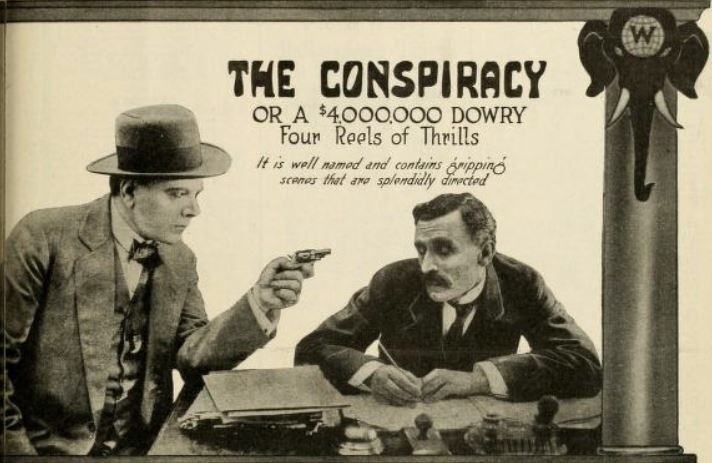
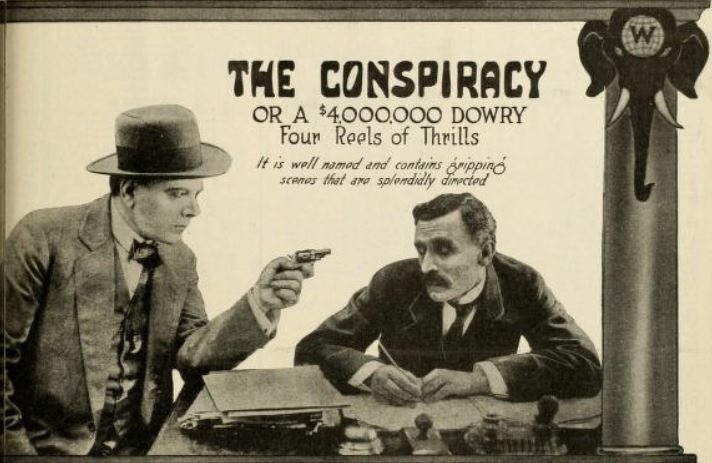
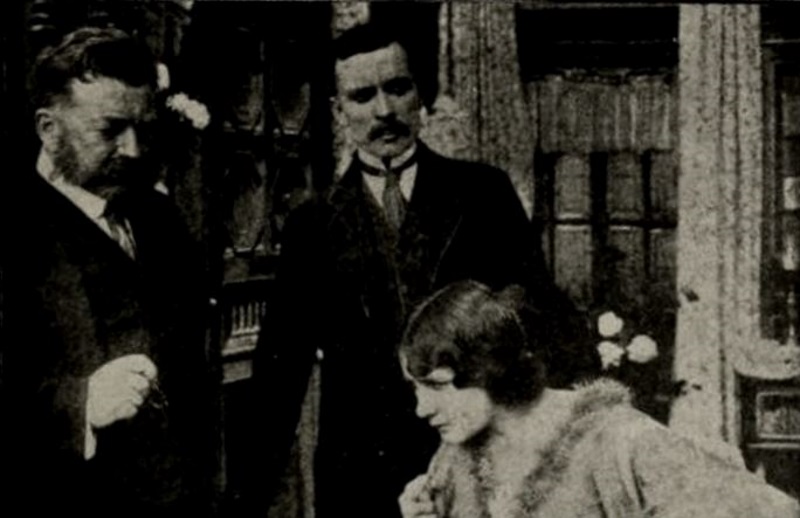
The Marquis of Kermor, a nobleman of ancient lineage, is an inveterate gambler. When short of funds he calls on his friend, also his banker, the Baron of Bressieu, without troubling himself further. After a heavy loss at his club, he sends his secretary to his banker for a remittance of $50,000. The Baron of Bressieu is the living antithesis of the Marquis. He is the heartless and unscrupulous man of business. He builds up his fortune on the ruins caused by his operations. He has just launched a new gold mine, "The Golden Mine," which is expected to yield extraordinary profits, but only to the promoter, for the mine does not contain a particle of the precious metal. While doing his best to insure the success of that colossal swindle, his daughter, Sidonia, reads to him a newspaper extract, announcing the return of Count Henry, son of the Marquis, from an exploration in Africa. The girl's ambition is to become the wife of the young and brave nobleman, and with her father plans for the future, when a visit from Delrue suggests to the Baron the idea of investigating the financial standing of the Marquis. The affairs of the Marquis are in a desperate condition; his account is over-drawn to the extent of close upon $1,000,000. He has not one penny left, being in such a strait de Bressieu thinks the Marquis can refuse nothing to his creditor. On the occasion of her son's return, the Marchioness of Kermor holds a reception. De Bressieu and Sidonia have been invited and the financier seizes that opportunity to present his ultimatum to the Marquis: that the Count shall marry Sidonia and the banker will not only wipe out the paternal debt, but will give his daughter a dowry of $4,000,000. While this shameful contract is being discussed, a touching scene takes place in another room. The Marquis has for a reading-woman a young and pretty orphan, Jeanne Le Brenn, who secretly loves Henry. The young girl delicately pins on the young man's coat the red ribbon (Legion of Honor), with which the young man has just been rewarded, and he, deeply stirred by the girl's gentle act, kisses her passionately. Sidonia has seen them. Trembling with rage, she calls Delrue to one side, the man is her tool, and promises $100,000 if he manages to rid her of that rival. The Marquis begs his son to marry Sidonia. Henry refuses, but a few moments later, detecting his father in the act of committing suicide, he consents to the sacrifice and to be presented to his future bride. Jeanne Le Brenn, hidden behind a tapestry, has heard everything and falls fainting to the floor. When she comes to herself she understands she is out of place in that house where she has been so happy, writes a few words of farewell to her benefactress, and deeply grieved, leaves the house. She is unconscious of a man following, dodging her footsteps. The wretch Delrue is doing his best to earn the $100,000 promised by Sidonia. Delrue comes up with Jeanne at the door of the unpretentious hotel where she is seeking an abode. On his recommendation, the unfortunate girl calls on a woman called Victoire, a milliner, who also manages a gambling den. After having persuaded his accomplice to pour a narcotic in Jeanne's glass, he informs Henry of the fugitive's retreat. Led by the secretary, the Count enters the gambling saloon and sees the poor child in evening dress in the midst of a strange gathering of roués and loose women. Henry, stabbed to the heart, runs away, cursing the one who has revealed to him that terrible fall. He has scarcely left the premises than the police anonymously informed by Delrue, make a raid on the place, seize the stakes and arrest the gamblers, while Delrue claims the reward of his treachery, and Sidonia exults, for she already believes herself to be the Countess of Kermor. The unhappy Henry sails for Africa, accompanied by the Great Allan, an American millionaire, in the hope of allaying his sorrow, of forgetting. Alarming rumors are circulated on the exchange regarding the Golden Mine. It is whispered that the concession has never possessed the least particle of gold and everyone sells out. Sidonia imparts to her father the fears she entertains, but De Bressieu simply smiles on, and as Delrue is announced, the financier places in a conspicuous spot on his desk the following note: "Buy all you can lay your hands on of Golden Mine on change. Buy at any price. The Golden is going up tremendously, Baron of Bressieu." Delrue, who has just cashed his check for $100,000, at once notices the infamous note, and thinking he is not observed, seizes it and takes it to the Marquis of Kermor. The latter, thinking he has got hold of a good thing, buys in large quantities. In two days the shares make a jump of $40. The banker's ruse is successful. Jeanne Le Brenn is taken to jail, but as nothing can be proven against her, she is discharged. Afraid of being victimized in the great city, she repairs to the house of her old nurse in Brittany. Three months have elapsed. Henry returns to France, still accompanied by Great Allan, who has become very much attached to him. Great Allan is presented to the De Kermor family and he does not hide from the Marquis that the Golden Mine is considered nothing but a gigantic swindle. The Marquis convinced, sells out all his shares. Henry de Kermor has seen Sidonia and has asked the young girl to abandon the hope of marrying him; his heart belongs to someone else. Great Allan knows all about Henry's love. He has seen a letter from Mme. Victoire, actually in jail, to her accomplice, asking for funds and he repairs to the prison. In exchange for bank notes, he obtains from the milliner the letter of recommendation of Delrue, the initial cause of all the catastrophes that have submerged the unfortunate Jeanne Le Brenn. In possession of those damnable papers, Allan soon runs to earth the wretch Delrue and forces him to write a full confession. The Golden Mine bubble has burst, spreading panic and ruin. The banker's dupes rush to his home and try to get hold of him. Bressieu tracked to his lair, seeks to fly. Whilst he is piling his securities in a valise, his daughter throws in the furnace all incriminating documents. In doing so she sets her clothes on fire and the house. Great Allan succeeds in discovering Jeanne's retreat, brings her back to Paris, to the Kermors, and with true American generosity, gives her a $4,000,000 dowry.
Review Excerpt
"
Spoiler-rich excavation ahead; proceed as though opening a vault of nitrate dreams.
There is a moment—wordless, of course—when the camera lingers on Jeanne Le Brenn’s trembling fingers as she pins the crimson rosette of the Légion d’honneur onto Henry’s lapel. The ribbon flutters like a tiny heart between two people who have never dared to speak its name. In that hush, The Conspiracy; or, A $4,000,000 Dowry announces itself not as melodrama but as archaeology of emotion: every frame a shard of..."