DbcultAccessing Vault...
Cult Review
Senior Film Conservator
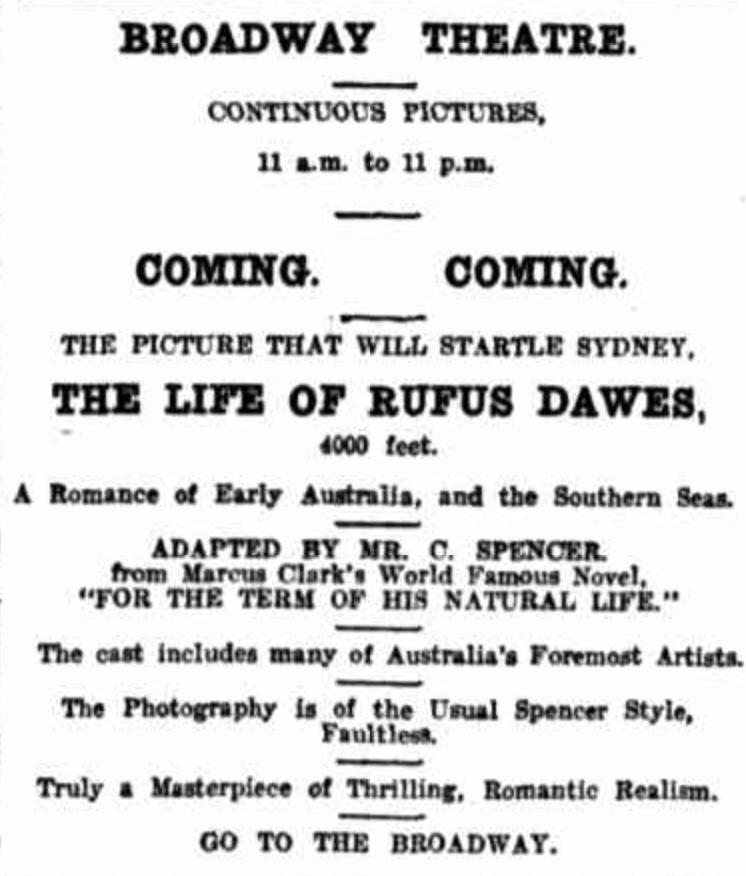
Stepping back into the nascent days of cinematic storytelling, "The Convict Hero" (1911) emerges not merely as a historical artifact, but as a surprisingly ambitious and emotionally resonant drama for its era. This Australian production, adapted from Marcus Clarke's revered novel, For the Term of His Natural Life, attempts a narrative sweep that few contemporaries dared, weaving a complex tapestry of betrayal, resilience, and the relentless pursuit of justice across continents and harrowing circumstances.
From its very inception, the film plunges viewers into a world steeped in intrigue and moral ambiguity. The opening sequence in the venerable Spaniard's Inn at Hempstead Heath is a masterclass in establishing a sinister undercurrent. Here, the nefarious Crofton, operating under the alias Rex, orchestrates the cold-blooded murder of Sir Richard Devine. The sheer audacity of his subsequent frame-up, meticulously crafting evidence to incriminate Sir Richard's own son, Dick, is a testament to the villain's cunning. Dick, a man of good cheer and perhaps a touch too much youthful exuberance, finds himself ensnared in a web of deceit, his prior estrangement from his father over debts conveniently weaponized against him. This narrative gambit immediately establishes the stakes, painting Dick as a victim of both circumstance and calculated malice.
The transition to the brutal penal colonies of Van Diemen's Land is stark and unflinching. The cinematography, though limited by early 20th-century technology, strives to convey the sheer arduousness of convict life. Scenes depicting men toiling on the rock pile and the relentless march of the chain gang are designed to evoke a visceral sense of hardship. One particular sequence, showcasing an attempted escapee being brutally apprehended by guards, serves as a potent reminder of the unforgiving nature of the system. These segments are not just plot devices; they are an attempt to ground the melodrama in a harsh reality, offering a glimpse into a dark chapter of history. In this regard, it shares a thematic resonance with other early Australian narratives like The Story of the Kelly Gang, which similarly sought to depict the unforgiving landscape and the struggles against authority, albeit from a different side of the law.
Amidst this grim tableau, the character of Parson North, portrayed with a quiet dignity, stands out. His past indiscretion—forging notes held by Sir Richard—adds a layer of moral complexity, suggesting that even those in positions of spiritual authority are not immune to human failing. Yet, his role as a compassionate chaplain, a friend to the condemned, offers a much-needed beacon of humanity. His clandestine act of providing tobacco to the convicts, though seemingly minor, is a powerful symbol of rebellion against an dehumanizing system, placing him in direct conflict with the authoritarian Lieutenant Black. This dynamic sets up an early clash between empathy and rigid order, a perennial theme in stories of incarceration.
The narrative gains considerable momentum with the relocation of the convict settlement to Port Arthur. The journey aboard the "Osprey" transforms the film into a thrilling maritime adventure. The convicts' audacious plan to seize control of the vessel injects a palpable sense of tension. Here, the film's ambition truly shines, attempting to stage large-scale action sequences that would have been technically challenging for the period. Chaplain North's unexpected act of heroism, saving an officer from a murderous assault by two convicts, reinforces his moral fortitude and underscores the idea that virtue can emerge from unexpected quarters. The subsequent mutiny, though successful in overpowering the crew, leads to a dramatic shipwreck, a spectacle that would have undoubtedly captivated audiences of the time. The visual impact of the boat being dashed against the rocks, culminating in the survivors being washed ashore, represents a significant undertaking in early cinema, striving for epic scale and high drama.
The marooned segment on the desolate island is where the film delves into the primal aspects of human nature. Rufus Dawes, formerly Dick Devine, truly embodies the "hero" of the title here. His dedication to Sylvia, Major Vickers' daughter, creating a makeshift camp and painstakingly constructing a boat for their escape, is a testament to his innate goodness and resourcefulness. This arc positions him as a protector, a stark contrast to the dehumanizing label of "convict." However, the narrative simultaneously explores the darkest corners of the human psyche through Rex and his two companions. Their descent into cannibalism, drawing lots to decide who will be sacrificed for food, is a truly shocking and audacious plot point for a film of this vintage. It speaks to a willingness to explore extreme themes of survival, pushing the boundaries of what was typically depicted on screen, perhaps even more daring than some of the more straightforward action of films like The Corbett-Fitzsimmons Fight, which focused on direct physical confrontation rather than moral horror.
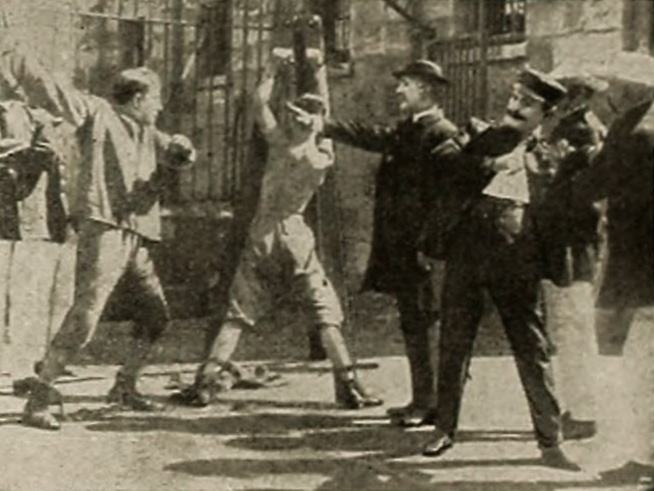
The subsequent recapture of the convicts and the arrival of a searching party introduces a fresh wave of tragedy and injustice. The senseless murder of Sylvia's mother by one of the desperate cannibals, leading to Sylvia's memory loss, is a poignant twist, adding a layer of psychological complexity to the unfolding drama. Lieutenant Black's immediate accusation of Dawes for the murder, despite Dawes's heroic efforts to protect Sylvia, highlights the ingrained prejudice and systemic failure of justice that permeates the narrative. This repeated injustice inflicted upon Dawes forms the emotional core of the film, making his eventual vindication all the more satisfying. The concept of memory loss as a plot device, while common in later cinema, demonstrates an early engagement with psychological themes.
Dawes's desperate escape from Port Arthur and his subsequent encounter with Sylvia, now tragically married to Lieutenant Black and without any recollection of her rescuer, is a moment of profound pathos. The film skillfully uses this interaction to underscore the cruel hand of fate. However, the sudden sight of Dawes triggers a partial restoration of Sylvia's memory, setting in motion the final act of recognition and revelation. This slow, agonizing return of memory is a powerful dramatic tool, building suspense and anticipation for the inevitable confrontation with truth. The narrative structure, cycling through moments of hope and despair, keeps the audience invested in Dawes's plight.
The climax of "The Convict Hero" masterfully ties together the disparate threads of the story. Dawes's recapture and return to Port Arthur, coinciding with Lady Devine's arrival from England, creates a convergence of characters and destinies. Sylvia's full memory return upon seeing Dawes again is a cathartic moment, validating his past heroism. But it is Rex's confession, weakened by his dreadful experiences and perhaps burdened by guilt, that provides the ultimate resolution. His admission to both Sir Richard's murder and the tragic death of Mrs. Vickers serves as the final, shattering blow to the conspiracy that imprisoned Dawes. This denouement, while perhaps a convenient narrative wrap-up, ensures that justice, though delayed, is ultimately served. The film concludes with Dawes's release and triumphant return to England, reclaiming his rightful name and title as Sir Richard Devine, a powerful affirmation of perseverance and the triumph of good over evil. The thematic arc of a wrongfully accused man reclaiming his honor resonates deeply, a timeless tale that even early cinema found compelling to explore.
The performances, as captured in this early silent film, require a different lens of appreciation. Actors like Lily Dampier and Raymond Longford (who also directed) relied on exaggerated facial expressions and body language to convey emotion, a convention of the era. Lottie Lyell, as Sylvia, navigates a challenging role that demands a portrayal of innocence, trauma, and a gradual return to lucidity. Augustus Neville, as Rex, must embody pure villainy, and his eventual breakdown would have been a pivotal moment for audiences. While the acting style might seem melodramatic by today's standards, it was the language of silent cinema, effectively communicating complex emotions without spoken dialogue.
In terms of cinematic ambition, "The Convict Hero" stands as a significant undertaking. The scope of the plot, spanning grand houses in England, the harsh Australian penal colonies, and a perilous sea voyage, demonstrates a desire to create an epic narrative. The film attempts to capture dramatic action sequences, from the chain gang to the ship mutiny and wreck, pushing the technical boundaries of filmmaking in 1911. While the visual quality and editing would be rudimentary compared to later developments, the very attempt to tell such a sprawling story with multiple locations and complex character arcs is commendable. It represents a step forward in narrative complexity, moving beyond simpler actualities or single-scene dramas that characterized much of cinema just a few years prior, such as Dressing Paper Dolls or even basic travelogues. The film's commitment to adapting a well-known literary work also speaks to a growing maturity in cinema's perception of itself as a storytelling medium.
The film's exploration of themes remains potent. The pervasive theme of injustice, with Dick Devine repeatedly suffering at the hands of others and the system, is central. His journey is one of endurance, testing the limits of human spirit against overwhelming odds. The theme of survival, both physical in the harsh Australian landscape and moral in the face of temptation and despair, is vividly portrayed. Ultimately, it is a story of redemption, not just for Dick, but arguably for the audience, who witness the eventual triumph of truth and goodness. The contrast between the rigid, often cruel, societal structures and the individual acts of compassion (like Parson North's) or heroism (like Dawes's) provides a rich thematic landscape. The film also touches on the complexities of social class, with Dick's initial fall from grace and his eventual restoration underscoring the fickle nature of status. In many ways, it's a testament to the enduring power of narrative that such complex ideas could be conveyed through the nascent art form of moving pictures.
Looking back, "The Convict Hero" is more than just a historical curiosity. It is an ambitious, emotionally charged drama that pushed the boundaries of early Australian cinema. Its detailed plot, dramatic set pieces, and exploration of profound human themes make it a fascinating watch for anyone interested in the evolution of film storytelling. It stands as a powerful example of how filmmakers, even in cinema's infancy, sought to captivate audiences with compelling narratives that resonated with universal human experiences of suffering, resilience, and the ultimate yearning for justice. It certainly holds its own in the pantheon of early narrative features, demonstrating a clear vision for the potential of the medium to tell complex and engaging stories, far removed from the simple visual recordings of earlier works like Professor Billy Opperman's Swimming School or Westinghouse Works.
IMDb —
1926
Community
Log in to comment.