DbcultAccessing Vault...
6.2/10
Senior Film Conservator
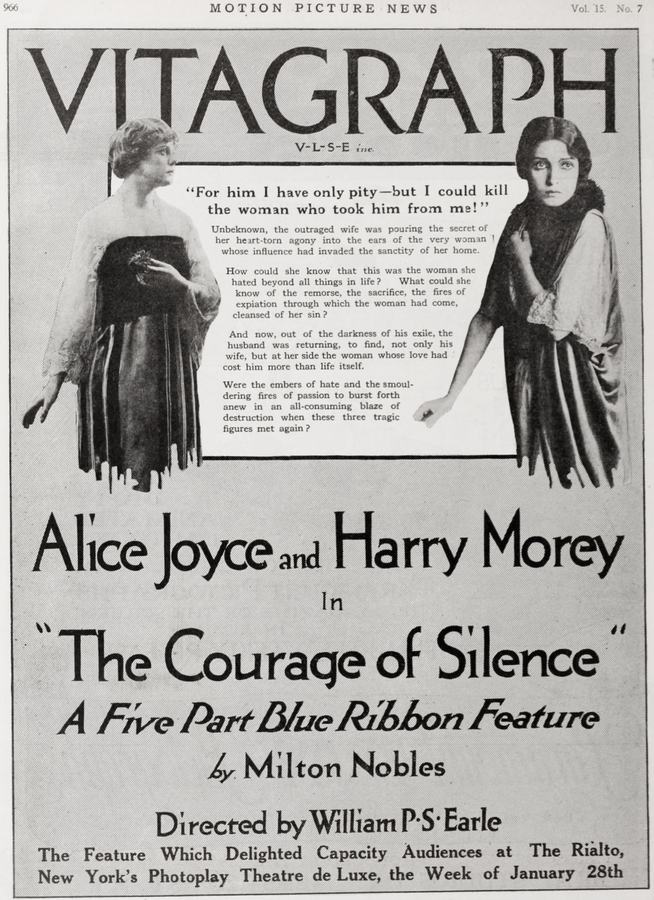
A definitive 6.2/10 rating for a film that redefined the boundaries of cult cinema. The Courage of Silence remains a cornerstone of transgressive art.
Stepping back into the nascent era of cinematic storytelling, Milton Nobles' 'The Courage of Silence' emerges not merely as a historical artifact but as a surprisingly resonant exploration of moral fortitude, societal strictures, and the profound, often devastating, consequences of clandestine affections. This is a narrative tapestry woven with threads of duty, desire, and the quiet heroism found in self-abnegation, a thematic richness that belies its early 20th-century origins. Directed with an understated elegance, the film, featuring a cast that includes Robert Gaillard, Dorothy Conroy, and Anders Randolf, delves into the labyrinthine complexities of human relationships, presenting a saga that is both heart-wrenching and ethically challenging.
At its core, 'The Courage of Silence' is a character study, primarily focusing on Bradley, portrayed with a compelling blend of domestic contentment and burgeoning vulnerability by Robert Gaillard. His initial portrayal is that of a man comfortably ensconced in marital bliss, his family a bastion of stability. This placid existence, however, is dramatically disrupted by a business trip to London, a setting that often symbolizes a departure from the familiar and an encounter with the unknown. It is here that he meets Mercedes, a character whose tragic circumstances immediately evoke empathy. Dorothy Conroy imbues Mercedes with a quiet dignity, a woman trapped in a forced marriage to a cruel Spanish Ambassador, a role Anders Randolf likely imbued with the requisite menace of a patriarchal oppressor. The film masterfully establishes the stark contrast between Bradley's serene domesticity and Mercedes's harrowing reality, laying the groundwork for the moral tightrope he is soon to walk.
The burgeoning infatuation between Bradley and Mercedes, born of mutual attraction and Mercedes's ignorance of Bradley's marital status, is depicted with a delicate touch, avoiding overt melodrama in favor of a more psychological approach. The screenplay by Milton Nobles subtly builds the tension, allowing the audience to witness Bradley's internal struggle. His eventual decision to return home, guided by his 'better nature,' speaks volumes about the societal and personal pressures of the era, where duty often trumped individual desire. This initial act of renunciation, however, is not a definitive resolution but merely a pause in the storm. The arrival of Mercedes's photograph acts as a potent catalyst, a silent but powerful plea that shatters Bradley's fragile peace. This plot device, simple yet effective, highlights the enduring power of memory and unfulfilled longing, drawing Bradley back into the vortex of a forbidden love. It echoes similar narratives of inescapable desire found in works like The Folly of Desire, where the siren call of passion often proves too strong for moral rectitude.
Bradley's return to Mercedes, under the thinly veiled pretense of business, sets the stage for the narrative's most dramatic turn. Witnessing the ambassador's cruelty firsthand—the film's implied depiction of physical abuse is particularly jarring, even for its time—solidifies Bradley's resolve to intervene. Their subsequent elopement, a desperate act of defiance against a tyrannical husband and a restrictive society, is fraught with both peril and the intoxicating promise of freedom. The sequence of their escape, particularly the Channel crossing, serves as a powerful metaphor for their journey into an uncertain future. It is during this pivotal moment that Bradley inadvertently reveals his marital status, a disclosure that unravels their newfound bond with heartbreaking swiftness. Mercedes's reaction is immediate and resolute; unwilling to become the architect of another woman's sorrow, she chooses self-exile. Her flight to a convent is not an act of weakness but one of profound moral courage, a testament to her unwavering ethical compass, even in the face of her own suffering. This moment resonates deeply with the film's title, encapsulating a form of courage that manifests not in grand gestures, but in silent, agonizing sacrifice.
The screenplay, even in its brevity, manages to convey the immense weight of this decision. Mercedes's choice to retreat, to embrace a life of spiritual devotion rather than illicit happiness, speaks to a societal understanding of female honor and the sanctity of marriage that was prevalent. It’s a stark contrast to more individualistic narratives, yet it presents a compelling argument for a different kind of strength. Bradley's subsequent despair, leading him to join a South American expedition, is a classic dramatic trope for escaping an unbearable reality, a physical manifestation of his internal turmoil. His letter to his wife, confessing his 'cowardice,' is a moment of raw vulnerability, a self-assessment that reveals his deep-seated guilt and regret. This element adds another layer to his character, moving him beyond a simple cad to a flawed individual grappling with profound moral failings.
The narrative takes a serendipitous, almost Dickensian turn with the failing health of Bradley's wife and the subsequent epidemic striking their children abroad. This plot contrivance, while potentially stretching credulity, serves a vital purpose: it brings Mercedes back into the orbit of the family she sought to protect. Her transformation into a nurse, a role often associated with selfless care, reinforces her innate goodness and capacity for compassion. The discovery of the children's identity, particularly the boy's plaintive cry for his father, acts as a powerful emotional trigger for Mercedes, propelling her on a renewed quest for Bradley. This sequence, despite its melodramatic overtones, offers a compelling exploration of fate and the intertwined destinies of the characters. It allows for a profound moment of reckoning, not just for Mercedes, but for the audience, who are invited to ponder the true meaning of sacrifice and forgiveness.
The use of the veil by Mercedes to conceal her identity is a powerful visual metaphor. It speaks to her desire for anonymity, her commitment to her new life, and her attempt to shield herself and others from the painful truths of the past. Her struggle, upon Bradley's recognition, to resist a renewal of their relations is perhaps the film's most potent display of 'the courage of silence.' It is a battle fought internally, a quiet triumph of principle over passion. Her warning to Bradley to keep his wife in ignorance underscores her unwavering commitment to protecting the sanctity of his family, even at the cost of her own happiness. This thematic thread of silent suffering and noble self-denial is also powerfully explored in films like The Price of Silence, where characters grapple with the heavy burden of unspoken truths and their profound impact on personal destiny.
While specific performance nuances from this era are often lost to time or the limitations of early film techniques, one can infer the weight carried by Dorothy Conroy as Mercedes. Her character arc, from an oppressed wife to a woman of profound moral strength and self-sacrifice, demands a nuanced portrayal that transcends mere melodrama. Robert Gaillard's Bradley, too, must navigate a complex emotional landscape, from initial contentment to infatuation, guilt, despair, and finally, a fragile, hard-won understanding. The supporting cast, including Walter McGrail, Mildred May, Alice Joyce, Willie Johnson, Clio Ayres, and Harry T. Morey, would have contributed to the film's texture, each playing their part in the unfolding drama, whether as sympathetic figures or as extensions of societal pressures.
Milton Nobles' writing, while adhering to the narrative conventions of the period, manages to imbue the story with a surprising depth of psychological realism. The pacing, typical of early features, might seem deliberate by modern standards, yet it allows for a gradual immersion into the characters' internal worlds. The film's strength lies in its ability to build emotional resonance through a series of carefully constructed dramatic beats, culminating in a denouement that is both inevitable and deeply affecting. The lack of dialogue in silent films often necessitated a greater reliance on visual storytelling and the expressive capabilities of the actors, pushing them to convey complex emotions through gesture, facial expressions, and body language. One can imagine the close-ups on Mercedes's veiled face, or Bradley's tormented gaze, conveying volumes without a single spoken word.
'The Courage of Silence' is a powerful testament to the timeless appeal of narratives centered on moral dilemmas and the human capacity for extraordinary sacrifice. It explores themes that remain perennially relevant: the conflict between personal desire and ethical obligation, the societal pressures placed upon individuals (particularly women in restrictive marriages), and the profound, often quiet, strength required to adhere to one's principles. Mercedes's ultimate choice to forgo personal happiness for the well-being of others is a poignant example of altruism, a theme also touched upon in narratives like Lost and Won, where characters often find a different kind of victory in resignation. The film challenges viewers to consider what true courage entails – is it the pursuit of one's own desires, or the silent, often painful, act of letting go for the greater good?
The final image of Mercedes, recovering from illness and witnessing the reunited Bradley family depart, her heart 'empty and closed forever to love,' is one of profound, almost unbearable pathos. It is a conclusion that eschews easy sentimentality, opting instead for a stark, realistic portrayal of the cost of such profound choices. This ending distinguishes 'The Courage of Silence' from more overtly romantic or redemptive narratives, embedding it firmly in the tradition of tragic romance that finds echoes in later works exploring similar themes of unfulfilled love and societal constraints, such as Vanity Fair with its broader critique of social maneuvering, or even the more direct emotional sacrifices seen in Divorce and the Daughter where familial duty often overrides individual happiness. The film doesn't offer a tidy resolution; instead, it offers a meditation on the enduring power of the human spirit to endure suffering with dignity.
In an era where cinematic spectacle was still finding its footing, 'The Courage of Silence' delivers a powerful emotional punch through its focus on character and moral quandary. It is a film that, despite its age, speaks to universal human experiences: the allure of forbidden love, the weight of responsibility, and the quiet heroism found in personal sacrifice. It reminds us that courage isn't always loud or demonstrative; sometimes, it is found in the silent endurance of a broken heart, in the unwavering commitment to a principle, and in the profound, often unacknowledged, act of letting go. Milton Nobles crafted a narrative that, through its exploration of these intricate themes, solidifies its place as a significant, albeit perhaps under-appreciated, work in the early canon of dramatic cinema. The performances, especially from Gaillard and Conroy, would have been pivotal in conveying the intricate emotional landscape, making this a film that invites reflection on the very nature of human resilience and the silent sacrifices that often define our lives. The legacy of 'The Courage of Silence' lies not in grandiosity, but in its quiet, persistent echo of the profound strength found in a heart that chooses integrity over personal fulfillment, leaving an indelible mark on anyone who contemplates its tragic beauty.
IMDb 5.9
1935
Community
Log in to comment.