DbcultAccessing Vault...
Cult Review
Senior Film Conservator
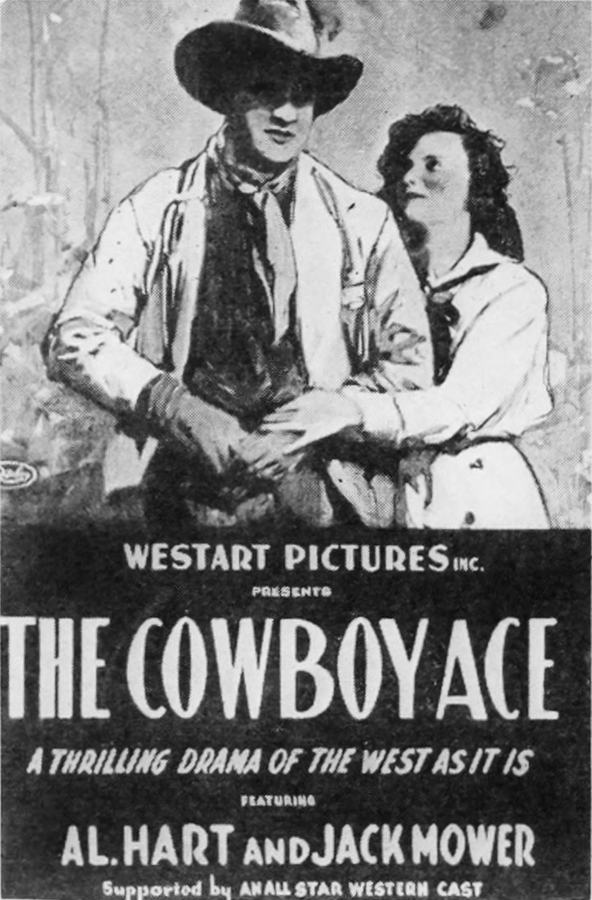
Set against the vast, unyielding expanse of the American frontier, The Cowboy Ace unfolds as a symphony of contrasts—between the grounded simplicity of ranch life and the daring escapism of flight, between calculated ambition and raw emotion. Jack Mower’s Bill Gaston, with his chiseled features and gravelly voice, embodies the archetypal Western hero, yet his character’s moral ambiguity is what elevates the film beyond cliché. When Ethel Dwyer’s Ethel Filson returns to her family’s ranch, her presence disrupts the equilibrium of a town clinging to survival. Her decision to sway the rodeo contest in favor of Red Bush (Al Hart) is less a romantic gesture and more a pragmatic gamble, a move that exposes the film’s undercurrent of social responsibility. The contest, a communal event meant to celebrate tradition, becomes a stage for Ethel’s quiet rebellion against the constraints of her gender—a theme echoed in the likes of The Church and the Woman, though with a distinctly less theological bent.
The film’s most audacious stroke is its integration of aviation into the Western lexicon. Red Bush’s airplane, a gleaming symbol of modernity, contrasts sharply with the horseback-mounted Bill, yet it is this very machine that becomes the instrument of salvation. When Snake Bullard (Robert Conville), a villain as slick as he is ruthless, abducts Ethel, the narrative pivots from rustic drama to a high-stakes aerial chase. The sequence where Red pilots his aircraft through a storm-lashed sky to locate the kidnapper’s hideout is a masterclass in tension, blending practical effects with a score that swells like a desert wind. This is not the silent, stoic heroism of classic Westerns but something more kinetic, almost proto-noir in its urgency. The airplane’s role as both savior and symbol—a tool repurposed for communal good—echoes the themes of Flying Colors, though *The Cowboy Ace* lacks that film’s escapist glamour.
What sets this film apart is its nuanced portrayal of relationships. Ethel and Bill’s romance is not the fiery passion of The Woman Untamed but a slow-burn alliance rooted in mutual respect. Their dialogue, penned with the crisp efficiency of W.M. Smith, avoids saccharine sentimentality. Instead, their connection is built on shared stakes—Ethel’s manipulation of the contest is not for love but for the survival of Red Bush, a man whose integrity they both admire. This moral complexity is rare in the genre; it’s a narrative that allows characters to be flawed without being diminished. Even Snake Bullard is more than a cartoonish antagonist—his resentment toward the community’s resilience hints at a deeper, unspoken desperation.
Visually, the film is a study in contrasts. The wide, sun-drenched shots of the ranch juxtapose with the claustrophobic interior of Snake’s cave during the kidnapping sequence. The use of color is restrained but effective: the orange of Red’s airplane against the blue of the sky becomes a recurring motif, symbolizing the precarious balance between progress and tradition. The final act, where Bill confronts Snake, is almost comically over-the-top in its physicality—a far cry from the existential dread of Der Weg, der zur Verdammnis führt—yet this tonal shift feels earned. The resolution, in which the townsfolk collectively acknowledge Red’s purchase of the airplane as "a good buy," is a subtle but profound statement on communal values. It’s a conclusion that avoids tidy moralizing, instead offering a quiet optimism that lingers long after the credits roll.
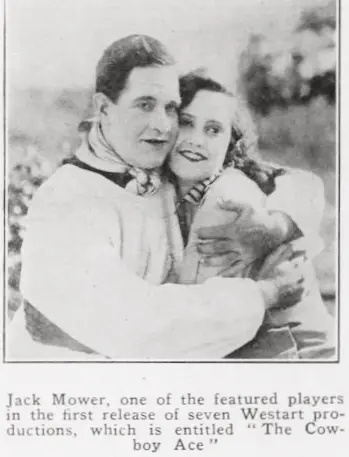
Performances are uniformly solid, with Ethel Dwyer bringing a deft blend of vulnerability and agency to her role. Her portrayal of Ethel is neither a damsel in distress nor a proto-feminist icon but something in between—a woman navigating a man’s world with calculated pragmatism. Mower’s Bill is similarly layered; his initial reluctance to let Red win the contest stems not from selfishness but from a rigid sense of honor, a trait that he later reevaluates. The film’s true unsung hero, however, is Al Hart as Red Bush. His character is the least glorified, yet his actions—both the rodeo manipulation and the rescue—are the film’s emotional backbone. Hart’s performance is understated but magnetic, a testament to the writer’s skill in crafting multidimensional characters within a genre often criticized for its simplicity.
The film’s score, a blend of traditional fiddle tunes and modernist motifs, deserves particular mention. It mirrors the narrative’s duality, with lilting melodies giving way to discordant crescendos during moments of tension. This aural contrast is particularly effective during the aerial sequences, where the swish of propellers is layered over a haunting violin solo. The editing, too, is noteworthy for its time—quick cuts during the chase scenes maintain a frenetic pace, while longer takes during dialogue scenes allow the chemistry between characters to breathe. The use of negative space in the film’s composition—a lone figure against a vast landscape—is a visual metaphor for the isolation and resilience central to the story.
Comparisons to other films of the era are inevitable. The Cowboy Ace shares thematic DNA with The Ticket of Leave Man in its exploration of redemption, though it lacks the latter’s gothic intensity. Its focus on community over individualism also aligns with Hail the Woman, albeit with a lighter tone. Yet what sets *The Cowboy Ace* apart is its willingness to embrace ambiguity. The film does not vilify progress (embodied by Red’s airplane) nor does it romanticize the past (represented by Bill’s steadfastness). Instead, it presents both as necessary facets of a changing world, a theme that feels strikingly modern for a film made in the 1930s.
In the pantheon of Westerns, The Cowboy Ace occupies a unique niche. It is neither a gritty revisionist take nor a pure adventure romp but a thoughtful blend of romance, action, and social commentary. Its legacy may be overshadowed by more iconic entries in the genre, but for those willing to look beyond the surface, it offers a rich, nuanced exploration of love, loyalty, and the price of progress. As a cinematic artifact, it is a bridge between eras—a film that looks backward to the myths of the frontier while gazing upward toward the future.
IMDb —
1921
Community
Log in to comment.