DbcultAccessing Vault...
Cult Review
Senior Film Conservator
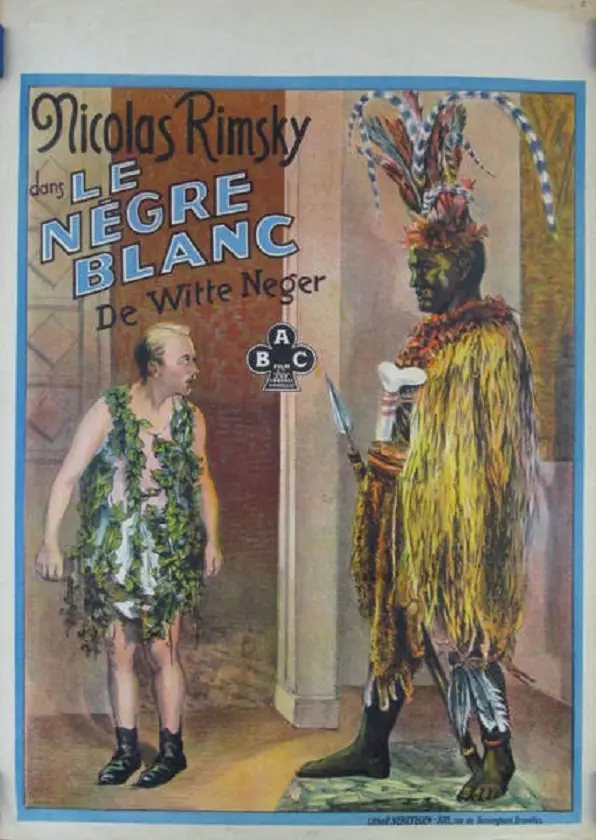
Is 'Le nègre blanc' still relevant in our contemporary discourse? Short answer: yes, but with significant caveats that demand a specific kind of viewer. This film, a daring exploration of identity and societal perception from its era, offers a fascinating, if sometimes uncomfortable, window into early cinematic attempts at social commentary.
It's a challenging watch, certainly not for those seeking light entertainment or a clear-cut moral lesson delivered without nuance. Instead, 'Le nègre blanc' is best suited for cinephiles, historians, and viewers interested in the evolution of storytelling, particularly around themes of race and identity, who are prepared to engage with a film that often feels both ahead of its time and deeply mired in the conventions and limitations of its period.
This film works because it fearlessly tackles a complex, then-taboo subject with a raw, almost experimental energy. It fails because its ambition sometimes outstrips its narrative clarity, occasionally slipping into melodrama or oversimplification. You should watch it if you're prepared for a thought-provoking, albeit imperfect, historical artifact that continues to spark debate.
From its very title, 'Le nègre blanc' announces its intent to provoke. The film, credited to writers Michel Linsky, Raoul Ploquin, and Nicolas Rimsky, plunges us into the existential quandary of a man (played with intense conviction by Rimsky himself) who, through a series of dramatic circumstances, assumes the identity of a Black man. This isn't merely a disguise; it's a profound, often harrowing, journey into the heart of prejudice and the arbitrary nature of social constructs.
The film’s central conceit is audacious, even by today’s standards. It asks its audience to consider the profound impact of perceived race on one's life, stripping away the comfort of privilege and forcing a direct confrontation with systemic injustice. This thematic boldness is, arguably, its greatest strength and its most significant liability.
Nicolas Rimsky, who also has a writing credit, delivers a performance that oscillates between the profoundly moving and the overtly theatrical. As the protagonist, his physical and emotional transformation is the film's anchor. We witness his initial disbelief, his growing despair, and ultimately, a nascent understanding of the world from a radically different perspective. There’s a particular scene early on, where Rimsky’s character first sees his altered reflection, a moment of silent horror and dawning realization that is genuinely chilling. The camera lingers on his face, a canvas of shifting emotions, without relying on title cards – a testament to his expressive power.
However, there are moments where Rimsky's portrayal veers into what could be interpreted as a 'performance' of suffering, rather than an embodiment of it. This is a common pitfall for actors tackling such heavy material, especially in the early cinematic period where emotional expression was often amplified for the screen. Yet, even in its excesses, his commitment is undeniable.
While no single director is explicitly credited in the provided information, the film bears the hallmarks of a collaborative vision, likely heavily influenced by Rimsky himself given his multifaceted involvement. The direction exhibits both moments of striking visual poetry and periods of clunky narrative progression. The use of chiaroscuro lighting, particularly in scenes depicting Rimsky's character navigating the shadowed alleys of the city or confined in his spartan living quarters, is remarkably effective. It visually reinforces his alienation and the encroaching darkness of his new reality.
One memorable sequence involves a chase through a bustling market, where the frantic editing and close-ups create a palpable sense of panic and claustrophobia, mirroring the character's internal state. This sequence, with its dynamic energy, stands in stark contrast to some of the more static, dialogue-heavy (or title-card heavy) scenes that feel less inspired. The film often struggles to maintain a consistent visual rhythm, which can be jarring. It reminds me of the uneven pacing found in The Idle Class, where moments of brilliance are interspersed with stretches that test the viewer's patience.
The cinematography, while not always groundbreaking, features several truly inspired shots. The framing often emphasizes Rimsky’s isolation, placing him as a small, vulnerable figure against imposing backdrops of urban grit or stark, empty rooms. There's a recurring motif of shadows and reflections that subtly underlines the theme of altered identity – a man literally unable to recognize himself, or perhaps, only seeing what society projects onto him.
The production design, though clearly working with limited resources, effectively creates two distinct worlds: the opulent, albeit fleeting, world of Rimsky’s past, and the harsh, unforgiving environments of his present. The contrast is stark and serves the narrative well, highlighting the chasm between privilege and marginalization. The details, from the costumes to the set dressings, feel authentic to the period, grounding the audacious premise in a believable reality.
The film's pacing is deliberately slow in its opening acts, allowing the viewer to fully absorb Rimsky's initial shock and slow descent into his new reality. This deliberate tempo, while effective for building empathy, can feel ponderous at times. However, it picks up considerably in the latter half, introducing elements of suspense and social drama that propel the narrative forward. The tone is predominantly serious, tinged with a pervasive melancholy, but there are fleeting moments of stark realism that cut through the melodrama.
One of the more surprising observations is how the film grapples with its own thematic ambiguity. While ostensibly a critique of racism, it also occasionally falls into the trap of portraying suffering as a spectacle, which can feel exploitative to a modern audience. This isn't necessarily a failure of intent, but rather a reflection of the evolving understanding of such sensitive subjects in cinema. It’s a tension that makes the film a compelling artifact for study.
While Rimsky rightly dominates the screen, the supporting cast provides crucial emotional and narrative support. Ernest Chambery, as a skeptical but eventually sympathetic figure, offers a grounding presence. His interactions with Rimsky are particularly strong, evolving from initial suspicion to a grudging respect, representing a crucial bridge for the protagonist’s journey. There's a scene where Chambery's character, after witnessing Rimsky's plight firsthand, quietly offers him a meager meal – a moment of understated humanity that speaks volumes.
Suzanne Bianchetti, often relegated to roles of emotional support or romantic interest in films of this era, here imbues her character with a quiet strength and dignity. She represents a moral compass for Rimsky, her gaze often conveying more than any title card could. Her performance, though perhaps less showy than Rimsky's, is a subtle masterclass in conveying resilience amidst adversity, reminiscent of the understated power seen in Pretty Ladies.
Madame Courtois and René Donnio contribute to the film’s textured world, portraying various societal figures who react to Rimsky’s transformation with a range of emotions, from contempt to pity. Their collective performances paint a vivid picture of the societal landscape the protagonist must navigate, reinforcing the film's central critique of ingrained prejudice.
'Le nègre blanc' is not a film to be approached lightly, nor is it a flawless cinematic experience. It is, however, an undeniably significant one. Its ambition alone, in tackling themes of racial identity and societal prejudice during its time, makes it a fascinating artifact. Nicolas Rimsky’s performance, for all its occasional overstatement, is a tour de force, anchoring a narrative that is both audacious and deeply human. It works. But it’s flawed.
While it may not resonate with every viewer, particularly those unfamiliar with the conventions and limitations of early cinema, 'Le nègre blanc' offers a rich text for analysis. It provokes thought, sparks debate, and reminds us that cinema has long been a battleground for ideas, even uncomfortable ones. For those willing to engage with its complexities and forgive its period-specific shortcomings, it remains a powerful, if imperfect, testament to empathy and the enduring quest for self-understanding. It’s a film that demands to be discussed, not merely consumed.
IMDb —
1916
Community
Log in to comment.