DbcultAccessing Vault...
Cult Review
Senior Film Conservator
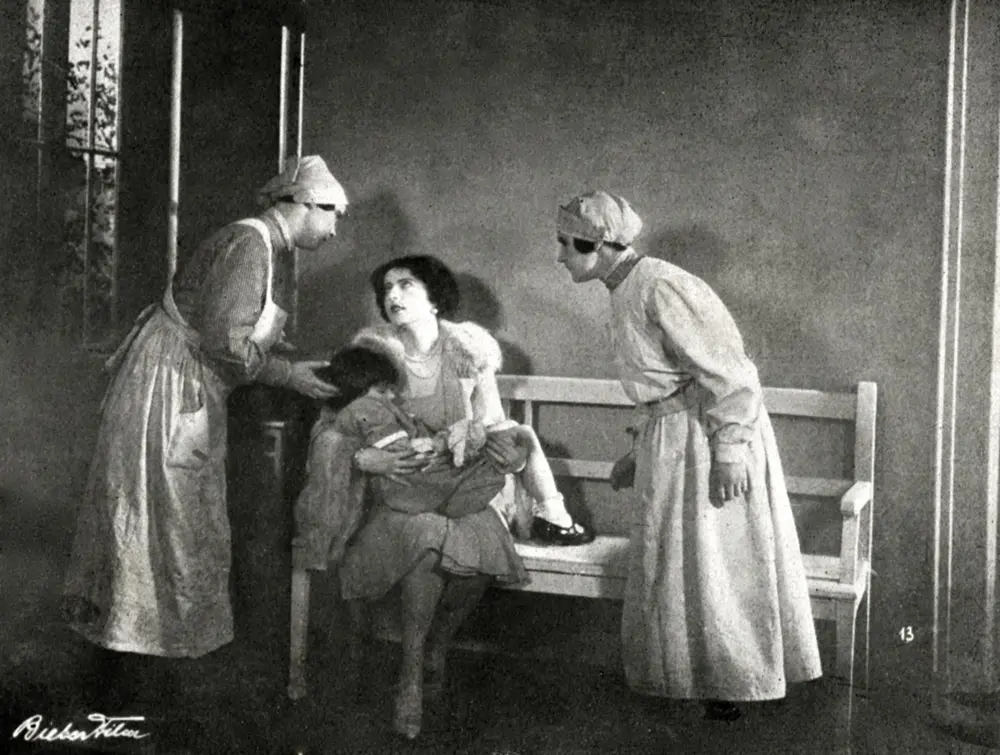
Is The Curse of Vererbung worth watching today? Short answer: yes, but with significant caveats that demand a particular kind of cinematic appreciation. This silent German drama from the 1920s is a compelling, if occasionally ponderous, exploration of inherited fate, perfectly suited for cinephiles interested in the evolution of melodrama and the power of non-verbal storytelling, but likely to test the patience of those accustomed to modern narrative pacing and overt emotional cues.
It's a fascinating artifact, a window into early cinematic techniques and societal anxieties. However, it's not for casual viewers seeking quick entertainment or those who struggle with the inherent slowness and theatricality of silent productions.
This film works because it commits wholeheartedly to its melodramatic premise, allowing the profound emotional weight of its central dilemma to unfold with a stark, almost operatic intensity. The silent era's reliance on visual storytelling and exaggerated performance here serves to amplify the tragedy, rather than diminish it, creating moments of genuine pathos that transcend the limitations of the medium.
This film fails because its pacing, a common characteristic of the era, can feel excruciatingly slow by contemporary standards, and its thematic exploration, while potent, sometimes borders on the simplistic, lacking the nuanced psychological depth modern audiences might expect. The narrative beats, while clear, are often telegraphed, leaving little room for surprise or complex character development beyond their immediate suffering.
You should watch it if you appreciate the historical significance of silent cinema, are fascinated by the portrayal of societal anxieties around genetics in early film, or simply enjoy a deeply emotional, albeit somewhat dated, tragic narrative. It’s a powerful piece for anyone willing to engage with its unique rhythm and visual language.
At its core, The Curse of Vererbung is a profound character study of Olga, a woman whose destiny is irrevocably shaped by a genetic inheritance. The narrative opens with the quiet dignity of Frau Römer, Olga's mother, burdened by the knowledge of her deceased husband's hemophilia and its transmission to her daughter. This isn't just a plot point; it's the crucible in which Olga's entire life is forged.
The film masterfully establishes the crushing weight of this secret, particularly in the lead-up to Olga's engagement to Dr. Münchow. The scene where Frau Römer must reveal the truth, likely depicted through a series of close-ups on trembling hands and averted gazes, would have been a silent powerhouse. The unspoken words, the mother's anguish, the daughter's unwitting vulnerability—all would be conveyed through the precise, often theatrical, gestures characteristic of the era. It’s a moment of devastating honesty that defines the film's emotional landscape.
Münchow's subsequent abandonment of Olga is not merely a rejection of her, but a rejection of the genetic 'curse' itself. This societal stigma, amplified by the medical understanding (or lack thereof) of the time, paints Olga as inherently flawed. Her later marriage to an older banker feels less like a choice of passion and more like a pragmatic retreat, a desperate grasp at stability in a world that has already marked her. The film's early sequences are a stark reminder of how deeply personal health issues were intertwined with social standing and marital prospects in the early 20th century, a thematic thread that still resonates today.
The eventual arrival of children, seemingly healthy, offers a temporary reprieve, a fragile illusion of normalcy. But the film, true to its title, never lets the audience forget the lurking threat. The accident involving one of Olga's sons is not just a dramatic climax; it's the inevitable, tragic fulfillment of the 'curse,' a brutal reminder that some fates, no matter how diligently avoided, cannot be escaped. This narrative structure, building from quiet dread to explosive tragedy, is a hallmark of effective silent melodrama.
Curt Thomalla, the writer of The Curse of Vererbung, clearly understood the power of visual storytelling inherent to silent cinema. While the director's name isn't provided, one can infer a distinct vision from the plot's dramatic arc. Silent films, by necessity, relied on exaggerated expressions, symbolic gestures, and carefully composed frames to convey complex emotions and narrative information. This film, centered on an invisible illness and its visible consequences, would have leaned heavily on these techniques.
Imagine the director's use of light and shadow to underscore Olga's emotional state—perhaps a brightly lit scene of her initial engagement, slowly darkening as the truth is revealed. The contrast between the stark, clinical environment of Dr. Münchow's office and the warmth of Olga's home life would have been a potent visual metaphor. Intertitles, far from being mere dialogue substitutes, would serve as narrative anchors, delivering crucial information and shaping the audience's understanding of the characters' internal struggles and the scientific context of hemophilia.
The pacing, while slow by modern standards, would have been deliberate, allowing the audience to absorb each emotional beat. A skilled director would have used long takes on faces, particularly Alex Allin as Olga and Frida Richard as Frau Römer, to draw out their suffering and contemplation. This method, often derided as 'slow,' is in fact a profound exercise in empathy, forcing the viewer to linger in the characters' pain. It's a directorial choice that demands patience but rewards with deep emotional connection, much like the slow burn of a film such as The Violinist of Florence, which also builds its drama with careful precision.
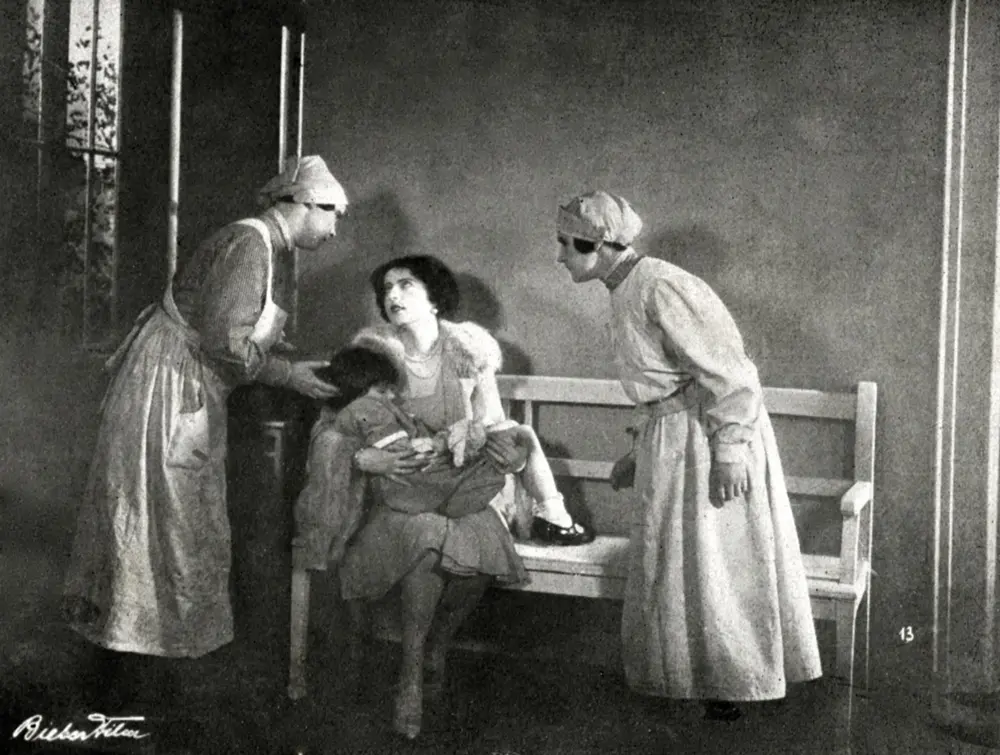
The final accident, too, would be handled with a specific visual language. Not necessarily graphic, but perhaps a sequence of quick cuts—the child falling, Olga's horrified face, the frantic scramble for help—punctuated by a title card that delivers the devastating diagnosis. This approach ensures maximum emotional impact without relying on sound or explicit gore, a testament to the ingenuity of silent filmmaking.
In silent cinema, acting is a heightened art form, a dance between pantomime and profound emotional expression. The cast of The Curse of Vererbung, particularly Alex Allin as Olga, Frida Richard as Frau Römer, and Fritz Kampers as Dr. Münchow, would have been tasked with conveying immense psychological depth without uttering a single word. Their performances are the true heart of the film.
Alex Allin, as Olga, carries the heaviest burden. Her portrayal would need to shift from youthful optimism to quiet despair, then to a fragile hope, and finally, to crushing resignation. A specific moment that comes to mind is her reaction to Münchow's departure. Without dialogue, Allin would have to convey a world shattering through her eyes, a subtle slump of her shoulders, perhaps a slow, solitary tear. This isn't just acting; it's visual poetry. Her ability to project inner turmoil through external stillness would be the measure of her success.
Frida Richard, as Frau Römer, would embody the quiet strength and enduring sorrow of a mother. Her performance in the scene where she reveals Olga's condition would be critical. Imagine her face, etched with a lifetime of worry, her hands clasped tightly, her gaze unable to meet Münchow's. Her every movement would speak of duty and pain, a testament to the silent power of maternal sacrifice. It’s a performance that would anchor the film's emotional truth, much like the stoic perseverance seen in films like Der Berg des Schicksals.
Fritz Kampers as Dr. Münchow would represent the societal reaction to Olga's condition. His initial charm would give way to a visible recoil, a performance that must balance a sense of medical pragmatism with personal fear. His decision to leave Olga, while harsh, would be conveyed not as outright villainy, but perhaps as a man overwhelmed by a responsibility he cannot bear. The subtle flinch, the hesitant step back, the final, regretful glance—these are the tools of a silent actor. The film's strength lies in these understated yet powerful performances, which allow the audience to project their own understanding onto the characters' silent struggles.
The thematic core of The Curse of Vererbung—the inescapable burden of inherited traits and the cruel hand of fate—is surprisingly potent and relevant even today. In an era before advanced genetic counseling, the film taps into a primal fear: the idea that one's lineage can be a prison. This isn't just about hemophilia; it's a metaphor for any inherited burden, whether it be disease, poverty, or social stigma.
The film resonates with a fatalism that was common in early 20th-century art, a sense that human agency is often secondary to the grand, indifferent forces of nature and destiny. It asks profound questions about love, duty, and sacrifice. Is love strong enough to overcome genetic predispositions? What is a mother's responsibility when her child carries such a burden? These are not simple questions, and the film offers no easy answers, instead choosing to illustrate the devastating consequences.
One could argue that the film, despite its melodrama, offers a surprisingly nuanced look at societal reactions to illness. Münchow's departure, while painful, can be seen not just as a failure of character, but as a reflection of the medical and social understanding of the time. The film challenges viewers to consider the ethical dilemmas surrounding inherited conditions, a conversation that continues to evolve with modern scientific advancements. It's an unconventional observation, perhaps, but the film's quiet portrayal of these issues gives it a depth beyond mere tragedy.
Compared to other films of its era, The Curse of Vererbung stands out for its direct engagement with a specific medical condition as the primary driver of its drama. While films like The Devil's Circus might explore broader societal ills, this film zeroes in on the deeply personal and familial impact of a genetic legacy, making its tragedy feel intensely intimate.
The pacing of The Curse of Vererbung is its most challenging aspect for contemporary viewers. Silent films operate on a different temporal rhythm, allowing scenes to unfold slowly, often with extended periods of visual contemplation. This deliberate pace, while crucial for building emotional tension and allowing the audience to absorb the visual cues, can feel glacial to those accustomed to the rapid-fire editing and constant stimulation of modern cinema. It demands a shift in viewing habits, an embrace of a slower, more meditative experience.
The tone is consistently somber, tinged with a pervasive sense of melancholy and impending doom. There are few moments of levity, and the film leans heavily into its tragic premise from the outset. This unwavering commitment to its dark subject matter is both a strength and a potential deterrent. For those seeking a powerful emotional journey, the tone is perfectly calibrated. For others, it might prove too unrelenting, lacking the dynamic shifts in mood that often make a long-form drama more palatable.
Does it hold up? Yes, but only for the right audience. Its technical limitations are obvious, but its emotional core remains surprisingly robust. The human struggle against an unyielding fate is timeless. It works. But it’s flawed. The lack of sound, the theatrical acting, the sometimes-simplistic character motivations—these are hurdles. Yet, the film's raw emotional power, particularly in its depiction of a mother's love and a family's enduring curse, transcends these superficial barriers. It’s a testament to the enduring power of a well-told story, regardless of its medium or era. To dismiss it entirely would be to overlook a crucial piece of cinematic history and a surprisingly resonant human drama.
The Curse of Vererbung is a cinematic curio that transcends its age. It’s a film that asks for your patience, but repays it with a story of profound human struggle. While it won't be for everyone, its commitment to emotional truth and its historical significance make it a compelling watch for the discerning cinephile. Do not expect a modern thriller; expect a powerful, if ponderous, journey into the heart of a mother's anguish and a daughter's tragic fate. It's a reminder that some stories, even without a single spoken word, can echo across generations.
Ultimately, The Curse of Vererbung is more than just a historical artifact; it's a testament to the enduring power of melodrama when crafted with sincerity. It may not compete with the technical sophistication of modern cinema, but its emotional core remains surprisingly potent. For those willing to adjust their expectations and immerse themselves in the unique language of silent film, it offers a rich and rewarding experience. It's a film that lingers, a quiet tragedy that speaks volumes about the human condition and the relentless march of fate. Give it a chance, and you might find yourself unexpectedly moved by its silent lament.
IMDb 6.6
1933
Community
Log in to comment.