DbcultAccessing Vault...
Cult Review
Senior Film Conservator
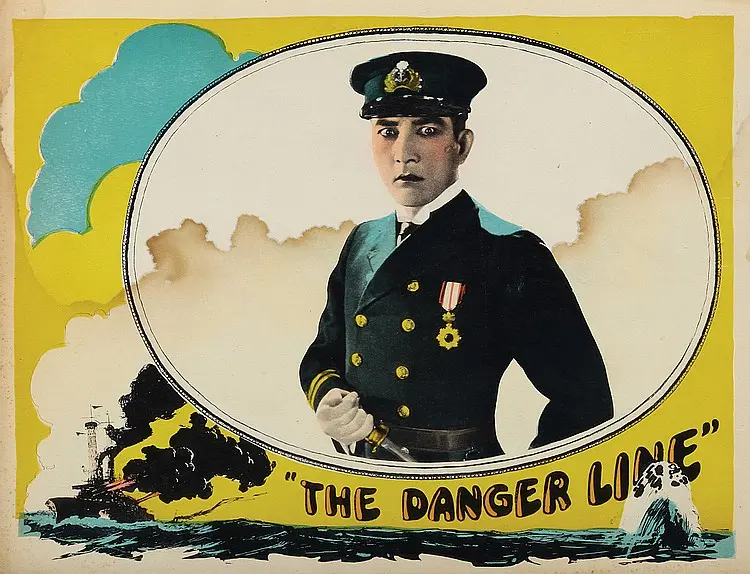
The screen opens to a world where tradition and modernity clash, setting the stage for 'The Danger Line.' The film, directed with a nuanced touch, explores the life of Marquise Yorisaka, a character whose existence is precariously balanced between East and West. As her husband embarks on a secret mission, the Marquise is left in the hands of Mrs. Hockey, a figure who represents Western influence and transformation. Mrs. Hockey's strategy is to Americanize the Marquise, stripping her of her traditional values and introducing her to a new way of life that challenges her very essence.
The introduction of Captain Fergan marks a significant turning point. Initially, he is drawn to the Marquise, captivated by her transformed persona. However, his interest is not merely romantic; it is a reflection of his own desire to bridge the gap between their worlds. Through their interactions, a complex relationship develops, one that is both seductive and fraught with tension. The Marquise, torn between her newly acquired American sensibilities and her roots, finds herself caught in a moral dilemma that tests her resolve.
As the plot thickens, the Marquis becomes aware of Captain Fergan's activities and the threat he poses to his wife's traditional values. Determined to protect her, he takes drastic measures, obtaining a post for the captain on his battleship and forcing him to take command when he himself is wounded. This act of control reflects the Marquis's desire to maintain the status quo and prevent further erosion of his wife's cultural identity. The death of Captain Fergan serves as a pivotal moment, bringing about a reconciliation between the Marquise and her husband. This resolution is not merely a return to their previous way of life but a new beginning that respects both their traditions and the inevitable changes brought about by modernity.
Francis Ward and Cady Winter bring depth and authenticity to their roles, their performances enhancing the emotional richness of the film. Tsuru Aoki and Gina Palerme add layers of complexity to the narrative, their characters embodying the tension between tradition and transformation. The standout performance, however, belongs to Sessue Hayakawa, whose portrayal of the Marquis is a masterclass in subtlety and power. His ability to convey a range of emotions, from pride to protectiveness, makes the Marquis a fully realized character, one whose actions and decisions have far-reaching consequences.
The screenplay, penned by Margaret Turnbull and Claude Farrère, is both intricate and engaging. The dialogue is meticulously crafted, each line contributing to the overall narrative and character development. The film's pacing is well-balanced, allowing the audience to fully immerse themselves in the world being portrayed. The visual aesthetics are equally noteworthy, with a blend of traditional and modern elements that create a visually stunning backdrop for the story.
'The Danger Line' stands as a testament to the art of storytelling, where tradition and transformation are not merely themes but deeply intertwined aspects of human experience. It invites viewers to reflect on the challenges of cultural adaptation and the complexities of personal identity. In a cinematic landscape where such narratives are often oversimplified, 'The Danger Line' offers a nuanced and thoughtful exploration of these themes.
For those interested in delving deeper into the world of transformation and cultural clash, 'The Wood Nymph' and 'The Arrival of Perpetua' offer similar explorations, while 'The Son-of-a-Gun' and 'Sentenced for Life' provide contrasting perspectives on the same themes. These films, along with 'The Danger Line,' collectively contribute to a rich tapestry of narratives that challenge our understanding of what it means to be both rooted and adaptable in a rapidly changing world.
Ultimately, 'The Danger Line' is a film that rewards close attention, offering a complex narrative that resonates on multiple levels. It is a journey through the dangers and opportunities that arise when traditional values are confronted with the allure of the new. As the Marquise learns to navigate this delicate balance, so too does the audience, emerging with a deeper appreciation for the intricate dance between tradition and transformation.
IMDb 5.2
1930
Community
Log in to comment.