DbcultAccessing Vault...
Cult Review
Senior Film Conservator
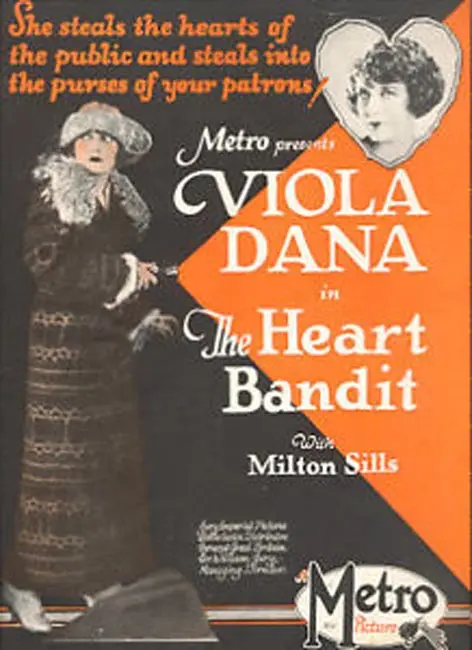
In the silent film era, 'The Heart Bandit' emerges as a poignant tale of redemption, moral ambiguity, and the human condition. Directed by an unknown director and featuring a cast including Nelson McDowell, Bertram Grassby, and Matthew Betz, this 1920s cinematic piece navigates the intricate lives of its characters with a deft hand.
The narrative centers around Mrs. Rand, a kindly old woman portrayed by Gertrude Claire, who takes in Molly O'Hara, known as 'Angel Face' to her gang, played by Viola Dana. Molly's character arc, from a petty crook to a reformed individual, serves as the film's emotional anchor. The transformation is meticulously crafted, showcasing the challenges Molly faces and the growth she experiences under Mrs. Rand's guidance.
However, the tranquility of Mrs. Rand's world is disrupted by her son John, played by Milton Sills, who has strayed from the path of righteousness. John's involvement in a big money bunco scheme not only jeopardizes his own life but also presents a formidable challenge to Molly, who has grown to care for him. It is at this juncture that Molly must decide whether to reciprocate the kindness shown to her by helping John find his way back to virtue.
The dynamic between Molly and John is pivotal to the narrative, as their relationship evolves from one of acquaintances to something more profound. This development adds a layer of complexity to the story, as Molly's efforts to reform John are complicated by her feelings for him. The portrayal of their romance is tender and believable, making their journey all the more compelling.
One of the most striking aspects of 'The Heart Bandit' is its thematic exploration. The film delves into issues of morality, redemption, and the transformative power of love and kindness. These themes are not presented in a didactic manner but are instead woven into the fabric of the narrative, allowing the audience to engage with them on a deeper level.
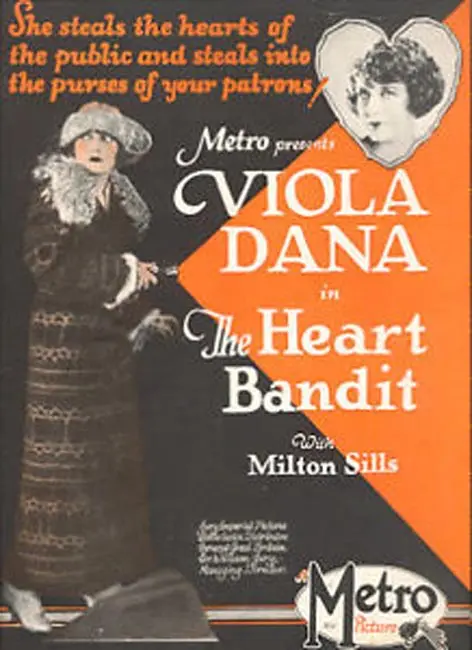
In terms of cinematography and production, 'The Heart Bandit' showcases the artistic sensibilities of its era. The film's use of lighting, composition, and camera movement contributes to its overall aesthetic, creating a visually engaging experience for the viewer. While the technical aspects may seem rudimentary by contemporary standards, they are integral to the film's charm and historical significance.
Comparing 'The Heart Bandit' to other films of its time, such as Le nabab and The Mystery of the Poison Pool, it becomes clear that this film occupies a unique space within the silent film canon. Its focus on character development and moral exploration sets it apart from more action-oriented films of the period.
In conclusion, 'The Heart Bandit' is a moving and thought-provoking film that offers a nuanced exploration of the human condition. Its engaging narrative, coupled with its thematic depth and historical significance, make it a must-see for fans of silent cinema and those interested in the evolution of film as an art form.
The cast, including DeWitt Jennings, Wallace MacDonald, and Edward Wade, delivers strong performances that bring depth and authenticity to the narrative. The writing, credited to Fred Myton and Tom J. Hopkins, demonstrates a keen understanding of character psychology and dramatic tension, making 'The Heart Bandit' a compelling watch from start to finish.
For those interested in exploring the film's historical context, Poor Men's Wives and The Lonesome Chap offer interesting parallels, while In a Naturalist's Garden and The Galloping Kid provide a glimpse into the broader cinematic landscape of the era.
Ultimately, 'The Heart Bandit' stands as a testament to the enduring power of cinema to inspire, educate, and entertain. Its exploration of redemption, love, and morality continues to resonate with audiences, making it a timeless classic of the silent film era.
IMDb 5.4
1929
Community
Log in to comment.