DbcultAccessing Vault...
Cult Review
Senior Film Conservator
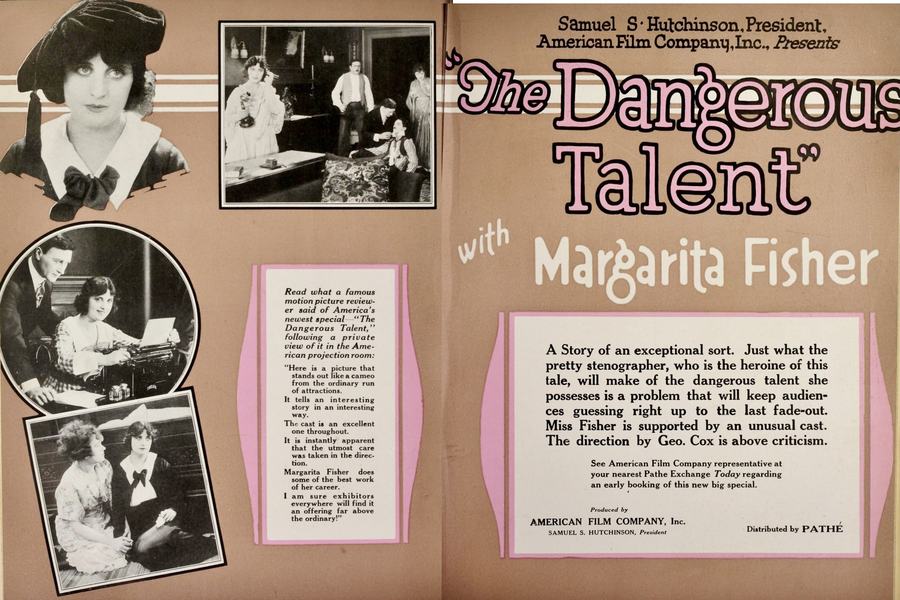
Ink is blood that never clots.
In the flicker of a 1919 carbon-arc beam, that maxim becomes flesh. Leila Mead, played by Margarita Fischer with the brittle poise of a porcelain figurine balanced on a fault-line, sits at a roll-top desk while Manhattan’s noon light slices through venetian blinds like prison bars drawn in celluloid. Her fingers—nimble, calloused, trembling—replicate the loop of a capital E until it perfectly rhymes with Gilbert Ellis’s own. The camera hovers so close we can count the lint specks on her cuffs, and in that intimacy the film announces its obsession: the terrifying moment when skill becomes sin, when labor becomes larceny.
Silent cinema rarely lingers on process; it prefers the punch, the kiss, the train track. Yet director Daniel F. Whitcomb—a name half-erased by nitrate rot—lets the forgery breathe. Each stroke of Leila’s steel nib is a drumbeat, scored by the whirr of the projector itself. The sequence lasts forty-three seconds, an eternity in 1919 syntax, and it does what later heist films merely montage: it seduces us into complicity. We want the fake to outrun the real.
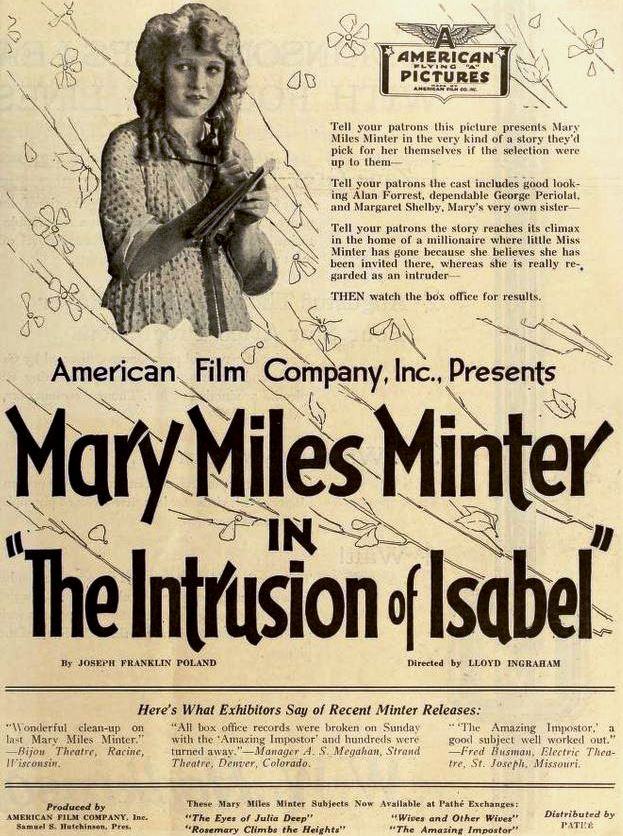
The plot pirouettes on a dime. One moment Leila is clutching a pink dismissal slip; the next she is descending the marble steps of Ellis’s Xanadu, a estate part Gilded Cage, part robber-baron fortress. Gilbert Ellis—George Periolat in a swallow-tail coat that gleams like obsidian—never once doubts the authenticity of the letter that claims her as kin. Why? Because wealth, the film whispers, is itself a forgery: a promissory note the world agrees to honor. The irony is so sharp you could shave with it.
Inside the manor, cinematographer Lois Zellner (also the co-writer, a rarity that feels modern) floods frames with chiaroscuro pools. Candle nibs drip wax like slow confession. The safe—an iron-jawed deity—squats in the library, its dial glinting each time Horton polishes it with a chamois cloth. The butler, essayed by Harvey Clark, has the stiff spine of a Beethoven sonata and the eyes of a man who has memorized every squeak in the floorboards. He is class resentment in white gloves.
Beatrice Van as Ellis’s ward pops in like a champagne bubble—her gowns a riot of sherbet silks that threaten to burst into Technicolor. She exists to remind Leila what polished femininity looks like when bankrolled by legitimized theft. Their scenes together are knife-fights wrapped in lace. In one exchange, Van’s character praises Leila’s “neat hand,” unaware that the same hand has already counterfeited her guardian’s will. Fischer’s micro-reaction—a blink held half a second too long—carries more subtext than pages of intertitles.
The tension coils tighter when Ellis dictates a new codicil to his attorney, effectively disinheriting everyone but the dog. Horton eavesdrops from the mezzanine, his silhouette swallowed by a tapestry of Diana at the hunt. The stag in the weave seems to glance sideways at the butler, as if even mythic beasts scent the approaching blood-in-ink.
Mid-film, Whitcomb stages a dinner sequence worthy of Homunculus’s expressionist hysteria. A long table, twenty chairs, but only four occupied. Footmen glide like mute Furies, pouring champagne that fizzes like seltzered diamonds. Conversation ricochets between polo scores and the “labor unrest” downtown—phrases that feel like epitaphs for the age. Beneath the table, Horton’s boot taps a Morse code only Leila notices. It is the countdown to larceny, set to the rhythm of cut-crystal clink.
Zellner’s script flirts with socialism without ever declaiming it. Ellis boasts that his fortune could “buy every typewriter from here to San Francisco,” and for a moment the film lets that enormity sit like a stone in the viewer’s stomach. Leila’s forgery, then, is not crime but reclamation—an unauthorized redistribution of narrative capital.
Unlike the daredevil tomboys of My Lady Robin Hood or the unreachable ice-statues in The Unattainable, Leila occupies a liminal register: too gifted for domestic service, too perilous for marriage. Her skill set—once discovered—threatens the patriarchal order more than any stick of dynamite. The film knows it; notice how the camera never sexualizes her workspace. No stockinged ankle peeks from under the desk, no male gaze lingers on her collarbone. The erotic charge is entirely cerebral: ink meets paper, power meets vulnerability, woman meets system.
When she finally confronts Horton in the lantern-lit corridor at 3 a.m., the scene crackles with mutually assured destruction. “Your hand is steady,” he sneers, “but safes require nerves of solder.” She retorts via intertitle: “And letters require hearts of stone.” The exchange is so curt it could fit inside a tweet, yet it distills the entire film’s dialectic: forgery vs. larceny, woman vs. servant, paper vs. steel.
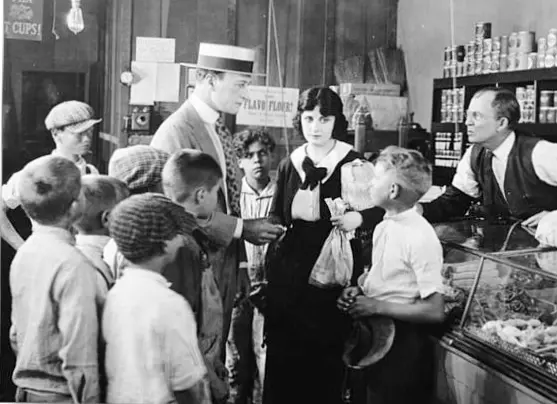
Anyone arriving after bingeing Nine-Tenths of the Law or the clockwork set-pieces of The House of Silence might expect a Rififi-style break-in. Whitcomb denies that spectacle. The robbery occurs off-screen; we only witness its aftermath—drawers yawning like broken jaws, papers strewn like gutted birds. The absence forces us to imagine the tactile details: Horton’s gloved wrist twisting the dial right-left-right, the tumblers falling like distant artillery.
By refusing to sensationalize, the film keeps its lens trained on consequence rather than action. Leila finds Horton crouched amid the chaos, pockets bulging with bearer bonds. Instead of screaming, she barters. The ensuing negotiation—conducted in whispers while Ellis snores two floors above—plays like a mini treaty negotiation for France, only the continent at stake is her future.
Margarita Fischer, often dismissed as a “light comedian” in fan-mags, delivers a masterclass in calibrated panic. Watch how her shoulders climb toward her earlobes each time Ellis dictates a new figure; by film’s end she seems two inches shorter, compressed by moral G-force. Conversely, Harvey Clark’s Horton never twirls a mustache; his villainy is bureaucratic, the kind that signs eviction notices with a fountain pen plumed in gold. The clash between their acting registers—her tremulous naturalism vs. his proto-Noah-Cross implacability—creates a static charge that hums even through the 104-year emulsion cracks.
George Periolat’s Ellis is the weak link, all bluff bonhomie and cigar-jabbing rhetoric. Yet even that flatness serves the film’s thesis: capital itself has no charisma, only gravity. When he finally discovers the forgery, his wrath is perfunctory, a CEO outsourcing outrage to underlings. The real emotional explosion comes earlier, when Leila, believing herself alone, practices Ellis’s signature on a fogged windowpane. The letters evaporate like guilty ghosts—a moment so poetic it could slide into Gli spettri without subtitles.
Shot largely on interior sets, the movie compensates for spatial sameness with visual rhymes. Note the recurring circle motif: Ellis’s monocle, the safe’s dial, a half-eaten cracker left on a plate, the moon glimpsed through a round window during the climax. Each ring foreshadows the zero-sum game of authentication—what goes around comes around, often stamped with someone else’s initials.
Color tinting survives in the best extant print: amber for daytime interiors, cyan for night, a brief blush of rose during the pseudo-familial embrace when Ellis “recognizes” Leila as kin. These chromatic pivots do more than cue mood; they mimic the phases of a confidence trick—warmth, cool assessment, the flush of victory.
Seen in 2024, the film vibrates with gig-economy resonance. Leila’s termination—“Your services are no longer required”—could slide into a Zoom call. Her subsequent hustle, monetizing a dubious portfolio, mirrors every freelancer frantically retouching a résumé. Even the manor’s gig-work staff—cooks, chauffeurs, footmen—exist at the whim of one errant market swing. When Horton robs Ellis, he is merely redistributing surplus value without the courtesy of a SPAC.
Contemporary restorations sometimes slap jaunty ragtime beneath silent intrigue, but a wiser score would sample keystrokes: the clack of typewriter hammers, the wet crunch of sealing wax, the sigh of parchment unrolling. Those are the true sound effects of precarity.
The finale sidesteps both matrimony and martyrdom—narrative ruts that ensnare Paid in Full and Arme Violetta. Leila negotiates immunity by threatening to expose Ellis’s own offshore shell companies, documents she has seen while transcribing dictation. The last shot frames her walking away from the manor at dawn, coat cinched, no beau in tow. She pauses at a crossroads, pulls a crumpled letter from her pocket, and—off-screen—strikes a match. The paper flares, fades, and the smoke drifts across the lens until the image itself seems to dissolve.
We never learn what she will do next. Perhaps she’ll forge passports for war refugees, or ghost-write love letters for the illiterate, or simply open a stationery shop in a seaside town where no one’s safe is worth cracking. The open-endedness feels radical for 1919, a year when most heroines were married or murdered by reel six. Here, the dangerous talent is not the hand that fakes but the mind that dreams beyond the signature line.
In the flicker of that match, cinema itself invents the modern anti-heroine—ink in her veins, ash on her breath, the road wide as a blank page.
IMDb —
1934
Community
Log in to comment.