DbcultAccessing Vault...
Cult Review
Senior Film Conservator
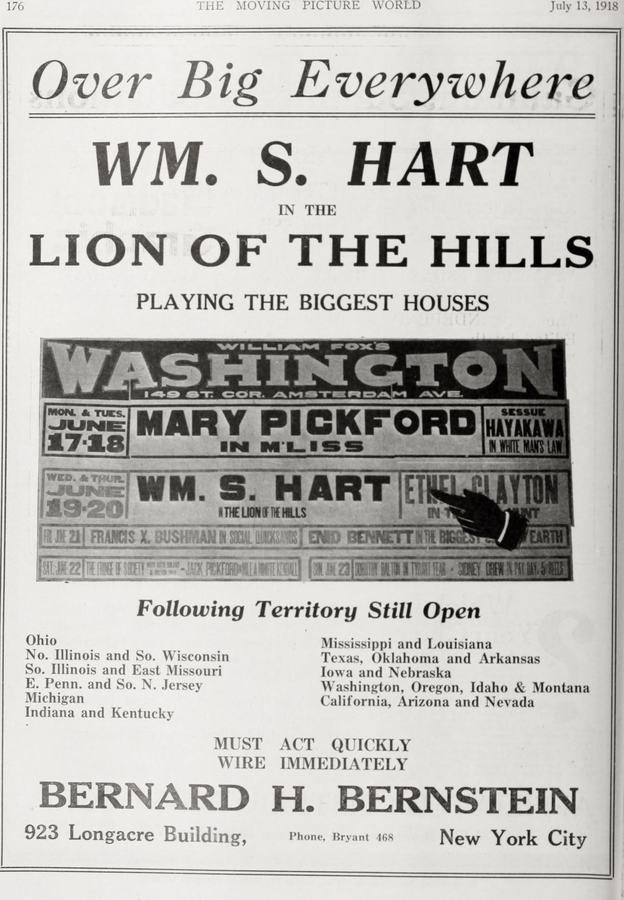
There are certain films that, despite the vast chasm of time and the profound evolution of cinematic language, retain an undeniable, visceral power. 'The Lion of the Hills' stands as a towering testament to this phenomenon, a silent Western that roars with an emotional intensity often lacking in its more verbose descendants. Released in an era when the frontier was still a potent mythos and the moving picture a nascent, yet mesmerizing, art form, this film isn't merely a historical curiosity; it's a profound exploration of justice, redemption, and the indomitable spirit of a man forged in the crucible of a lawless land. It compels us, even today, to grapple with questions of morality and the very essence of heroism, rendered with a stark authenticity that was William S. Hart's signature.
To speak of 'The Lion of the Hills' is to immediately invoke the name of William S. Hart, an actor-director whose impact on the Western genre is immeasurable. Hart wasn't just performing; he was embodying an archetype. His 'good-bad man' persona, a figure of quiet strength, burdened by a past but driven by an unyielding moral compass, found its zenith in characters like 'Lion' Dan Mallory. Mallory is not your typical clean-cut hero; he is a man etched with the harsh realities of the frontier, his eyes holding the weariness of countless sunrises and the memory of profound betrayals. Hart's genius lay in his ability to convey complex inner turmoil through subtle gestures, a slight tilt of the head, or the intensity of his gaze. This wasn't melodrama; it was distilled emotion, raw and unadorned.
His approach to filmmaking was revolutionary for its time, eschewing the theatrical flourishes prevalent in many contemporary productions for a gritty realism. Hart insisted on authentic costumes, real locations, and a narrative grounded in the harsh realities of the West, rather than romanticized fantasy. This commitment to verisimilitude imbues 'The Lion of the Hills' with a texture that feels remarkably modern, even a century later. You don't just watch the film; you feel the dust, the sun, the desperation of the miners, and the oppressive weight of Silas Blackwood's tyranny. The sparse landscapes become characters themselves, mirroring Mallory's isolation and the vastness of the moral challenges he faces.
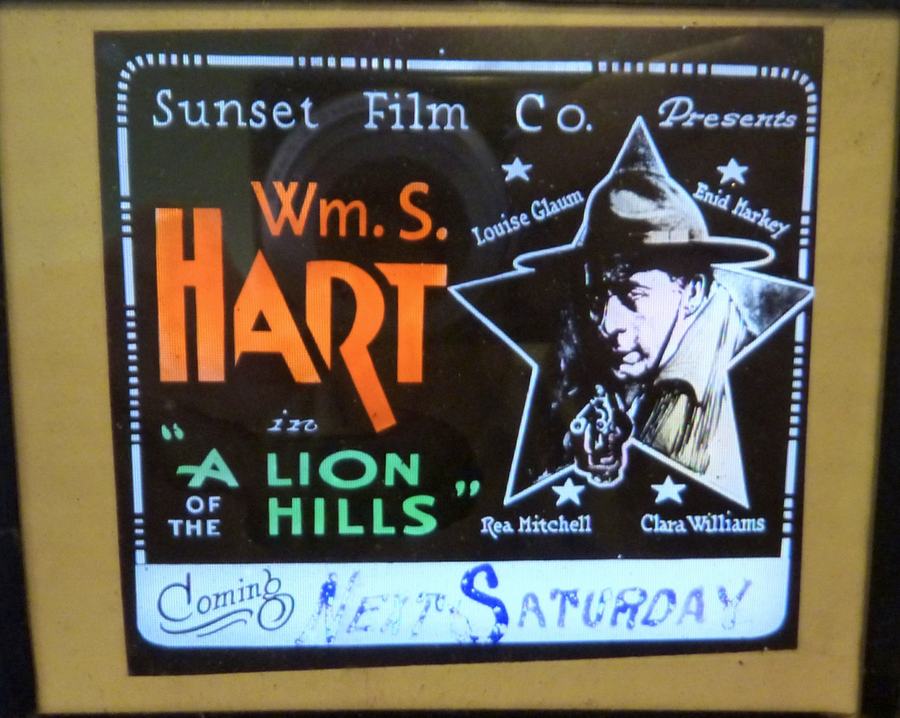
While Hart's presence is undeniably central, the supporting cast in 'The Lion of the Hills' provides essential counterpoints and depth. Clara Williams, as Elara Vance, delivers a performance of remarkable grace and resilience. Her character is not a damsel in distress in the conventional sense, but rather a catalyst for change, her unwavering belief in justice acting as a moral anchor in a storm of corruption. Williams imbues Elara with a quiet strength, her vulnerability never descending into weakness, making her a compelling figure who earns Mallory's respect and ultimately, his intervention. Her portrayal is a delicate balance, providing both the emotional core and the impetus for the narrative’s unfolding.
Enid Markey, Louise Glaum, and Rhea Mitchell, while perhaps in more secondary roles, contribute significantly to the film’s rich tapestry. Markey, often known for her dramatic intensity, might here portray a sympathetic townsfolk or a figure caught in Blackwood’s web, adding layers to the community’s plight. Glaum, with her formidable screen presence, could easily embody a more ambiguous character, perhaps a femme fatale or a jaded resident whose cynicism slowly gives way to hope. Mitchell’s contributions would further flesh out the social dynamics of the beleaguered town, each actor’s silent performance adding nuance to the collective struggle. The combined efforts of this ensemble create a believable, lived-in world, enhancing the gravitas of Hart's central performance. It's a testament to the directorial hand that even without dialogue, these characters communicate volumes, their expressions and body language speaking a universal truth.
At its heart, 'The Lion of the Hills' is a profound meditation on the nature of justice, particularly in environments where formal law is either absent or corrupted. 'Lion' Dan Mallory embodies the concept of natural justice, a man who operates outside the flawed legal structures, yet adheres to a higher, personal code of ethics. This theme resonates deeply, inviting comparisons to other films that explore vigilante justice or the conflict between personal morality and societal norms. One might draw parallels to the existential dilemmas presented in a film like Satan's Rhapsody, where characters are often forced to confront the dark corners of human nature and make difficult choices in morally ambiguous landscapes. Both films, despite their differing genres, probe the limits of human resilience and the search for righteousness in a fallen world.
The film also masterfully explores the concept of redemption. Mallory, haunted by his past, finds a path back to purpose not through forgiveness from others, but through self-forgiveness earned by defending the vulnerable. His journey is not one of seeking accolades, but of fulfilling an internal imperative. This arc of a flawed hero finding his way back to grace is a timeless narrative, echoed in countless stories across mediums. It speaks to the universal human desire for second chances and the belief that even the most hardened souls can be stirred to nobility. The silent film format, ironically, amplifies this internal struggle, forcing the audience to project their own understanding onto Mallory's stoic countenance, making his eventual roar all the more impactful.
The direction in 'The Lion of the Hills' is a masterclass in visual storytelling. Hart, a seasoned stage actor before his foray into film, understood implicitly how to use the camera to convey narrative and emotion without dialogue. His compositions are often stark, utilizing the vastness of the Western landscape to emphasize the isolation and vulnerability of his characters. The wide-open spaces are not merely backdrops; they are active participants in the drama, reflecting the boundless opportunities and formidable dangers of the frontier. The editing, while perhaps less frenetic than modern cinema, is deliberate and effective, building tension through sustained shots and carefully chosen intertitles that punctuate the narrative with poetic brevity.
The use of light and shadow is particularly noteworthy. Cinematographers of the silent era were masters of chiaroscuro, and 'The Lion of the Hills' is no exception. Shadows cling to Mallory, hinting at his troubled past, while moments of clarity and moral resolve are often bathed in harsh, unforgiving sunlight. This visual dichotomy reinforces the film's thematic exploration of good versus evil, and the internal struggles of its protagonist. It's a testament to the artistry that even without the benefit of sound, the film creates an immersive experience, guiding the viewer's emotions with expert precision.
'The Lion of the Hills' is a pivotal entry in the evolution of the Western genre. It moves beyond simplistic heroics to embrace a more nuanced portrayal of frontier life. Hart’s 'good-bad man' prefigures countless anti-heroes and morally complex protagonists that would populate Westerns for decades to come. His influence can be seen in later iterations of the genre, where characters are often driven by personal demons as much as by a desire for justice. The film’s focus on the struggles of the common man against corporate greed also adds a layer of social commentary that elevates it beyond mere escapism. This engagement with societal issues, rather than just adventure, connects it to a lineage of films that use the Western setting to explore broader human conditions. For instance, while vastly different in tone, the social commentary found in films like La capanna dello zio Tom (Uncle Tom's Cabin) or even the more adventurous but socially aware The Victoria Cross, which explores heroism and sacrifice, share a common thread of using narrative to delve into significant societal constructs and human struggles.
The film also masterfully utilizes the iconography of the Western: the lone rider, the dusty town, the saloon, the formidable antagonist. Yet, it infuses these familiar elements with a gravitas that makes them feel fresh and potent. The climax, undoubtedly a tense confrontation between Mallory and Blackwood's forces, is not just a shootout; it's a symbolic battle for the soul of the community, a struggle between oppression and liberation. It speaks to the enduring appeal of the Western as a genre that allows for grand narratives of good versus evil, even when those lines are blurred by human fallibility. The sense of epic struggle against overwhelming odds found here is reminiscent of the tenacious spirit seen in films like The Long Trail, another silent classic that emphasizes perseverance in the face of arduous journeys and societal pressures.
The legacy of 'The Lion of the Hills' extends far beyond its initial release. It solidified William S. Hart's status as a screen legend and influenced generations of filmmakers and actors who would go on to define the Western. Its commitment to realism, its nuanced characterizations, and its powerful thematic explorations set a high bar for the genre. The film serves as a crucial historical document, offering a window into the storytelling techniques and societal values of its time, yet its core narrative of a lone hero fighting for justice remains universally resonant. It's a film that demands to be seen not just for its historical significance, but for its sheer artistic merit and emotional impact.
In an age saturated with special effects and rapid-fire dialogue, the quiet power of 'The Lion of the Hills' reminds us that true cinematic artistry lies in the ability to evoke profound emotion and tell a compelling story with elegance and restraint. It is a film that rewards careful viewing, revealing new layers with each revisit. For cinephiles and casual viewers alike, it offers a rich, immersive experience into a pivotal moment in film history and a timeless narrative of human struggle and triumph. Its roar, though silent, echoes through the decades, a powerful reminder of the enduring strength of classic cinema.
Comparing its impactful simplicity to the more complex narrative structures that would later emerge, one might consider films like The New Adventures of J. Rufus Wallingford or A Million a Minute, which explored different facets of adventure and intrigue. Yet, 'The Lion of the Hills' stands apart in its unvarnished portrayal of the American spirit on the edge of civilization. Its raw emotionality and stark beauty solidify its place not just as a silent film classic, but as a timeless piece of storytelling that continues to captivate and inspire. It is a profound journey into the human condition, where the landscape itself becomes a character, and the struggle for justice is as vast and unforgiving as the hills themselves.
The film's exploration of moral ambiguity and the grey areas of heroism also predates many modern cinematic tropes. While the protagonist may be a 'good-bad' man, his actions are driven by a clear, albeit unconventional, moral code. This complexity adds depth, distinguishing it from more simplistic narratives of good triumphing over evil without internal conflict. It's a testament to the sophistication of silent era storytelling that such intricate characterizations could be conveyed without a single spoken word, relying instead on the power of performance, cinematography, and evocative intertitles. The enduring power of 'The Lion of the Hills' lies in its ability to transcend its historical context and speak to universal truths about human nature and the perpetual quest for justice, making it a masterpiece worthy of continued appreciation and study.
IMDb —
1921
Community
Log in to comment.