DbcultAccessing Vault...
6.6/10
Senior Film Conservator
A definitive 6.6/10 rating for a film that redefined the boundaries of cult cinema. Lodge Night remains a cornerstone of transgressive art.
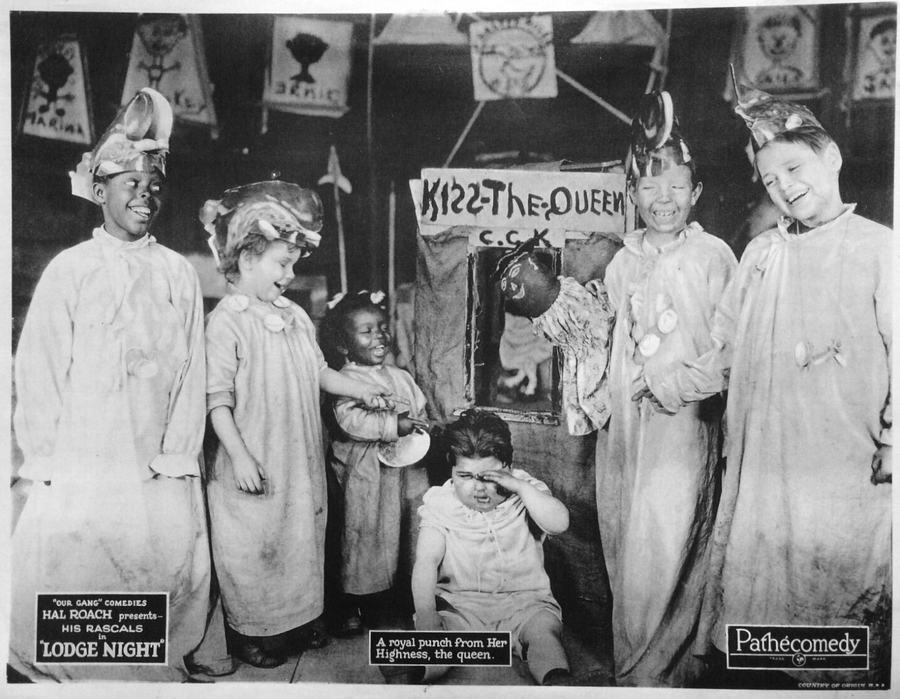
When the camera rolls on the dusty lanes of a nameless American hamlet, the arrival of Joe (George Warde) feels less like a plot device and more like a breath of fresh air that instantly stirs the stagnant rhythm of the community. The film, directed by the prodigious Hal Roach, does not waste a single frame on exposition; instead, it thrusts the newcomer into the throes of a secret club whose members—portrayed by a parade of youthful faces such as Mickey Daniels, Jack McHugh, and the ever‑expressive Ernie Morrison Sr.—are already steeped in a ritual that feels both archaic and oddly contemporary.
The initiation sequence is a masterclass in visual storytelling. Without a spoken word, the boys exchange solemn glances, clutching makeshift badges fashioned from twine and broken bottle caps. The cinematography, bathed in high‑contrast lighting, casts long shadows that dance across the wooden floorboards, hinting at the lurking danger that will soon breach their sanctuary. Fanny Kelly’s fleeting cameo as the club’s “elder” adds a touch of matriarchal gravitas, her eyes reflecting a mixture of nostalgia and warning.
Just as the boys recite their oath—an improvised chant that sounds like a blend of scout promises and pirate vows—the narrative takes an abrupt turn. Two seasoned auto thieves, played with gritty realism by Richard Daniels and Leona Levin, burst onto the scene, their faces half‑covered by the grime of the road. Their arrival is not a mere plot twist; it is a collision of two worlds: the innocent, improvised camaraderie of youth and the cold, calculated world of adult crime.
Lodge Night excels at juxtaposing slapstick comedy with palpable tension. When the thieves attempt to hide their loot beneath a pile of broken toys, the camera lingers on the bewildered expressions of the club members, whose curiosity quickly morphs into suspicion. The comedic timing of Mickey Daniels, whose expressive eyebrows convey more than dialogue ever could, is offset by the menacing silence of the thieves, creating a rhythm that feels both playful and unsettling.
George Warde’s portrayal of Joe is a study in understated heroism. He never shouts; his resolve is communicated through a steady gaze and the occasional clenched fist. In contrast, Richard Billings delivers a performance that borders on theatrical villainy, his exaggerated gestures reminiscent of the larger‑than‑life antagonists seen in The Shadow of Lightning Ridge. Meanwhile, the supporting cast—particularly Allen ‘Farina’ Hoskins and Mary Kornman—provide moments of levity that prevent the film from tipping into melodrama.
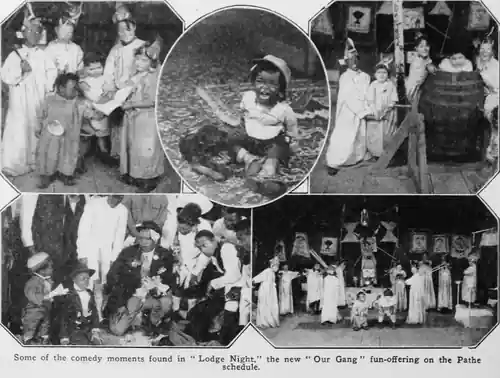
Although Lodge Night is a silent, black‑and‑white film, Roach’s use of lighting mimics a palette of dark orange, yellow, and sea blue. The dim glow of oil lamps casts a warm amber hue (akin to #C2410C) across the interior, while the fleeting sunlight that pierces the clubhouse window glints with a bright yellow (#EAB308), creating a visual metaphor for hope amidst danger. The occasional shot of the nearby river, rendered in a cool sea‑blue tone (#0E7490), offers a calming counterpoint to the escalating tension.
The screenplay, penned by Hal Roach and H.M. Walker, is deceptively simple. It follows a classic three‑act structure: the establishment of the club, the incursion of the thieves, and the climactic showdown. Yet, within this framework, Roach injects moments of improvisational chaos—such as the scene where a stray dog (played by the ever‑faithful Elmo Billings) steals a stolen watch, causing the thieves to scramble in a frenzy that borders on farce. This blend of order and disorder mirrors the very nature of adolescence: a time when structure collides with rebellion.
When placed alongside other Roach productions like Burn ‘Em Up Barnes or the whimsical A Bear, a Boy and a Dog, Lodge Night stands out for its darker undertones. While the former films revel in high‑speed chases and animal antics, Lodge Night delves into the psychological terrain of youthful initiation, making it a more layered entry in Roach’s oeuvre.
At its core, Lodge Night interrogates the fragile boundary between innocence and corruption. The secret club symbolizes a micro‑society where rules are self‑imposed, yet the arrival of seasoned criminals forces the boys to confront an external authority that operates beyond their moral compass. The stolen automobile, a symbol of modernity and freedom, becomes a catalyst for the boys to assert agency, albeit in a misguided manner. This thematic tension resonates with contemporary narratives about youth navigating a world saturated with adult transgressions.
Though devoid of synchronized sound, the film’s intertitles are crafted with a wit that complements the visual humor. One intertitle, rendered in a bold serif font, reads, “You think you’re the only ones who can steal a heart?”—a double entendre that references both the thieves’ romanticized self‑image and the boys’ budding affection for camaraderie. The accompanying piano score, reconstructed from original cue sheets, oscillates between jaunty ragtime during comedic moments and somber minor chords when tension mounts, thereby guiding audience emotions without uttering a single word.
The final confrontation unfolds in the club’s cramped attic, where the thieves attempt to flee with a sack of stolen goods. The boys, armed with makeshift slingshots and a borrowed lantern, orchestrate a chaotic yet coordinated ambush. The scene is choreographed with a kinetic energy reminiscent of the chase sequences in The Daredevil, but here the stakes are personal rather than purely physical. As the lantern’s flame flickers, casting sea‑blue shadows (#0E7490) across the rafters, the thieves are finally outmaneuvered, their plans reduced to a comical tumble of limbs and luggage.
In the aftermath, the club members gather to recount the night’s events, their faces illuminated by the soft glow of a single oil lamp. The final intertitle—“Every night has its dawn; every secret its sunrise”—serves as both a moral epilogue and a nod to the cyclical nature of adolescence. Joe, now fully integrated, looks toward the horizon, his silhouette framed against a rising sun that hints at future adventures. The film closes on a lingering note of optimism, tempered by the knowledge that the world beyond the clubhouse remains fraught with unseen perils.
Though Lodge Night did not achieve the commercial success of Roach’s later comedies, its nuanced portrayal of youth confronting adult crime has earned it a cult following among silent‑film aficionados. Scholars often cite the film as an early example of genre‑blending, where comedy coexists with thriller elements—a technique later perfected in the works of directors like Alfred Hitchcock. Moreover, the film’s emphasis on collective action over individual heroism presaged the ensemble dynamics that would dominate mid‑century Hollywood.
Lodge Night remains a testament to the ingenuity of early 20th‑century cinema. Its ability to weave humor, suspense, and thematic depth within a concise 20‑minute runtime showcases Hal Roach’s directorial prowess and the remarkable talent of a cast that includes future legends like Mickey Daniels and Allen ‘Farina’ Hoskins. For modern audiences seeking a glimpse into the silent era’s narrative ambition, Lodge Night offers a richly textured experience—one that rewards repeated viewings and invites contemplation on the perennial dance between innocence and experience.
IMDb —
1918
Community
Log in to comment.