DbcultAccessing Vault...
7.8/10
Senior Film Conservator
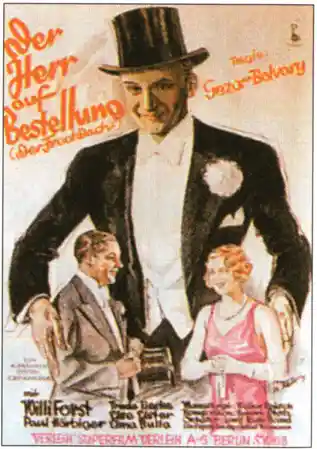
A definitive 7.8/10 rating for a film that redefined the boundaries of cult cinema. The Darling of Vienna remains a cornerstone of transgressive art.
Right, so The Darling of Vienna. Is it worth tracking down in the year of our Lord 2024? Honestly, it’s a tricky one. If you’re a real completist for old European comedies, especially those gentle, slightly _stuffy_ ones from the 30s, then yeah, maybe give it a whirl. But if you're hoping for anything loud or a plot that really grabs you, you'll probably feel like it’s a bit of a snoozer. It’s got a very particular charm, you know? Like finding an old, dusty porcelain doll. Sweet, but not for everyone. 🤷♀️
The whole thing centers around this very dapper fella, almost too neat, who works as a stand-in. Not for actors, mind you, but for important people – officials, dignitaries, the kind of folks who always have somewhere else to be. Our hero, played by Willi Forst, slips into their shoes, attends their boring banquets, and even sometimes, kinda remarkably, mimics their voices. It’s a wild idea, even for a movie back then. You gotta wonder how often that actually worked without someone noticing.
One scene sticks with me. He’s at this big, formal dinner, pretending to be some Baron von Kitzinger. And the real Baron is apparently very particular about his wine. Forst’s character, with this perfect little mustache and an air of quiet confidence, takes a sip, and his eyes just _ever so slightly_ twitch. It’s the kind of tiny detail you almost miss, but it says so much about the effort. He’s putting on a show, even in his own head. The camera stays just a little too long on his face, which gives you time to pick that up.
The movie doesn't really try for big, boisterous laughs. It’s more about the _situations_ he gets into. There’s a bit where he has to give a speech at some civic event, and the real official he’s replacing is notoriously dull. So, Forst’s character tries to liven it up, but he _can’t_ really go too far, right? He’s supposed to be this other guy. It’s a delicate balance. You can almost feel the movie trying to convince you this moment matters, like it's a big deal. The stakes feel low, but that's part of its charm.
And his voice work! It's not like he’s doing broad caricatures. It’s more subtle, a slight inflection here or there. You hear him mimicking Georg Berg’s character – an older, blustery sort – and it's not a perfect impression, but it's enough to get by. It’s _just_ enough to fool the people who don't know the real guy well. The film never really explains _how_ he gets so good at it. Just, he is. That's it.
There’s this recurring bit where a specific, slightly obnoxious lady (played by Trude Lieske) keeps showing up at events. She’s one of those busybodies who always thinks she knows everyone. Our hero has to keep changing his persona to avoid her figuring out he's the same guy. It’s a simple gag, but it keeps things moving. Her dresses are always a little too much, too. Lots of feathers and sparkle. Very 1930s, very much.
The music is, as you’d expect, very much of its time. Think lots of waltzes and light orchestral numbers. It helps set that Viennese mood, makes it feel romantic in a very old-fashioned way. But sometimes, it feels a bit… _generic_? Like it could be from any number of films of the era. It’s pleasant, never annoying, but not particularly memorable either.
The whole plot gets a little convoluted, as these things do. He ends up falling for someone (Elma Bulla), naturally, and then the big question is always: when does the charade fall apart? And will she still like him when she knows the truth? The pacing isn't exactly zippy; some scenes go on a tad too long, like a fancy dance that doesn't quite know when to end. It never feels rushed, which is nice, but it could use a little snip here or there.
It’s not a film that really tries to make a grand statement. It’s just a pleasant way to spend an hour and a half, if you're in the right mood. Don't expect a masterpiece, but do expect some decent performances and a bit of a giggle. The sets are quite lovely though, especially the ballrooms. Lots of chandeliers. You can almost smell the polished wood.
Did I mention the guy who keeps losing his spectacles? Wilhelm Bendow’s character, I think. He's always fumbling for them, and it's a small, recurring visual gag that’s kinda sweet. It’s not essential to the plot, just a little thing.
In the end, it’s a film that _existed_. It’s part of a time, a style. It's got its moments. But probably not one you'll be recommending to all your friends. Unless they're _really_ into this kinda thing.
IMDb 6
1936
Community
Log in to comment.