DbcultAccessing Vault...
Cult Review
Senior Film Conservator
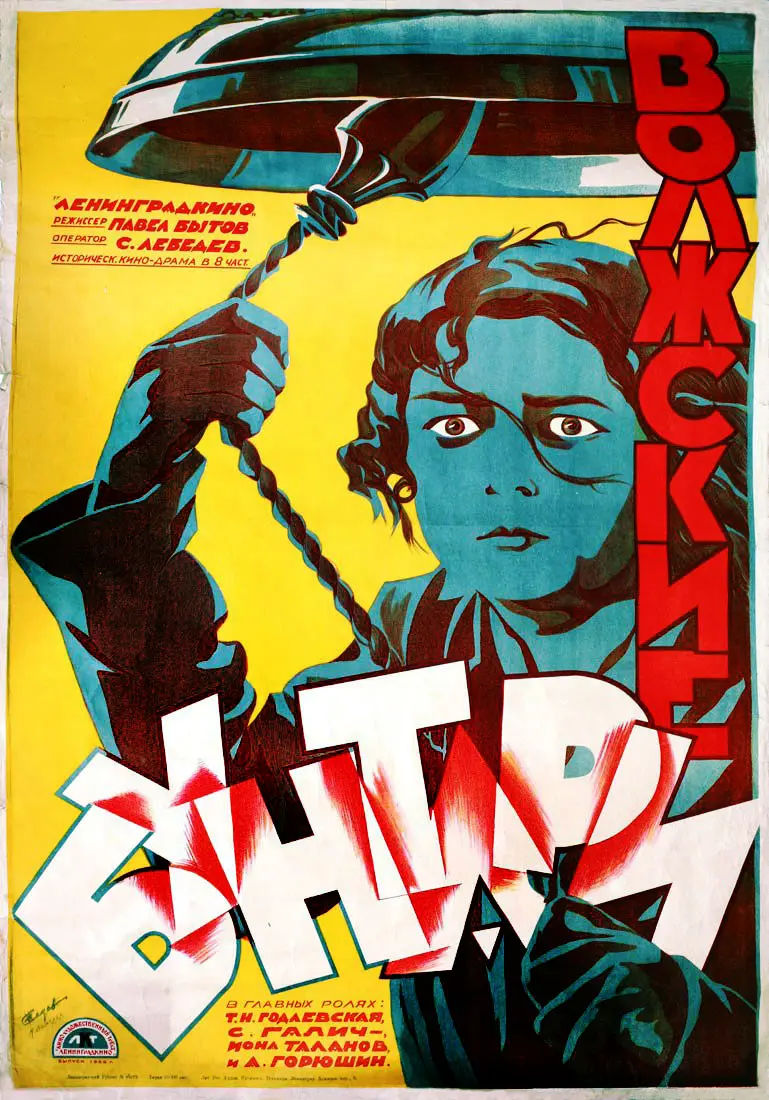
Is Volzhskiye buntari a forgotten gem worth unearthing from the silent era's vast archives? Short answer: yes, but with significant caveats that demand a particular kind of cinephile. This film, a stark portrayal of early 20th-century Russian societal friction, offers a fascinating, albeit imperfect, window into a pivotal historical moment and a nascent cinematic language.
It is a film for those who appreciate the raw, unpolished power of silent cinema, for history buffs intrigued by the precursors to the Russian Revolution, and for viewers who seek out performances driven by pure, unadulterated emotion. Conversely, if you demand fast pacing, complex character arcs, or pristine technical execution, Volzhskiye buntari will likely test your patience, feeling more like an academic exercise than pure entertainment.
This film works because of its unflinching commitment to depicting social injustice and the human cost of oppression, anchored by a truly magnetic central performance.
This film fails because its narrative can feel episodic, its pacing often drags, and some of its thematic messaging is delivered with the subtlety of a sledgehammer.
You should watch it if you are a student of cinematic history, a fan of early Russian drama, or someone willing to engage with a film on its own, historically informed terms.
Pavel Petrov-Bytov's Volzhskiye buntari, translated as 'The Volga Rebels,' plunges us directly into the heart of rural Russian life, where the vast, iconic river serves as both a lifeline and a silent witness to systemic hardship. The narrative centers on a small village, its inhabitants bound by tradition and the iron fist of a local land baron. Life here is a relentless cycle of toil and deprivation, a stark reality painted with broad, emphatic strokes typical of the silent era's social dramas.
Mariya Dobrova, in a role that solidifies her as a formidable presence of early Russian cinema, embodies Anna, a young woman whose spirit refuses to be broken by the prevailing misery. Anna is not merely a victim; she is an observer, a listener, and eventually, a catalyst. Her journey from quiet endurance to defiant leadership forms the emotional core of the film, providing a human anchor to the broader sociopolitical commentary.
The spark of rebellion is not a sudden explosion but a slow burn, fueled by mounting injustices: arbitrary land seizures, brutal punishments, and the ever-present specter of famine. Petrov-Bytov masterfully builds this tension, using intertitles not just to convey dialogue but to articulate the growing collective frustration. We see the villagers' faces, etched with despair, slowly transform into masks of resolute anger.
What separates Volzhskiye buntari from simpler melodramas of the period is its earnest attempt to portray the collective consciousness of a burgeoning movement. It's less about individual heroics and more about the tipping point where individual suffering coalesces into a shared demand for change. The film doesn't shy away from the brutal consequences of such defiance, hinting at the desperate stakes involved without fully revealing the outcome, leaving the viewer to ponder the true cost of freedom.
Petrov-Bytov's direction in Volzhskiye buntari is a fascinating blend of theatricality and nascent cinematic realism. He understands the power of the wide shot to convey the vastness of the landscape and the smallness of the individual within it, yet he's equally adept at intimate close-ups that magnify the raw emotion on his actors' faces. This duality is particularly evident in scenes depicting the villagers' communal gatherings, where the camera sweeps across dozens of faces before honing in on Anna's determined gaze.
One particularly striking sequence involves a scene on the Volga River itself. Petrov-Bytov uses the natural light and the river's expanse to create a sense of both liberation and looming danger as Anna attempts to secretly transport vital supplies. The silhouette of her small boat against the broad, grey sky is an image that lingers, a powerful visual metaphor for the struggle itself – a tiny spark of hope against an immense, indifferent world. It’s a moment that rivals the dramatic tension found in contemporary American Westerns like The Vengeance Trail in its portrayal of man against nature, or perhaps, man against fate.
The cinematography, while constrained by the technology of its time, effectively utilizes stark black and white contrasts to enhance the film's grim tone. Shadows are deep, textures are palpable, and the human form is often rendered with an almost sculptural quality. There's a particular shot of a barren field, stretching to the horizon, with a single, gnarled tree standing sentinel. This visual motif underscores the harshness of the environment and the resilience required to survive within it. It’s a testament to the visual storytelling capabilities even without the nuanced color palettes we take for granted today.
Mariya Dobrova’s performance as Anna is, without question, the pulsating heart of Volzhskiye buntari. In an era where silent acting often bordered on exaggerated pantomime, Dobrova brings a surprising depth and subtlety to her portrayal. Her eyes, in particular, are incredibly expressive, conveying a spectrum of emotions from quiet despair to fierce resolve with remarkable clarity. She doesn't just act; she *becomes* the embodiment of an entire people's defiance.
Consider the scene where Anna first openly challenges the baron's foreman. Dobrova's initial posture is one of deference, her head bowed. But as the foreman's cruelty escalates, her chin slowly rises, her shoulders square, and her gaze locks onto his. There’s no need for an intertitle to explain her shift; her body language speaks volumes. This is a masterclass in silent film acting, a lesson in conveying inner turmoil and burgeoning strength through physical presence alone. It evokes the powerful, understated rebellion seen in films like The Exiles, where a single individual’s conviction can ignite a movement.
While some supporting characters occasionally lean into archetypal representations – the cruel baron, the downtrodden peasant – Dobrova’s Anna transcends these limitations. She is a figure of quiet dignity who finds her voice and her power through suffering and solidarity. Her character arc, though simple by modern standards, is profoundly effective, charting a believable transformation from a passive observer to an active agent of change. It's a performance that, even today, commands attention and admiration, reminding us of the enduring power of human spirit in the face of overwhelming odds.
The pacing of Volzhskiye buntari is undeniably a product of its time. The film takes its time establishing the oppressive atmosphere and the slow build-up of resentment. There are long sequences dedicated to showing the arduous labor of the peasants, the starkness of their homes, and the quiet desperation in their everyday lives. This deliberate tempo can feel ponderous to modern audiences accustomed to faster cuts and immediate gratification.
However, this measured pace also serves a crucial thematic purpose. It allows the viewer to truly immerse themselves in the grinding reality of the characters' existence, making the eventual eruption of rebellion feel earned and inevitable, rather than a sudden, unmotivated plot point. When the action finally ignites, it does so with a raw, almost shocking intensity that contrasts sharply with the preceding quietude.
The tone of the film is consistently grim, yet punctuated by moments of defiant hope. Petrov-Bytov doesn't shy away from the brutality of the era, depicting violence and suffering with an unflinching gaze. Yet, through Anna's unwavering spirit and the growing solidarity among the villagers, a sense of revolutionary optimism pervades, suggesting that even in the darkest times, the human will to freedom cannot be entirely extinguished. It's a delicate balance, one that many contemporary social dramas still struggle to achieve.
Beyond its historical context, Volzhskiye buntari resonates with timeless themes of oppression, resistance, and the universal yearning for dignity. The struggle of the Volga peasants against an exploitative system is a narrative that has echoed throughout history and continues to find relevance in various forms today. This isn't just a historical document; it's a commentary on power dynamics that remain strikingly familiar.
The film’s portrayal of collective action, the way individuals overcome fear to unite for a common cause, is particularly poignant. It explores the psychological shift from individual grievance to shared identity, a powerful observation that often gets lost in more simplistic heroic narratives. It doesn't just show you rebellion; it makes you feel the gnawing hunger that fuels it.
While its revolutionary message might seem overt, it’s couched within a compelling human drama. The film poses questions about justice, sacrifice, and the moral ambiguities of fighting for freedom. These are not simple questions, and Petrov-Bytov, through his narrative, invites the audience to grapple with them, making the film more than just a period piece but a thought-provoking exploration of humanity's enduring struggles.
In an age saturated with digital effects and rapid-fire storytelling, Volzhskiye buntari stands as a powerful reminder of cinema's fundamental ability to convey profound human experience through simple, evocative means. It matters because it is a foundational piece of a national cinema, showcasing the early talents of its creators and reflecting the turbulent sociopolitical landscape from which it emerged. It offers a glimpse into how stories were told, and how emotions were evoked, before the advent of sound and color.
It also matters as a historical artifact, preserving a perspective on a period that reshaped global politics. Viewing it allows for a deeper understanding of the cultural currents that flowed through pre-revolutionary Russia, providing context for later, more well-known works. It is a vital link in the chain of cinematic evolution, demonstrating the early roots of social realism and political cinema that would define much of 20th-century filmmaking.
Volzhskiye buntari is a film that demands to be seen, not necessarily for its entertainment value in a modern context, but for its historical weight and the sheer power of its central performance. It's a challenging watch, certainly, with a pace that can meander and political messaging that is, at times, blunt. But these are not necessarily flaws; they are characteristics of a specific time and place in cinematic history. It works. But it’s flawed.
What truly elevates this film is Mariya Dobrova's magnetic presence. Her Anna embodies the silent strength and simmering fury of a people pushed to their breaking point. It's a performance that transcends the era's limitations, speaking directly to the universal human spirit of resistance. For those willing to engage with its historical context and appreciate its artistic merits, Volzhskiye buntari offers a rewarding, albeit stark, cinematic experience.
Ultimately, this isn't a film for everyone. But for the discerning cinephile, the history enthusiast, or anyone curious about the foundational stones of revolutionary cinema, Volzhskiye buntari is an essential, if demanding, journey back in time. It's a testament to the enduring power of film to capture the human struggle, even without a single spoken word.
IMDb 6.8
1936
Community
Log in to comment.