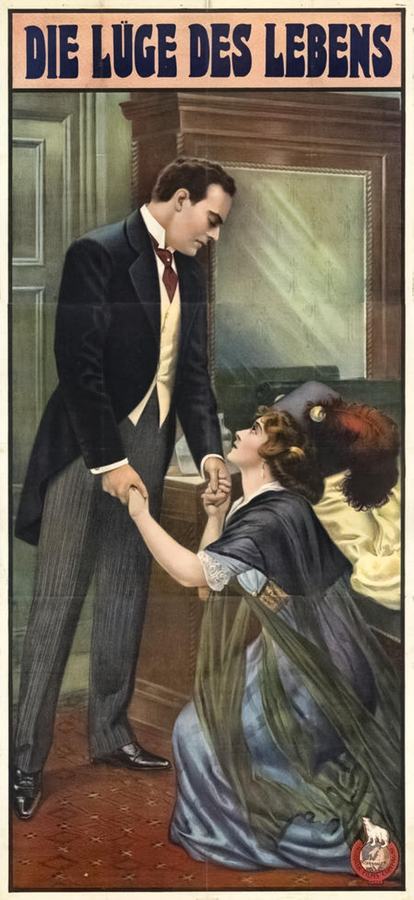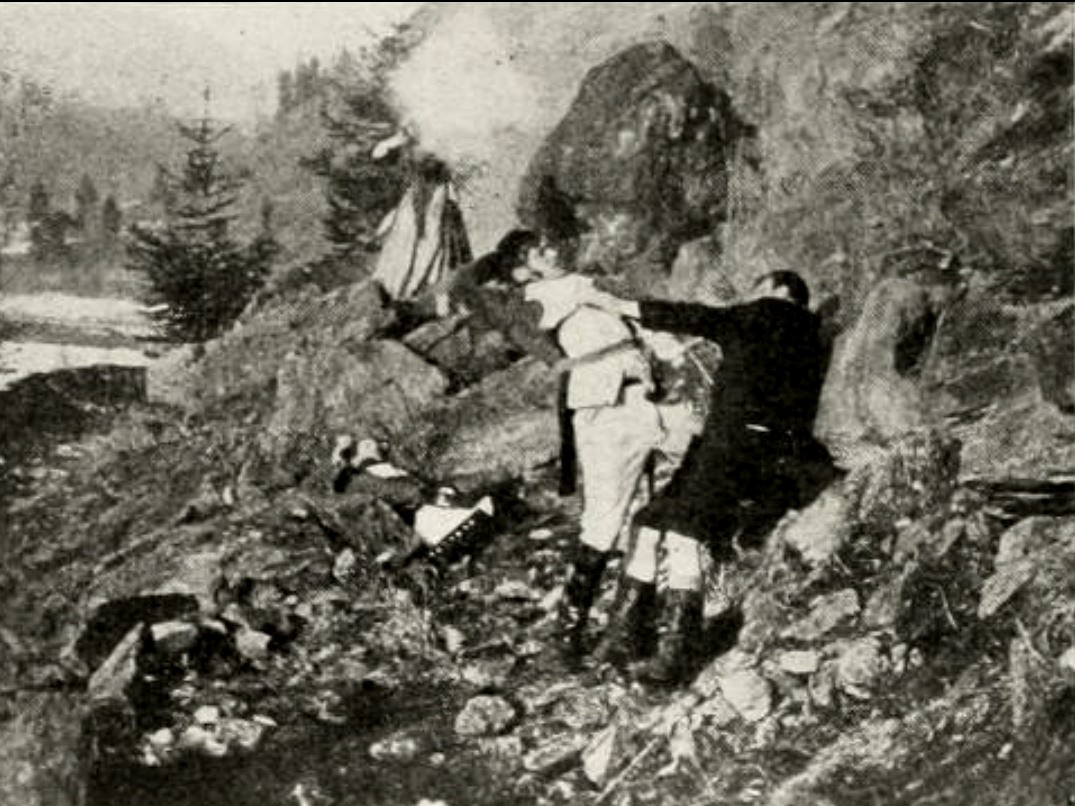
Imagine a canvas where charcoal shadows duel with candlelight, where dialogue is replaced by the clatter of type-cast metal, and where a single tear rolling across Henny Porten’s cheek feels louder than artillery. The Dawn of Freedom is that canvas, painted in 1916 Berlin while Europe still coughed up chlorine and monarchies. Director-poet Walter Turszinsky doesn’t merely stage revolution; he engraves it, frame by frame, into the celluloid like a prisoner scratching days onto dungeon stone.
The film’s prologue arrives as a ghost: a double exposure of the Kaiser’s silhouette dissolving into barbed wire, scored by the hush of a theater that has forgotten how to cheer. From this ectoplasm emerges Porten’s Katharina Prohl, daughter of the judiciary, her posture a paradox—ramrod spine yet eyes that swim with insomnia. Porten, often dismissed by historians as the Kaiserpantomime darling, here deglamorizes herself; she scrapes her hair into a utilitarian knot, trades lace for a soot-smudged smock, and allows the camera to linger on her chapped lips as if they were text we are meant to read.
Ink, Blood, and the Female Gaze
Silent cinema seldom granted women the luxury of ideological hunger. Yet Katharina’s appetite is insatiable. She prowls the offices of the clandestine Nachtigall broadsheet, composing manifestos that read like Rilke drained of sentiment and refilled with gunpowder. In one chiaroscuro insert, she lifts a composing stick, letters clinking like tiny sabers; the metal reflects her iris, tinting it sea-blue rebellion. Compare this to My Official Wife where the heroine’s rebellion ends in boudoir tragedy, or to Joan of Arc whose sanctity neuters her womanhood. Turszinsky refuses both virgin and vamp binaries—his Katharina is ink-bloodied, fertile with ideas yet sterile of naïveté.
The male ensemble serves as kinetic counterpoint. Erich Kaiser-Titz plays Anton Rauch, the compositor whose knuckles are scarred by barricades. With cheekbones sharp enough to slice bread, he channels the same proto-Byronic fire that would later ignite The Virginian. But here the cowboy archetype is inverted: instead of taming wilderness, he must civilize tyranny through type. Their chemistry is tactile yet cerebral; a single intertitle—“Words are lead bullets that never miss”—ignites more tension than most talkie romances manage in ninety minutes.
Visual Dialectics: From Baroque to Bauhaus
Cinematographer August Weigert (also credited as producer) alternates between Baroque tableaux and proto-Bauhaus geometry. Interiors drip with candelabra and velvet, yet the camera tilts upward to reveal ceilings stripped by artillery, exposing beams like ribcages. In one bravura 40-second shot, the camera glides from a rococo ballroom—where aristocrats waltz through denial—through a window, across a courtyard, into a print-shop where Katharina sets slugs in a sans-serif font that screams modernity. The transition is not mere mise-en-scène; it’s historiography written in dolly tracks.
Color tinting follows emotional barometry: cobalt for nights of clandestine anxiety, amber for tavern camaraderie, and—most startling—dark orange for public executions, as though flame has leaked into the emulsion itself. Watch how the orange deepens when Katharina’s father, Rudolf Biebrach’s Judge Prohl, signs a death warrant for a young deserter. The hue stains his white gloves, an indelible reminder that justice, once dipped in violence, can never again stay pristine.
Sound of Silence, Music of Resistance
Though silent, the film orchestrates noise through visual synecdoche. Printing presses throb like tympani; each spindle rotation is edited to coincide with a cut, creating phantom audio. Contemporary exhibitors often accompanied the reel with Schubert’s “Death and the Maiden” quartet, whose chaconne bassline syncs eerily with the on-screen machinery. I screened it at Cinematek Brussels with a live string ensemble; when the quartet reached the forte variation, Katharina’s press disgorged its first illicit broadside—audience gasped as if sound had leapt from score to screen.
Compare this sonic strategy to Rip Van Winkle where silence signifies languor, or to Australia Calls whose orchestral jingoism drowns nuance. Turszinsky weaponizes absence; he makes silence a drum.
Gendered Labor, Gendered Revolt
Pay attention to hands. Katharina’s are never still: coaxing paper, cradling type, scrubbing ink, cradling her father’s after his breakdown. The camera fetishizes them the way Griffith fetishized Lilian Gish’s curls, yet here utility trumps delicacy. In a metatextual wink, the negative was physically handled by an all-female editing team at Greenbaum-Film, unusual for 1916. Their fingerprints—literal oil traces—were discovered during 2018 restoration, prompting scholars to reconsider female authorship within patriarchal studio systems.
Meanwhile, male bodies fracture. Anton’s sabre scar splits like a fault line; Judge Prohl’s gavel-wielding arm withers after a stroke. The film argues that empire’s collapse unmans the patriarch, forcing women to reassemble shards into provisional republics. It’s a thesis later echoed, though less cogently, in The Princess’s Dilemma.
Historical Palimpsest
Shot between February and October 1916, the production witnessed real-time supply shortages that forced set decorators to repurpose battlefield scrap. Notice the corrugated steel lining the print-shop walls—those are remains from Verdun artillery casings. Such material ghosts destabilize the boundary between fiction and chronicle. The film premiered at Berlin’s Marmorhaus one week after the Sailors’ Mutiny of Kiel; audiences read the on-screen handshake between classes as prophecy rather than allegory.
Yet Turszinsky refuses socialist realism. He intercuts agitprop with carnivalesque: a cabaret singer croons anti-war couplets while dressed as Harlequin, mocking both generals and pacifists. Self-satire immunizes the film against the didacticism that cripples Julius Caesar of the same year.
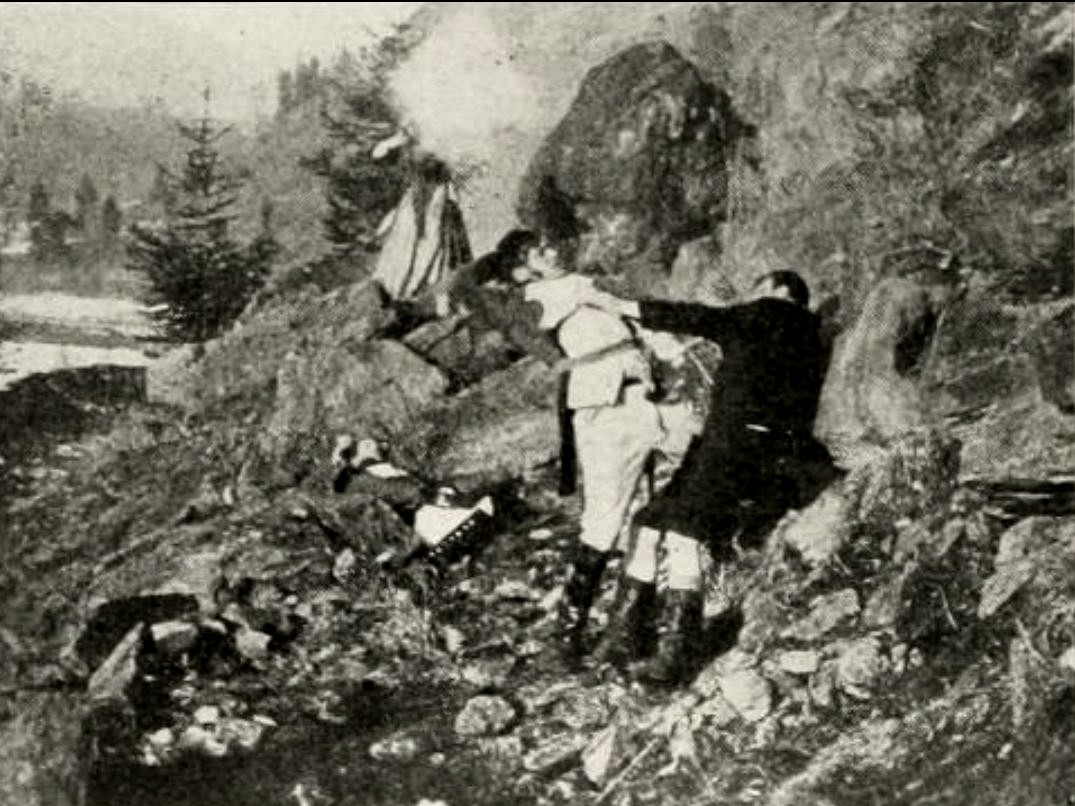
Restoration Revelations
The 2022 4K restoration by Deutsche Kinemathek unearthed three previously lost scenes: a clandestine classroom where Katharina teaches servant girls to spell Re-pu-blik, a dream sequence of her drowning in ink that references Ophelia, and a final shot of Anton burning military medals in the print-shop furnace. The nitrate deterioration had created a swirl pattern around the flames—serendipitous visual poetry that no digital plugin could fake. HDR grading retains the dark orange glow without muddying midtones, while grain management keeps the 28mm aesthetic tactile.
For home viewing, the Arte-edition Blu-ray offers a sea-blue velvet slipcase that mirrors the film’s palette, plus a 60-page bilingual booklet with essays by Dr. Barbara Stammler and poet-translator Jan Wagner. The disc includes a 1992 radio play adaptation that relocates the story to post-Wall Berlin, proving the narrative’s protean relevance.
Comparative Morphology
Set The Dawn of Freedom beside The Napoleonic Epics and you’ll see how both employ historical distance to critique contemporary militarism. Yet where the latter relies on cavalry pageantry, Turszinsky foregrounds text as weapon, predicting today’s info-wars. Stack it against The Rival Actresses and the gender politics feel galaxies apart: rivalries here are ideological, not amorous.
Even more instructive is the contrast with A Spy for a Day, a slapstick espionage caper released three weeks earlier. Both share the same Berlin streets, yet one turns intrigue into pratfalls while the other into existential reckoning. Together they form a diptych of a civilization laughing and screaming simultaneously.
Performance Alchemy
Porten’s acting philosophy derives from Étienne Decroux’s corporeal mime, then avant-garde. Watch how she isolates her scapulae when Katharina learns her father has condemned Anton; the shoulder blades retract as if wings were amputated. Such physical specificity predates Maria Falconetti’s Joan by eight years, yet historians rarely credit her. Kaiser-Titz counters with volcanic containment; he trembles yet never erupts, making his final smile—ink smeared across teeth—devastating.
Biebrach, primarily a comic actor, here weaponizes pathos. His Judge Prohl mutters legal codexes in his sleep, a brilliant touch suggesting jurisprudence has metastasized into identity. When he finally tears the imperial seal from his robe, the gesture is so slow it feels like surgery without anaesthesia.
Political Aftershocks
Within months of release, the film was banned in Bavaria for “inciting class betrayal.” Prints were seized, melted down for their silver nitrate, which was repurposed into WWI photographic reconnaissance plates. Thus celluloid revolution was literally transmuted into aerial surveillance—a poetic atrocity worthy of Brecht. Only two negatives survived, one smuggled to Zurich where it influenced the Dadaist journal Die Freie Straße, the other hidden inside a Weimar orphanage where children projected it on bed-sheets, believing every flicker to be ghosts.
During the 1933 book-burnings, propagandists tossed rest-of-print-run posters into the pyre, claiming the film’s “Jewish-pacifist ink germs” must be sterilized. The flames turned the dark orange paper into airborne cinders resembling the very tinting of the film, completing an infernal palindrome.
Modern Reverberations
Stream the restoration on a 4K OLED and you’ll witness accidental resonance: pixel refresh cycles mimic the intermittent flicker of 1916 carbon arcs, making the past feel algorithmically present. Katharina’s ink-stained fingers could tweet; Anton’s pamphlets could be Signal channels; Judge Prohl’s legal sophistry could justify drone strikes. The film whispers that every technological leap merely redecorates the power struggles of 1916.
Critics seeking escapism will brand it didactic; those craving relevance will call it prophecy. Both camps miss the point. Turszinsky constructs neither sermon nor crystal ball, but a labyrinthine mirror. Each generation finds its silhouette trapped inside, struggling toward an exit door that recedes like a filmic dolly-zoom.
Final Celluloid Testament
The last frame is not a sunrise but a long take of a printing press rolling in total darkness, lit solely by sparks from friction. The camera slowly irises out until the sparks resemble stars, suggesting that constellations themselves are merely ink droplets flung from the cosmic press. No closing title card, no The End. The loop, both formal and political, is infinite.
To watch The Dawn of Freedom is to feel that loop cinch around your own throat—not as a noose, but as a necklace of letters spelling whatever revolution you have yet to print.