DbcultAccessing Vault...
4.8/10
Senior Film Conservator
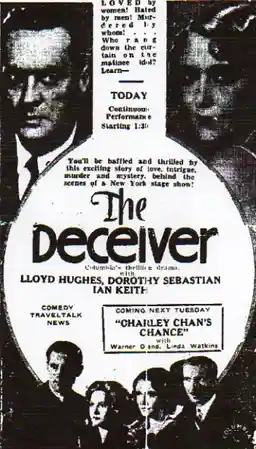
A definitive 4.8/10 rating for a film that redefined the boundaries of cult cinema. The Deceiver remains a cornerstone of transgressive art.
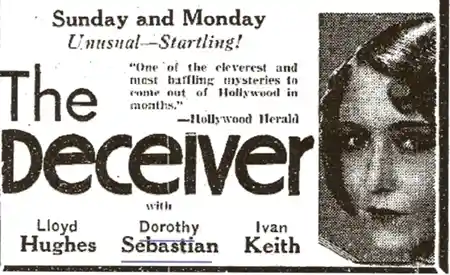
If you like those old mysteries where everyone has a motive and a pencil-thin mustache, you might actually dig this one. It’s a 1931 relic called The Deceiver.
It’s worth watching if you enjoy the early "talkie" era where movies felt more like recorded plays. People who need fast action or big explosions will probably hate it though.
The movie is only about an hour long, so it doesn't overstay its welcome. It feels like a quick snack rather than a full meal.
Ian Keith plays Reginald Thorpe, a big-shot Shakespearean actor who is just... a jerk. He’s mean to his understudy, he’s mean to his lady friends, and he’s basically begging to be murdered.
When he finally gets found dead in his dressing room, I wasn't even sad. I was more like, "Finally, let’s get to the mystery part."
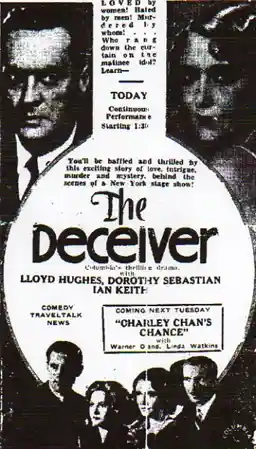
The main suspect is his understudy, Tony Hill. Mostly because Tony is really good at throwing knives.
There’s a scene early on where they show him practicing with his knives. It’s so obvious that this is going to be important later that it’s almost funny.
The movie doesn't try to be subtle. It just lays everything out there like a deck of cards.
I noticed the sets look pretty cheap. Thorpe's dressing room looks like it was put together in about twenty minutes with some spare curtains and a mirror.
But that’s part of the charm of these 1930s B-movies. They have this scratchy, desperate energy that you don't see anymore.
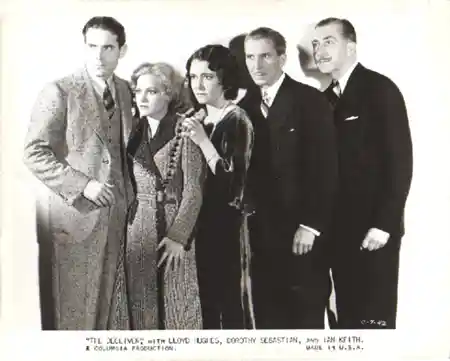
The way the actors stand is weirdly stiff. They all seem to be hovering around the hidden microphones.
Sometimes a character will walk off-screen and their voice suddenly gets super quiet. It’s a bit distracting but also kind of cute in a historical way.
Natalie Moorhead is in this too. She was in a ton of these types of films, like Say It with Diamonds.
She has this way of looking suspicious even when she’s just standing there. It’s the eyes, I think.
The plot gets a bit messy when they start talking about blackmail. Thorpe was apparently a "lady's man," which is 1931 code for being a total creep.
There are all these subplots about letters and secret lovers. It’s hard to keep track of who is mad at who after a while.
One weird bit of trivia: a very young John Wayne is supposedly in this. He’s not the star, obviously.
I think he was a body double for the corpse or something? I honestly couldn't spot him for sure because the film quality was a bit grainy.
It’s funny to think about a future megastar just hanging around a set as a body. Everyone has to start somewhere, I guess.
The mystery itself isn't exactly Sherlock Holmes level. If you pay attention for ten minutes, you can probably guess the ending.
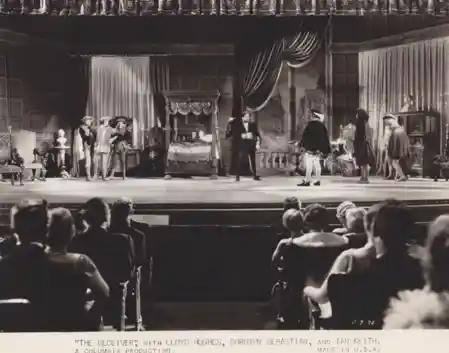
But the journey is kind of fun. It’s like watching a time capsule of how people thought "drama" worked back then.
It reminds me a little of The Sideshow because of that stage-bound feeling. Everything feels very theatrical and slightly fake.
The movie gets way better once the body is found. Before that, it’s just Thorpe being a loud-mouth for twenty minutes.
I actually liked the ending, even if it was a bit rushed. They just sort of explain everything in a big clump of dialogue and then the movie stops.
No long drawn-out goodbye. Just, boom, the end.
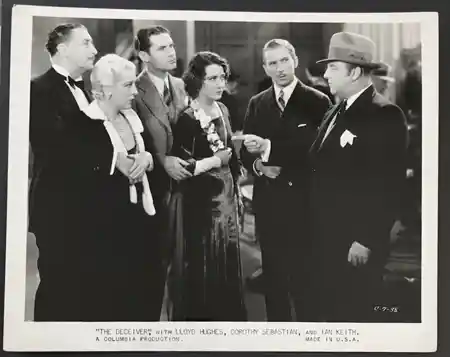
It’s definitely better than some of the other stuff from that year. Like, it’s not as polished as Mata Hari, but it has more energy.
If you're bored on a Sunday afternoon, give it a shot. Just don't expect a masterpiece 🕵️♂️.
The knife throwing stuff is definitely the highlight. It makes me want to learn how to throw a knife, though I'd probably just hurt myself.
One more thing—the dialogue is so snappy. People just bark lines at each other without breathing.
It’s a very 1930s way of talking. Fast and a little bit angry for no reason.
Anyway, it’s a decent watch. Not great, but interesting.
IMDb 7.1
1927
Community
Log in to comment.