DbcultAccessing Vault...
Cult Review
Senior Film Conservator
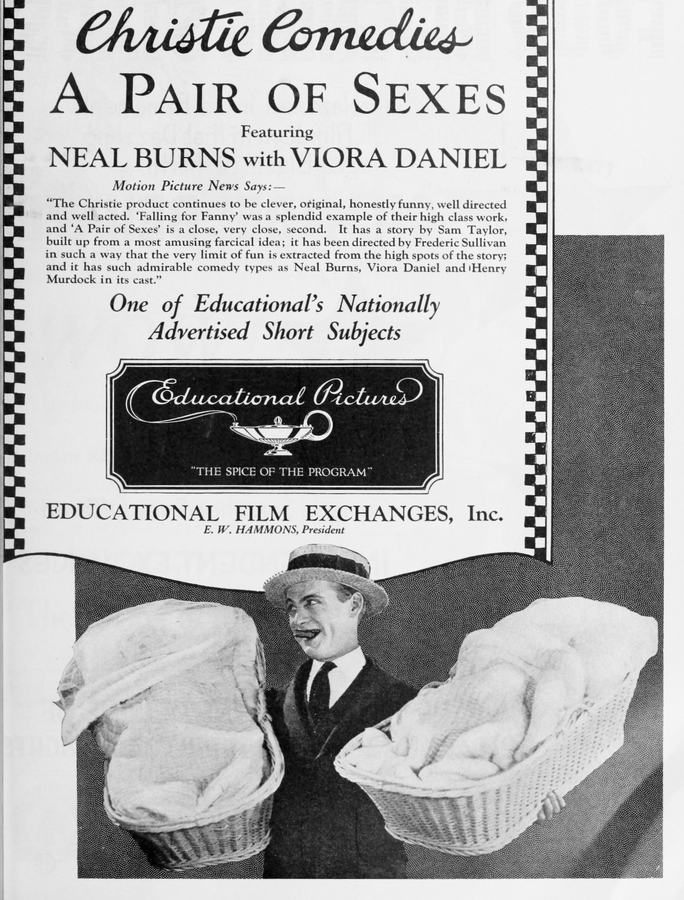
The year 1917 stood as a pivotal junction in the evolution of American cinema, a period where the primitive flickers of the nickelodeon era began to coalesce into the sophisticated visual grammar of the silent feature. Within this transformative landscape, A Pair of Sexes emerges not merely as a relic of slapstick antiquity, but as a fascinating study in the mechanics of situational irony and the fragility of social norms. Directed and written by the prolific Sam Taylor, this film navigates the treacherous waters of mistaken identity with a kinetic energy that rivals the more canonical works of the era, such as The Social Secretary or the atmospheric The City of Illusion.
At the heart of the narrative lies a fundamental spatial error—a man entering the wrong flat. While modern audiences, accustomed to the rigid security of contemporary urban living, might find the premise improbable, Taylor utilizes this breach of privacy to explore the precariousness of the domestic sanctum. Earle Rodney, portraying the husband, delivers a performance characterized by a blend of earnestness and oblivious entitlement. His character does not simply enter a room; he invades a reality that is not his own, and in doing so, he disrupts the very fabric of the nuclear family. The discovery of the twins is handled with a surreal lightness, as if the children were mere stage props in his personal drama rather than living, breathing entities.
One of the most intriguing sequences involves Rodney’s character transporting the infants to his office. Here, the film shifts from a domestic comedy into a satire of masculine posturing. The office, typically a site of productivity and professional decorum, is transformed into a nursery of the absurd. The reaction of "the boys"—his colleagues—highlights a fascinating cultural zeitgeist regarding fatherhood and virility in the early 20th century. Unlike the somber social critiques found in Bolshevism on Trial, A Pair of Sexes treats its social commentary with a velvet glove, masking its observations behind a veil of frantic pacing and physical humor.
The introduction of a German band to facilitate a celebration at a restaurant is a stroke of directorial genius. In the medium of silent film, the concept of a "loud" band is a visual paradox. We see the puffing cheeks, the gleaming brass, and the rhythmic swaying of the musicians, yet the silence of the screen forces the audience to imagine the cacophony. This reliance on the viewer's auditory imagination creates a unique participatory experience. The band acts as a catalyst for the film’s escalating entropy, their presence signaling a departure from the mundane into the carnivalesque. It is a thematic resonance that one might find in the more theatrical productions like The Seven Swans, though here it is grounded in the grit of a metropolitan eatery rather than a fairy tale kingdom.
Lillian Biron and Dagmar Dahlgren provide the necessary emotional ballast to Rodney’s manic energy. Their roles, while seemingly secondary in the hierarchy of the plot’s propulsion, offer a glimpse into the bewildered feminine perspective of the era. Biron, in particular, possesses a screen presence that is both luminous and grounded. Her reactions to the unfolding chaos serve as a surrogate for the audience’s own incredulity. While the film lacks the romantic gravitas of Romeo and Juliet (1916), it manages to capture a specific type of marital friction that feels surprisingly contemporary. The chemistry between the cast members, including Victor Rodman and Henry Murdock, suggests a well-oiled comedic machine, likely honed through the rigorous demands of early short-form production.
The climax at the restaurant, featuring the arrival of the real father and the police, is a masterclass in choreographed mayhem. The law, represented by the constabulary, enters not as a force of justice but as a final ingredient in the comedic stew. This intersection of the domestic, the commercial, and the legal echoes the multifaceted narratives seen in The Reign of Terror, albeit on a much more localized and humorous scale. The resolution of the conflict is swift, as is typical for the genre, yet it leaves behind a lingering sense of the fragility of identity. If a man can so easily be mistaken for another, and if children can be so effortlessly displaced, what does that say about the stability of the social order?
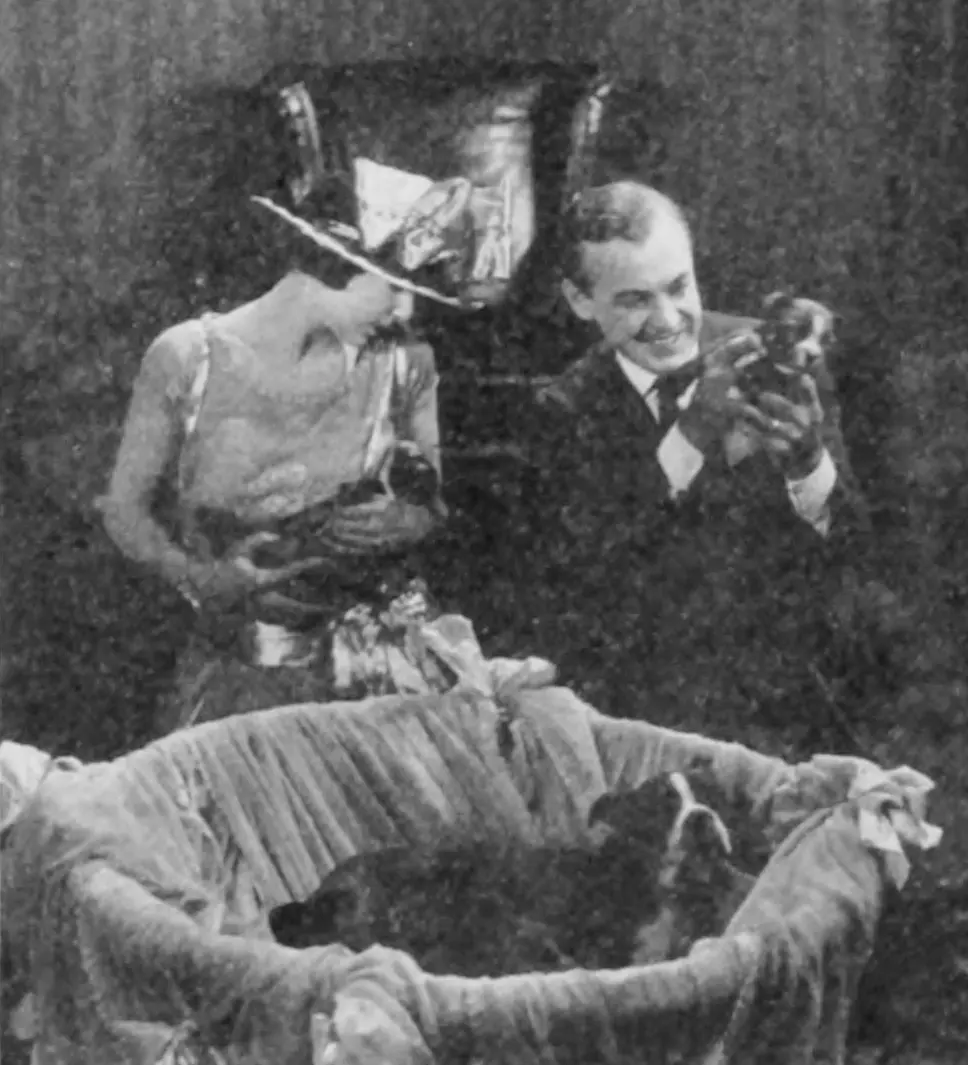
Sam Taylor’s writing, while focused on the immediate payoff of the gag, exhibits a structural integrity that prevents the film from devolving into mere episodic vignettes. There is a clear narrative arc—a descent into chaos followed by a forced restoration of status quo. This structural discipline is what separates a mediocre silent short from a lasting piece of art. When compared to the more melodramatic offerings of the time, such as The Glory of Yolanda or Testimony, A Pair of Sexes feels remarkably light on its feet, unburdened by the heavy moralizing that often plagued silent-era scripts.
Visually, the film utilizes the limited technology of 1917 to its fullest potential. The interior sets of the apartments and the office are designed with a keen eye for detail, providing a sense of place that grounds the absurdity. The lighting, while rudimentary by modern standards, effectively highlights the expressive faces of the actors—a crucial element in a medium devoid of spoken dialogue. The editing, likely handled with a physical razor and tape, maintains a brisk tempo that keeps the viewer engaged. One can see the precursors to the more polished cinematography found in later works like His Parisian Wife.
In the grand tapestry of film history, A Pair of Sexes might be viewed as a minor thread, yet it is these very threads that constitute the richness of the medium. It represents a moment in time when cinema was discovering its power to reflect and distort reality for the sake of amusement. It shares a certain DNA with Made in America in its exploration of American identity, though its focus is squarely on the micro-level of the family unit. The film’s reliance on the "twin" trope is a classic comedic device, one that would be reused for decades to come, yet Taylor’s execution feels fresh and unencumbered by the clichés that would later define the genre.
For the modern cinephile, watching this film is an exercise in historical empathy. We must look past the grain of the film stock and the absence of sound to appreciate the universal human truths on display: the desire for recognition, the fear of social embarrassment, and the sheer unpredictability of the urban environment. It is a work that, much like Wild Oats, captures the exuberant spirit of a world on the brink of profound change. As we witness the husband's frantic attempts to justify his actions to the real father and the police, we are reminded that the line between a hero and a fool is often a matter of which door one chooses to walk through.
Ultimately, A Pair of Sexes stands as a testament to the enduring power of the well-constructed gag. It does not require a deep understanding of 1917 politics or social mores to appreciate the humor of a man trying to manage two babies and a German brass band simultaneously. It is a primal, visceral form of comedy that speaks across the decades. Whether one is a scholar of silent film or a casual viewer looking for a glimpse into the past, this film offers a rewarding and frequently hilarious journey into the heart of early 20th-century farce. It is a reminder that while the technology of storytelling may change, the fundamental absurdity of the human condition remains remarkably constant.
In conclusion, Sam Taylor’s work here is a vibrant example of the creative energy that defined the era. By linking the film to other contemporaries like Elisabet or The War of the Tongs, we can see a broader picture of a burgeoning industry testing its limits. A Pair of Sexes may be a short film, but its impact on the development of comedic timing and narrative structure is significant. It is a piece of history that continues to resonate, proving that a good laugh is truly timeless.
IMDb —
1932
Community
Log in to comment.