DbcultAccessing Vault...
6.5/10
Senior Film Conservator
A definitive 6.5/10 rating for a film that redefined the boundaries of cult cinema. The Deciding Kiss remains a cornerstone of transgressive art.
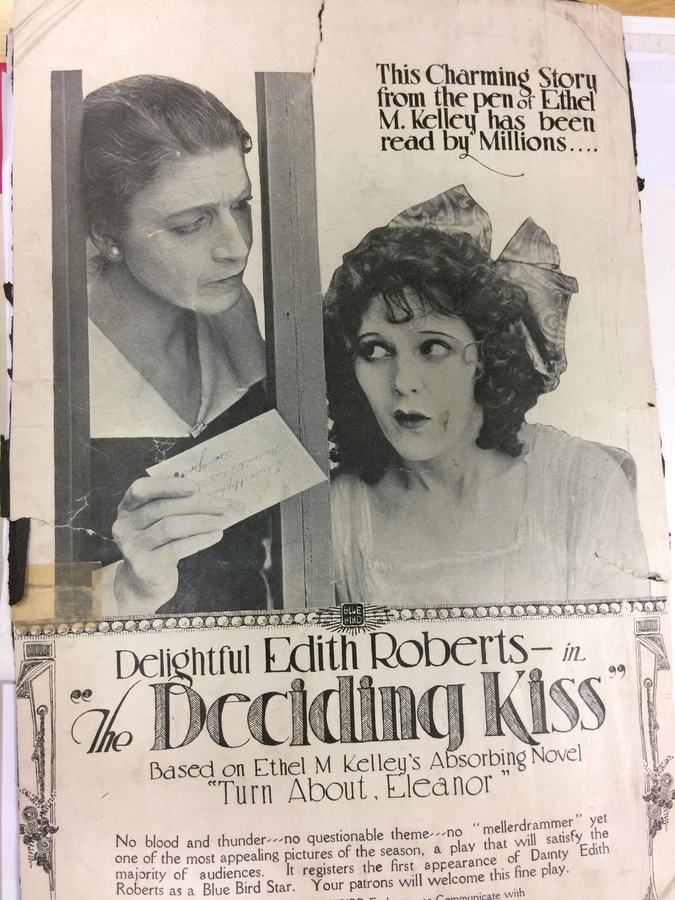
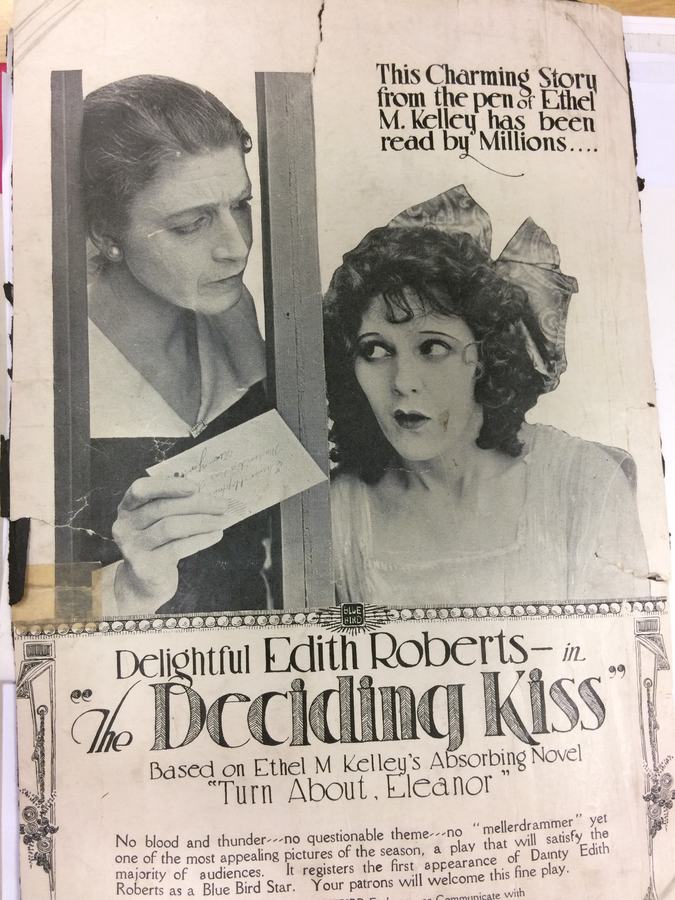
Stepping into the ethereal glow of early cinema, one often encounters narratives that, despite their age, resonate with startling contemporary relevance. Such is the enduring power of The Deciding Kiss, a film that, even a century after its creation, speaks volumes about the intricate dance of human emotion, societal artifice, and the quiet resilience of the human spirit. It is a cinematic tapestry woven with threads of innocence, manipulation, and the slow, often painful, blossoming of self-awareness. This silent drama, penned by the insightful duo of Ethel M. Kelly and Bernard McConville, transcends its era, offering a profound commentary on the true nature of affection versus possessiveness.
At its heart lies Eleanor Hamlin, portrayed with a delicate yet potent vulnerability that is utterly captivating. Her initial depiction as a forlorn little orphan, dwelling in the rustic simplicity of Cape Cod with her grandparents, immediately establishes a poignant contrast to the opulent world she is soon to inhabit. This early setting, imbued with a sense of quiet dignity and genuine familial warmth, serves as a crucial anchor for Eleanor’s character, a touchstone she will repeatedly seek throughout her tumultuous journey. The visual language of the film, even in its silent grandeur, masterfully conveys the stark differences between these two worlds: the humble, loving embrace of her grandparents versus the glittering, yet often hollow, embrace of high society.
The arrival of Beulah Page, a wealthy New Yorker whose benevolence is thinly veiled self-interest, marks the turning point. Beulah, brought to life by an actress whose command of silent melodrama is undeniable, embodies a certain societal archetype: the patroness whose generosity is intrinsically linked to her own vanity and social standing. Her adoption of Eleanor is less an act of charity and more a performative gesture, a means to burnish her image among her sophisticated friends. This transactional approach to human connection is a central theme, highlighting the superficiality that can often accompany immense wealth and social ambition. Beulah’s lack of genuine affection for Eleanor is subtly, yet effectively, communicated through her gestures, her glances, and her interactions, which consistently betray a detachment beneath the veneer of care.
However, Beulah’s carefully constructed world begins to fray when Eleanor’s inherent charm inadvertently captivates those around her. The film introduces us to Beulah’s circle, a collection of individuals who, unlike Beulah, seem genuinely moved by Eleanor’s innocent allure. Chief among them is Peter Bolling, a man whom Beulah has, with a proprietary air, designated as her future husband. Peter, portrayed with a compelling sincerity that cuts through the film’s dramatic tensions, finds himself drawn to Eleanor’s guileless spirit. His fascination with the young girl is not romantic in its initial stages, but rather a profound recognition of purity and authenticity, qualities conspicuously absent in Beulah’s carefully curated persona. This budding connection, though initially innocuous, sows the seeds of Beulah’s escalating jealousy and insecurity, setting the stage for the film’s central conflict.
Beulah’s response to this perceived threat is swift and calculated: she dispatches Eleanor to an upstate finishing school. This decision, ostensibly for Eleanor’s betterment, is in truth a desperate attempt to remove her from Peter’s orbit, to relegate her to a forgotten corner of her life. It’s a classic narrative trope, reminiscent of other silent films where young women are sent away to be molded, often against their will, into acceptable societal forms. One might draw a parallel to certain elements in Innocent, where a protagonist's journey is shaped by external forces and institutional settings. Beulah envisions Eleanor returning as a demure, perhaps even socially awkward, young woman, one who would pose no threat to her romantic aspirations. The irony, of course, is that this very act of banishment becomes the catalyst for Eleanor’s most profound transformation.
The finishing school, rather than diminishing Eleanor, refines her. She returns not as a meek child, but as a radiant and poised young woman, her inherent beauty now enhanced by an acquired grace and sophistication. This dramatic metamorphosis is a triumph of character development, signaling Eleanor’s transition from a vulnerable orphan to a self-possessed individual. The film’s visual storytelling excels in depicting this change, contrasting her earlier simplicity with her newfound elegance. This transformation is pivotal, as it elevates Eleanor from a mere pawn in Beulah’s game to a formidable, albeit unwitting, rival. The performances from the ensemble cast, including William Lloyd, Hans Unterkircher, Winifred Greenwood, Hallam Cooley, Lottie Kruse, Edith Roberts, Edmund Cobb, and William Courtright, collectively contribute to painting a vivid picture of this high-society world and its intricate personal dramas.
The inevitable realization that Peter is now deeply in love with Eleanor sends Beulah into a spiral of desperation. Her earlier possessiveness, hinted at by her desire to claim Peter, now manifests as outright malice. In a moment of calculated cruelty, Beulah informs Eleanor that she is engaged to Peter, a lie designed to crush Eleanor’s spirit and drive her away. This act of deception is a classic melodramatic device, yet it feels genuinely earned within the narrative, a logical escalation of Beulah’s increasingly desperate attempts to control her destiny and Peter’s affections. It echoes the manipulative tactics seen in films like The Love Tyrant, where personal desires often lead to detrimental and dishonest actions.
Eleanor’s subsequent retreat to her old Cape Cod home is a poignant moment, signifying her desire to return to a place of authentic connection and emotional safety. It is a powerful statement about the allure of genuine affection over superficial grandeur. Peter, however, is not easily deterred. His pursuit of Eleanor is driven by a deep conviction in his feelings, a stark contrast to Beulah’s manipulative hold. Yet, Eleanor, wounded by Beulah’s lie and convinced of Peter’s impending marriage, eludes him, her self-worth and trust severely shaken. This segment of the film beautifully explores the themes of misunderstanding and the fragility of trust, even when love is true.
The eventual revelation of Beulah’s deception is, of course, inevitable. The truth has a way of surfacing, especially in tales of this nature. However, what sets The Deciding Kiss apart is not merely the unraveling of the lie, but Eleanor’s response to it. Unlike many heroines who would immediately embrace the now-available suitor, Eleanor makes a choice that is both unexpected and profoundly mature. She informs her benefactors—and by extension, Peter—that she wishes simply to remain their child. This decision is not a rejection of love, but an assertion of self. It signifies her journey from a dependent orphan to a young woman capable of making her own choices, prioritizing her emotional well-being and sense of identity over the conventional happy ending of romantic union. It’s a powerful statement on self-discovery, resonating with the spirit of films where characters forge their own paths, perhaps even challenging the norms of what society expects, much like the challenging social commentary found in What Will People Say?.
The thematic richness of The Deciding Kiss extends beyond the central love triangle. It’s a nuanced exploration of class dynamics, the performative nature of charity, and the corrupting influence of unchecked jealousy. The film, through its characters, critiques a society where status and appearance often overshadow genuine human connection. Beulah represents the superficiality of this world, while Eleanor, with her journey from innocence to self-possession, embodies a quiet rebellion against it. Peter, caught between these two forces, ultimately chooses authenticity, showcasing a moral compass that elevates him beyond a mere romantic interest.
Visually, the film is a masterclass in silent era storytelling. The use of elaborate sets and costumes for the New York scenes starkly contrasts with the simpler, more naturalistic backdrops of Cape Cod, effectively reinforcing the thematic divide between artifice and authenticity. The actors, relying solely on their expressions, body language, and the occasional intertitle, convey a remarkable depth of emotion. The close-ups, particularly of Eleanor and Peter, are incredibly effective in communicating their inner turmoil and burgeoning affection. The cinematography, while adhering to the conventions of the time, demonstrates a keen understanding of visual narrative, guiding the viewer’s eye and emphasizing key emotional beats without the aid of dialogue. The pacing, a crucial element in silent film, is deliberate, allowing the emotional arcs of the characters to unfold organically, building suspense and empathy with admirable precision.
The performance of the actress playing Eleanor is particularly noteworthy. She navigates the character’s transformation from a wide-eyed child to a refined young woman with remarkable grace, conveying both vulnerability and an emerging strength. Her silent anguish, her moments of quiet joy, and her ultimate resolve are all rendered with a compelling authenticity that anchors the film’s emotional core. Similarly, the actor portraying Beulah delivers a nuanced performance of villainy, avoiding caricature and instead presenting a character driven by relatable, albeit destructive, human failings like insecurity and possessiveness. This complexity prevents Beulah from becoming a one-dimensional antagonist, adding layers to the film’s exploration of human nature.
The film’s title itself, The Deciding Kiss, is laden with symbolic weight. While one might expect a literal kiss to serve as the narrative’s climax, the film cleverly subverts this expectation. The “deciding kiss” perhaps refers not to a physical act of romance, but to Eleanor’s decisive embrace of her own agency, her choice to define her happiness on her own terms. It’s a metaphorical kiss of self-acceptance, a declaration of independence that transcends the conventional romantic resolutions of its era. This nuanced interpretation elevates the film beyond a simple love story, imbuing it with a timeless message about personal autonomy and the pursuit of genuine contentment.
In conclusion, The Deciding Kiss stands as a testament to the enduring power and sophistication of silent cinema. It is a film that, despite its age, offers a rich and compelling narrative, brought to life by strong performances, thoughtful direction, and a screenplay that delves into complex human emotions. It’s a story of transformation, deception, and ultimately, the triumph of self-discovery. For cinephiles and newcomers to silent film alike, it offers a captivating glimpse into a bygone era of filmmaking, yet its themes of identity, true affection, and the courage to forge one’s own path remain as resonant and profound today as they were a century ago. It’s a film that lingers in the mind, prompting reflection on what truly constitutes a fulfilling life, far beyond the dictates of societal expectation or romantic entanglements. A true cinematic gem that deserves to be rediscovered and celebrated.
IMDb —
1923
Community
Log in to comment.