DbcultAccessing Vault...
7/10
Senior Film Conservator
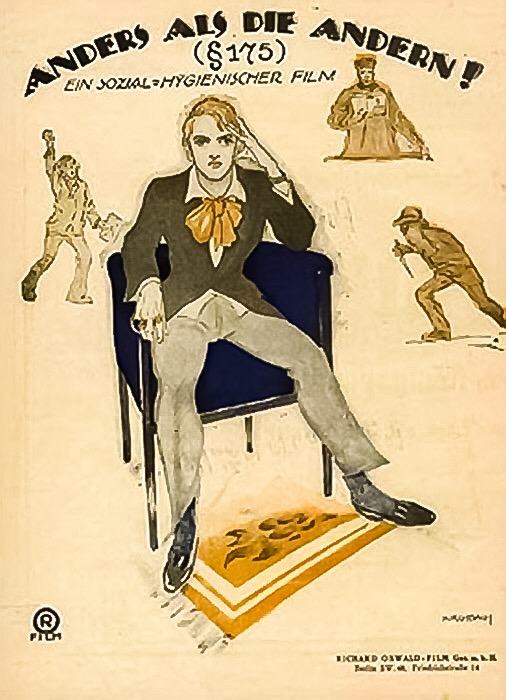
A definitive 7/10 rating for a film that redefined the boundaries of cult cinema. Different from the Others remains a cornerstone of transgressive art.
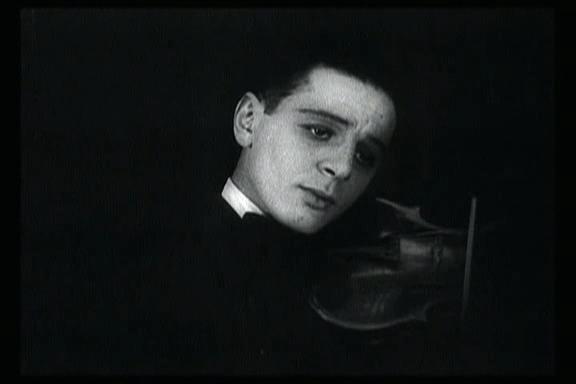
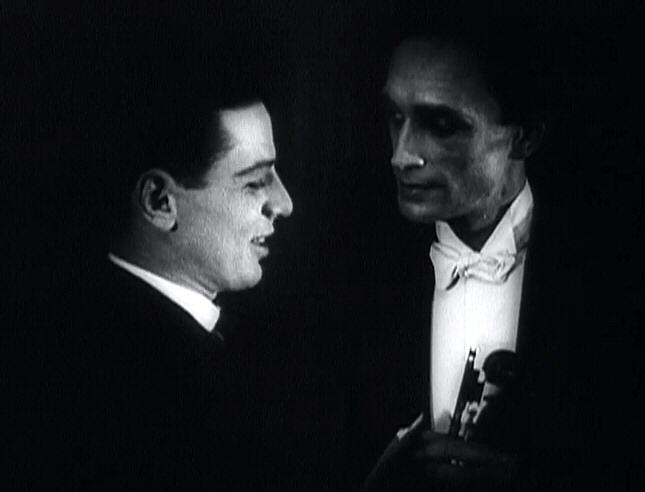
When the reels of "Different from the Others" begin to spin, the viewer is immediately immersed in a Berlin that throbs with jazz‑infused nightlife, smoky taverns, and the restless yearning of a generation still reeling from the cataclysm of war. The opening tableau, shot in chiaroscuro contrast, frames Paul (Karl Giese) hunched over a battered violin, his bow trembling as if echoing the tremors of a society on the brink. Conrad (Conrad Veidt), meanwhile, glides across a piano bench with a confidence that belies the precariousness of his own existence. Their first encounter—an accidental collision of sheet music in a cramped rehearsal room—is rendered with a kinetic elegance that hints at the symphonic partnership soon to blossom.
Oswald's direction is unflinching in its attention to the minutiae of everyday oppression. The camera lingers on the glint of a police badge, the furtive glance of a newspaper headline condemning "unnatural" acts, and the oppressive architecture of a courtroom that looms like a monolith over the protagonists' fragile world. These visual motifs are not mere set dressing; they serve as a constant reminder that love, in this narrative, is a subversive act that must navigate a labyrinth of legal and moral hazards.
Paul's internal conflict is articulated through a series of close‑ups that capture the tremor in his hands as he tunes his instrument, each string a metaphor for the tension between desire and duty. Conrad, by contrast, is often framed in medium shots that emphasize his posture—straight, resolute—yet his eyes betray a lingering vulnerability. The chemistry between the two actors is palpable, a dance of glances and gestures that transcends the silent medium. Their affection is communicated through the language of music: duets that swell into crescendos, interludes that linger in minor keys, and moments of silence that speak louder than any spoken word.
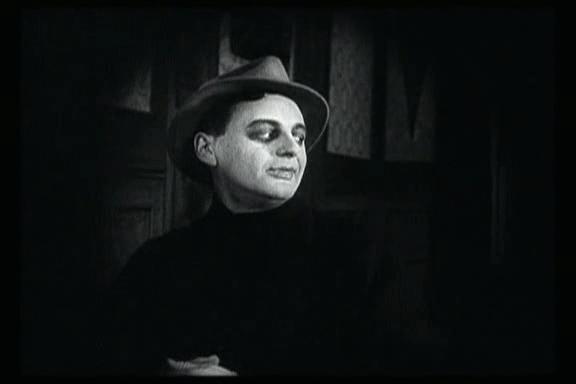
The inciting incident arrives in the form of a ruthless blackmailer, portrayed with a sleazy charisma that recalls the archetypal villain of early German expressionism. This antagonist discovers the lovers' secret and leverages it for personal gain, threatening to expose them unless they comply with his demands. The ensuing cat-and-mouse game is a masterclass in tension building; each scene is punctuated by rapid cuts, shadowy alleyways, and the ever‑present ticking of a pocket watch—a visual metronome that underscores the inexorable march toward disaster.
Amid this turmoil, the film introduces Dr. Magnus Hirschfeld (Reinhold Schünzel), a real‑life pioneer of sexual science, who appears as a compassionate confidant and intellectual beacon. His presence is not merely narrative convenience; it anchors the film within a broader socio‑political discourse, reminding audiences that the plight of Paul and Conrad is emblematic of a larger struggle for recognition and rights. Hirschfeld's dialogues—delivered through intertitles rendered in an elegant serif—offer a rare glimpse into contemporary arguments for decriminalization and the humane treatment of LGBTQ+ individuals.
The supporting cast enriches the tapestry of the story. Anita Berber, cast as a flamboyant cabaret performer, injects a burst of avant‑garde energy that mirrors the protagonists' own yearning for self‑expression. Helga Molander, playing Paul's sister, embodies the familial pressures that compound the lovers' isolation. Even the minor roles—such as the stern magistrate (Wilhelm Diegelmann) and the sympathetic bartender (Fritz Schulz)—are imbued with nuanced performances that elevate the film beyond a simple melodrama.
From a thematic standpoint, "Different from the Others" resonates with contemporaneous works that interrogated societal norms. The film's exploration of forbidden love finds a kinship with The Hidden Law, which also delves into the clandestine lives of marginalized individuals. Similarly, the moral quandaries faced by Paul and Conrad echo the emotional turbulence of The Foundling, where personal identity is constantly at odds with external expectations.
Visually, Oswald employs a palette that juxtaposes the starkness of black‑and‑white cinematography with splashes of symbolic color introduced through set design—deep reds on a lover's scarf, a solitary yellow lantern flickering in a rain‑soaked street, and the occasional sea‑blue hue of a river that serves as a metaphor for the fluidity of desire. These chromatic accents, though subtle, are amplified by the film's original score, which weaves leitmotifs that echo the protagonists' emotional arcs.
The narrative reaches its tragic apex when the blackmailer escalates his threats, forcing Paul to choose between artistic integrity and personal safety. In a heart‑wrenching sequence, Paul sabotages a concert, causing a cacophony that mirrors his internal disarray. The audience, both within the film and watching from the theater, is thrust into a collective gasp as the lovers' world collapses under the weight of public scandal.
Oswald's handling of the climax is both methodical and poetic. The camera pans across a courtroom where the lovers stand side by side, their faces illuminated by a single, harsh light that casts elongated shadows—an allusion to the looming specter of legal persecution. The intertitles, rendered in a stark, sans‑serif typeface, deliver the final verdict with a chilling brevity that leaves no room for ambiguity: the law is unyielding, and love, in this universe, is a crime.
Yet, the film does not conclude with mere despair. In the final frames, a solitary violin rests against a cracked windowpane, its strings still resonating faintly. This lingering note serves as a haunting reminder that, despite societal condemnation, the essence of love endures—an echo that reverberates through history and continues to inspire contemporary discourse on LGBTQ+ rights.
Critically, "Different from the Others" stands as a pioneering work that predates the more overtly political cinema of the 1930s while retaining an intimate, character‑driven focus. Its daring subject matter, combined with a sophisticated visual language, positions it alongside other seminal Weimar films such as The Kiss and The Yellow Ticket, both of which interrogate the intersection of personal desire and societal constraint.
From a modern perspective, the film's relevance is amplified by ongoing conversations about representation and the historical erasure of queer narratives. Scholars frequently cite "Different from the Others" as a foundational text in queer film studies, noting its courageous portrayal of same‑sex love at a time when such depictions were not only taboo but illegal under Paragraph 175. The involvement of Magnus Hirschfeld, a real‑life advocate for sexual minorities, further cements the film's status as a cultural artifact of resistance.
In terms of craftsmanship, the cinematography—credited to Carl Hoffmann—exhibits a mastery of light and shadow that anticipates the later expressionist masterpieces of Fritz Lang and F.W. Murnau. Hoffmann's use of low‑angle shots to emphasize the oppressive architecture of the legal system, juxtaposed with high‑angle shots that capture the liberating expanse of Berlin's night sky, creates a visual dialectic that mirrors the film's central conflict.
The editing rhythm, paced deliberately to allow emotional beats to breathe, avoids the frenetic cuts common in contemporary melodramas. Instead, each transition feels purposeful, granting the audience space to contemplate the moral complexities presented. This measured pacing enhances the film's meditative quality, inviting viewers to engage intellectually as well as emotionally.
When comparing "Different from the Others" to later works such as Power and The Patriot, one observes a lineage of cinematic bravery. While those later films tackle political oppression and personal ambition, Oswald's early masterpiece focuses on the intimate oppression of identity, laying groundwork for future storytellers to explore the private ramifications of public policy.
Moreover, the film's influence can be traced to contemporary queer cinema that continues to grapple with themes of secrecy, blackmail, and societal backlash. Directors today often cite Oswald's willingness to foreground authentic queer experiences as a touchstone for their own narratives, underscoring the film's enduring legacy.
In sum, "Different from the Others" is not merely a relic of silent cinema; it is a living document that challenges viewers to confront the lingering shadows of prejudice. Its artistic audacity, combined with a meticulously crafted narrative and a resonant score, ensures its place in the pantheon of films that have reshaped cultural consciousness. For scholars, cinephiles, and activists alike, the film offers a profound meditation on love's capacity to both illuminate and endanger those who dare to defy convention.
For those seeking further exploration of early 20th‑century cinema that interrogates similar motifs, the following titles provide complementary perspectives: Der Knute entflohen, Wild Women, Chimmie Fadden Out West, and The Planter. Each of these works, while distinct in genre, shares a commitment to probing the societal undercurrents that shape individual destiny.
Ultimately, the film's most compelling achievement lies in its ability to render the abstract tangible: the fear of exposure, the yearning for acceptance, and the inexorable march of history that seeks to silence dissenting voices. By marrying a deeply personal love story with a broader sociopolitical critique, "Different from the Others" transcends its era, offering a timeless reflection on the human condition.
IMDb 6.3
1923
Community
Log in to comment.