DbcultAccessing Vault...
4.6/10
Senior Film Conservator
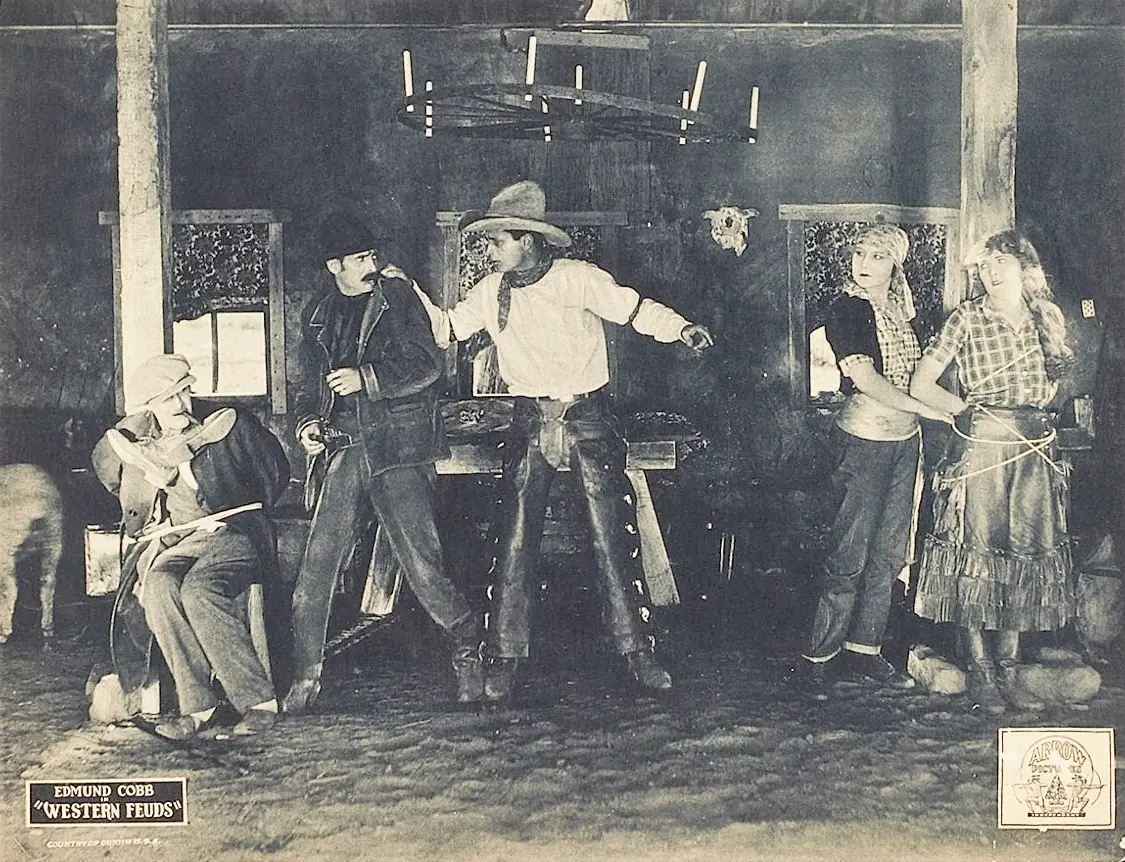
A definitive 4.6/10 rating for a film that redefined the boundaries of cult cinema. Western Feuds remains a cornerstone of transgressive art.
The cinematic landscape of the 1920s was a vibrant tapestry, particularly for the Western genre, which found its stride in the silent era. Amidst this burgeoning field, Western Feuds, released in 1924, emerges not merely as a relic of its time but as a fascinating snapshot of storytelling conventions and character archetypes that defined early American cinema. Directed by Ashton Dearholt, who also contributed to the screenplay alongside Isabelle Blodgett, this film plunges viewers into a classic narrative of conflict, deception, and burgeoning romance set against the rugged backdrop of the American frontier. It’s a testament to the enduring power of elemental human drama, even without the luxury of spoken dialogue, relying instead on the expressive prowess of its cast and the visual poetry of its cinematography.
At its core, Western Feuds orchestrates a familiar yet compelling ballet of good versus evil, cloaked in the iconic imagery of cowboys and vast, untamed lands. The central conceit revolves around Ed Jones, portrayed with a compelling blend of quiet determination and nascent heroism by Edmund Cobb. Jones isn't just another ranch hand; he is an undercover agent, a silent sentinel dispatched to penetrate the heart of a long-standing, venomous dispute between the cattlemen and the sheepmen. This foundational conflict, a staple of Western literature and film, provides a rich fertile ground for the unfolding drama, allowing for allegiances to be tested and loyalties to be questioned. Cobb imbues Ed with a stoic charisma, a quality essential for a silent film protagonist who must convey complex emotions and resolute intentions through gesture and gaze alone. His performance is a masterclass in understated intensity, drawing the audience into his clandestine mission without the need for expository dialogue.
The narrative gains significant emotional weight through the introduction of Sally Warner, brought to life by the luminous Florence Gilbert. Sally is not merely a damsel in distress, though she frequently finds herself in perilous situations. As the daughter of the leading sheepman, she embodies the very heart of the conflict Ed is investigating, yet her spirit transcends the partisan animosity. Gilbert portrays Sally with a captivating blend of vulnerability and resilience, making her a truly engaging figure. The burgeoning romance between Ed and Sally forms the emotional anchor of the film, a tender counterpoint to the surrounding violence and intrigue. Their connection is forged amidst adversity, lending their eventual union a sense of hard-won triumph. The silent film era often excelled at portraying such heartfelt emotional journeys, and Gilbert's expressive acting ensures Sally's feelings resonate deeply with the viewer. This romantic arc, a common thread in many silent era narratives, finds particular resonance here, reminiscent of the earnest and often fraught courtships depicted in films like Cupid's Roundup, where love blossoms amidst the dust and danger of the frontier.
No compelling Western narrative is complete without a formidable antagonist, and Western Feuds delivers in the form of Black Pete. Portrayed by Al McCormick, Pete is a classic cinematic villain: cunning, ruthless, and utterly devoid of moral compass. His guise as a sheepman provides a clever layer of deception, perfectly illustrating the pervasive mistrust that defines the feud. Pete’s unwelcome attentions towards Sally are a recurring source of tension, providing numerous opportunities for Ed to demonstrate his protective instincts and heroic capabilities. McCormick’s performance as Pete is suitably menacing, his gestures and expressions conveying a palpable sense of threat that elevates the stakes of Sally's predicament. The film expertly uses Pete’s villainy not just as a plot device but as a catalyst for Ed’s true identity to slowly unfurl through his actions, rather than immediate revelation. This gradual uncovering of heroism through deeds is a hallmark of effective silent storytelling, allowing the audience to witness and appreciate the protagonist's growth and resolve.
The arrival of J. P. Hartley, an eastern ranch owner, masterfully portrayed by William White, acts as a pivotal turning point, injecting a fresh wave of chaos and accelerating the plot towards its climactic resolution. Hartley’s presence precipitates a series of dramatic events: heightened confrontations, a desperate kidnapping, and moments of extreme danger for the principal characters. White’s portrayal of Hartley carries an air of authority and gravitas, hinting at a deeper connection to the unfolding events without explicitly revealing it until the opportune moment. His character serves as a crucial narrative fulcrum, disrupting the established dynamics and forcing the various players into direct conflict. This escalation is expertly handled by Dearholt's direction, maintaining a brisk pace that keeps the audience enthralled, a quality that set many successful silent films apart from their more languid contemporaries. The intricate dance
IMDb —
1919
Community
Log in to comment.