DbcultAccessing Vault...
Cult Review
Senior Film Conservator
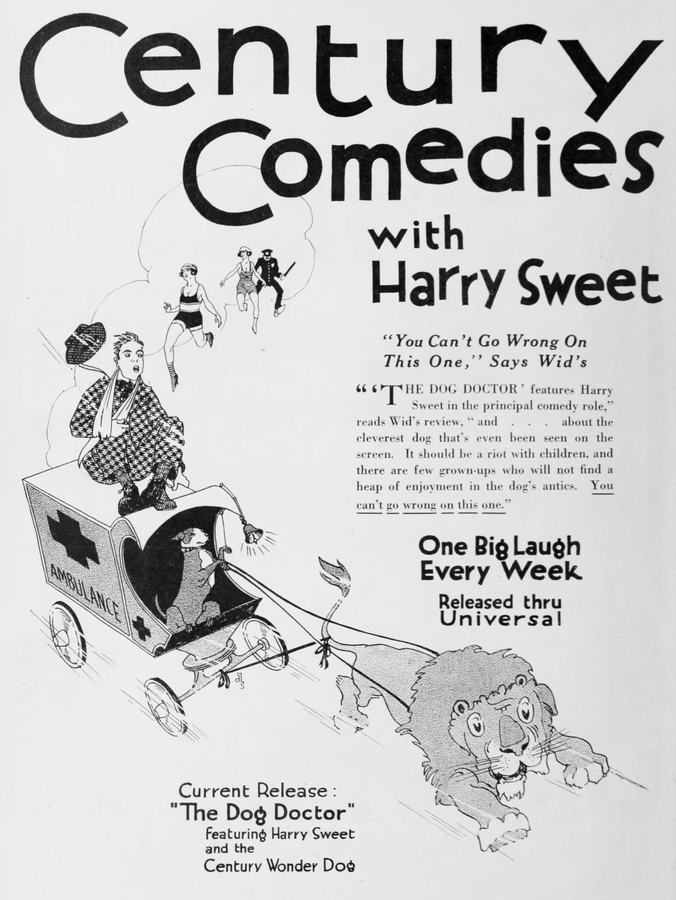
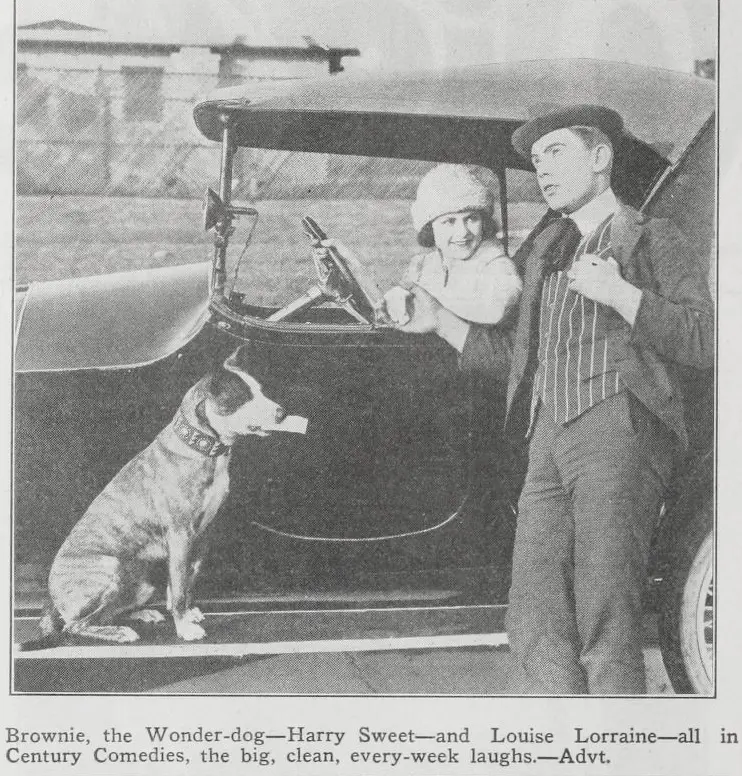
Fred Hibbard’s The Dog Doctor is a moonshine-soaked fever dream wearing the homespun mask of a country comedy. Shot in the blistering summer of 1921, the film exhales celluloid vinegar and kerosene, its frames perforated like porch-screen gossip. Brownie—part border-collie, part myth—pads through the narrative with the laconic wisdom of a bartender who’s heard every lie twice. Around him, humans orbit like moths too drunk on their own light to notice the flame is already dead.
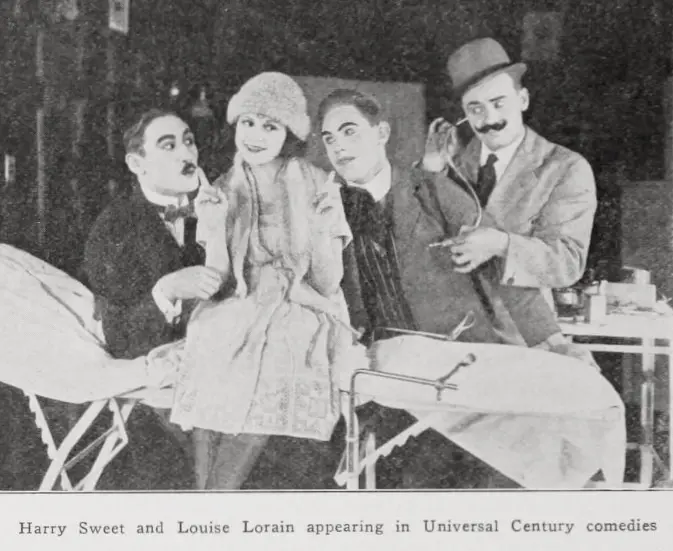
Louise Lorraine’s ingenue, all spit-curled optimism, arrives clutching a carpetbag stuffed with dream fragments and a half-read veterinary manual. She believes in science the way children believe in pocketed stars: fiercely, absurdly. Opposite her, Harry Sweet’s fraudulent veterinarian swaggers in a top-hat stitched from feed-sack burlap, selling “canine panacea” that’s ninety-proof grain alcohol and ten-percent prayer. Every time he tips the bottle, the camera tilts like a witness too polite to vomit.
The Century Lions—an itinerant brass ensemble who seem to have marched out of a lost Buñuel reel—provide aural hallucinations in a silent world. Their trumpets glint like switchblades; their tubas exhale steam that fogs the very lens. When they strike up a cakewalk during the climactic dogfight, the soundtrack we can’t hear becomes a ghost we can’t exorcise. It’s the kind of ironic counterpoint that would make Eisenstein cough up his tobacco.
Structurally, the film unspools like a tintype photo album left in a downpour. Episodes adhere by saliva and moonlight: a colt with a leg twisted like a question mark; a flirtation conducted via close-ups of boot buckles; a midnight trial where the only witness is a sheep who refuses to bleat. Hibbard’s intertitles—hand-lettered, jittery—read like fortune cookies baked by a drunken soothsayer: “A dog’s tail tells the truth his master drinks away.”
Cinematographer Jules Cronjager (moonlighting from his usual Westerns) lenses the barn interiors with a chiaroscuro so voluptuous you could saddle it. Dust motes become galaxies; a single lantern burns like a courthouse of regret. Compare this to the stark prairie daylight of The Branding Iron or the velvet-cloaked corridors of Eerie Tales—here light is neither moral nor immoral, simply carnivorous.
Performance registers somewhere between barn-storm and ballet. Brownie hits his chalk-mark with the precision of Keaton, then pauses—head cocked, ears akimbo—until the human co-stars remember whose close-up it is. Lorraine’s eyes telegraph flickers of Dorothy Gish and nascent Garbo, while Sweet’s vaudevillian swagger tips into pathos each time his bottle runs dry. Their duet beside the rain-barrel feels improvised on the cusp of entropy: she dips a tin cup; he steals the reflection of her hope.
Gender politics? The film sidesteps them like a horse refusing a puddle. Lorraine’s would-be vet ultimately hungers not for license but for license to trust. Her final prescription is empathy—administered off-label. Meanwhile, the male conman’s comeuppance arrives packaged as slobbery forgiveness: Brownie licking the very hand that once raised a whip. Redemption tastes like dog saliva; Hibbard implies that’s still better than the taste of your own teeth.
Comparative cinephiles will detect DNA shared with Patsy’s Jim—another rural curio where sentimentality gets tarred and feathered—yet The Dog Doctor lacks that film’s Sunday-school moral. It is closer in spirit to the anarchic canine larks of Faro Nell, Lookout, though shot through with the existential shiver found in Yulian Otstupnik. The result: a pastoral that refuses to pasture.
Restoration-wise, the 2022 4K scan by Eye Filmmuseum scrubs away decades of nitrate freckles yet keeps the emulsion’s bruised knuckles. Flicker remains, like a pulse you can’t decide to staunch. The tints—amber for lamplight, viridian for snake-oil, rose for the first blush of dawn—bloom like bruises beneath the skin of the print. A new score by Ensemble Céleste (piano, musical saw, and a broken music-box) avoids the usual nickelodeon honky-tonk; instead it wheezes, whispers, occasionally growls.
Interpretive rabbit-holes? Abound. One could read the film as an anti-vivisection screed: the only wound that matters is the human ego. Or as Prohibition allegory: every bottle uncorks a new fiction. Or as post-war PTSD pastoral: when the Great War’s ambulance dogs return home, they bring morphine dreams of no-man’s-land into the barnyard. Hibbard, ever the gag-man, leaves just enough hayloft floorboards loose for any thesis to fall through.
Yet the abiding miracle is Brownie himself. Watch the scene where he limps across the moonlit bridge, shadow stitched to paw by silver nitrate. The limp is acting—he was famously able-bodied—but the limp also is. Cinema’s first Method performance delivered by a creature who wouldn’t know Stanislavski from a soup bone. When he stops mid-span, ears pricked toward an owl that we never see, the moment dilates into something approaching the sacred. No human co-star can compete; the lens loves him with a devotion both carnal and devotional.
Critical reception in 1921 was bemused. Variety dismissed it as “Keaton with fleas,” while Photoplay praised its “earthy whimsy” in the same column that panned Martyrs of the Alamo for “too much Texas and too little tear gas.” Today, nestled between YouTube deepfakes and TikTok terrier memes, The Dog Doctor feels prophetic: a cautionary tale about charlatans who monetize desperation, starring an actual dog who’s too decent to invoice you afterwards.
So, is it a masterpiece? The question misbehaves. Masterpieces stand on pedestals; this film rolls in manure then trots across your parquet. It is imperfect, unruly, occasionally incoherent—yet every splinter feels alive. Watch it at 3 a.m. with the windows open, smell of rain on asphalt, and you may find yourself envying a 1921 mongrel who never had to learn the word internet. In that envy lies the film’s sneaky profundity: a reminder that authenticity needs no Wi-Fi password.
Final tip: stay through the last frame. After the final intertitle fades, Brownie glances back—at us. His tail wags once, twice, then stillness. It’s the silent era’s equivalent of a post-credits stinger, delivered a century before post-credits were marketable. That wag is the film’s invoice: pay with whatever innocence you have left, or proceed at your own fleabitten peril.

IMDb —
1931
Community
Log in to comment.