DbcultAccessing Vault...
7.8/10
Senior Film Conservator
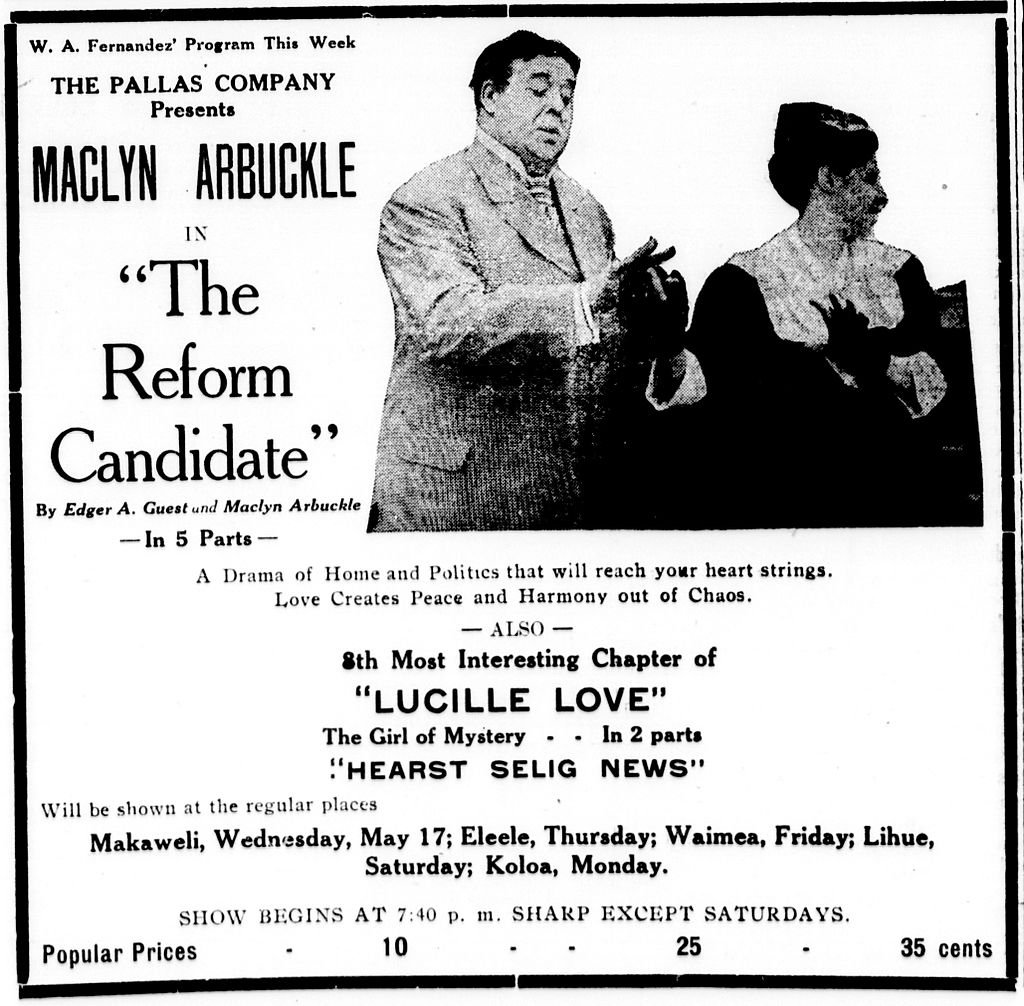
A definitive 7.8/10 rating for a film that redefined the boundaries of cult cinema. The Reform Candidate remains a cornerstone of transgressive art.
Spoilers prowl below like lobbyists at midnight—enter the ward at your own peril.
Picture 1915: Europe is a bonfire, D. W. Griffith has just broken the medium’s spine with Birth of a Nation, and out of the flicker of a carbon-arc lamp comes The Reform Candidate—a political flamethrower masquerading as drawing-room melodrama. It is only five reels, yet its moral aftertaste stains the tongue longer than most ten-hour miniseries currently hailed as “prestige.” Macklyn Arbuckle, triple-threat star-writer-producer, understood that the camera could be both scalpel and mirror: cut the skin of civic virtue, reflect the pus beneath.
The plot, at first whiff, feels familiar—idealistic challenger versus entrenched boss—but the film’s engine runs on kerosene-soaked gender politics and the queasy economics of shame. Grandell’s campaign headquarters is a claptrap loft wallpapered with impossible promises: municipal ownership of streetcars, abolition of ward captains, milk inspections for immigrant babies. Each plank is a daredevil tightrope strung over the abyss of campaign coffers. When the cash dries up, the staff—played by Malcolm Blevins and a pre-stardom Jane Darwell—become grave-robbers of reputation, exhuming whatever cadaverous gossip will keep the headlines twitching.
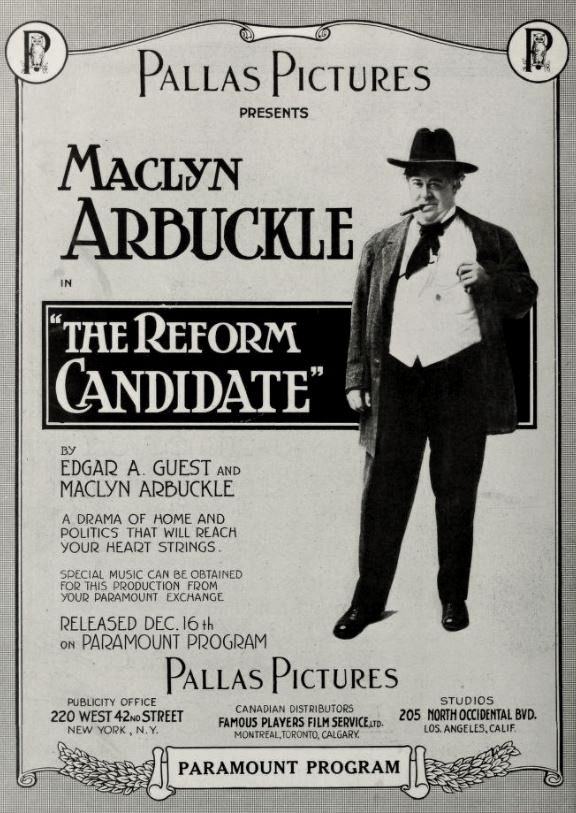
Enter Looney Jim, a character Dickens would have relegated to a paragraph but whom silent cinema magnifies into a whole aria of twitching brows and ink-blackened nails. Jim’s death—an off-screen apoplexy that the intertitles euphemize as “the tavern’s final tab”—is the first rupture in the film’s ethical hull. His corpse becomes MacGuffin and confession booth; the secret dies with him, yet its echo metastasizes. Arbuckle’s screenplay (co-credited to pop-poet Edgar A. Guest and pioneering scenarist Julia Crawford Ivers) refuses the comfort of a smoking-gun document. Instead we get fragmented testimony: a baptismal record falsified in 1897, a midwife’s rosary sold to pay gambling debts, a society photograph with the daughter’s face deliberately scratched out. The audience becomes co-conspirator in stitching together the scandal, a proto-Rashomon stitched on frayed nitrate.
Visually, director Howard Davies—moonlighting from West End stagecraft—composes each frame like a gerrymandered district. Deep shadows lop off chunks of the screen, forcing the eye to the lit quadrant where power convenes. Note the sequence where Grandell confronts Hoke inside a private club: the camera holds at calf-level, making the cigar-chewing boss loom like a cathedral gargoyle while Grandell’s polished shoes shuffle, boyish and suddenly small. It’s a tableau that prefigures Orson Welles’ low-angle caesuras in Citizen Kane, yet Davies achieves it with hand-cranked patience rather than optical tricks.
Performances oscillate between grandiloquent stage gesture and proto-naturalistic minimalism. Arbuckle’s Grandell has the rubbery stamina of a vaudevillian, but watch his shoulders deflate the moment he pockets the damning locket—an entire campaign’s entropy in one exhalation. Fannie Yantis, as Hoke’s cloistered daughter Madeline, communicates volumes by simply whitening her knuckles around a parasol handle; her wordless close-up, backlit by a streetlamp’s sodium halo, is the silent era’s rebuttal to every chin-wagging monologue that would clog talkies a decade later.
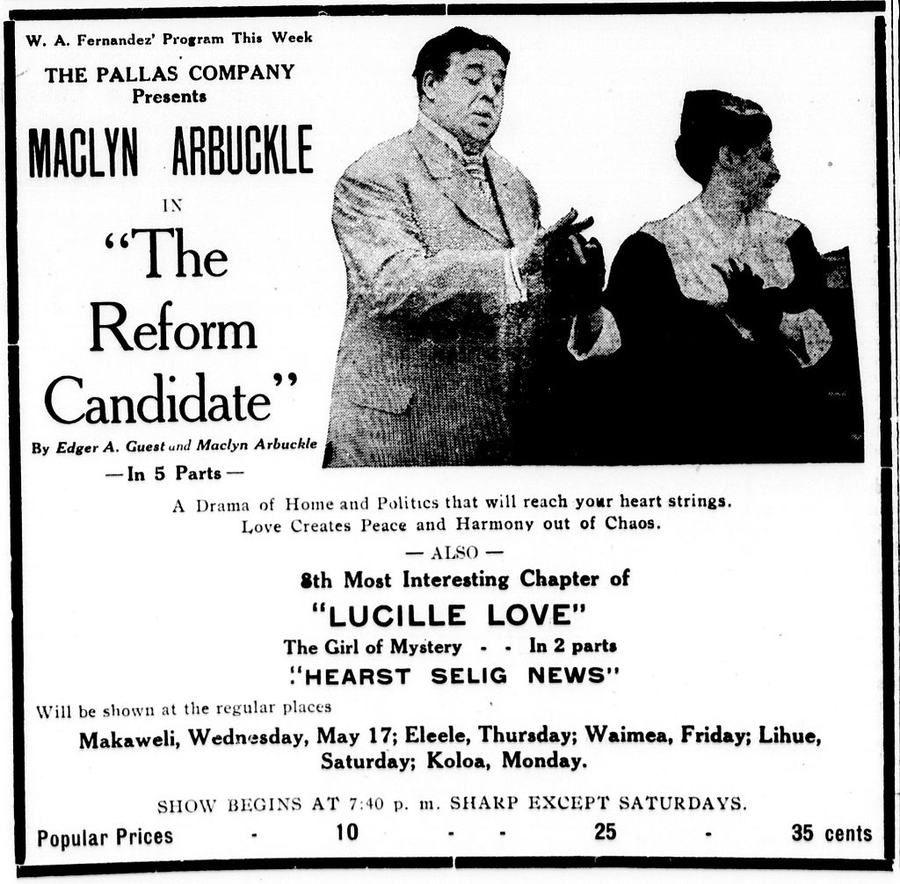
The film’s moral calculus still scalds. Grandell’s dilemma—nuke a young woman’s privacy or permit civic gangrene—feels ripped from whichever Twitter cyclone is curating today’s headlines. Arbuckle declines both sentimental martyrdom and cheap triumph. The final shot withholds the decision: we see Grandell’s gloved hand hover over the ballot slot, intercut with Madeline’s profile blurred behind a frosted window. Fade to black. No victory parade, no mea culpa press conference. Just the vertiginous silence of a conscience suspended in amber.
Compare this to other 1915 morality plays—Little Jack sanitizes poverty with Pickfordian dimples, while The Deep Purple punishes female desire with Gothic flames. The Reform Candidate instead indicts the very machinery that manufactures such sentimental pieties. Its DNA can be traced through The Education of Mr. Pipp’s bourgeois satire, through the graft-obsessed newspaper diatribes of The Lure of Millions, all the way to the shadowy smoke-filled backdrops of 1970s conspiracy thrillers.
Restoration-wise, the surviving 35 mm print—unearthed in a disused Montana church in 1998—bears scabs of emulsion decay that look disturbingly like dried blood. The Montanian Archive’s 4K scan chose not to digitally iron these blemishes; thus every flicker reminds us that cinema itself is a corruptible ballot, subject to time’s political machine. The tinting strategy deserves applause: amber for interiors the color of cigars, cyan-blue for exteriors that feel perpetually just-rained-upon, and a sulfurous orange for campaign rallies that evokes both torchlight parades and eternal damnation. Composer Elena Gutierrez’s new score—piano, muted trumpet, and a typewriter used as percussion—underscores the narrative’s staccato urgency without spoon-feeding emotion.
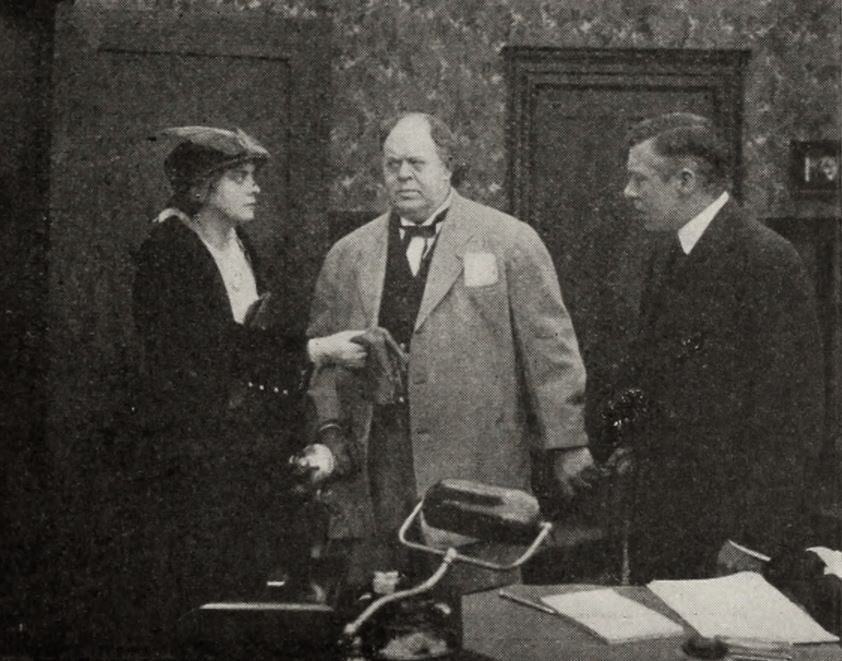
Caveats? The film’s gender politics, progressive for 1915, still traffic in damsel-adjacent tropes. Madeline’s agency is reactive; her body is the contested ward. Yet even this limitation is interrogated: note the insert shot of her reflection in a cracked mirror—fractured identity as campaign prop. Contemporary viewers may also bristle at the ethnic caricatures sprinkled among ward heelers (a blink-and-miss-it Irishman brandishing a shillelagh), though these walk-on grotesques pale beside the film’s larger target: systemic rot rather than immigrant scapegoats.
Why should stream-hardened cinephiles care? Because The Reform Candidate is a Rosetta Stone for understanding how American cinema learned to stage corruption as intimate psychodrama rather than abstract allegory. It anticipates the paranoia pods of The Manchurian Candidate, the journalistic bloodhounding of All the President’s Men, even the toxic family dynastic tangles of Succession. The film proves that noir did not emerge fully formed from post-war disillusion; its seeds were already sprouting in pre-WWI reformist zeal, fed by muckraking journals and trust-busting speeches.
Arbuckle’s subsequent career—eclipsed by the scandal that decimated his nephew Roscoe “Fatty” Arbuckle—makes this picture a poignant what-if. Had the industry not been cannibalized by moral panic, we might speak of “Arbuckle-ian” political thrillers the way we invoke Hitchcockian suspense. Instead, The Reform Candidate survives as a spelunker’s torch, illuminating the cave where Hollywood learned to barter ethics for spectacle.
Final tally: ten out of ten ward captains defeated, zero easy catharses delivered. Watch it on a night when you can stomach the aftertaste of your own civic compromises. Then, when the credits roll and the screen goes black, listen for the echo of that uncast ballot—your complicity clicking like a phantom lever inside the booth you thought you’d escaped.
Streaming: Internet Archive 4K restoration | Blu-ray: Montanian Silent Classics, Region-free | Related viewing: His Wife (domestic noir), The Straight Road (redemptive politics), On the Fighting Line (labor corruption).
IMDb —
1925
Community
Log in to comment.