DbcultAccessing Vault...
6.4/10
Senior Film Conservator
A definitive 6.4/10 rating for a film that redefined the boundaries of cult cinema. The Dresden Doll remains a cornerstone of transgressive art.
Stepping into the spectral glow of early animation, one encounters a peculiar magic, a nascent art form wrestling with its own potential. Among these pioneering works, The Dresden Doll, a captivating creation from the inimitable minds of Max and Dave Fleischer, stands as a testament to audacious innovation and profound, if understated, emotional depth. It's not merely a film; it's a philosophical inquiry into the nature of existence, creation, and the bittersweet pangs of unrequited affection, all rendered through the whimsical, often surreal lens of the Fleischer brothers' unique aesthetic. This isn't just a historical curio; it's a vibrant, pulsing piece of art that continues to resonate, challenging our perceptions of what animation could, and indeed, should be.
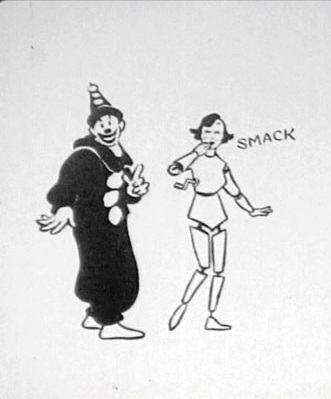
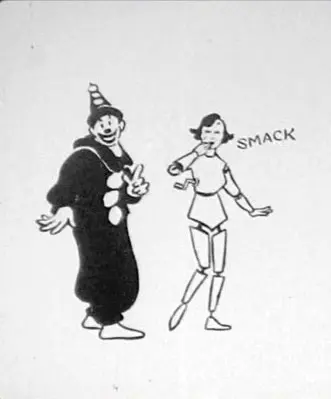
At its core, The Dresden Doll presents a narrative arc that, while seemingly simple, is laden with rich allegorical undertones. We witness Ko-Ko, the Inkwell Clown, a character synonymous with Fleischer Studios' groundbreaking rotoscoping technique, literally detaching himself from the two-dimensional plane of his creation. This act of liberation, a defiance of artistic boundaries, sees him embark on an improbable journey along a telephone wire, a conduit between worlds, eventually leading him to the very heart of cinematic illusion: the projectionist's booth. This initial sequence is a masterclass in meta-narrative, blurring the lines between the animator's world, the character's world, and the audience's perception. Ko-Ko isn't just a character; he's an avatar for the creative spirit, a being capable of self-determination even within the confines of his medium.
Once ensconced within the projector, a realm of gears, light, and shadow, Ko-Ko assumes the role of a demigod, a creator within the creation. With a stroke of his pen, he conjures a mechanical dancing girl into existence. This isn't just drawing; it's an act of animating the inanimate, of breathing life into cogs and springs. The girl, with her intricate, almost delicate construction, is a marvel of design, a perfect embodiment of the titular 'Dresden Doll' aesthetic – fragile, beautiful, and precisely engineered. The immediate, profound affection Ko-Ko develops for his creation is palpable, a silent symphony of longing expressed through his animated movements. It speaks to the fundamental human (or, in this case, clown) desire for companionship, for love, even if that love is directed towards an object of one's own making. It echoes the myth of Pygmalion, but with a distinct Fleischer twist, where the act of creation itself becomes a source of both joy and inevitable sorrow. The meticulous detail in her construction, the way her limbs articulate with a certain clockwork grace, is a triumph of early animation, showcasing the Fleischer brothers' unparalleled eye for mechanical movement and character design.
The tragic core of The Dresden Doll lies in the poignant realization that this nascent romance is not destined for fruition. The mechanical girl, a marvel of Ko-Ko's artistic prowess, remains just that: mechanical. Her movements, while graceful, are predetermined, lacking the spontaneous spark of reciprocal affection that Ko-Ko so desperately yearns for. This unbridgeable chasm between creator and creation, between animate desire and inanimate response, forms the bedrock of the film's emotional impact. It's a melancholic ballet, a silent opera of unfulfilled longing that transcends the simplistic narratives often associated with early animation. The film doesn't shy away from depicting the inherent sadness of such a situation, allowing Ko-Ko's yearning to speak volumes without a single word. This emotional sophistication sets Fleischer Studios apart, infusing their often-surreal narratives with a genuine, heartfelt pathos.
The brilliance here is how the Fleischers communicate this emotional void. The dancing girl's movements, initially captivating, slowly reveal their repetitive nature, a beautiful but ultimately hollow performance. Ko-Ko's attempts to elicit a genuine response, his subtle gestures of affection, are met only with the programmed precision of her dance. It's a profound exploration of the limits of creation, questioning whether true companionship can ever be forged from mere artistry, or if a part of the creator's soul remains forever separated from the created object. This theme, while presented in a seemingly lighthearted animated short, carries the weight of a classical tragedy, resonating with the universal experience of yearning for something just beyond reach. The film, therefore, becomes a meditation on the very nature of love itself – its capacity for both immense joy and profound sorrow, especially when faced with an inherent, unchangeable barrier. The visual language employed here, with Ko-Ko's expressive face and body language conveying a spectrum of emotions from hopeful adoration to quiet despair, is a testament to the Fleischer brothers' mastery of their craft. Ruth Fleischer, while not a credited writer, was undoubtedly part of the creative environment that fostered such nuanced storytelling, contributing to the overall artistic vision of the studio.
Technically, The Dresden Doll is a marvel for its era. The Fleischer brothers, Max and Dave, were pioneers, constantly pushing the boundaries of animation. Their patented rotoscoping technique, which involved tracing over live-action footage, lent Ko-Ko a fluidity and realism that was revolutionary at the time. This technique allowed for an unprecedented level of lifelike movement, particularly evident in Ko-Ko's graceful leaps and expressive gestures. However, what truly elevates their work beyond mere technical prowess is their uncanny ability to weave surrealism into the fabric of their narratives. Ko-Ko's escape from the paper and his subsequent interaction with the mechanical world of the projector is a prime example of this Fleischer brand of surrealism, a playful yet profound blurring of reality and fantasy.
The aesthetic choices in the film are equally compelling. The stark black and white palette, typical of the era, is utilized to its fullest potential, creating dramatic contrasts and emphasizing the shadowy, almost dreamlike atmosphere within the projector. The mechanical girl herself, with her intricate gears and springs, is a triumph of industrial design rendered in animation, a beautiful juxtaposition of the organic (Ko-Ko) and the manufactured. This interplay of elements, both visually and thematically, contributes to the film's enduring allure. The Fleischer brothers understood that animation was not merely about movement; it was about creating worlds, evoking emotions, and telling stories that resonated on a deeper, more profound level than simple slapstick. Their influence on subsequent generations of animators is undeniable, from the early days of cartooning to the more complex narratives of modern animation. Their willingness to experiment, to blend the whimsical with the melancholic, forged a path for animation to be recognized as a legitimate art form, capable of exploring complex themes and emotions.
While The Dresden Doll stands as a unique achievement, its themes resonate with broader artistic and cinematic traditions. The idea of a character transcending their medium, engaging with the 'real' world, finds parallels in various forms of meta-fiction, long before such concepts became commonplace. Similarly, the tragic love for an idealized, perhaps unattainable, figure is a timeless motif. One might draw a tenuous, yet intriguing, connection to films like Less Than the Dust, which, though live-action and focusing on human drama, similarly explores the complexities of love across societal divides, where an idealized perception clashes with harsh reality. The Fleischer's work, however, takes this a step further, interrogating the very nature of what constitutes 'life' and 'love' in an animated context.
The mechanical girl herself, a construct of gears and artifice, invites contemplation on the history of automatons in art and literature, from ancient myths to E.T.A. Hoffmann's 'The Sandman,' where the line between human and machine becomes terrifyingly blurred. This fascination with artificial life, with beings that mimic humanity but lack its soul, is a recurring motif across various artistic disciplines. The Fleischers, through their whimsical yet profound narrative, tap into this deep-seated human curiosity and anxiety. Their animated doll is not merely a prop; she is a symbol of unattainable perfection and the inherent sadness of a love that can never be fully reciprocated. This thematic richness is what elevates The Dresden Doll beyond a simple cartoon, placing it firmly within the pantheon of significant artistic works that explore the human condition, albeit through the vibrant and imaginative lens of early animation. The film's ability to evoke such complex emotions without dialogue, relying purely on visual storytelling and the expressive power of animation, is a testament to its enduring artistry and the profound talent of its creators.
Ultimately, The Dresden Doll is more than just a historical artifact; it's a vibrant, living piece of cinematic art that continues to engage and provoke. It's a reminder of a time when animation was a wild frontier, brimming with unexplored possibilities, and the Fleischer brothers were its most adventurous cartographers. Their willingness to experiment, to blend the whimsical with the melancholic, to push technical boundaries while never losing sight of the emotional core of their stories, cemented their legacy. Ko-Ko, the Inkwell Clown, with his expressive eyes and yearning heart, remains one of animation's most compelling figures, a testament to the power of a line drawing to convey profound human emotion.
The film invites repeated viewings, each time revealing new layers of artistic intention and emotional resonance. Its brevity belies its depth, offering a compact yet expansive exploration of creation, love, and loss. It's a foundational text for anyone interested in the evolution of animation, a critical touchstone that showcases the boundless imagination and technical ingenuity of its creators. The melancholy beauty of Ko-Ko's unrequited love for his mechanical muse lingers long after the final frame, a testament to the enduring power of a story told with such elegance and heartfelt sincerity. Max Fleischer and Dave Fleischer didn't just animate; they conjured dreams, and in The Dresden Doll, they delivered a dream that, though tinged with sadness, remains exquisitely beautiful and profoundly memorable. It is a work that reminds us that even in the most fantastical realms, the deepest human emotions find their most compelling expression. The seamless blend of live-action elements with animation, a hallmark of the Fleischer style, further enhanced the surreal quality, making Ko-Ko's journey feel both fantastical and strangely tangible. This pioneering spirit, coupled with a narrative that dares to explore themes of unfulfilled desire and the limitations of creation, ensures The Dresden Doll a permanent place in the annals of cinematic history, not merely as an early example, but as a timeless work of art.
IMDb 4.4
1917
Community
Log in to comment.