DbcultAccessing Vault...
Cult Review
Senior Film Conservator
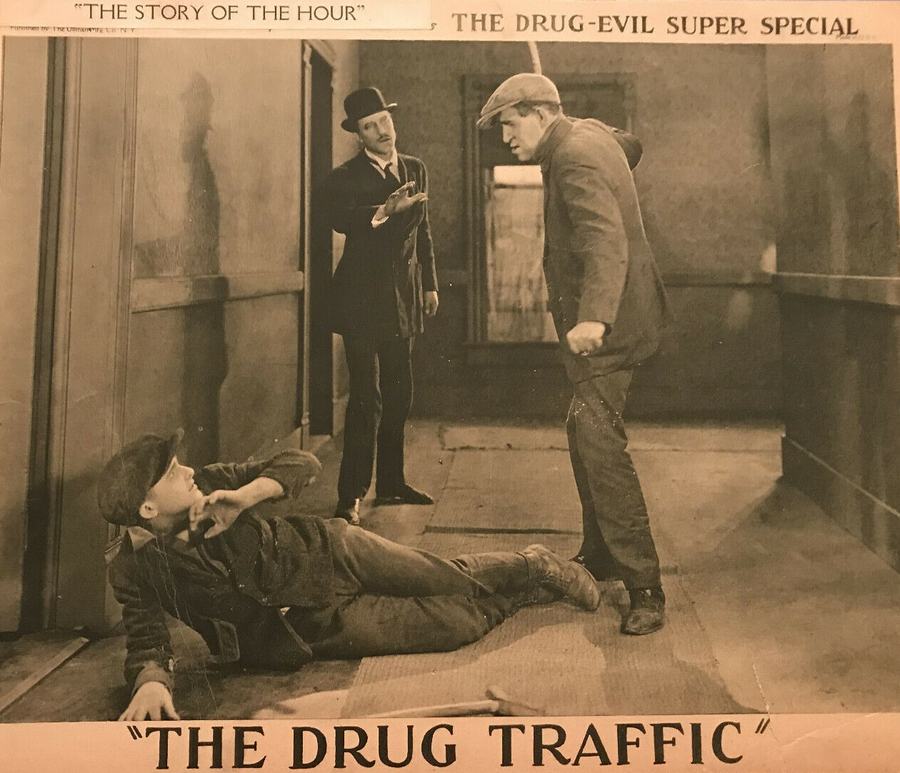
In the annals of silent cinema, certain films emerge not just as historical artifacts but as stark, enduring commentaries on the human condition. Harvey Gates's "The Drug Traffic," released in 1923, is unequivocally one such work. Far from a mere melodrama, it functions as a visceral, unflinching examination of addiction, a topic often sidestepped or sensationalized, yet handled here with a surprising degree of psychological depth for its era. This film doesn't merely tell a story; it plunges the viewer into the harrowing, inexorable descent of a man utterly consumed by a destructive habit, painting a portrait of a society grappling with the unseen epidemic lurking beneath its polished surface.
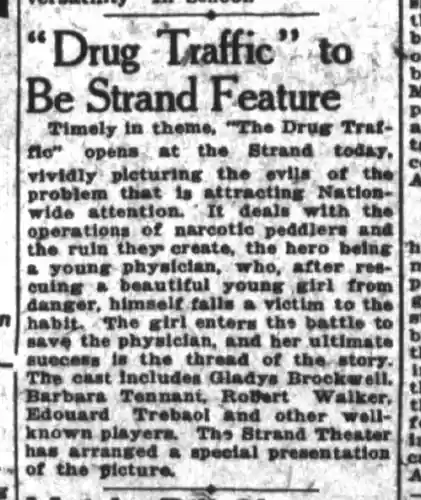
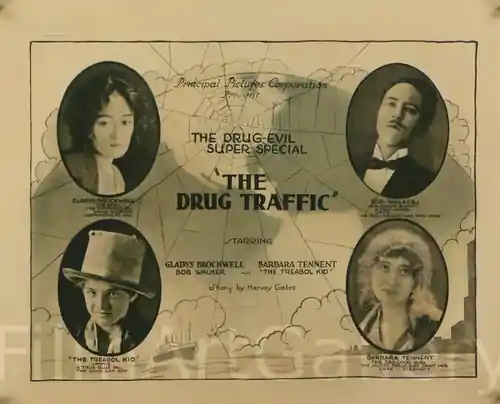
At the heart of this somber narrative is Dr. Steve Maison, portrayed with a compelling, nuanced intensity by Robert Walker. Maison is introduced not as a villain or a weak-willed individual, but as a man under immense pressure. He is a successful surgeon, a pillar of his community, juggling the life-and-death responsibilities of his profession with the demanding social graces required to maintain appearances and please his fiancée, played by Barbara Tennant. This delicate balance, this burning of the candle at both ends, becomes the initial crack in his formidable façade. In a moment of acute professional exigency, facing a critical operation while physically and mentally exhausted, Maison succumbs to the siren call of a stimulant. It's a choice born of perceived necessity, a desperate bid for enhanced focus and endurance, rather than wanton self-destruction. This initial transgression, however, sets in motion an irreversible chain of events, a subtle yet potent poison seeping into the very fabric of his being.
The film masterfully depicts the insidious progression from occasional use to utter dependency. That 'shot now and again' quickly becomes a ritual, then a craving, and finally, an inescapable master. The early scenes, though silent, convey the subtle shifts in Walker's performance – the initial relief turning to a furtive desperation, the confidence giving way to a haunted anxiety. It's a testament to the power of non-verbal storytelling that the audience feels the tightening grip of the drug, even without a single spoken word describing its effects. The pressures that once defined Maison's success now become the very instruments of his downfall, as his once-sharp mind clouds and his steady hands begin to tremble.
"The Drug Traffic" doesn't shy away from depicting the brutal consequences of Maison's addiction. His professional life, once a source of pride and purpose, crumbles. The surgical mask, once a symbol of his healing prowess, becomes a grim reminder of his lost capabilities. He abandons his profession, his reputation in tatters, and his fiancée's hopes shattered. The film then drags us through his inexorable slide into the urban underbelly, a stark contrast to the opulent world he once inhabited. This visual metaphor of societal degradation is powerfully rendered; the crisp lines of his tailored suits give way to ragged clothes, the well-lit operating rooms are replaced by the murky shadows of the slums. This transformation is not merely external; it reflects the internal rot, the erosion of his moral compass and self-worth.
The supporting cast, including Edouard Trebaol, Ben Hewlett, and Gladys Brockwell, plays crucial roles in sketching out this fallen world, though their characters often serve as reflections or catalysts for Maison's further decline. The film uses their interactions to underscore the complete isolation that addiction fosters, even amidst others. Maison becomes an outcast, a pariah, his former life a distant, unattainable memory. The narrative then takes an even darker turn, with his eventual incarceration. Here, the film touches upon themes of societal judgment and the punitive measures taken against those who fall outside conventional norms. It’s a moment of profound despair, stripping Maison of his last vestiges of freedom and dignity, yet it also plants the seed for his desperate, tragic struggle for redemption.
His escape from jail is not a triumphant moment of liberation, but rather an act of sheer, drug-fueled desperation. The freedom he momentarily gains is not one of true liberty but of continued enslavement to his habit. He returns to his humble abode, a poignant reminder of how far he has fallen from his former grand residence. The film then builds to a moment of intense, almost unbearable tension: Maison burglarizing the very hospital where he once commanded respect and saved lives. This act of sacrilege, stealing from the institution that represented his past glory, underscores the complete dominion the drug now holds over him. It's a chilling sequence, emphasizing the cyclical, self-destructive nature of addiction; the means to temporarily sate the craving only further entrenches the user in their own degradation.
This desperate pursuit of the drug is a common thread in addiction narratives, and "The Drug Traffic" captures its essence with stark realism. One might draw parallels to the relentless, almost animalistic drive seen in films like The Derelict, where characters are pushed to the fringes of society by their circumstances, engaging in acts of desperation to survive or, in Maison's case, to feed an insatiable hunger. However, Maison's plight feels uniquely tragic because his fall is from such a height, making his desperation all the more agonizing to witness.
The film's climax is a powerful, gut-wrenching portrayal of withdrawal and the fight for sobriety. Having secured his supply, Maison is suddenly confronted with a stark, terrifying realization: the utter uselessness of it all. The drug, which promised stimulation and escape, has delivered only ruin and despair. This epiphany sparks a furious, internal battle. He doesn't simply give up; he puts up a fight, a monumental struggle against the insidious habit that has consumed him. The film dedicates a significant portion to this 'night of terror,' a sequence that, even without sound, conveys the visceral agony of withdrawal. Robert Walker's performance here is nothing short of extraordinary, embodying the tremors, the hallucinations, the desperate pleas, and the sheer physical and mental torment of a man wrestling with his demons.
This is not a clean, Hollywood redemption. Maison's victory against the drug, his ultimate triumph over its grip, tragically brings death. It's a grim, sobering conclusion, refusing to offer easy answers or saccharine resolutions. The film suggests that while the spirit can fight, the body often bears the irreversible scars of such a brutal war. This ending distinguishes "The Drug Traffic" from many contemporary narratives that might have opted for a more conventional, albeit less impactful, happy ending. It’s a testament to writer Harvey Gates's willingness to embrace the harsh realities of his subject matter, delivering a powerful, albeit heartbreaking, moral.
"The Drug Traffic" resonates deeply even a century after its release, primarily due to its bold exploration of themes that remain acutely relevant today. It's a cautionary tale about the perils of self-medication and the pressures of modern life, where individuals often seek artificial aids to cope with overwhelming demands. The film implicitly critiques a society that expects superhuman endurance while simultaneously offering tempting, destructive shortcuts. It delves into the profound isolation that addiction breeds, severing ties with loved ones and transforming an individual into a shadow of their former self. The portrayal of Maison's fiancée, Barbara Tennant, underscores the collateral damage, the heartbreak inflicted upon those who stand by, helpless witnesses to a loved one's self-destruction.
Moreover, the film's depiction of the justice system and societal reaction to addiction is noteworthy. While Maison is thrown into jail, the narrative doesn't necessarily celebrate this as a solution. Instead, it highlights the system's inability to truly address the underlying issues, merely containing the problem rather than curing it. In this aspect, it touches upon similar societal critiques found in films like The Jailbird, where the focus is often on the individual's struggle against societal forces and their own inner demons, often leading to tragic or complex outcomes rather than straightforward moral victories.
Despite the limitations of silent film, "The Drug Traffic" achieves remarkable emotional depth and narrative clarity. The performances, particularly Robert Walker's, are incredibly expressive, relying on exaggerated gestures and facial expressions that convey a spectrum of emotions from professional stoicism to abject despair. The visual language of the film is crucial; the contrast between the sterile hospital environment and the squalid slums, the bright lights of society and the dark shadows of addiction, all contribute to the film's powerful message. The pacing, though deliberate by modern standards, effectively builds tension and underscores the slow, relentless march towards Maison's inevitable fate.
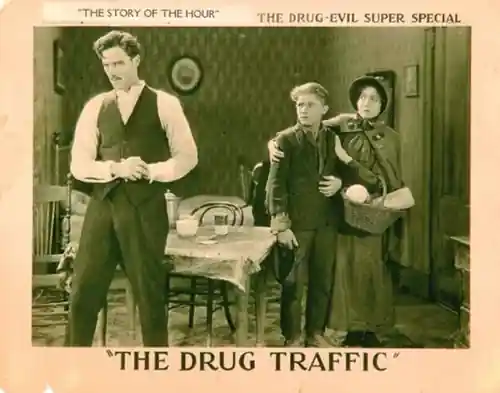
The screenplay by Harvey Gates, even without dialogue, constructs a tight, compelling narrative arc. It understands the psychology of addiction, presenting it not as a moral failing but as a tragic illness that consumes its victim whole. The film's strength lies in its ability to evoke empathy for Maison, even as he commits increasingly desperate acts. We witness his suffering, understand the pressures that led him astray, and feel the crushing weight of his ultimate, Pyrrhic victory. This humanistic approach, rather than a purely judgmental one, is what elevates "The Drug Traffic" beyond mere propaganda and transforms it into a timeless piece of art.
In an era often characterized by simpler narratives, "The Drug Traffic" dared to confront a complex and uncomfortable truth. It stands as a powerful testament to the early capabilities of cinema to tackle serious social issues with both dramatic flair and profound sensitivity. While films like The Hidden Scar might explore personal struggles and hidden torments, "The Drug Traffic" brings its protagonist's internal battle to a horrifyingly public and explicit conclusion, leaving no room for ambiguity about the devastating consequences of addiction. Its unflinching gaze at the dark side of human nature and societal pressures makes it a film that, despite its age, still holds significant weight and relevance today.
For cinephiles and those interested in the history of social commentary in film, "The Drug Traffic" is an essential viewing. It's not an easy watch, but its power lies precisely in its raw honesty and its refusal to avert its gaze from the ultimate price of addiction. It reminds us that sometimes, the most profound victories are bought at the highest cost, leaving behind a legacy not of triumph, but of a deeply human tragedy.
IMDb 6.1
1930
Community
Log in to comment.