DbcultAccessing Vault...
Cult Review
Senior Film Conservator
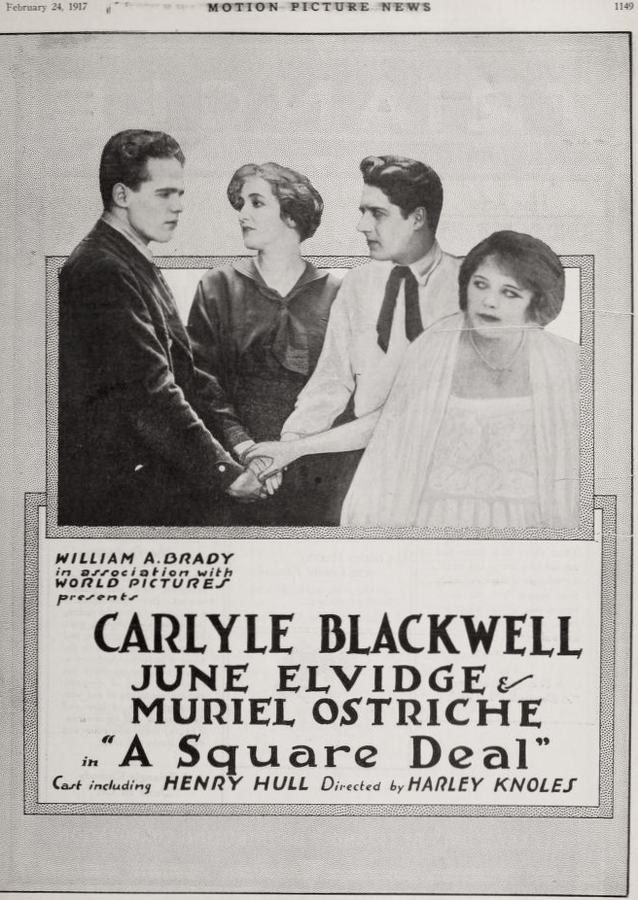
Stepping back into the cinematic annals, we encounter A Square Deal (1917), a silent-era gem that, despite its age, resonates with an enduring relevance, dissecting the intricate dance between ambition, integrity, and the often-turbulent currents of human relationships. This film, a compelling narrative spun by the masterful Frances Marion and L.V. Jefferson, and directed with a keen eye for emotional nuance, invites us to MacDougal Alley, a locale synonymous with artistic struggle and camaraderie. Here, our narrative anchors itself to three souls: Hugh Eltinge, a painter whose canvases betray a talent yet to be recognized; Mark Dunbar, a wordsmith whose literary genius awaits its due; and Doris Golden, a discerning reporter whose admiration for their nascent brilliance is palpable. Their shared existence is a tapestry woven with mutual support and the quiet dignity of shared aspiration, a testament to the purity of creative pursuit before the corrupting influence of success takes hold.
The first significant tremor in this delicate ecosystem arrives with the sale of Mark’s novel. Suddenly, the world, once indifferent, opens its arms, and with it, Mark undergoes a subtle, yet significant, transformation. This initial success, however, is not without its grace. Mark, remembering his roots, extends a generous hand to Hugh, offering to stake him until his artistic endeavors bear fruit. He also orchestrates a benevolent deception for Doris, arranging a fabricated inheritance to ensure her financial comfort. Such acts, born of a genuine desire to uplift his friends, suggest a character fundamentally altruistic, a stark contrast to the self-serving machinations that will later define his antagonists. This phase of the film, in its quiet portrayal of burgeoning prosperity and the temptation it brings, might remind one of the moral quandaries explored in The Lure, where newfound opportunities often come with unforeseen costs and integrity is frequently tested.
Yet, the allure of new clothes, new popularity, and the superficial trappings of success begin to chip away at Mark’s initial resolve. He finds himself increasingly distanced from the simple joys and loyalties of his MacDougal Alley days. The burgeoning chasm between his old life and his new, more opulent existence is not lost on him. In a moment of genuine, albeit misguided, generosity, he anonymously acquires all of Hugh's paintings on exhibition, an act intended to bolster his friend's career without the taint of charity. This secret patronage, a poignant attempt to bridge the widening gap, underscores Mark's internal conflict: a desire to remain true to his past while being irrevocably pulled into a future defined by different values. Carlyle Blackwell, as Mark, navigates this early emotional landscape with commendable subtlety, conveying the character's internal tug-of-war without the benefit of spoken dialogue. His performance relies heavily on expressive glances and body language, a hallmark of powerful silent film acting, masterfully translating inner turmoil to the screen.
The narrative then introduces its antagonists, a mother-daughter duo, Mrs. Trailes and Ruby, whose sole ambition is to ensnare a wealthy husband for the latter. Mark’s burgeoning reputation makes him an ideal target for their predatory designs. Their machinations are laid bare with chilling transparency, as Ruby is meticulously coached to attract him at a Literary Club meeting. The scene where Mark first encounters Ruby, under the watchful eyes of Hugh and Doris (who is reporting the event), is masterfully executed. The camera, or perhaps the audience's own empathetic gaze, makes Mark's nascent infatuation painfully clear to his old friends. This initial encounter, fraught with unspoken anxieties and a sense of impending doom, serves as a pivotal turning point, signaling Mark's unwitting descent into a web of deceit. It's a classic setup of innocence meeting calculated deception, a theme explored with varying degrees of success in films like The Prince of Graustark, where social standing and calculated charm often dictate romantic entanglements and societal acceptance.
The courtship between Mark and Ruby accelerates with alarming speed, culminating in a fabricated "drowning" incident at a ladies' swimming club, orchestrated by Ruby's mother to solidify Mark's heroic image and, by extension, his commitment. This manipulative ploy, a theatrical performance designed to elicit a specific emotional response, is a stark demonstration of Ruby’s cunning and her mother’s orchestrating genius. The ensuing marriage, built on such a flimsy foundation of artifice, is predictably doomed. Henry Hull, portraying Hugh, and June Elvidge, as Doris, provide the audience with a silent chorus of concern, their expressions eloquently communicating the unspoken fears for their friend. The film here delves into the perils of marrying for superficial reasons, a cautionary tale that resonates across generations, highlighting the emptiness of unions based on ambition rather than genuine affection. The societal critique embedded within this plot point is sharp, exposing the transactional nature of certain relationships in high society.
Mark’s wedded bliss, if it can even be called that, is short-lived. Ruby quickly sheds her demure facade, revealing herself to be pettish, extravagantly wasteful, and prone to vitriolic tirades. His remonstrations are met with scolding, driving him to silence and profound disillusionment. The domestic scenes, though silent, are loud with the echoes of shattered ideals and simmering resentment. This portrayal of a marriage crumbling under the weight of incompatible personalities and fundamental dishonesty is remarkably potent, a powerful indictment of superficiality. It recalls the bitter realism found in certain domestic dramas of the era, such as Her Husband's Wife, where marital discord is often the central dramatic engine, but A Square Deal adds a layer of premeditated malice that makes Ruby's character particularly odious.
Concurrently, Doris, perplexed by an irregularity, discovers that her 'deceased' uncle is, in fact, alive. Her subsequent visit to the lawyer unravels the entire benevolent deception orchestrated by Mark. In a moment of profound integrity, Doris writes to Mark, enclosing a check for the remaining balance of the 'inheritance' and promising to repay the rest. This act, revealing her unwavering moral compass and selfless character, serves as a stark contrast to Ruby’s mercenary nature. The letter, however, becomes another instrument of Ruby’s malice. Intercepting it, she immediately accuses Mark of infidelity, her true vulgarity asserting itself in a torrent of baseless accusations. This scene, a dramatic crescendo of misunderstanding and betrayal, drives Mark back to the sanctuary of the little studio, only for Ruby to follow, igniting another furious confrontation in front of Doris. Mark, utterly broken, begs Hugh to look after Doris before disappearing, his world seemingly in ruins, stripped bare of love and trust.
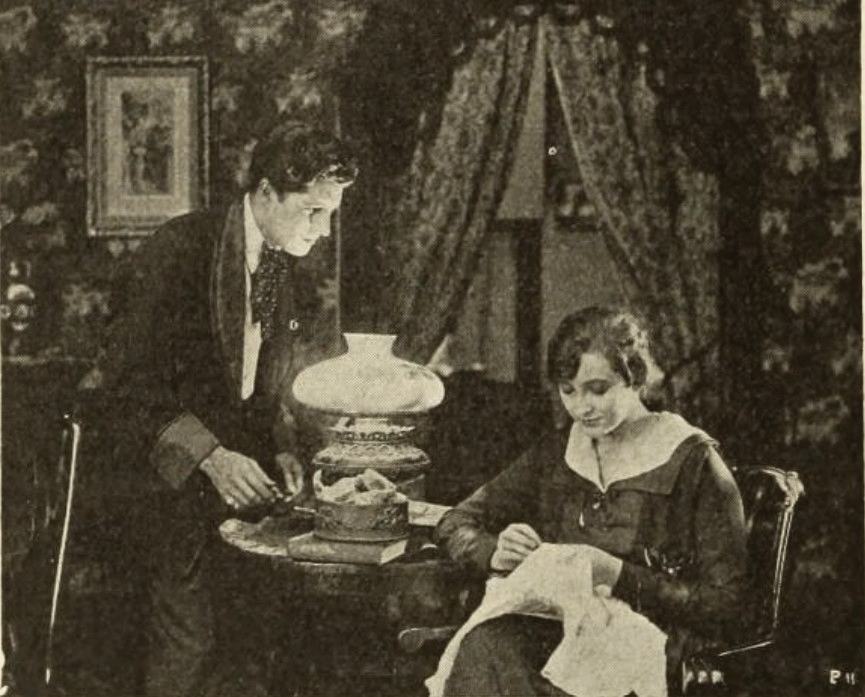
It is at this juncture that Hugh Eltinge, hitherto a supportive but secondary character, steps into the spotlight with a plan of extraordinary selflessness and cunning. He leaves a cryptic letter for Doris, instructing her not to open it until she finds happiness, a poignant foreshadowing of his elaborate scheme. Hugh then fabricates a story for a newspaper reporter, claiming to have inherited a vast fortune from his grandfather. The sensational news, printed in the evening paper, reaches the ears of Ruby and her mother, whose avarice immediately shifts focus. They remember Hugh as Mark’s friend and invite him to call, setting the stage for their next predatory maneuver. This audacious deception, designed not for personal gain but for the ultimate happiness of his friends, elevates Hugh to the status of a true hero, a silent guardian orchestrating a complex play for justice. His character arc is arguably the most compelling, showcasing a profound capacity for altruism.
A closer intimacy, far from genuine affection, rapidly develops between Hugh and Ruby. The trap is sprung with devastating precision. Mark returns home one evening to the crushing sight of Ruby in Hugh’s arms. This final betrayal, the shattering of his last ideal – the sanctity of friendship – leaves Mark utterly broken. His disillusionment is complete, his world stripped bare of all illusions. He hurries away, leaving behind the wreckage of a marriage and a friendship seemingly destroyed. Muriel Ostriche, as Ruby, portrays the character’s calculating nature with convincing coldness, making her pursuit of Hugh believable within the narrative’s context of greed. The scene is a powerful climax, demonstrating the devastating impact of deceit on the human spirit, reminiscent of the dramatic betrayals found in films like Satan Sanderson, where trust is frequently put to the ultimate test and often found wanting. The emotional weight carried by the actors through their expressions alone is a testament to the power of silent cinema.
The aftermath is swift. Divorce proceedings conclude, and Mark, purged of his illusions and finally seeing the world with clear eyes, seeks out Doris. Their reunion is not one of passionate fireworks but of quiet understanding and a shared history of loyalty. They become engaged, a union forged in the crucible of adversity and genuine affection. It is then that Doris remembers Hugh’s enigmatic letter. Upon opening it, the full scope of Hugh’s sacrifice is revealed. He meticulously outlines his plan, confessing that the story of his fortune was a carefully constructed hoax, a ruse designed solely to expose Ruby’s true nature and free Mark from her clutches. For the sake of friendship, he had willingly sacrificed his reputation, enduring the pretense of a relationship with a woman he despised, all to bring happiness to the two people he loved most. This revelation is the emotional cornerstone of the film, transforming Hugh from a mere friend into an almost Christ-like figure of self-sacrifice, embodying the film's title in the most profound way possible.
Mark, overwhelmed by the profound depth of Hugh’s loyalty, telephones him. When Hugh arrives, the old feeling of happiness and love, untainted by ambition or deceit, fills once more the little studio in MacDougal Alley. The film concludes on a note of profound emotional resonance, celebrating the triumph of genuine human connection over the ephemeral allure of wealth and status. The performances, particularly by Carlyle Blackwell and Henry Hull, convey a depth of emotion that transcends the silent medium, relying on subtle yet powerful non-verbal cues. The narrative arc, from the initial camaraderie to the bitter disillusionment and eventual redemption, is expertly paced, keeping the audience invested in the fates of its characters. A Square Deal serves as a powerful reminder that true fortune lies not in material possessions, but in the unwavering bonds of friendship and love. It’s a beautifully crafted piece that, much like a finely aged wine, reveals more layers with each viewing, making a compelling case for its enduring place in the pantheon of early cinema.
Beyond its engaging plot, A Square Deal offers a fascinating glimpse into the social mores and aspirations of the early 20th century. It critiques the superficiality of social climbing and the dangers of allowing material success to corrupt personal values. The film’s silent nature, far from being a limitation, amplifies the expressive power of its actors. Each gesture, each facial contortion, carries immense narrative weight, drawing the viewer deeper into the psychological landscape of the characters. This emphasis on visual storytelling, a hallmark of the era, is particularly effective in conveying the nuanced emotional shifts that define Mark’s journey and Hugh’s selfless resolve. The interplay of light and shadow, the carefully composed frames, all contribute to a rich cinematic experience that transcends the absence of spoken dialogue. It's a testament to the fact that compelling storytelling needs no words when the visuals speak volumes.
The thematic resonance of A Square Deal extends beyond its immediate narrative. It is a timeless exploration of what it means to be truly wealthy – not in monetary terms, but in the currency of loyalty, love, and self-sacrifice. The film asks profound questions about integrity and the choices we make when faced with temptation. It suggests that genuine happiness is not found in the acquisition of status or material possessions, but in the steadfastness of true friends and the purity of an honest heart. In an era often characterized by melodrama, this film distinguishes itself with a thoughtful, almost philosophical, approach to its moral lessons. It’s a film that leaves a lasting impression, prompting reflection on our own definitions of success and the value we place on the relationships that truly matter. For those seeking a deeper understanding of cinematic history and the enduring power of human drama, A Square Deal is an essential viewing experience, a testament to the artistry that blossomed in the silent era.
IMDb —
1933
Community
Log in to comment.